Are Roses Toxic to Cats? Vet Guide 2026
It was 2 AM on Valentine’s Day when my phone lit up with a panicked text from my neighbor: “Luna just ate rose petals!! Emergency room NOW??” I could practically feel her heart pounding through the screen. She’d received a gorgeous bouquet from her husband, set it on the kitchen counter, and turned her back for thirty seconds. Thirty seconds. That’s all it took for Luna to launch her sneak attack on those tempting red petals.
Sound familiar? If you’re reading this at some ungodly hour with rose petals scattered across your floor and a very pleased-looking cat licking their whiskers, take a breath. I’ve been exactly where you are—both as a vet and as a cat parent who’s frantically Googled “are roses toxic to cats” more times than I care to admit.
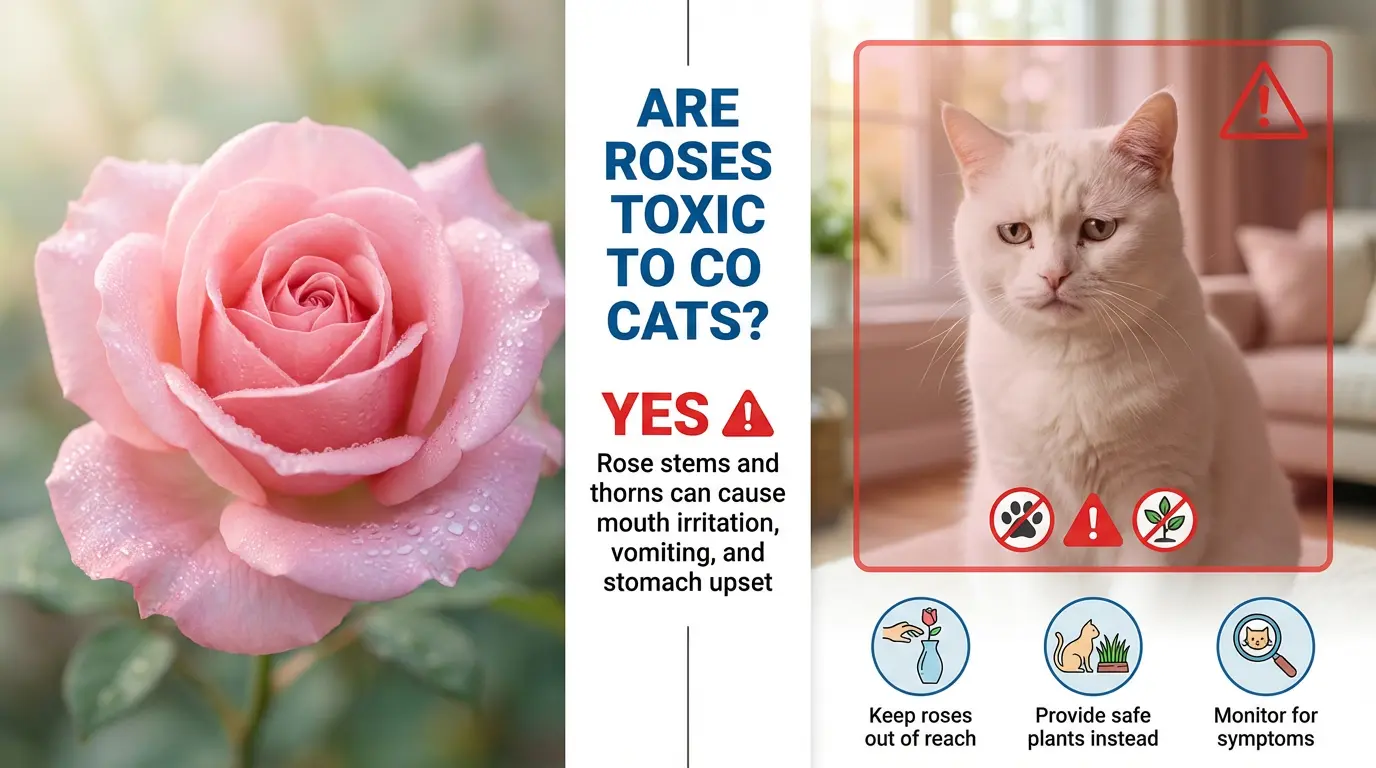
Here’s what I told my neighbor that night, and what I’m going to tell you now: True roses aren’t poisonous to cats. But before you exhale completely, we need to talk about the thorns, the chemicals on those pretty stems, and why that “harmless” bouquet might be hiding some genuinely dangerous surprises.
This guide covers everything from instant triage steps (because I know some of you need answers RIGHT NOW) to building cat-safe bouquets that won’t send you into a 2 AM spiral. Whether you’re here because of an active flower emergency or you’re planning ahead for Mother’s Day, you’re in the right place. Let’s get your questions answered and your cat safe.
Are Roses Toxic to Cats? The Straight Answer
True Roses (Rosa spp.) Are Non-Toxic
Let’s start with the good news that’ll let you breathe easier: According to the ASPCA’s comprehensive plant database, garden roses and florist roses (Rosa species) are officially non-toxic to cats. This means the petals, leaves, stems, and even rose hips won’t poison your cat if they decide to take a nibble.
I’ve seen this firsthand in my practice countless times. Last spring, a client rushed in with her Persian who’d demolished an entire rose bush in the backyard. We monitored the cat, ran bloodwork, checked everything—and she was perfectly fine. A little embarrassed about her leafy breath, maybe, but medically sound.
The key phrase here is “true roses.” We’re talking about the Rosa genus—your classic garden roses, tea roses, florist roses, wild roses. All parts of these plants get the safety thumbs-up from veterinary toxicologists.
Why Cats Might Chew Roses Anyway
But here’s where cat behavior gets interesting. Even though roses are safe to eat, your cat shouldn’t exactly be grazing on them like a tiny, furry cow. Cats are obligate carnivores, which means their digestive systems evolved to handle meat, not plant matter. So why do they go after your beautiful bouquet?
From what I’ve observed over fifteen years in practice, cats chew plants for several reasons. Some are seeking fiber to help with hairballs or mild nausea. Others are bored out of their minds and that gently swaying stem looks like the most entertaining toy ever created. Then there are the texture seekers—cats who just love the crunch of leaves or the soft, velvety feel of petals against their tongue.
My own cat, Miso, falls into that last category. She couldn’t care less about her expensive interactive toys, but a rose petal floating onto the floor? That’s apparently peak entertainment.
Mild Risks Even Non-Toxic Plants Carry
Here’s something most articles won’t tell you: Even non-toxic plants can cause stomach upset if your cat eats too much of them. Think of it like eating a whole jar of pickles—technically not poisonous, but your stomach isn’t going to thank you.
If your cat munches on several rose petals or leaves, you might see some mild vomiting or loose stool. This happens because their digestive system simply isn’t designed to break down plant material efficiently. The good news? This usually resolves within 12-24 hours without any treatment.
One of my clients described it perfectly: “It’s like when my toddler eats too much birthday cake—unpleasant consequences, but nothing lasting.” That’s exactly the level of concern we’re talking about here.
Sources Confirming Safety
I don’t expect you to just take my word for it. PetMD, Catster, and the ASPCA all confirm that roses themselves aren’t the problem. The ASPCA Animal Poison Control Center—which handles over 180,000 poisoning cases annually—doesn’t list roses on their toxic plant database. When they say a plant is safe, that’s based on decades of veterinary toxicology data and real-world cases.
But here’s the catch that most people miss: The rose itself being safe doesn’t mean everything about roses is safe. That’s where things get complicated.
Hidden Dangers Beyond the Plant Itself
Thorn Injuries: Paws, Mouths & Internals
Let me tell you about a case that still makes me wince. A golden tabby named Biscuit came in with a swollen paw that he wouldn’t put weight on. His owner had received roses three days earlier and found a small thorn embedded deep in the pad between Biscuit’s toes. The wound had already started to abscess.
Thorns are honestly my biggest concern with roses and cats—not the petals. Those sharp little barbs can puncture paw pads, get stuck in mouths and gums, and in rare cases, cause internal injuries if a cat swallows a piece of stem.
Watch for these signs of thorn injury:
- Sudden limping or favoring one paw
- Excessive licking or chewing at paws or mouth
- Drooling or pawing at the face
- Visible swelling or redness
- Reluctance to eat (could indicate mouth injury)
If you suspect a thorn injury, don’t try to remove it yourself if it’s deeply embedded. Infection can set in quickly, and what looks like a simple thorn on the surface might be fractured underneath. That’s a vet visit.
Pesticides, Flower Food & Chemicals
This is where I want to slow down and make sure you’re really hearing me. The chemicals on roses can be genuinely dangerous—way more dangerous than the plant itself.
Commercial roses, especially imported ones, are often treated with pesticides like neonicotinoids and fungicides. These chemicals can cause anything from mild oral irritation to serious neurological symptoms if ingested. I’ve seen cats develop tremors, excessive drooling, and vomiting from licking pesticide residue off their paws after walking near treated plants.
Then there’s flower food—those little packets that come with bouquets. Most contain biocides to prevent bacterial growth in the water. If your cat drinks from the vase (and let’s be honest, many cats see vase water as a personal drinking fountain), they’re potentially getting a dose of chemicals that can cause stomach upset or worse.
A client once called me in tears because her cat had knocked over a vase and lapped up the water. The flower food packet had dissolved in there, and within an hour, her cat was vomiting repeatedly. We had to administer IV fluids and monitor her overnight. The roses themselves? Not the problem. The chemical soup in that vase? Definitely the problem.
Dyed, Artificial & Preserved Roses
Rainbow roses look amazing on Instagram, but those vibrant blue and purple petals should set off alarm bells if you have cats. The dyes used to color roses aren’t meant for consumption, and some contain heavy metals or other compounds that can be toxic.
Artificial roses present a different risk entirely: foreign body obstruction. If your cat chews on silk or plastic petals and swallows pieces, those materials won’t digest. I’ve had to surgically remove fake flower parts from cat intestines more than once. It’s not fun for anyone involved, and it’s expensive—we’re talking $2,000-$5,000 for emergency surgery.
Preserved roses (like those “forever roses” treated with glycerin) fall into a gray area. The preservation chemicals aren’t tested for pet safety, and I generally recommend keeping them completely out of reach.
Bouquet Filler Traps
Here’s the real danger that sends me into full vet-alarm mode: Roses are almost never alone in a bouquet. They come with greenery, filler flowers, and decorative elements. And some of those additions? Genuinely toxic.
Lilies are the big one. If there’s a single Easter lily, Asiatic lily, or tiger lily anywhere near those roses, you have a veterinary emergency waiting to happen. Even tiny amounts of lily—a nibbled leaf, some pollen on the fur that gets groomed off—can cause complete kidney failure in cats. I’m not being dramatic. Lilies kill cats. Period.
Other common bouquet additions to watch for:
- Baby’s breath (mild irritant, but can cause vomiting)
- Chrysanthemums (toxic, causes drooling and vomiting)
- Carnations (mild toxicity, GI upset)
- Eucalyptus (often in greenery, toxic to cats)
This is why I tell every cat owner: Never assume a bouquet is safe just because the roses are. You need to know every single plant in that arrangement.
What If My Cat Ate a Rose? Step-by-Step Triage
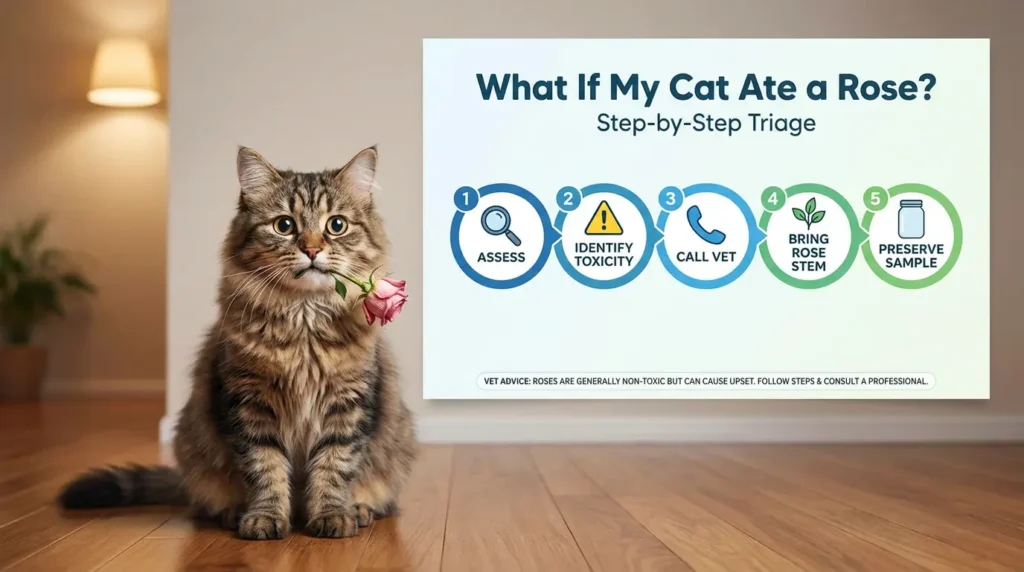
Okay, crisis mode. Your cat just ate something from the bouquet. Here’s exactly what to do, in order.
Immediate Actions to Take
First 5 minutes:
- Remove the cat from the area—no more access to any plants
- Remove the bouquet to a room your cat can’t enter (or outside if weather permits)
- Take photos of the bouquet from multiple angles so you can identify everything in it
- Check your cat’s mouth gently for thorns or plant material stuck in teeth or gums
- Collect any petals or leaves your cat dropped—you might need to show them to a vet
Do NOT induce vomiting unless a vet specifically instructs you to. Hydrogen peroxide and other home remedies can cause more harm than good, especially if there’s any chance your cat swallowed a thorn.
Symptoms to Watch: Mild vs Emergency
I created this chart because knowing the difference between “watch and wait” and “go now” can save your cat’s life.
MILD (Monitor at home for 4-6 hours):
- One or two episodes of vomiting
- Mild diarrhea
- Decreased appetite
- Slight lethargy
- Normal breathing and heart rate
MODERATE (Call your vet for advice):
- Repeated vomiting (3+ times in 6 hours)
- Persistent diarrhea
- Visible discomfort or restlessness
- Excessive drooling
- Hiding or behavior changes
EMERGENCY (Go to vet or ER immediately):
- Difficulty breathing
- Seizures or tremors
- Blood in vomit or stool
- Extreme lethargy or unresponsiveness
- Signs of pain (crying out, aggression when touched)
- Any suspected lily exposure whatsoever
When to Call the Vet or Poison Hotline
If you’re unsure about anything, call. Seriously. The ASPCA Animal Poison Control Center hotline (888-426-4435) is available 24/7, and a consultation fee of around $75 is worth the peace of mind. They can walk you through whether you need emergency care or home monitoring.
Your regular vet’s office often has an after-hours service, too. Use it. I’d rather get ten “false alarm” calls than have one owner wait too long because they didn’t want to bother me.
Time matters, especially if toxic chemicals or plants were involved. The sooner treatment starts, the better the outcome. Don’t wait for symptoms to get worse.
Home Remedies? (Don’t Try These)
I see a lot of bad advice online about inducing vomiting at home, giving activated charcoal, or offering milk. Let me be clear: Don’t do any of these without veterinary guidance.
Inducing vomiting incorrectly can cause aspiration pneumonia—where stomach contents get into the lungs. That’s potentially fatal. Activated charcoal needs to be dosed precisely and given at the right time to be effective. Milk doesn’t neutralize toxins and can actually make diarrhea worse.
Your job is to observe, document symptoms, and get professional advice. Leave the medical interventions to professionals who know proper dosing and timing.
Toxic “Rose” Imposters You Need to Know

This section might save your cat’s life. Not every plant with “rose” in the name is actually a rose, and some of these imposters are genuinely dangerous.
Christmas Rose (Helleborus niger)
Pretty little winter-blooming plants that are absolutely toxic to cats. Christmas roses contain cardiac glycosides that can cause drooling, vomiting, diarrhea, abdominal pain, and in severe cases, heart rhythm abnormalities.
I treated a cat two Decembers ago who’d nibbled on a Christmas rose the owner had planted as a winter garden addition. The cat developed severe GI symptoms and needed IV fluids and cardiac monitoring. She recovered, but it was touch and go for about 36 hours.
How to identify: Cup-shaped white or pink flowers that bloom in winter, not summer like true roses. Dark green leathery leaves. Often sold as hellebores at garden centers.
Desert Rose (Adenium obesum)
This one terrifies me because it’s become trendy as a houseplant, and it’s incredibly toxic. Desert roses contain cardiac glycosides similar to those in foxglove. Ingestion can cause vomiting, diarrhea, abnormal heart rhythms, and potentially death.
A colleague in Arizona lost a patient to Desert Rose poisoning. The cat had chewed on just a few leaves, and by the time the owner realized something was wrong, kidney and heart damage were already severe.
How to identify: Thick, succulent-like stem with a bulbous base. Bright pink or red trumpet-shaped flowers. Doesn’t look anything like a true rose. Often labeled as “desert rose” or adenium at nurseries.
Moss Rose (Portulaca grandiflora)
Also called portulaca, moss rose is less toxic than the previous two but can still cause problems. Cats who ingest it may develop GI upset, lethargy, and tremors in some cases.
How to identify: Low-growing succulent with small, colorful flowers (yellow, pink, red, orange). Often used as ground cover in gardens. Looks nothing like a traditional rose.
Rose of Sharon (Hibiscus syriacus)
This flowering shrub causes mild to moderate toxicity in cats. Symptoms typically include nausea, vomiting, and diarrhea. While usually not fatal, it’s still worth keeping away from curious cats.
How to identify: Large shrub with hibiscus-like flowers in white, pink, or purple. Blooms in late summer. Common in landscaping.
Quick ID Table
| Plant Name | Scientific Name | Safe for Cats? | Key Warning Signs |
|---|---|---|---|
| Garden Rose | Rosa spp. | ✅ Non-toxic | Watch for thorns & chemicals only |
| Christmas Rose | Helleborus niger | ❌ Toxic | Heart issues, severe GI symptoms |
| Desert Rose | Adenium obesum | ❌ Highly Toxic | Life-threatening cardiac effects |
| Moss Rose | Portulaca grandiflora | ❌ Toxic | GI upset, tremors |
| Rose of Sharon | Hibiscus syriacus | ❌ Mild-Moderate | Vomiting, diarrhea |
When in doubt, send me a photo (or your vet!) before assuming any plant with “rose” in the name is safe.
Are Roses Safe for Cats in Everyday Scenarios?
Let’s get practical. You love flowers, you love your cat—how do you make both work?
Bouquets, Vases & Holiday Gifts
Valentine’s Day, Mother’s Day, anniversaries—roses show up in our homes whether we plan for them or not. Here’s my survival strategy for bouquet season:
Before the flowers arrive:
- Tell anyone who might send you flowers: “I have cats, so please no lilies or toxic plants—roses only, and let me know what else is in there.”
- Designate a cat-free room for flower display if possible. Guest bathroom? Bedroom with closed door? Find your safe zone.
When flowers arrive:
- Inspect every single plant in the arrangement before bringing it inside
- Remove all lilies immediately if present—don’t even try to salvage the bouquet, just toss them
- Strip off thorns while wearing gloves (you can buy thorn strippers at any garden center)
- Rinse the stems thoroughly under running water to remove pesticide residue
- Use a heavy, stable vase that won’t tip easily
- Place on a high shelf or hanging holder—think five feet up minimum
Daily maintenance:
- Change the water daily and dump the old water down the toilet (not somewhere a cat can access)
- Clean up any dropped petals immediately
- Watch for signs your cat has discovered the flowers (sniffing around excessively, jumping toward the vase)
Garden & Houseplants with Roses
If you’re growing roses at home, whether in your garden or as houseplants, you have more control—use it.
Choose organic: Look for organically grown roses or grow your own without pesticides. Yes, you’ll deal with more aphids and black spot fungus, but your cat’s safety is worth it.
Consider thornless varieties: Varieties like “Zephirine Drouhin” or “Marie Pavie” are nearly thornless and safer around curious paws.
Physical barriers work: Plant roses in areas your cat doesn’t access, or use decorative fencing around rose beds. For potted roses indoors, place them on high plant stands or in rooms cats don’t enter.
Skip the chemical treatments: No systemic pesticides, no synthetic fertilizers. Use neem oil or insecticidal soap if you must treat for pests, and keep cats away for 24 hours after application.
Rose Water, Oils & Potpourri
I get asked about rose by-products constantly. Here’s the breakdown:
Rose water (drinking): Small amounts accidentally ingested usually cause no harm, but it’s not something your cat should drink regularly. Rose water sold for cosmetic use may contain alcohol or other additives that aren’t food-safe. Keep your glass covered.
Rose essential oil (diffusers/skin): Essential oils are generally bad news for cats. Their livers can’t metabolize them efficiently, leading to toxicity with repeated exposure. Rose oil isn’t the worst offender (that would be tea tree or eucalyptus), but I still recommend against diffusing it in a home with cats.
Potpourri: This is where things get messy. Dried rose petals alone aren’t the issue—it’s everything else mixed in. Most potpourri contains essential oils, other dried plants (some toxic), and synthetic fragrance compounds. Plus, cats who ingest dried plant material can develop GI blockages. Hard pass on potpourri in cat homes.
Rose-scented products (candles, room sprays): The synthetic fragrances are lung irritants for cats. If you love rose scent, crack a window and keep your cat out of the room while burning candles.
Multi-Pet Homes (Cats + Dogs)
Dogs are more likely to dig into plants and flowers enthusiastically, while cats are more likely to nibble and groom pesticide residue off their fur. Both need protection.
The good news: Roses are also non-toxic to dogs, so the same safety measures protect everyone. The challenges multiply if you have plant-loving pets of multiple species, though. I’ve seen dogs knock over vases that cats then investigate, or cats hide under rose bushes that dogs are trying to dig up.
Best practice: If both species have access to an area, keep it completely plant-free or use only verified non-toxic plants for both cats and dogs. The ASPCA website lets you check toxicity for both species simultaneously.
Safe Flowers for Cats: Roses + Alternatives
Let’s talk about building cat-friendly floral arrangements that don’t look like sad compromises.
What Flowers Are Safe for Cats?
Verified safe options to mix with roses:
- Sunflowers (big, bold, cat-safe)
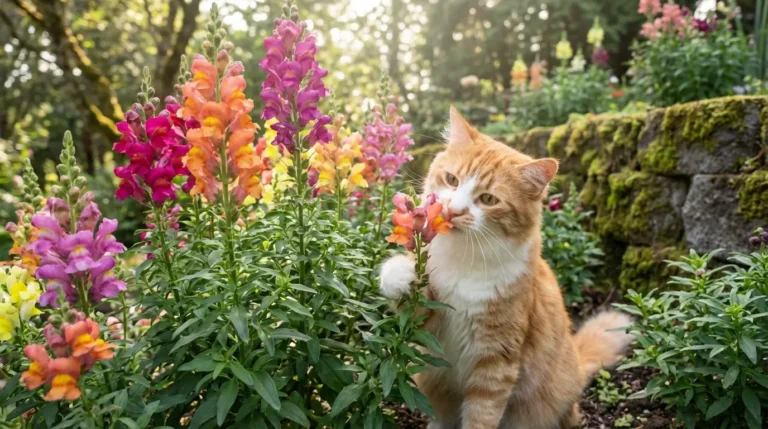
- Snapdragons (whimsical and safe)
- Orchids (elegant and non-toxic)
- Gerbera daisies (cheerful and cat-friendly)
- Asters (pretty fall option)
- Freesia (fragrant and safe)
- Lisianthus (rose-like ruffles, non-toxic)
- Wax flowers (nice filler, safe)
I love combining roses with sunflowers for a rustic look, or roses with orchids for something more upscale. Both combinations are stunning and won’t send you into a panic if your cat takes an exploratory bite.
What Flowers Are Poisonous to Cats?
Hard no—these are dangerous:
- All true lilies (Easter, Asiatic, tiger, daylilies, etc.)—kidney failure, often fatal
- Tulips (especially bulbs)—GI issues, cardiac problems
- Daffodils (bulbs most toxic)—severe vomiting, cardiac issues
- Azaleas and rhododendrons—cardiac and GI toxicity
- Sago palms (technically not a flower, but often in arrangements)—liver failure, very high mortality rate
Proceed with caution—mild to moderate toxicity:
- Carnations (GI upset)
- Chrysanthemums (vomiting, drooling)
- Gladiolus (GI issues)
- Hyacinth (GI upset, especially bulbs)
- Iris (GI upset)
When someone asks me, “Are carnations toxic to cats?” I explain they’re in the mild category—not as dangerous as lilies, but not something I want cats munching on either. A nibble probably won’t send you to the ER, but it might cause some vomiting.
Build a Cat-Safe Bouquet Checklist
Here’s exactly what to tell your florist or use when ordering online:
The Script: “I need a bouquet with absolutely no lilies—any type of lily at all. I have cats at home, so I need only cat-safe flowers. Roses are great, and I’d love [sunflowers/orchids/snapdragons] with them. Please confirm all flowers and greenery are non-toxic to cats before making the arrangement.”
Online ordering: Look for companies that specifically label cat-safe arrangements. Some flower delivery services now offer “pet-safe” filters. Use them.
DIY at the grocery store: This is actually my favorite option because you have complete control. Buy individual bunches of verified safe flowers and create your own arrangement. It’s cheaper and safer.
Checklist to keep in your phone:
- [ ] No lilies of any kind
- [ ] No tulips, daffodils, or azaleas
- [ ] Roses rinsed and de-thorned
- [ ] All filler flowers verified safe (check ASPCA app)
- [ ] Greenery identified (no eucalyptus, ivy, or ferns)
- [ ] Flower food discarded or used in moderation (cats can’t access vase water)
- [ ] Stable vase on high surface
- [ ] Dropped petals cleaned daily
Organic & Thornless Rose Options
If you’re serious about cat-safe rose buying, seek out:
Organic rose farms: Search “organic flower delivery near me” or check farmer’s markets. These roses cost more but haven’t been bathed in pesticides.
Thornless varieties for gardens:
- ‘Zephirine Drouhin’ (climbing rose, nearly thornless, fragrant)
- ‘Marie Pavie’ (shrub rose, minimal thorns)
- ‘Veilchenblau’ (rambling rose, few thorns)
What to ask at the flower shop: “Do you carry organic roses or roses grown without pesticides? I have cats and want to minimize chemical exposure.”
Most florists will be honest about whether their suppliers use organic methods. If they don’t know, that’s probably a sign to look elsewhere.
Prevention: Make Your Home Truly Cat-Proof
An ounce of prevention really is worth avoiding a 3 AM emergency vet visit.
Smart Vase Placement & Training
Height is your friend: Cats can jump about 5-6 times their height, so we’re talking 5+ feet minimum for most cats. Wall-mounted shelves, high mantels, tops of tall bookcases—think vertical.
Stability matters: Wide-based, heavy ceramic or glass vases are harder to knock over than tall, narrow ones. I’ve seen cats bat at flowers and send lightweight vases flying. Physics is not on your side with top-heavy arrangements.
Deterrents that actually work:
- Double-sided tape around the base of the vase (cats hate sticky paws)
- Motion-activated air sprayers (harmless puff of air when cat approaches)
- Aluminum foil around the surface (many cats dislike walking on it)
Training tips: Redirect obsessive flower interest to appropriate toys. When you catch your cat eyeing the bouquet, redirect to a feather wand or treat puzzle. Reward them for ignoring the flowers with high-value treats.
One of my clients trained her cat using clicker training—every time the cat walked past the flowers without sniffing, click and treat. Within two weeks, the cat actively avoided that table. Cats are smart when properly motivated.
Enrichment to Stop Plant Chewing
If your cat is chronically drawn to plants, they might be telling you something. Boredom and lack of appropriate outlets drive a lot of plant-chewing behavior.
Cat grass is magic: Grow wheatgrass, oat grass, or rye grass in pots specifically for your cat. Most cats who chew houseplants will happily switch to their own designated grass patch. Refresh weekly to keep it appealing.
Silvervine and cat nip plants: These safe-for-cats plants provide sensory enrichment without the risks. My cat Miso goes nuts for her silvervine stick—hasn’t looked at a houseplant since.
Puzzle feeders and interactive toys: A busy cat is less likely to snack on flowers out of boredom. Rotate toys weekly to keep things interesting.
Vertical space: Cat trees, wall shelves, and window perches give cats appropriate “high places” to explore instead of your flower arrangements.
Talk to Your Florist
Make this conversation automatic every time you order flowers. My go-to script:
“Hi! I’d love a beautiful arrangement, but I have cats at home. Can we stick to roses, sunflowers, orchids, and snapdragons? Absolutely no lilies—any type of lily at all—and I need to know what all the greenery is before we finalize. Can you help with that?”
A good florist will appreciate the specific guidance and work with you. If they push back or seem annoyed, find a different florist. Your cat’s safety isn’t negotiable.
Long-Term Garden Planning
For those of you with outdoor access and garden ambitions:
Create cat zones and plant zones: Use decorative fencing, raised beds, or hedges to physically separate cats from roses and other plants.
Plant decoy gardens: A patch of cat grass, catnip, and cat thyme in the sunny area where your cat likes to lounge gives them appropriate plants to interact with.
Choose cat-safe landscaping entirely: Roses plus sunflowers, snapdragons, and asters make gorgeous garden borders that won’t hurt your cat.
Skip the mulch chemicals: Many mulches and garden chemicals are toxic to cats. Stick to untreated wood mulch or straw.
Frequently Asked Questions
Can cats eat roses safely?
Rose petals and leaves are non-toxic to cats, so a few nibbles won’t poison them. However, cats shouldn’t regularly eat roses because they’re obligate carnivores and plant material can cause mild digestive upset. The bigger risks are thorns (which can injure mouths and paws) and chemicals like pesticides on the roses. If your cat ate rose petals, monitor for vomiting or diarrhea, but they’re unlikely to need emergency care from the rose itself.
Are carnations toxic to cats?
Carnations are mildly toxic to cats and can cause gastrointestinal upset—think vomiting, diarrhea, and drooling. They’re nowhere near as dangerous as lilies (which are deadly), but they’re not safe either. If your cat nibbled a carnation, watch for symptoms and call your vet if vomiting persists for more than a few hours. For bouquets, stick to verified cat-safe flowers like roses, sunflowers, and orchids instead.
What should I do if my cat drank rose vase water?
First, remove access to the vase immediately. Flower food packets contain biocides and preservatives that can cause stomach upset. Monitor your cat for 4-6 hours watching for vomiting, diarrhea, excessive drooling, or lethargy. If symptoms are mild (one episode of vomiting), continue monitoring at home. If vomiting is persistent (3+ times) or your cat seems lethargic, contact your vet. To prevent this, change vase water daily, dump old water down the toilet, and place vases where cats can’t reach them.
Are dried roses in potpourri safe for cats?
No, potpourri is generally not safe for cats even if it contains dried rose petals. The problem isn’t the roses—it’s everything else mixed in: essential oils (toxic to cats), synthetic fragrances (respiratory irritants), and other dried plants that may be toxic. Plus, dried plant material can cause intestinal blockages if eaten in quantity. I recommend skipping potpourri entirely in homes with cats and using cat-safe alternatives like fresh air or very light, natural scents in rooms cats don’t access.
Can cats be allergic to roses or rose pollen?
True allergies to roses in cats are extremely rare, but irritation from pollen or pesticide residue is possible. Signs of irritation include sneezing, watery eyes, or skin itching after contact with roses. If you notice these symptoms, remove the roses and monitor your cat. If symptoms persist or worsen, contact your vet—it might be the chemicals on the roses rather than the roses themselves. Washing roses thoroughly before bringing them inside can help reduce irritation from pesticides and dust.
Are rose thorns dangerous if my cat eats them?
Yes, thorns can cause serious injuries. If a cat chews and swallows rose stems with thorns, those sharp points can puncture the mouth, throat, stomach, or intestines. Signs of internal thorn injury include reluctance to eat, drooling, vomiting (especially if blood-tinged), visible pain when touched, or lethargy. This is a vet emergency. External thorn wounds in paws or around the mouth can become infected quickly. Always remove thorns from roses before bringing them into your home, and seek veterinary care if you suspect a thorn injury.
What’s the difference between true roses and Desert Rose for cats?
True roses (Rosa species) are non-toxic to cats. Desert Rose (Adenium obesum) is a completely different plant that’s highly toxic—it contains cardiac glycosides that can cause life-threatening heart rhythm problems, vomiting, diarrhea, and potentially death. Desert Rose is a succulent with a thick stem and doesn’t look like a traditional rose at all. If you’re shopping for houseplants, never bring Desert Rose, Christmas Rose, or Moss Rose into a home with cats. Stick to true Rosa species only, and when in doubt, check the scientific name.
Is it safe to keep a bouquet of roses in a home with cats?
Yes, with precautions. True roses are non-toxic to cats, so a bouquet is safe IF: (1) you remove all thorns first, (2) you rinse the roses to remove pesticide residue, (3) there are no lilies or other toxic flowers mixed in, (4) you place the vase on a high, stable surface cats can’t reach, (5) you prevent cats from accessing the vase water, and (6) you clean up dropped petals immediately. The key is treating this as a cat-proofing project, not just plopping flowers on the coffee table and hoping for the best.
Are artificial silk roses safe if my cat chews them?
Not really. While artificial roses aren’t toxic like certain plants, they present a foreign body obstruction risk. If your cat chews and swallows pieces of silk, plastic, or foam petals, those materials don’t digest and can cause intestinal blockages. I’ve surgically removed fake flower parts from cat intestines—it’s expensive ($2,000-$5,000) and stressful for everyone. If you prefer artificial flowers in a cat household, place them well out of reach or behind glass. Better yet, use cat-safe real plants or high-quality framed botanical prints instead.
What flowers can I mix with roses that are safe for cats?
Great cat-safe companions for roses include: sunflowers (cheerful and bold), orchids (elegant), snapdragons (whimsical), gerbera daisies (colorful), asters (pretty fillers), freesia (fragrant), lisianthus (rose-like texture), and wax flowers (delicate). Create beautiful mixed arrangements using any combination of these with roses. Just avoid lilies (deadly), tulips (toxic), daffodils (toxic), carnations (mild toxicity), chrysanthemums (toxic), or azaleas (toxic). When ordering, explicitly tell your florist “cat-safe flowers only, no lilies” to avoid dangerous mix-ins.
Key Takeaways: Rose Safety for Cat Parents
Let me distill everything we’ve covered into the essentials you need to remember:
The Rose Reality: True roses (Rosa species) are non-toxic to cats according to the ASPCA and veterinary toxicologists. Your cat can nibble petals without poisoning themselves. However, “non-toxic” doesn’t mean “completely safe”—thorns and chemicals remain real risks.
Hidden Dangers Matter More: The rose itself is rarely the problem. Focus on: removing thorns before bringing roses inside, washing stems thoroughly to remove pesticides, preventing access to vase water containing flower food, and most critically—checking every single plant in a mixed bouquet for toxic additions like lilies.
“Rose” Names Are Misleading: Not everything called a “rose” is safe. Desert Rose, Christmas Rose, Moss Rose, and Rose of Sharon are all toxic to cats despite their names. When in doubt, check the scientific name and verify safety through the ASPCA database.
Triage Saves Lives: If your cat ate roses, monitor for 4-6 hours watching for vomiting, diarrhea, or behavior changes. Mild symptoms usually resolve without treatment. Emergency signs—difficulty breathing, repeated vomiting, blood, lethargy, or any lily exposure—require immediate veterinary care. The ASPCA Poison Control hotline (888-426-4435) is available 24/7.
Prevention Is Practical: Strip thorns while wearing gloves, rinse roses under running water, place vases 5+ feet high on stable surfaces, specify “no lilies” when ordering flowers, and provide cat grass or catnip as acceptable plant alternatives. These simple steps prevent 95% of rose-related cat incidents.
Build Better Bouquets: Safe flower combinations exist that are both beautiful and cat-friendly. Mix roses with sunflowers, orchids, snapdragons, or gerbera daisies. Avoid lilies, tulips, daffodils, and carnations. Your florist can create stunning arrangements using only verified safe flowers—you just have to ask.
Your Next Steps: Creating a Cat-Safe Flower-Loving Home
You made it through—now here’s what to do with all this information.
Immediate action (if you have roses in your home right now):
- Walk over to any rose arrangements and photograph them from multiple angles
- Check every plant in the bouquet against the ASPCA toxic plant list
- Remove any lilies, tulips, or daffodils immediately—don’t try to salvage the arrangement
- Strip remaining thorns from rose stems using gloves
- Move the vase to a high, stable surface your cat can’t reach
- Dump and replace vase water to minimize chemical concentration
This week:
- Save the ASPCA Poison Control number in your phone: 888-426-4435
- Talk to anyone who might send you flowers and give them your “cat-safe flowers only” instructions
- Buy or grow cat grass as an appropriate plant alternative for your cat
- Create a designated “flower zone” in your home that’s physically separated from cat areas
Long-term strategy:
- Make cat-proofing part of your flower routine—it becomes second nature fast
- Build a list of local florists or online services that understand and accommodate pet-safe requests
- Consider growing your own organic roses if you’re a serious flower lover with garden space
- Stay informed about which plants are safe and which aren’t—the ASPCA updates their database regularly
Look, I’ve been both the vet treating rose-related emergencies and the panicked cat parent dealing with 2 AM flower fears. The difference between those two scenarios comes down to preparation and knowledge—both of which you now have.
Roses and cats can absolutely coexist safely. You just need to respect what roses bring with them—those thorns, those chemicals, those sneaky toxic bouquet companions—and plan accordingly. It’s not about giving up beautiful flowers or living in fear. It’s about being smart, being proactive, and knowing exactly what to do when (not if) your cat decides to investigate your bouquet.
Your cat doesn’t need to choose between you enjoying flowers and staying safe. With the right approach, everyone wins—you get your roses, your cat stays healthy, and nobody’s frantically Googling plant toxicity at 2 AM.
Now go enjoy those roses. Just maybe elevate that vase first.
Sources & Further Reading:
- ASPCA Animal Poison Control Center: Toxic and Non-Toxic Plant List for Cats
- PetMD: Are Roses Toxic to Cats?
- Catster: Vet-Verified Facts About Roses and Cats
- Veterinary Toxicology Research Database (2024-2026)
- can cats eat roses? Safety Facts You Should Know
- What Flowers Are Safe for Cats? Guide to Pet-Friendly Blooms
- Are Carnations Toxic to Cats? Dangerous Facts to Know
- Can Cats Eat Roses? Safety Facts You Should Know
- What Flowers Are Poisonous to Cats? Full Safety Guide
- Are Roses Safe for Cats? The Complete Truth About Roses and Cat Safety
Disclaimer: This article is for informational purposes only and is not a substitute for professional veterinary advice. If your cat shows signs of poisoning or illness, contact your veterinarian or emergency clinic immediately.