Kirkland Signature Super Premium Cat Food Review: The Costco Kibble Everyone’s Talking About
Standing in the Costco cat food aisle last March, I watched a woman load four 25-pound bags of Kirkland into her cart while another member photographed the ingredient label like she was documenting a crime scene. That’s Kirkland Signature cat food in a nutshell—half the people swear by it, the other half need convincing it won’t kill their cats.
I get it. My rescue tabby, Parker, had been eating $65 bags of boutique grain-inclusive kibble that he mostly ignored. My neighbor’s three cats demolished Kirkland and looked fantastic. So I did what any anxious cat parent does: I spent two weeks researching instead of just buying the bag.
Here’s everything I learned about Kirkland Signature Super Premium Cat Food—the purple bag that’s either your budget’s best friend or a compromise you’re not sure you should make.
This article includes affiliate links. You buy through these links and support this site at no extra cost to you.
What Is Kirkland Signature Super Premium Cat Food?

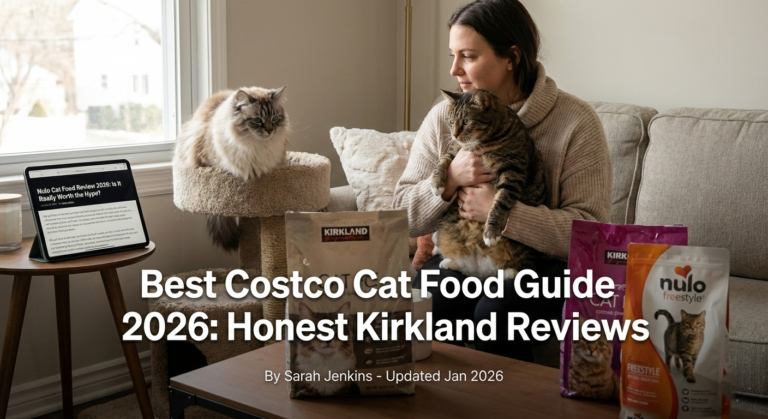
Kirkland Signature Super Premium is Costco’s flagship dry cat food, sold exclusively through Costco warehouses and their website. It’s positioned as a mid-tier formula—better than grocery store brands like Friskies, cheaper than premium options like Blue Buffalo or Wellness.
The purple 25-pound bags dominate the pet section in most Costco locations. You’ll also find it online in smaller 13-pound bags for about $20, though the per-pound cost jumps significantly.
Who makes it? Costco doesn’t advertise the manufacturer on the bag, but industry databases and facility codes confirm it’s Diamond Pet Foods, produced at their Lathrop, California plant. Diamond also manufactures Taste of the Wild, Natural Balance, and several other brands. They’re a major co-packer in the pet food industry—not bottom-tier, but not Mars Petcare or Purina either.
Ingredient Analysis: What’s Actually in the Bag
Let’s decode the label like we’re actual nutrition detectives instead of people who just want our cats to stop begging.
First Five Ingredients:
- Chicken
- Chicken meal
- Whole grain brown rice
- Cracked pearled barley
- Rice bran
The good: Chicken and chicken meal lead. Chicken meal is concentrated protein (chicken with water removed), so it packs more protein per pound than whole chicken. Real meat protein in the top two spots beats grocery brands where corn or by-product meal often leads.
The compromise: Three rice ingredients in the top five (brown rice, barley, rice bran). That’s a lot of grain doing heavy lifting for volume and carbs. Your cat’s ancestors didn’t evolve eating rice paddies. They need meat.
Full ingredient list includes:
- Chicken fat (preserved with mixed tocopherols—that’s vitamin E, good)
- Egg product (quality protein and binding agent)
- Flaxseed (omega-3s for coat health)
- Taurine (essential amino acid cats can’t make themselves—must be added)
- Vitamins and minerals
What’s missing: No corn, wheat, or soy. No artificial colors or flavors. No meat by-products (though by-products aren’t inherently bad—they’re just less appealing to humans).
Guaranteed Analysis and Nutritional Breakdown
Here’s where numbers matter more than marketing.
As-Fed Basis (what’s on the bag):
- Crude Protein: 32% minimum
- Crude Fat: 20% minimum
- Crude Fiber: 3% maximum
- Moisture: 10% maximum
Dry Matter Basis (what your cat actually digests after moisture is removed):
- Protein: ~36%
- Fat: ~22%
- Estimated Carbohydrates: ~35%
- Fiber: ~3%
Translation: Kirkland delivers decent protein—higher than most grocery brands (Friskies sits around 30% dry matter) but lower than premium grain-free options (Wellness CORE is 42-45%).
The problem child? Thirty-five percent carbohydrates. Cats are obligate carnivores. They need protein and fat for energy, not carbs. They can handle moderate carbs without immediate harm, but high-carb diets long-term can contribute to obesity, diabetes, and chronic inflammation in predisposed cats.
For context, many premium cat foods aim for 25-30% carbs. Kirkland’s 35% isn’t dangerous, but it’s not ideal either—especially for indoor cats who burn minimal calories.
Caloric density: Approximately 3,800 kcal/kg (or about 435 calories per cup).
Feeding Guidelines and Real Cost Breakdown
Costco’s feeding chart on the bag is generic and usually overestimates portions. Here’s what actually works.
For a 10-pound indoor cat:
- Daily calories needed: ~200-250 calories (depends on activity level)
- Kirkland amount: ~1/2 cup per day (split into two meals)
- 25-lb bag lasts: ~110 days (nearly 4 months)
- Cost: ~$28 at warehouse (January 2026 pricing)
- Cost per day: $1.68
- Cost per month: $50.40
For a 12-pound active cat:
- Daily calories: ~260-300 calories
- Amount: ~2/3 cup daily
- Bag lasts: ~83 days (under 3 months)
- Cost per day: $2.26
- Cost per month: $67.80
Compare that to Blue Buffalo Indoor at $2.90/day or even mid-tier Purina Pro Plan at $2.20/day, and Kirkland wins your wallet.
The hidden cost: If your cat develops weight gain, soft stools, or constant hunger on Kirkland, you’ll spend those savings on vet visits, supplements, and eventually switching foods anyway.
Recall History: The 2012 Incident Everyone Mentions
Let’s address the elephant in the Costco aisle.
Yes, Kirkland cat food was recalled—in 2012. Diamond Pet Foods issued a voluntary recall across multiple brands (including Kirkland, Taste of the Wild, Natural Balance) due to potential salmonella contamination at their South Carolina facility.
Important context:
- The recall affected the South Carolina plant, which no longer produces Kirkland. Current production happens in California and Missouri.
- No cats reportedly got sick from Kirkland specifically during that incident.
- Since 2012—14 years—Kirkland has had zero recalls.
Diamond overhauled their safety protocols after 2012. Their facilities are FDA-inspected and follow standard safety regulations. Perfect? No manufacturing operation is. But their track record since 2012 is clean.
For perspective, some boutique brands have had 3-4 recalls in the same timeframe. Kirkland’s history doesn’t particularly worry me compared to the industry average.
Pros: Why Thousands of Cat Parents Choose Kirkland
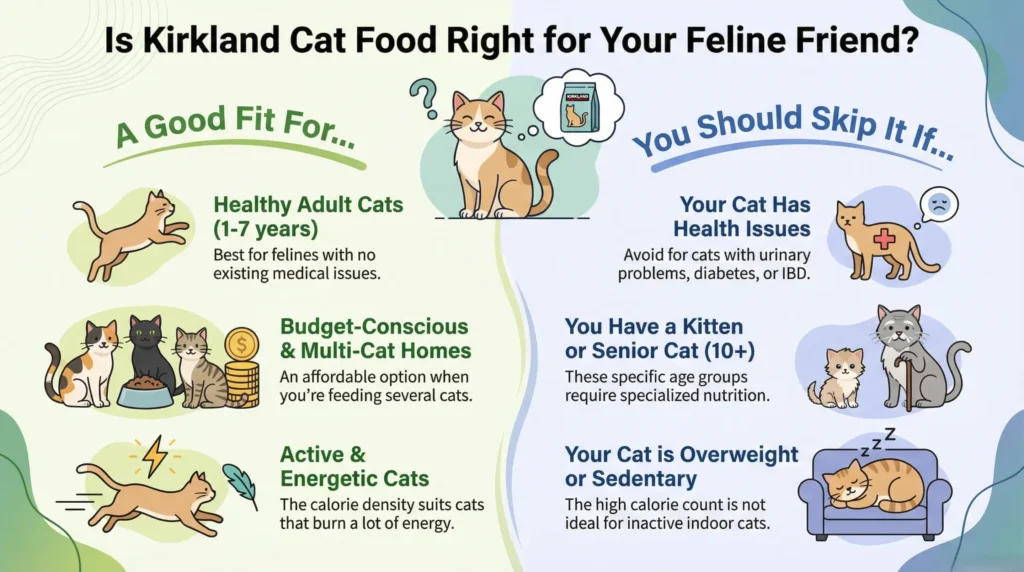
Outstanding value for the nutrition delivered. You’re getting real chicken meal, decent protein levels, and AAFCO-approved complete nutrition for $1.68/day. That’s $600/year less than many premium brands.
Cats actually eat it. Check Chewy reviews (4.4/5 stars from 2,100+ buyers) and Reddit threads—most cats transition fine and enjoy the taste. Parker inhaled it immediately, which shocked me given his picky history.
Clean ingredient list for the price point. No corn, wheat, soy, or artificial junk. You’re getting recognizable ingredients, not a chemistry experiment.
Manufactured in the USA by an established co-packer with inspected facilities. You’re not gambling on mystery overseas production.
Great for multi-cat households. Feeding three cats premium food costs $200+/month. Kirkland brings that down to $150 while still providing better nutrition than grocery brands.
Consistent availability. Unlike boutique brands that go out of stock constantly, Kirkland is at every Costco, every month. No hunting down your cat’s food at 11pm.
Cons: Where Kirkland Falls Short
Higher carbohydrate content than ideal. That 35% carb estimate concerns me for indoor cats, seniors prone to diabetes, or overweight cats. It’s not dangerous, but it’s not optimized either.
Heavy reliance on grain fillers. Three rice ingredients in the top five means volume and calories are coming from cheap grains, not premium protein sources.
No published feeding trials. Kirkland meets AAFCO formulation standards (nutrients on paper), but there’s no evidence of controlled feeding trials proving cats thrived on it long-term. Brands like Purina and Hill’s conduct extensive live-cat testing. Kirkland? We’re trusting the math.
Lack of ingredient sourcing transparency. Where’s the chicken from? What about quality control for individual batches? Diamond doesn’t publish this info, and Costco won’t tell you.
The 25-pound commitment. If your cat rejects it after week two, you’re stuck with 23 pounds of expensive paperweight. Some cats refuse it outright—Parker’s friend next door won’t touch it.
Not suitable for cats with health issues. No urinary support, weight management is questionable with those carbs, and there’s no sensitive stomach formula. Healthy adult cats only.
Minimal omega-3 sources. Flaxseed provides some, but it’s plant-based omega-3 (ALA), which cats convert poorly. Fish oil would be better for coat and joint health.
Who Should Buy Kirkland Signature Cat Food
My Honest Verdict After 6 Months
Parker’s been eating Kirkland Super Premium since March. His coat is glossy, his weight is stable at 11 pounds, his energy is good, and his stools are consistent. I haven’t seen any red flags that would make me switch.
But—and this matters—I don’t feed it exclusively. I do 2/3 cup Kirkland daily plus a 3-ounce can of quality wet food (Weruva or Tiki Cat) four times a week. That balances the dry food’s carb content with extra protein, moisture, and variety.
Would I feed Kirkland alone long-term? Probably not. The carbs worry me enough that I want wet food offsetting them. But as part of a mixed diet? Absolutely. It’s solid value that lets me afford better wet food instead of blowing the entire budget on premium dry kibble.
Is it the best cat food available? No. Brands like Wellness, Orijen, or even Purina Pro Plan edge it out nutritionally.
Is it good enough for most healthy cats? Yes. And “good enough” plus $600 in annual savings is a legitimate win if your cat tolerates it well.
Final Recommendation
Buy the 13-pound bag online first ($20) or split a 25-pound warehouse bag with a friend. Test it for four weeks. Watch your cat’s weight, stools, coat, and energy.
If they thrive? You just found your budget’s new best friend. Bank those savings or redirect them to better wet food, annual vet visits, or the emergency fund every cat parent needs.
If they struggle? At least you know. Upgrade to Purina Pro Plan or Wellness and don’t look back.
Kirkland Signature Super Premium isn’t perfect. But for healthy adult cats in households that need to stretch a dollar without sacrificing basic quality? It’s legitimately worth considering.
Parker’s bowl is empty again. That’s my cue.
Rating: 4.0/5 stars — Excellent value for healthy adult cats, with the understanding that it’s a good compromise, not a premium solution.