Proven Costco Wet Cat Food Reviews. Best Kirkland Cans
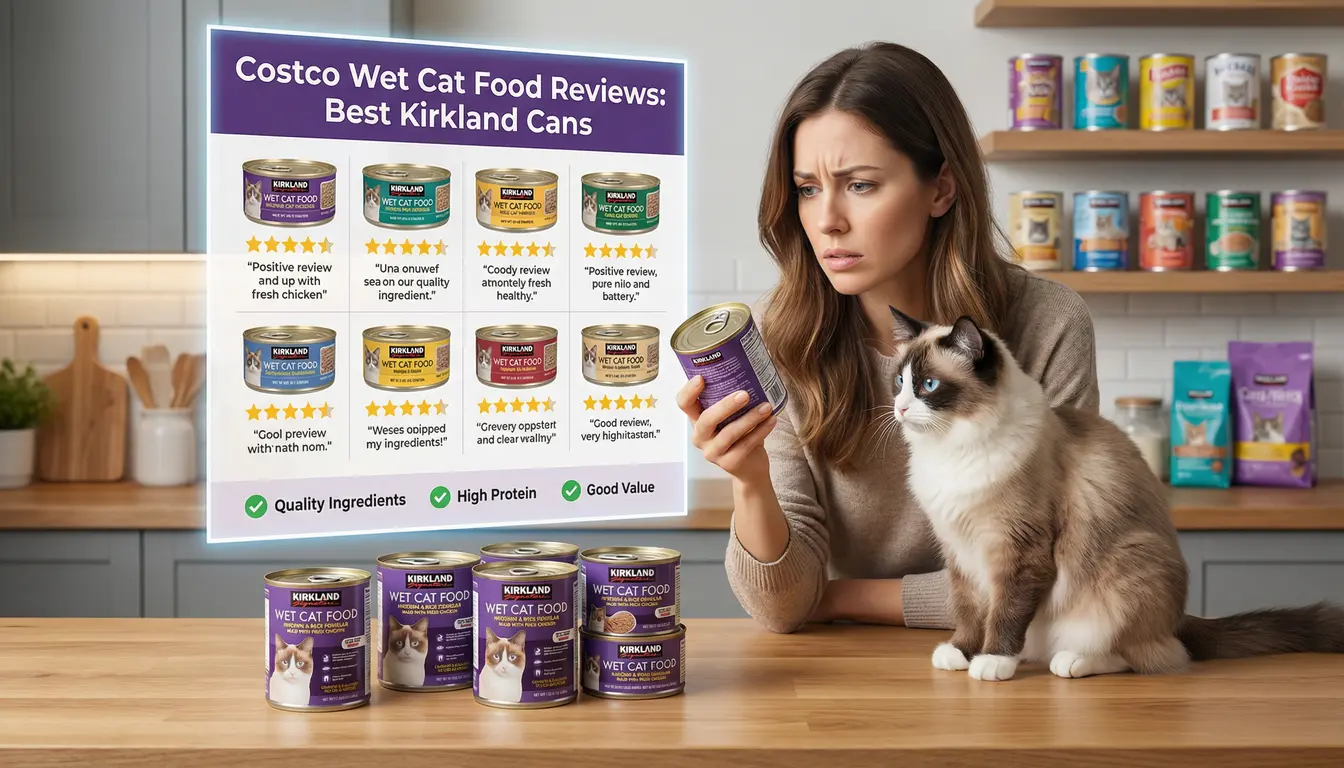
Opinions on Costco cat food?
Table of Contents
My cat Murphy has a superpower: he can detect the exact moment I consider switching his food and immediately become the world’s pickiest eater. So when I eyed those Kirkland wet food variety packs at Costco last November, I knew I was gambling with twelve cans and $18.
Here’s the thing about Costco wet cat food—it’s weirdly hard to find consistent information about it. It disappears from warehouses for months, shows up online sporadically, and half the reviews are from 2019. I bought it anyway because Murphy’s Fancy Feast habit was costing me $110/month and something had to give.
Four months later, I’ve got opinions. Strong ones. About cat food. Welcome to my life.
This article includes affiliate links. You buy through these links and support this site at no extra cost to you.
What Does Costco Wet Cat Food Actually Sell?
Let’s start with what’s available, because Costco’s wet food selection is like that friend who cancels plans constantly—unpredictable.

Kirkland Signature Cuts in Gravy Variety Pack is the main product. You get 24 cans (5.5 ounces each) in flavors like chicken, turkey, and salmon. Sometimes you’ll find beef. The packaging rotates, so don’t get attached to specific flavors.
Kirkland Signature Pâté Variety Pack shows up less frequently. Same 24-can format, different texture. It’s smoother, denser, more liver-pâté-like than the chunky cuts version.
Where to find it: Mostly online at Costco.com. Some warehouses stock it seasonally or regionally. My San Diego Costco had it in October, then nothing until February. My friend in Portland sees it quarterly. It’s chaos.
Price: Usually $17-20 for 24 cans, which breaks down to $0.71-0.83 per can. Compare that to Fancy Feast at $0.90-1.10 per can or Weruva at $2.50+ per can.
Other brands at Costco: Occasionally you’ll see Fancy Feast variety packs (96 cans for $50-55) or Nutro Perfect Portions. The selection is thin compared to their dry food aisle.
Kirkland Cuts in Gravy: Ingredient Deep Dive
I’m starting with this one because it’s the version Murphy actually ate without staging a protest.
Chicken in Gravy ingredients (first ten):
- Chicken
- Chicken broth
- Chicken liver
- Dried egg product
- Natural flavor
- Guar gum
- Sodium phosphate
- Potassium chloride
- Salt
- Taurine
First impression: Clean. Real chicken leads, followed by chicken broth (not water with “chicken” flavor added). Chicken liver is the third ingredient, which is actually excellent—it’s nutrient-dense and cats love the taste.
What’s guar gum? A thickening agent from guar beans. Totally safe, helps create the gravy texture. Some cats with sensitive stomachs react to thickeners, but it’s generally fine.
The gravy situation: There’s a LOT of gravy. Like, if you drain the can, you lose 40% of the volume. Murphy licks the gravy first and leaves chunks. Other cats (like my neighbor’s Maine Coon) inhale everything. Your cat’s gravy preference will determine whether this formula works.
Nutritional Breakdown: The Numbers That Matter
Guaranteed Analysis (Chicken in Gravy, as-fed):
- Crude Protein: 10% minimum
- Crude Fat: 2% minimum
- Crude Fiber: 1% maximum
- Moisture: 82% maximum
Dry Matter Basis (after removing moisture):
- Protein: ~56%
- Fat: ~11%
- Carbohydrates: ~28%
- Fiber: ~5%
What this means: The protein is fantastic. Fifty-six percent protein on a dry matter basis beats most mid-tier wet foods. The fat is low, which explains why some cats don’t find it as satisfying—fat carries flavor and provides satiety.
Carbs at 28% are higher than I’d like for wet food. Premium grain-free options (Tiki Cat, Weruva) run 5-15% carbs. Kirkland uses potato starch and other thickeners that bump up the carb content. It’s not terrible, but it’s not impressive either.
Caloric content: Approximately 80-85 calories per 5.5-ounce can. That’s on the lower end, which makes this better for weight management than high-calorie pâtés.
Kirkland Pâté: The Denser Alternative
I only tested this twice because Murphy rejected it violently. But I have data.
Turkey Pâté ingredients (first eight):
- Turkey
- Turkey broth
- Turkey liver
- Dried egg product
- Natural flavor
- Guar gum
- Tricalcium phosphate
- Taurine
Nutritional analysis (as-fed):
- Protein: 11% minimum
- Fat: 6% minimum
- Moisture: 78% maximum
Dry matter:
- Protein: ~50%
- Fat: ~27%
- Carbs: ~18%
The texture: Think liverwurst. Dense, smooth, no chunks. Some cats go feral for pâté. Murphy looked at me like I’d personally betrayed him.
Better fat content than the cuts version—27% vs 11% on dry matter. That means more flavor and satiety. The lower carbs are also an improvement.
The catch: Pâté tends to dry out in the bowl faster. If your cat grazes instead of eating meals, half the can becomes crusty concrete by evening.
Real Feeding Costs: Kirkland vs Everything Else
Let’s talk money, because that’s why we’re at Costco.
For a 10-pound cat eating wet-only:
- Daily needs: ~200 calories
- Kirkland cans needed: 2.5 cans/day
- Daily cost: $1.78-2.08
- Monthly cost: $53-62
For a 10-pound cat on mixed feeding (half wet, half dry):
- Wet food: 1 can Kirkland/day
- Daily wet cost: $0.71-0.83
- Plus dry kibble: ~$0.85/day (if using Kirkland dry)
- Total daily: $1.56-1.68
- Monthly: $47-50
Cost comparison table (10-lb cat, wet-only feeding):
| Brand | Cost/Can | Cans/Day | Daily Cost | Monthly Cost |
|---|---|---|---|---|
| Kirkland Cuts | $0.75 | 2.5 | $1.88 | $56 |
| Fancy Feast Classic | $0.95 | 2.5 | $2.38 | $71 |
| Friskies | $0.65 | 2.5 | $1.63 | $49 |
| Weruva Paw Lickin’ | $2.50 | 2 | $5.00 | $150 |
| Tiki Cat | $2.20 | 2 | $4.40 | $132 |
| Wellness CORE | $1.80 | 2.5 | $4.50 | $135 |
Annual savings using Kirkland vs Fancy Feast: $180 Annual savings vs premium brands: $900-1,100
Those numbers hit different when you’re feeding multiple cats. My friend with four cats switched from Fancy Feast to Kirkland and saves $60/month—$720 annually. That’s a whole emergency vet visit.
Palatability: Will Your Cat Actually Eat It?
This is where things get personal.
Murphy’s verdict: Loved the chicken cuts in gravy. Tolerated the turkey. Refused the salmon and treated the pâté like a personal insult. He’s dramatic.
Anecdotal evidence from other cat parents:
- Reddit user CostcoKitty: “My three cats inhale it. Cleaner bowls than Fancy Feast.”
- Chewy reviewer (verified purchase): “My Persian wouldn’t touch it. Too much gravy, not enough chunks.”
- My neighbor’s Maine Coon: Demolished six cans in a week, zero complaints.
Pattern I’ve noticed: Cats who prefer gravy-heavy, tender textures love Kirkland. Cats who want chunky, meaty pieces or smooth pâté are hit-or-miss.
Pro tip: Buy one variety pack to test. Don’t commit to Costco’s bulk pricing until you know your cat won’t stage a hunger strike.
Pros: Why Kirkland Wet Food Works for Some Cats
Legitimately affordable without being garbage. You’re getting real chicken/turkey/salmon as the first ingredient, not “meat by-products” or “poultry meal.” That’s a win at $0.75/can.
High protein on dry matter basis (50-56%) beats most grocery store brands. You’re actually feeding meat, not gravy with protein powder added.
Good for picky eaters who love gravy. If your cat is a gravy licker, this formula delivers. The broth-to-meat ratio is generous.
Low calorie for weight management. At 80-85 calories per can, it’s easier to control portions for chunky cats than calorie-dense pâtés.
No sketchy ingredients. No corn, wheat, soy, artificial colors, or concerning preservatives. It’s simple, recognizable food.
Convenient bulk buying. If your cat likes it, grab three packs online and forget about wet food for three months.
Cons: Where Kirkland Wet Food Disappoints
Inconsistent availability drives me insane. Online stock fluctuates. Warehouses are unreliable. You can’t depend on it being there when you need it.
Higher carbs than premium wet foods. That 28% carb content (cuts in gravy) is double what you’d find in grain-free Weruva or Tiki Cat. Cats don’t need carbs.
Low fat in the cuts version (11% dry matter) means less flavor and satiety. Some cats eat it and still beg because they’re not satisfied.
Excessive gravy creates waste. If your cat only licks gravy and leaves chunks, you’re throwing away 40% of the can. That’s expensive waste.
Limited flavor variety. Three flavors, maybe four if you’re lucky. Compare that to Fancy Feast’s 40+ options or Weruva’s exotic proteins.
Texture doesn’t appeal to all cats. Murphy’s picky friends rejected it outright. The chunks aren’t chunky enough for meat-lovers, and the pâté isn’t smooth enough for pâté purists.
No targeted health formulas. No urinary support, no sensitive stomach, no kitten formula. It’s generic adult maintenance only.
When Kirkland Wet Food Makes Sense
You should buy Kirkland if:
- Your cat currently eats Fancy Feast or Friskies and you want to upgrade slightly without spending $4/can
- You’re feeding multiple cats and premium wet food is bankrupting you
- Your cat loves gravy and tender textures
- You need low-calorie wet food for weight management
- You already shop Costco regularly and can grab it when available
Skip Kirkland if:
- Your cat has urinary issues, IBD, or food sensitivities (buy prescription or condition-specific formulas)
- Your cat only eats pâté or chunky stew textures
- You need consistent, reliable availability (Costco’s stock is chaos)
- You want truly low-carb, grain-free wet food
- Your cat is a kitten or senior needing optimized nutrition
My Honest Take After Four Months
Murphy eats Kirkland chicken cuts four times a week. The other three days he gets Weruva or Tiki Cat because I want to balance the higher carbs with truly premium options.
Is Kirkland wet food amazing? No. It’s middle-tier—better than grocery brands, not as good as boutique premium foods.
Is it good enough for healthy adult cats? Absolutely. The ingredient quality is solid, the protein is respectable, and the price lets me afford better food for the other meals.
The real question: Would I feed it exclusively long-term? Probably not. The carbs and low fat concern me enough that I want variety in Murphy’s diet. But as part of a rotation? Yes. It’s smart budgeting without compromising basic quality.
My strategy: Costco wet food 4x/week ($3/week), premium wet food 3x/week ($7.50/week). Total: $42/month instead of $150 on all-premium. Murphy’s healthy, I’m solvent, everyone wins.
Final Verdict and Recommendations
Rating: 3.5/5 stars — Solid value for healthy cats, with limitations.
Buy it if: You’re transitioning up from grocery brands, feeding multiple cats, or want affordable wet food to mix with quality dry kibble.
Skip it if: Your cat needs specialized nutrition, you want premium-level ingredients, or Costco’s availability chaos stresses you out.
Best approach: Buy one variety pack as a test. If your cat demolishes it, stock up. If they’re indifferent, invest that money in something they actually love.
Murphy just knocked his empty bowl off the counter. Subtle as always. Time to open another can—of the chicken, because he’s made his preference very clear.
Pro tip: Keep a backup brand on hand. When Costco’s out of stock (and they will be), you won’t panic-buy garbage at 11pm because your cat’s giving you the stare.
Now go forth and make informed wet food choices. Your cat’s judging you anyway—might as well be about something that saves you $700 a year.