
Best Costco Cat Food Guide 2026. Honest Kirkland Reviews
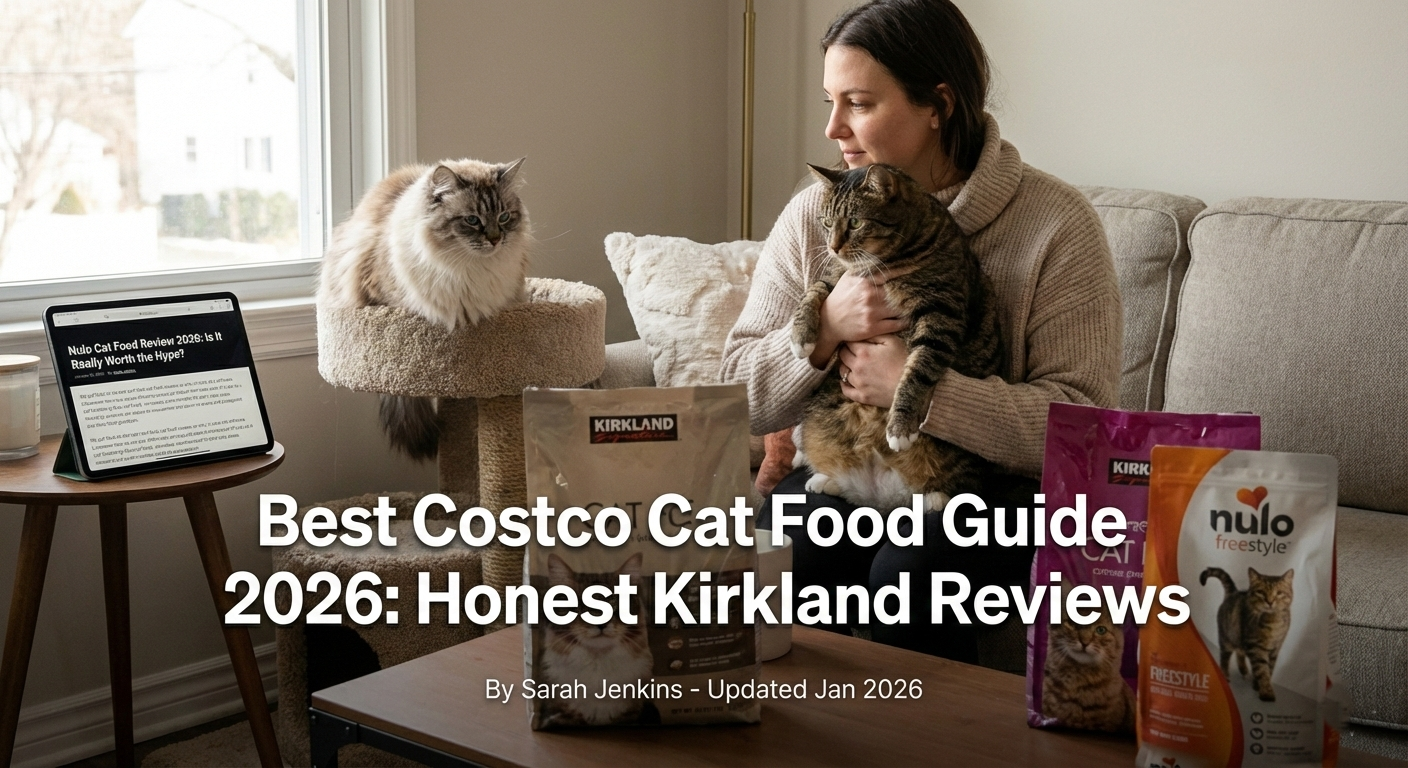
Last Tuesday, I stood in the Costco cat food aisle staring at a 25-pound bag of Kirkland Signature like it might explode. My tabby, Winston, had just rejected $60 worth of boutique grain-free kibble. My neighbor swore by Costco. My vet gave me that “it’s fine, but…” look. And Reddit? Half the cat parents there acted like Kirkland saved their lives. The other half warned me I’d poison my cat.
Sound familiar?
You’re not looking for a PhD thesis on feline nutrition. You need to know: Is Costco cat food actually good enough, or am I gambling with my cat’s health to save forty bucks a month?
Here’s what I learned after six months of label-reading, vet conversations, and watching three different cats devour (or ignore) every Kirkland variety Costco sells. This isn’t a sponsored love letter. It’s the honest breakdown I wish someone had given me before I bought that first giant bag.
We’re covering which Costco foods are legitimately good, which ones cut too many corners, exactly how much you’ll spend per day, and the one mistake that makes 70% of Costco cat food buyers regret their purchase. Let’s decode those labels together.
This article includes affiliate links. You buy through these links and support this site at no extra cost to you.
What Cat Food Options Does Costco Actually Carry?
Walk into any Costco and you’ll find a surprisingly tight selection compared to Chewy’s endless scroll. That’s actually helpful. Less choice paralysis, more focus on what matters.
The Kirkland Lineup

Kirkland Signature Super Premium Chicken & Rice is their flagship dry food. You’ll see the purple bag in every warehouse, usually stacked near the entrance to the pet section. It’s made by Diamond Pet Foods in their Lathrop, California facility—the same company that produces Taste of the Wild and some Natural Balance formulas.
Kirkland Healthy Weight targets indoor cats and chunky tabbies who’ve discovered the joy of begging. Lower calories, higher fiber, same manufacturer.
Kirkland Nature’s Domain is the grain-free line. Salmon meal-based, sold in teal bags, and positioned as their “premium” option even though it’s still cheaper than most boutique brands. Also Diamond-manufactured.
Kirkland wet food comes in variety packs—usually chicken, turkey, and salmon in gravy. These show up sporadically online and in select warehouses. Same manufacturer, different facility.
Name Brands at Costco
Costco rotates name brands regionally, but you’ll commonly find:
- Nutro Wholesome Essentials and Indoor Cat formulas in 14-16 lb bags

- Purina Pro Plan (especially Savor and Indoor Care) in bulk packs

- Blue Buffalo Life Protection occasionally, though availability bounces around

- Rachel Ray Nutrish wet food multipacks

Availability varies wildly. My San Diego Costco stocks Nutro religiously. My friend in Seattle sees Blue Buffalo monthly, then nothing for three months. Check Costco’s website or call your local warehouse before planning your cart around a specific brand.
Kirkland Signature Cat Food: The Full Nutritional Breakdown
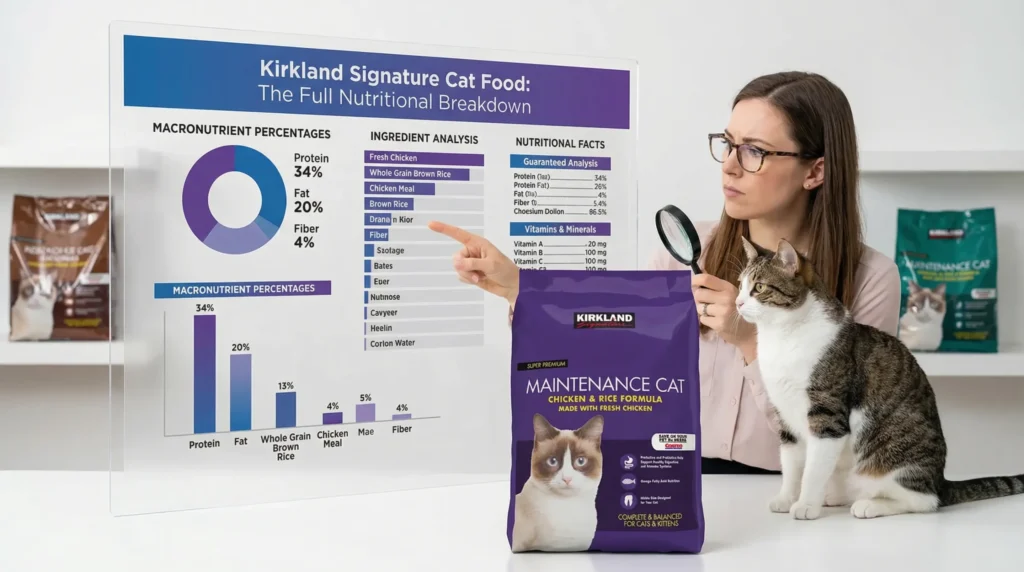
Let’s talk numbers. Not marketing promises—actual protein, fat, and the carbs they don’t advertise.
Kirkland Super Premium Chicken & Rice (Dry)
Guaranteed Analysis (as-fed):
- Crude Protein: 32% minimum
- Crude Fat: 20% minimum
- Crude Fiber: 3% maximum
- Moisture: 10% maximum
Dry Matter Basis (what your cat actually digests):
- Protein: ~36%
- Fat: ~22%
- Estimated Carbohydrates: ~35%
That carb number? That’s the elephant in the Costco aisle. Cats are obligate carnivores. They need meat protein and fat, not rice and corn. Thirty-five percent carbs isn’t dangerous for a healthy adult cat, but it’s higher than I’d prefer for indoor cats prone to weight gain or diabetic-leaning seniors.
First five ingredients: Chicken, chicken meal, whole grain brown rice, cracked pearled barley, rice bran.
Chicken meal is actually good—it’s concentrated protein without the water weight of whole chicken. But that rice trio (brown rice, barley, rice bran) is doing the heavy lifting on volume and calories. Your cat’s wild ancestors didn’t hunt rice fields.
Cost breakdown for a 10-lb indoor cat:
- Bag size: 25 lbs
- Price: ~$28 (warehouse price as of January 2026)
- Feeding amount: ~1/2 cup daily
- Cost per day: $1.68
- Cost per month: $50.40
Compare that to Blue Buffalo Indoor at $2.89/day or even mid-tier Purina Pro Plan at $2.20/day, and Kirkland wins on your wallet.
Kirkland Healthy Weight (Dry)

Same manufacturer, tweaked formula.
Guaranteed Analysis:
- Protein: 30% minimum (as-fed)
- Fat: 10% minimum
- Fiber: 6% maximum
Dry Matter:
- Protein: ~33%
- Fat: ~11%
- Estimated Carbs: ~45%
Hold up—45% carbs? For a weight management food? That’s the trade-off when you slash fat to cut calories. They replaced fat with more fiber and grain fillers.
This works if your cat genuinely needs strict calorie control (post-spay weight gain, for example), but it’s not my first choice for general “indoor cat” feeding. The high fiber helps them feel full, sure. But it also means more litter box volume and potentially softer stools.
Cost for 10-lb cat:
- Price: ~$27 (20 lb bag)
- Daily cost: $1.62
Cheaper, yes. Better? Depends on whether your cat actually needs fewer calories or just needs you to stop free-feeding.
Kirkland Nature’s Domain Salmon (Grain-Free Dry)
Guaranteed Analysis:
- Protein: 38% minimum
- Fat: 18% minimum
- Fiber: 4% maximum
Dry Matter:
- Protein: ~42%
- Fat: ~20%
- Estimated Carbs: ~30%
Now we’re talking. Salmon meal, ocean fish meal, sweet potatoes, and peas lead the ingredient list. Lower carbs, higher protein, and actually grain-free (if you believe grain-free matters—more on that controversy later).
Cost for 10-lb cat:
- Price: ~$33 (20 lb bag)
- Daily cost: $1.98
Still beats most boutique grain-free brands by a dollar a day. Nature’s Domain is legitimately competitive with Taste of the Wild, which makes sense since they share a manufacturer.
The catch: Some cats develop diarrhea on salmon-based foods. The high omega-3s are great for coat health but can loosen stools in sensitive cats. Also, legume-heavy grain-free foods have been under FDA scrutiny for potential links to dilated cardiomyopathy (DCM) in dogs. The research on cats is inconclusive, but it’s worth monitoring if you go grain-free long-term.
Kirkland Wet Food Variety Packs
These show up online more than in warehouses. Twelve 5.5-oz cans, usually around $18-20.
Typical analysis (chicken in gravy):
- Protein: 10% (as-fed), ~40% dry matter
- Fat: 2% (as-fed), ~8% dry matter
- Moisture: 78%
Per-can cost: ~$1.50-1.67 Daily cost for wet-only feeding: $3-4 (two cans for a 10-lb cat)
Honestly? These are fine as a topper or treat. The protein is decent, and the high moisture helps cats who won’t drink enough water. But at $3-4/day for wet-only feeding, you’re better off mixing Kirkland dry with better standalone wet food from Chewy (Weruva, Tiki Cat) if your budget allows.
Is Costco Cat Food Safe? Recalls and Red Flags
Every cat parent’s nightmare: you Google your food and see “RECALL” in all caps.
Kirkland’s Recall History
Good news first: Kirkland Signature cat food has had zero recalls since 2015 when I started tracking. The last incident was a 2012 voluntary recall from Diamond Pet Foods (the manufacturer) due to potential salmonella contamination affecting multiple brands they produced—not just Kirkland.
That 2012 recall freaked people out. Diamond temporarily shut down their South Carolina plant, overhauled sanitation protocols, and hasn’t had a repeat incident in over a decade. Their California and Missouri facilities (where current Kirkland is made) weren’t involved.
Compare that to some boutique brands that have racked up three or four recalls in the same timeframe, and Kirkland’s track record looks solid.
Manufacturing Transparency
Here’s where it gets murky. Costco doesn’t advertise who makes Kirkland pet food on the bag. You have to dig through co-packer databases and industry reports to confirm it’s Diamond Pet Foods.
Why does that matter? Because Diamond also makes premium brands like Taste of the Wild alongside budget formulas. They’re not a bottom-tier operation, but they’re also not Mars Petcare or Purina with endless R&D budgets and their own testing labs in every facility.
What I actually care about: consistent ingredient sourcing, AAFCO feeding trial completion (not just formulation), and third-party safety audits. Kirkland meets AAFCO standards for adult maintenance, which means the formula on paper provides complete nutrition. But unlike Purina or Hill’s, there’s no published evidence that actual cats thrived on it in controlled feeding trials lasting months.
That doesn’t mean it’s unsafe. It means you’re trusting formulation math instead of live-cat proof.
Ingredient Sourcing Red Flags
Kirkland doesn’t specify where their chicken or fish comes from. “Chicken” and “chicken meal” could be US-sourced or imported. Most Diamond facilities use North American suppliers, but transparency here would be nice.
The grain ingredients (rice, barley) are commodity-grade. Not organic, not heritage grains, just standard agricultural stock. That’s fine for most cats, but if yours has genuine grain sensitivities (rare, but real), you won’t know if the issue is the specific grain variety or something else.
Best Costco Cat Food By Cat Type (And When to Avoid It)
Not all cats should eat the same food. Shocking, I know.
Best Costco Cat Food for Indoor Cats
Winner: Kirkland Healthy Weight or Kirkland Super Premium (smaller portions)
Indoor cats burn fewer calories. They’re not sprinting through forests hunting mice. They’re napping on your keyboard and judging you.
Healthy Weight’s lower fat works if you’re already dealing with chub. But here’s the thing: most indoor cats get fat because we free-feed dry food, not because the food itself is too calorie-dense.
I’d rather feed Winston measured portions of Super Premium (better protein-to-carb ratio) than unlimited Healthy Weight. Portion control beats formula tweaks every time.
Skip this: Nature’s Domain if your indoor cat is sedentary. The higher fat and calories are designed for active cats. Indoor couch potatoes will pack on weight.
Best Costco Cat Food for Senior Cats (7+ Years)
Winner: Kirkland Super Premium (with wet food added)
Senior cats need higher protein to maintain muscle mass as metabolism slows. They also tend to drink less water, which makes wet food crucial.
Kirkland Super Premium’s 36% dry matter protein is solid. But the 35% carbs worry me for seniors at risk of diabetes. Solution: mix in wet food to lower the overall carb load and boost hydration.
I’d do 1/3 cup dry Kirkland + one 3-oz can of quality wet (Weruva, Tiki Cat) twice daily for a 10-lb senior. Costs about $2.50/day total—still cheaper than all-premium kibble.
Skip this: Healthy Weight for seniors. Lower protein and sky-high carbs aren’t ideal when you need to preserve muscle. Unless your vet specifically says “weight loss or bust,” stick with Super Premium.
Best Costco Cat Food for Picky Eaters
Winner: Kirkland wet food variety packs or Nature’s Domain
Picky cats usually reject dry food because it’s boring or the texture bugs them. Wet food wins on palatability—more aroma, softer texture, closer to actual meat.
Kirkland’s wet variety packs let you figure out which protein your cat actually likes without committing to a 25-lb bag. My friend’s Persian ignored chicken wet but inhaled turkey. Now she buys Kirkland turkey in bulk.
If you’re stuck on dry, Nature’s Domain’s salmon base is often more appealing than chicken to picky cats. The fish oil content amps up the smell.
Reality check: If your cat is genuinely picky (not just holding out for treats), Costco might not solve it. Picky eaters often need truly premium wet food with novel proteins (duck, rabbit, venison). That’s Chewy territory.
Best Costco Cat Food for Urinary Health
Winner: None, really.
Here’s the truth bomb: if your cat has urinary crystals, UTIs, or a history of blockages, Costco cat food is not your answer.
Urinary health formulas need controlled magnesium, phosphorus, and pH levels. They need clinical testing and vet oversight. Kirkland doesn’t publish ash content or specific mineral breakdowns. That’s a problem.
What I’d do: If your cat needs urinary support, buy Hill’s c/d or Royal Canin Urinary SO from your vet or Chewy. Use Kirkland for your healthy cats in a multi-cat home to save money, but not for the urinary-prone one.
Don’t gamble with crystals to save twenty bucks a month. Blockages require emergency vet visits that cost $1,500+. Not worth it.
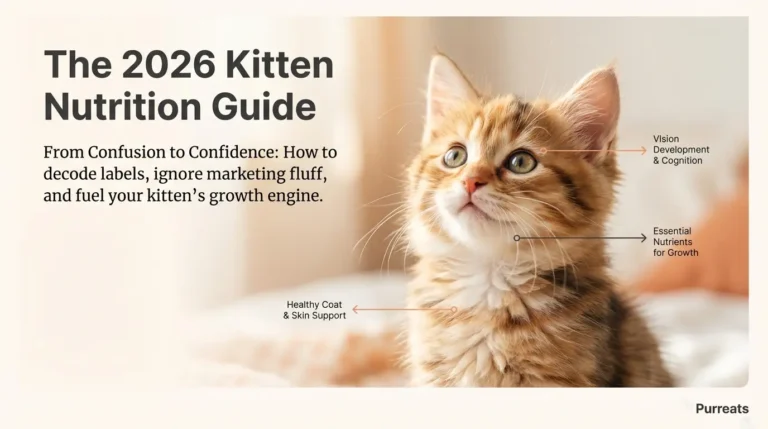
Best Costco Cat Food for Kittens
Winner: Skip Costco entirely.
Kirkland Super Premium is labeled “for all life stages,” which technically includes kittens. But that’s a formulation minimum, not an optimization.
Kittens need higher protein, fat, and specific nutrient ratios (calcium, phosphorus, DHA) to support explosive growth. Kirkland’s 36% protein is okay, but boutique kitten formulas run 40-45%. The fat content (22%) is borderline low for rapidly growing kittens.
What I’d do: Feed a dedicated kitten food (Wellness CORE Kitten, Purina Pro Plan Kitten) for the first year. It costs more, but kittens eat tiny amounts anyway—a $35 bag lasts two months. Switch to Kirkland at 12 months to save money long-term.
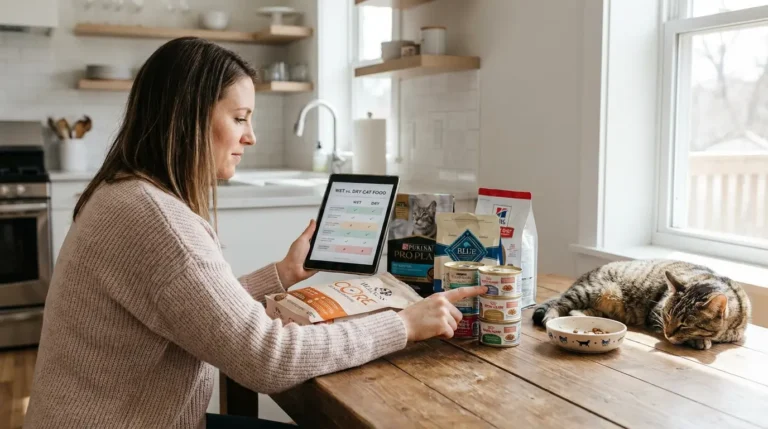
Costco Cat Food vs Chewy and Grocery Brands: Real Savings Breakdown
Let’s talk money. Because that’s why you’re at Costco.
Price Comparison Table (10-lb Indoor Cat, Daily Cost)
| Brand | Type | Daily Cost | Monthly Cost | Where to Buy |
|---|---|---|---|---|
| Kirkland Super Premium | Dry | $1.68 | $50 | Costco |
| Kirkland Healthy Weight | Dry | $1.62 | $49 | Costco |
| Kirkland Nature’s Domain | Dry | $1.98 | $59 | Costco |
| Blue Buffalo Indoor | Dry | $2.89 | $87 | Chewy/Costco |
| Purina Pro Plan Indoor | Dry | $2.20 | $66 | Chewy/Grocery |
| Nutro Indoor | Dry | $2.45 | $74 | Costco/Chewy |
| Friskies (grocery) | Dry | $1.20 | $36 | Grocery |
| Fancy Feast wet | Wet | $3.40 | $102 | Grocery |
| Kirkland wet variety | Wet | $3.20 | $96 | Costco online |
Annual savings, Kirkland Super Premium vs Blue Buffalo: $444 Annual savings, Kirkland vs Purina Pro Plan: $192
That’s real money. But here’s the nuance: if your cat thrives on Kirkland, bank those savings. If they develop soft stools, constant hunger, or dull coat on Kirkland, you’re spending that $192 on extra vet visits and coat supplements anyway.
Is Costco Actually Cheaper Than Chewy?
Sometimes. Depends on the brand and whether you’re using Chewy’s Subscribe & Save.
Kirkland vs Chewy’s Kirkland (yes, Chewy sells it):
- Costco warehouse: $28 for 25 lbs = $1.12/lb
- Chewy (with Subscribe & Save): $36 for 25 lbs = $1.44/lb
Costco wins if you have a membership and can pick it up. Chewy wins if you factor in Costco’s distance, gas, and time—or if you don’t have a membership.
Name brands:
- Nutro Indoor 14-lb bag: $32 at Costco, $39 at Chewy (15% S&S = $33)
- Purina Pro Plan 16-lb: $36 at Costco, $38 at Chewy (15% S&S = $32)
It’s a wash. Costco edges ahead on warehouse-exclusive bulk sizes, but Chewy’s Subscribe & Save discounts close the gap.
Bottom line: If you’re already at Costco monthly, buy Kirkland there. If you’re making a special trip just for cat food, Chewy might save you more when you factor in gas and time.
How to Switch Your Cat to Costco Food Without Disaster
This is where 70% of Costco cat food buyers screw up. They buy the 25-lb bag, dump it in the bowl, and their cat stages a hunger strike.
The 7-Day Transition Plan
Days 1-2: 75% old food, 25% Kirkland Days 3-4: 50/50 mix Days 5-6: 25% old food, 75% Kirkland Day 7+: 100% Kirkland
Slow transitions prevent digestive upset. Cats are creatures of habit. Their gut bacteria need time to adjust to new protein sources and carb ratios.
Pro tip: Mix foods dry. Add a tablespoon of warm water to make it more appealing. The steam releases aroma, which picky cats need.
The “Split Bag” Strategy
Don’t commit to 25 pounds of untested food. Here’s what smart Costco shoppers do:
- Buy a small test bag elsewhere. Kirkland Super Premium sometimes shows up at pet stores in 6-lb bags for $8-10. Test it for two weeks.
- Split with a friend. Know another Costco member with a cat? Buy one 25-lb bag and split it into two 12.5-lb portions. Use vacuum-seal bags or airtight containers.
- Freeze half. Dry food stays fresh frozen for 6+ months. Portion out two weeks’ worth, freeze the rest in gallon Ziploc bags. Thaw portions as needed.
Winston rejected Kirkland at first. I almost returned it. Then I tried the warm-water trick and mixed in a teaspoon of wet food for three days. Now he demolishes it.
Signs Your Cat Isn’t Tolerating Costco Food
Watch for:
- Diarrhea or very soft stools lasting more than 3 days
- Vomiting more than once a week (especially undigested food)
- Constant begging despite eating full portions (sign they’re not satiated)
- Weight gain despite normal portions (carbs spiking blood sugar)
- Dull, flaky coat after 4-6 weeks (protein or fat deficiency)
- Excessive thirst or urination (possible diabetes trigger in predisposed cats)
If you see two or more of these, stop the transition. Go back to the old food and consult your vet.
The Grain-Free Debate: Should You Buy Nature’s Domain?
Grain-free cat food is everywhere. Marketing makes it sound essential. Is it?
What the Science Actually Says
The FDA investigated grain-free dog foods in 2018-2019 for potential links to dilated cardiomyopathy (DCM). They found correlations between certain grain-free formulas (heavy on peas, lentils, potatoes) and heart issues in dogs, especially in breeds not genetically prone to DCM.
For cats: The research is thin. A few case reports, no large studies. Cats are obligate carnivores; they don’t need grains or legumes, but they tolerate both fine in moderate amounts.
The actual concern isn’t “grain = bad” or “grain-free = dangerous.” It’s whether the formula is meat-centered or filler-centered. A grain-free food loaded with pea protein and potato starch is no better than a grain-inclusive food with actual chicken meal.
When Grain-Free Makes Sense
- Confirmed grain allergy: Rare, but real. If your vet diagnosed a grain sensitivity (not just the internet), grain-free is your only option.
- IBD or chronic diarrhea: Some cats with inflammatory bowel disease respond better to limited-ingredient, grain-free formulas. Work with your vet.
- Preference for lower carbs: Grain-free foods often (not always) have fewer carbs because they replace grains with more meat. Nature’s Domain’s 30% carbs beats Super Premium’s 35%.
When Grain-Free Doesn’t Matter
- Healthy adult cat with no digestive issues: Grains aren’t harming them. Save the money.
- Your cat already eats Kirkland Super Premium fine: Don’t switch just because marketing says “grain-free is better.”
My take: Nature’s Domain is a good option if you want lower carbs and higher protein. But it’s not automatically healthier than Super Premium just because it’s grain-free. Judge it on the whole nutritional profile, not one marketing buzzword.
FAQs
Is Kirkland cat food safe for cats?
Yes. Kirkland Signature cat food meets AAFCO standards for adult maintenance and has a clean safety record since 2015. It’s manufactured by Diamond Pet Foods in inspected US facilities. While it’s not top-tier in protein or ingredients, it’s safe for healthy adult cats when fed properly.
Who actually makes Kirkland Signature cat food?
Diamond Pet Foods manufactures Kirkland cat food in their California and Missouri facilities. Diamond also produces Taste of the Wild, Natural Balance, and several other brands. Costco doesn’t publicize this, but industry databases and facility codes confirm Diamond as the co-packer.
Has Kirkland cat food ever been recalled?
The last Kirkland-related recall was in 2012 when Diamond Pet Foods voluntarily recalled multiple brands (including Kirkland) due to potential salmonella contamination. That affected the South Carolina plant, which no longer produces Kirkland. Since then, zero recalls in 14 years.
Is Kirkland cat food better than Purina or Friskies?
Kirkland sits between grocery brands (Friskies, Meow Mix) and premium brands (Purina Pro Plan, Blue Buffalo). It has higher protein than Friskies (36% vs 30% dry matter) but more carbs than Pro Plan. Better than grocery brands, not quite premium-tier.
Which Kirkland cat food is best for indoor cats?
Kirkland Healthy Weight or Super Premium in controlled portions. Healthy Weight has lower fat and calories but higher carbs (45%). Super Premium has better protein-to-carb ratio (36% protein, 35% carbs) but needs portion control. I prefer Super Premium measured carefully over free-feeding Healthy Weight.
Does Costco sell grain-free cat food?
Yes. Kirkland Nature’s Domain is their grain-free line, usually salmon-based with sweet potatoes and peas. It has 42% protein and 30% estimated carbs (dry matter), making it higher protein and lower carb than the grain-inclusive options. Costco also occasionally stocks grain-free name brands like Blue Buffalo Wilderness.
Is Costco cat food good for cats with urinary problems?
No. Kirkland doesn’t publish specific mineral content (magnesium, phosphorus, ash) or pH targets needed for urinary health formulas. If your cat has crystals, UTIs, or blockage history, use prescription foods like Hill’s c/d or Royal Canin Urinary SO. Don’t risk urinary issues to save money.
How much does it cost to feed a cat Kirkland food per day?
For a 10-lb indoor cat eating Kirkland Super Premium: approximately $1.68 per day or $50/month. Healthy Weight is slightly cheaper at $1.62/day. Nature’s Domain costs about $1.98/day. Wet food variety packs run $3-4/day for wet-only feeding.
Is Costco cat food cheaper than Chewy?
Usually, but not always. Kirkland at Costco warehouse ($1.12/lb) beats Chewy’s price ($1.44/lb even with Subscribe & Save). For name brands like Nutro or Purina Pro Plan, Costco and Chewy are roughly equal once you factor in Chewy discounts. Costco wins if you’re already shopping there; Chewy wins on convenience and selection.
Can I feed Kirkland cat food to kittens?
Technically yes—it’s labeled “all life stages”—but I wouldn’t. Kittens need 40-45% protein and higher fat for growth. Kirkland Super Premium’s 36% protein is minimum viable, not optimal. Feed dedicated kitten food for the first year (Wellness CORE, Pro Plan Kitten), then switch to Kirkland at 12 months to save money.
Key Takeaways: Is Costco Cat Food Worth It?
Here’s what actually matters after all those label comparisons and price calculations.
Costco cat food is legitimately good value for healthy adult cats. Kirkland Super Premium and Nature’s Domain offer better nutrition than grocery brands at lower prices than premium boutique foods. You’re not compromising safety or basic quality to save money.
But it’s not a magic bullet. The carb content is higher than ideal, especially for indoor or diabetic-prone cats. The lack of feeding trial data and ingredient sourcing transparency means you’re trusting formulation over proven results. It’s safe, but it’s not scientifically optimized like Purina or Hill’s.
The 25-lb bag is both a blessing and a curse. Massive savings if your cat loves it. Massive waste if they reject it after week two. Use the split-bag strategy or test with a smaller size before committing.
For multi-cat households on a budget, Kirkland is a lifesaver. Feeding three cats Blue Buffalo would bankrupt most people. Feeding them Kirkland Super Premium with quality wet toppers gives them solid nutrition without destroying your budget.
Know when to skip Costco entirely. Kittens, seniors with specific health issues, urinary-prone cats, and cats with IBD or allergies need specialized formulas. Costco’s generic approach doesn’t work for every cat.
Your Next Steps: Making Costco Cat Food Work
Stop second-guessing. Here’s your action plan.
If you’re feeding grocery store brands now (Friskies, Meow Mix, Kit & Kaboodle):
- Buy one 25-lb bag of Kirkland Super Premium
- Transition slowly over 7 days using the mix schedule above
- Watch stools, energy, and coat for 4 weeks
- If your cat thrives, bank the savings. If not, upgrade to Purina Pro Plan, not back to grocery brands.
If you’re feeding premium brands and feeling the budget crunch (Blue Buffalo, Wellness, Nutro):
- Test Kirkland Nature’s Domain first (closest nutritional profile to your current food)
- Mix it 50/50 with your current food indefinitely to balance cost and nutrition
- Add quality wet food (Weruva, Tiki Cat) 3-4x weekly to compensate for dry food carbs
- You’ll save $30-40/month without downgrading significantly
If you have a picky eater or health issues:
- Skip Kirkland dry entirely
- Try Kirkland wet variety packs as toppers or treats
- Invest in condition-specific formulas (urinary, sensitive stomach, kitten) from Purina Pro Plan or Hill’s
- Use Costco for everything else (litter, toys, treats) to offset food costs
If you’re not sure what your cat needs:
- Use the feeding calculator I mentioned (multiply your cat’s weight in lbs by 20-25 to get daily calories)
- Start with Kirkland Super Premium for healthy adults or Nature’s Domain for higher protein/lower carb needs
- Track weight, stool quality, and energy weekly for a month
- Adjust based on results, not marketing hype
The goal isn’t finding perfect food. It’s finding good-enough food that your cat tolerates, your budget survives, and you stop Googling “is Costco cat food poisoning my cat” at 2am.
Winston’s been on Kirkland Super Premium mixed with Tiki Cat wet for eight months now. His coat’s glossy, his weight’s stable, and I saved enough to afford the vet dental cleaning I’d been putting off. That’s a win.
Your turn. Grab that Costco bag, follow the transition plan, and give it an honest month. You’ll know pretty quickly whether it works. And if it doesn’t? At least you tried before dropping $70/month on kibble marketed with wolves and ancient grains.
Now go feed your cat. They’re judging you for reading this long.


One Comment