8 Best Senior Cat Food: Vet-Informed Picks by Age
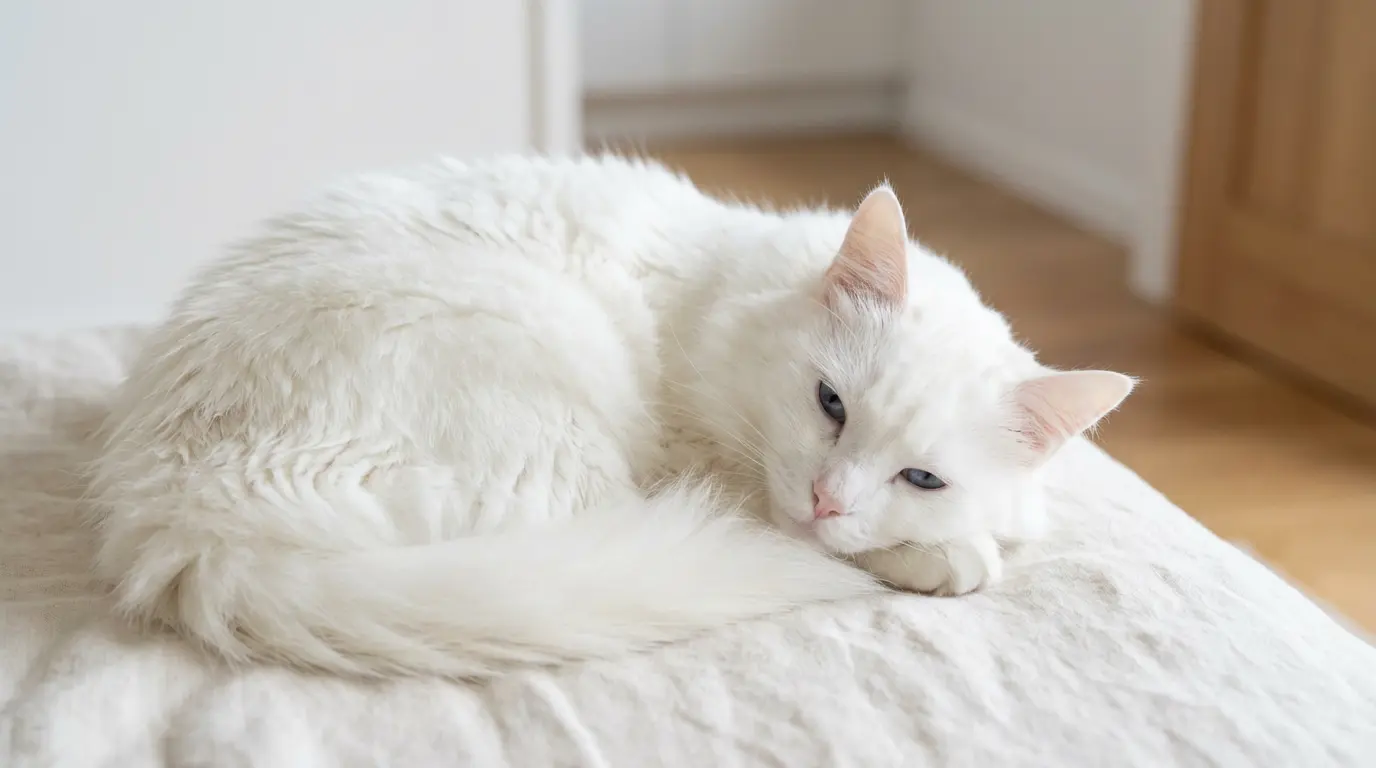
My tabby Leo turned 14, and practically overnight he stopped eating the dry food he’d loved for seven years. He’d walk to the bowl, sniff it, and leave. I blamed the brand, then the bag, then him. My vet told me the truth in about four words: “His teeth hurt, Sarah.”
A softer, high-calorie wet pâté fixed it within three days.
Here’s what I learned from that experience — and from the dozens of senior cats I’ve researched since: the word “senior” on a cat food label tells you almost nothing. A healthy, active 8-year-old and a frail, arthritic 15-year-old have completely different nutritional needs. Most articles treat them the same. This one doesn’t.
Instead of ranking brands by popularity, I’m going to help you figure out what your specific cat needs right now — and then show you the best food for that exact situation.
Table of Contents
🏆 Best Senior Cat Food: Quick Picks (2026)
No time for the full guide? Here are my top picks by situation. Every recommendation below is something I’d personally feed a senior cat — no padding, no sponsored placeholders.
| Category | My Pick | Best For | Est. Daily Cost |
|---|---|---|---|
| ✅ Best Overall | Purina Pro Plan Prime Plus 7+ Wet | 7–14 year olds needing high protein + hydration | ~$1.80/day |
| 💧 Best Wet | Royal Canin Aging 12+ Wet Slices | 12+ cats with dental + weight concerns | ~$2.10/day |
| 🥇 Best Dry | Hill’s Science Diet Adult 11+ Dry | Active 11-year-olds, easy digestion, joint support | ~$0.75/day |
| 💰 Best Budget | Purina ONE Indoor Advantage Senior 7+ | Cost-conscious owners, high protein, glucosamine | ~$0.40/day |
| ⚖️ Best for Weight Loss | Blue Buffalo Wilderness Mature High Protein | Thin seniors who need more calories and protein | ~$1.20/day |
| 🦷 Best for Bad Teeth | Purina Fancy Feast Senior 7+ Wet Pâté | Soft texture, strong aroma, picky senior-friendly | ~$1.50/day |
| 🫘 Best for Kidney Support | Hill’s Prescription Diet k/d | Vet-diagnosed CKD stages 1–3 | ~$2.40/day |
| 😿 Best for Picky Eaters | Royal Canin Indoor 7+ Morsels in Gravy | Highly palatable, weight control, gravy texture | ~$2.00/day |
📌 Sarah’s Note: These are my starting points — not absolutes. The right food depends entirely on your cat’s age, weight, and health status. Use the quiz below to narrow it down in 30 seconds, or scroll straight to the section that matches your cat’s biggest issue.
Does Your Senior Cat Actually Need Senior Cat Food?
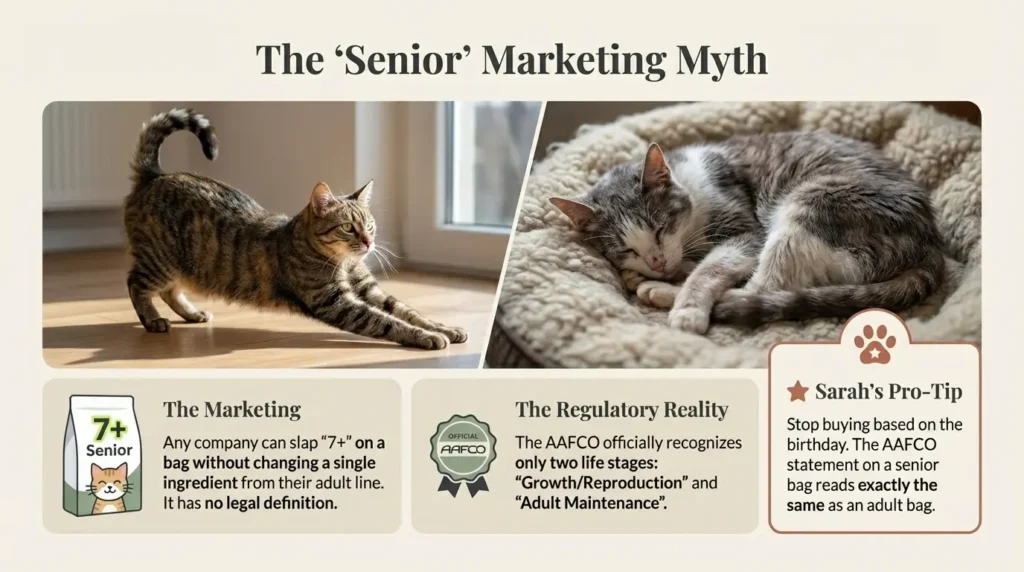
Here’s the honest answer most brands won’t give you: “senior” on a cat food label has no legal definition.
Unlike “complete and balanced” — which is AAFCO-regulated and legally meaningful — “senior” is pure marketing. The AAFCO only recognizes two official cat life stages: “growth/reproduction” and “adult maintenance.” That means any company can label a bag “7+” without changing a single ingredient from their adult line.
So the real question isn’t “should I buy senior food?” It’s “what does my cat actually need right now?”
When Your Current Adult Food Is Probably Fine
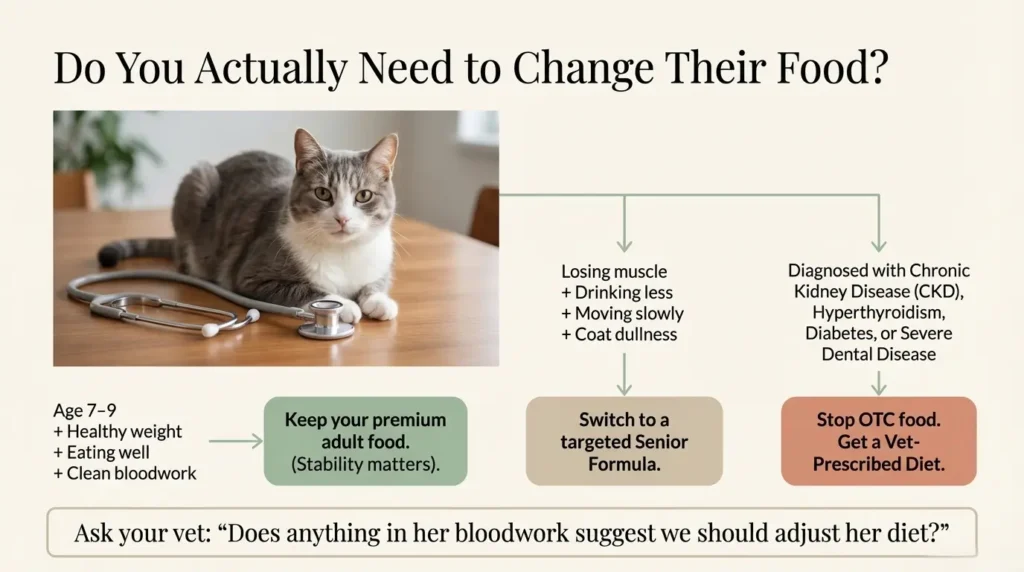
If your cat is 7–9 years old, maintaining a healthy weight, eating enthusiastically, and getting clean annual bloodwork — you may not need to change anything yet.
A premium adult food with a named animal protein in the first position, low filler content, and appropriate calorie density may outperform a mediocre “senior” formula every day of the week. Stop switching foods just because the birthday passed. Stability matters to aging digestive systems.
Ask your vet at the next checkup: “Does anything in her bloodwork suggest we should adjust her diet?” That question is worth more than any label.
When a Senior Formula Earns Its Place
A targeted senior food makes sense when your cat is:
- Losing muscle mass despite eating — the clearest sign their current protein isn’t being utilized efficiently
- Drinking noticeably less water — a red flag that grows more serious after age 11
- Moving more slowly or reluctantly — omega-3s and glucosamine in senior formulas support joint health
- Experiencing coat changes — dullness, flaking, or excessive shedding can signal shifting nutrient needs
When You Need a Therapeutic Vet Diet Instead
Stop buying OTC food entirely if your vet has diagnosed any of the following:
- Chronic kidney disease (CKD) → controlled phosphorus is non-negotiable
- Hyperthyroidism → specific caloric and protein parameters apply
- Diabetes → requires low-carbohydrate, high-protein formulation
- Severe dental disease → texture and consistency must be vet-directed
In these cases, prescription options like Hill’s k/d, Royal Canin Renal Support, or Purina Pro Plan Veterinary Diets are medical nutrition — not a premium upgrade. The cost difference between a prescription diet and a $2,000 emergency kidney hospitalization makes the math clear.
💡 The AAFCO “senior” secret — click to expand
The Association of American Feed Control Officials (AAFCO) sets the nutritional standards for pet food in the US. They define two cat life stages: “growth/reproduction” (for kittens and pregnant cats) and “adult maintenance” (for all adult cats). There is no AAFCO-defined “senior” life stage. This means the AAFCO statement on a senior cat food bag will read “formulated to meet the nutritional levels established by AAFCO for adult maintenance” — the exact same statement on adult food. The “senior” label above it is the brand’s choice, not a regulatory standard.
What Older Cats Actually Need Nutritionally
Let’s walk through the science — quickly and practically.
Protein: More of It, Better Quality
This is the most misunderstood piece of senior cat nutrition. The instinct is to reduce protein in older cats. For the majority of seniors, that instinct is wrong.
Cats over 11 become progressively less efficient at digesting and absorbing protein. To maintain muscle mass, they need more high-bioavailability protein, not less — ideally from named animal sources like chicken, turkey, salmon, or beef in the first position.
The AAHA/AAFP Feline Life Stage Guidelines recommend a minimum of 30–45% dry matter protein for healthy senior cats. A “light” or “weight control” formula may actually accelerate muscle loss in a thin senior cat.
The only exception: Cats with vet-diagnosed CKD may need protein quantity managed alongside phosphorus restriction — but this is a medical decision, not a general feeding principle.
Calories and Fat: Two Opposite Senior Problems
Senior cats split into two very different metabolic groups, and most owners are managing both the wrong way.
- Ages 7–11 (early senior): Many cats gain weight as activity drops and metabolism slows. They need slightly fewer calories and more fiber for satiety.
- Ages 12+ (established senior to geriatric): Many cats lose weight as fat and protein digestion decline. They need more calories, more fat, and food that’s easier to absorb.
If your 13-year-old is losing weight, switching to a “senior light” formula is exactly the wrong move. Look for calorie-dense wet foods with high named-protein content and strong palatability.
Run your hands along your cat’s spine right now. Can you feel the individual vertebrae more sharply than you did a year ago? That’s your signal to act before the weight loss becomes serious.
💧 Hydration: The Quiet Emergency You’re Probably Missing
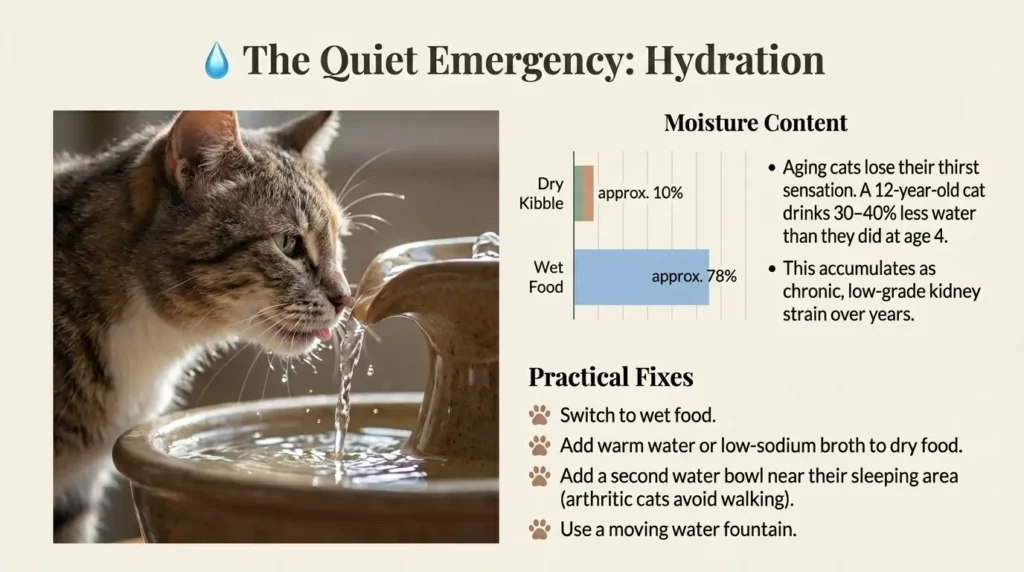
Aging cats lose their thirst sensation. A 12-year-old cat may drink 30–40% less water than they did at 4, even when their kidneys desperately need more.
A cat eating only dry kibble (approximately 10% moisture) gets a fraction of the hydration available from wet food (approximately 78% moisture). Over months and years, that difference accumulates as chronic low-grade kidney strain.
Practical fixes:
- Switch to wet food or at minimum add warm water or low-sodium broth to dry food
- Place a second water bowl near where your cat sleeps — arthritic cats won’t walk to the kitchen
- Consider a cat water fountain; moving water encourages drinking in many cats
Phosphorus, Sodium, Fiber, and Omega-3s
| Nutrient | Why It Matters for Seniors | What to Look For |
|---|---|---|
| Phosphorus | Excess accelerates kidney decline; wet food typically lower than dry | Avoid high-ash formulas; prioritize wet food for kidney-risk cats |
| Sodium | High sodium strains kidneys and cardiovascular system | “Moderate sodium” or avoid brands with salt high in ingredient list |
| Fiber | Supports aging digestive motility and hairball control | Beet pulp or chicory root in moderate amounts — fine and beneficial |
| Omega-3s (EPA/DHA) | Reduces joint inflammation, supports cognitive function | Named fish oil or salmon in ingredient list; not just “fish meal” |
📌 Sarah’s Priority Order for Seniors 11+: Hydration first. Protein quality second. Calorie density third. Phosphorus control fourth.
Best Senior Cat Food by Your Cat’s Actual Problem
This is the section I wish existed when Leo was struggling. No alphabetical listing, no padding. Just the right food for the right issue.
🐾 For Weight Loss or Low Appetite
Weight loss and appetite decline often arrive together — and one fuels the other. A cat eating less absorbs fewer calories, loses more muscle, has less energy to seek food, and eats even less. Breaking that cycle early is everything.
One of the earliest and most overlooked aging changes in cats is a declining sense of smell. A food that smells powerful and meaty to us may barely register to a 14-year-old cat. Pâtés and gravies generally have stronger, more immediate aromas than shredded or chunked formats. Warming the food slightly (10 seconds in the microwave, stirred and temperature-checked) can increase palatability dramatically.
What to look for:
- 100+ kcal per 3 oz can
- Named animal protein in first position
- High moisture (75%+)
- Strong natural aroma — avoid bland “neutral” formulas
My picks:
- Purina Pro Plan Prime Plus 7+ Wet — high protein, multiple textures, strong palatability
- Blue Buffalo Wilderness Mature High Protein Dry — for seniors still preferring kibble but needing calorie boost
- Royal Canin Aging 12+ Wet — specifically formulated for 12+ with a highly digestible protein profile
⚠️ Skip this if: Your cat is overweight or aged 7–9 with a stable body condition score.
🦷 For Dental Issues or Trouble Chewing
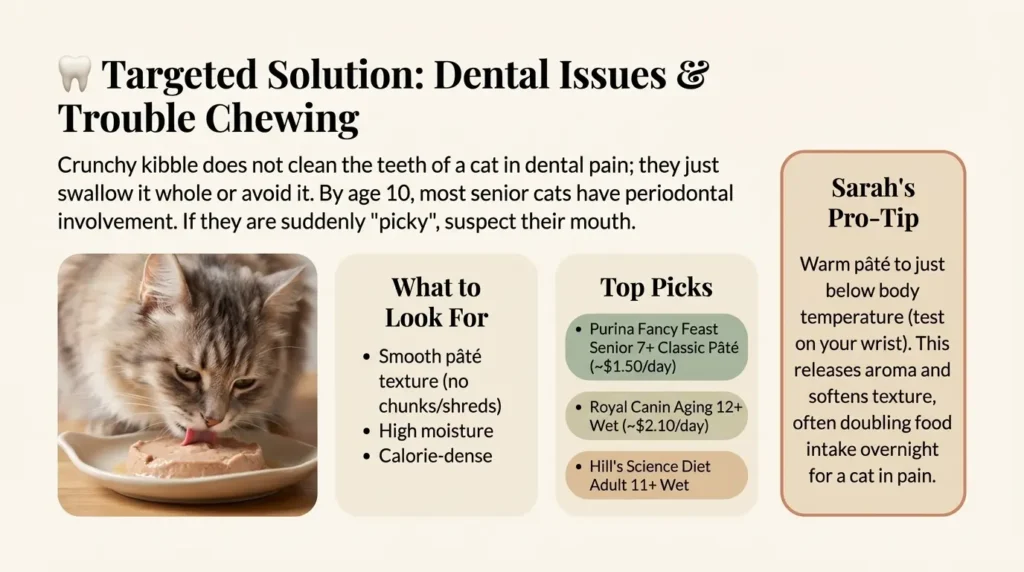
I see this handled wrong constantly. Owners feed dry kibble to cats with dental pain because someone told them “crunchy food cleans teeth.” The reality: a cat in dental pain is often swallowing kibble whole or avoiding it entirely. There is no cleaning happening. There is pain happening.
Dental disease affects up to 85% of cats over age 3 — and by age 10, most senior cats have some level of periodontal involvement. If your cat has suddenly become “picky,” suspect their mouth before their palate.
What to look for:
- Smooth pâté texture (no chunks, no shreds requiring significant bite force)
- High moisture to support hydration alongside dental issues
- Calorie-dense to compensate for reduced intake during painful periods
My picks:
- Purina Fancy Feast Senior 7+ Classic Pâté — budget-friendly, silky texture, strong aroma, widely available
- Royal Canin Aging 12+ Wet — specifically designed for older cats, soft texture, vet-formulated
- Hill’s Science Diet Adult 11+ Wet Chicken & Vegetable Entrée — science-backed, highly digestible
💡 Pro tip: Warm pâté to just below body temperature (test on your inner wrist — it should feel barely warm, not hot). This releases aroma and softens texture further. For a cat in dental pain, this single step can double their food intake overnight.
⚠️ Skip this if: Your cat has no dental issues and eats dry food enthusiastically with no hesitation.
😿 For Sensitive Stomach or Frequent Vomiting
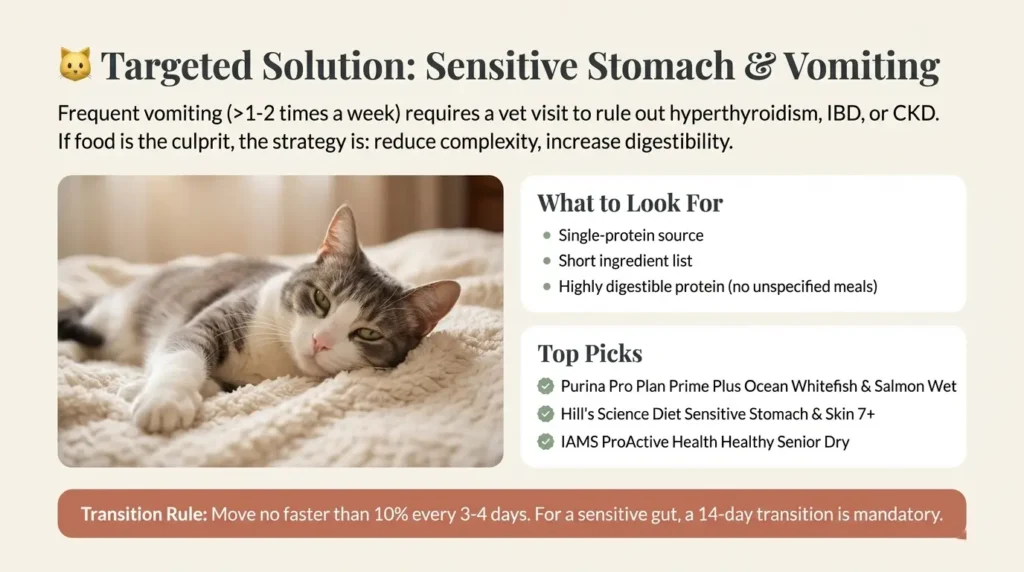
First, a caveat: frequent vomiting in a senior cat (more than once or twice a week) deserves a vet visit before a food change. Vomiting can signal hyperthyroidism, IBD, CKD, pancreatitis, or other conditions that a food switch won’t fix — and might mask.
If your vet confirms that food is the contributing factor, the strategy is simple: reduce complexity, increase digestibility.
What to look for:
- Single-protein source (e.g., chicken only — no mixed proteins)
- Short, recognizable ingredient list
- No artificial colors, flavors, or preservatives
- Highly digestible protein source (not “meat by-products” or unspecified meals)
My picks:
- Purina Pro Plan Prime Plus Ocean Whitefish & Salmon Wet — single-focus protein, highly palatable, senior-specific
- Hill’s Science Diet Sensitive Stomach & Skin 7+ — veterinary-backed formula for digestive sensitivity
- IAMS ProActive Health Healthy Senior Dry — budget-friendly dry option with digestive support
⚠️ Transition rule: Start at 10% new food, 90% old. Move no faster than every 3–4 days. For a senior with a sensitive gut, 14 days minimum is not excessive — it’s appropriate.
🛋️ For Indoor, Less Active, or Overweight Senior Cats
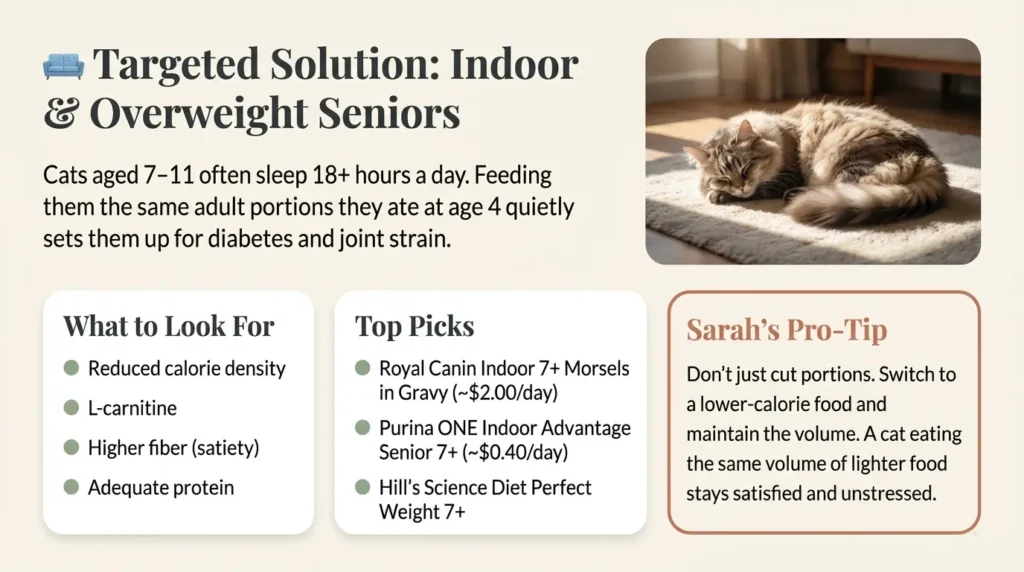
Many cats aged 7–11 are gaining weight silently. They sleep 18+ hours a day, play rarely, and their metabolism has slowed considerably since their active years. Continuing to pour the same portions of adult food they ate at age 4 is quietly setting them up for diabetes, joint strain, and fatty liver disease.
What to look for:
- Reduced calorie density (not “diet” — “weight management” or “indoor”)
- L-carnitine to support fat metabolism
- Higher fiber content for satiety without excess calories
- Still adequate protein — don’t sacrifice protein for calorie reduction
My picks:
- Royal Canin Indoor 7+ Morsels in Gravy — designed specifically for less-active indoor seniors, palatable gravy format
- Purina ONE Indoor Advantage Senior 7+ — real chicken, glucosamine, hairball control, budget-friendly
- Hill’s Science Diet Perfect Weight 7+ — clinically tested weight management with senior nutritional priorities
💡 Feeding tip: Don’t just cut portions — switch to a lower-calorie-density food and maintain volume. A cat eating less food feels deprived and stressed; one eating the same volume of a lighter food stays satisfied and is far easier to manage long-term.</section>
💰 Monthly Senior Cat Food Cost Calculator
Before you commit to any formula, know exactly what it costs per day and per month. Senior cat owners on fixed budgets deserve a real number — not just a sticker price.
💰 Senior Cat Food Cost Calculator
See exactly how much you’ll spend per day, week, and month feeding your senior cat.
⚠️ 5 Mistakes Senior Cat Owners Make (That I’ve Made Too)
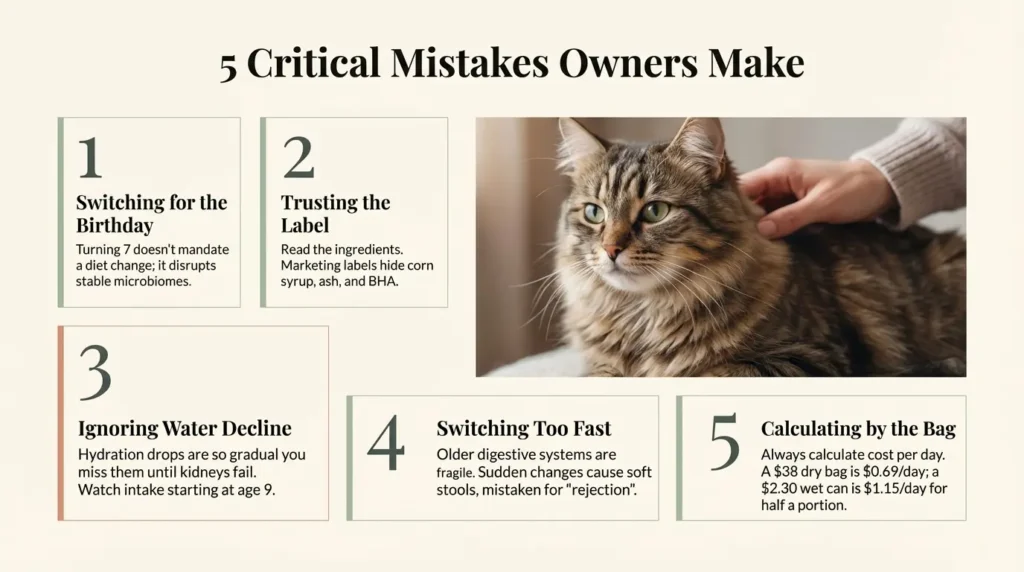
1. Switching Food Because of the Birthday
Turning 7 does not automatically require a new diet. It requires a vet check. Switching to an inferior “senior” formula just because the bag now matches your cat’s age can disrupt a stable gut microbiome, reduce palatability, and create unnecessary anxiety. If bloodwork is clean and weight is stable, stay the course.
2. Assuming “Senior” Label Means Better Formula
I have personally read ingredient panels on “senior” cat foods that listed corn syrup derivatives, excessive ash, unnamed by-products, and artificial preservatives like BHA. The label is marketing. The ingredient panel is fact. Flip the bag over before you put it in the cart.
3. Ignoring the Gradual Water Decline
The hydration drop in senior cats is so gradual that most owners never notice it until it shows up as elevated kidney values at a vet visit. Start watching water intake at age 9. If you transition your senior to wet food and within two weeks their coat improves, energy increases, and vomiting reduces — that wasn’t coincidence. That was dehydration you’d been living with for months.
4. Switching Foods Too Fast
An older cat’s digestive system is significantly less resilient than it was at 3. A sudden food change — even to a better food — can produce two weeks of soft stools and vomiting, which owners interpret as rejection. The food may be perfect. The transition was just too fast. See the 10-day plan below.
5. Calculating Cost by Bag Price, Not Daily Cost
A $38 bag of premium dry food lasting 55 days costs $0.69/day. A $2.30 “budget” wet can providing half a day’s calories costs $1.15/day for that portion. Always calculate cost per day. The math almost always surprises people.
How to Switch Your Older Cat to New Food Without Drama
The #1 reason senior food transitions fail is speed. The second reason is giving up too early. Here is a 10-day protocol that works — even for cats with sensitive stomachs and strong food preferences.
| Day | Old Food | New Food | Notes |
|---|---|---|---|
| 1–2 | 90% | 10% | Introduce smell, not volume |
| 3–4 | 75% | 25% | Monitor stool consistency |
| 5–6 | 50% | 50% | Hold here if any GI upset |
| 7–8 | 25% | 75% | Most cats accept this easily by now |
| 9–10 | 0% | 100% | Full transition complete |
For any cat with a history of GI sensitivity, IBD, or previous food refusals — extend this to 14 days minimum. Go slower, not faster.
If Your Cat Flat-Out Refuses
Work through this list in order before giving up on the food:
- Warm it slightly — 8–10 seconds in the microwave, stir well, check temp on your wrist
- Add a topper — a teaspoon of low-sodium tuna water or unseasoned chicken broth on top
- Change the texture — if pâté is refused, try minced or sliced; if wet is refused, try lightly moistened kibble
- Reduce the ratio — go back one step and hold for 4–5 days before advancing
- Try a different flavor — sometimes it’s simply the protein source, not the formula
⚠️ Critical warning: If your senior cat refuses food entirely for more than 24–36 hours during a transition, stop and revert to their old food immediately. Senior cats — especially those who are already thin — can develop hepatic lipidosis (fatty liver disease) within 48–72 hours of not eating. This is a medical emergency. Call your vet if appetite does not return within 24 hours of reverting.
Signs the New Food Is Working
You’ll usually see these within 2–4 weeks of a successful transition:
- ✅ Stable or improving weight at weekly weigh-ins
- ✅ Coat becomes noticeably shinier and less flaky
- ✅ Stools are firm, consistent, and easy to pass
- ✅ They approach the bowl with purpose rather than sniffing and walking away
- ✅ Energy level or play interest has increased even slightly
When to Call Your Vet During a Transition
- Weight loss of more than 0.5 lbs in 2 weeks
- Vomiting more than twice per week
- Diarrhea lasting more than 3 days
- Complete food refusal for 24+ hours
Frequently Asked Questions
At what age should cats switch to senior cat food?
There is no single right age because “senior” is not an AAFCO-regulated life stage. Most healthy cats benefit from senior-targeted nutrition review between ages 10–12, when protein digestion efficiency begins declining. Cats with health conditions may need adjustments earlier. Always base the decision on a vet’s assessment of bloodwork and body condition — not a number on the bag.
Is wet food better for senior cats?
For most cats over 10, yes — especially those with reduced thirst drive, dental issues, or early kidney concerns. Wet food provides hydration that aging cats won’t seek voluntarily, is gentler on sensitive teeth, and is generally more palatable for seniors with declining appetite. That said, if your cat is thriving on dry food and drinks plenty of water, there’s no reason to force a change.
Do senior cats need more or less protein?
Most senior cats need more high-quality protein, not less. Aging reduces protein digestion efficiency, requiring higher-bioavailability sources to maintain muscle mass. The AAHA/AAFP guidelines recommend 30–45% dry matter protein for healthy senior cats. The exception is cats with vet-diagnosed kidney disease, who may need protein managed alongside phosphorus restriction under veterinary guidance.
Can senior cats eat regular adult cat food?
Yes — if it’s genuinely high quality and their specific nutritional needs are met. A premium adult food with named protein first, moderate phosphorus, and no excessive fillers may outperform a mediocre “senior” formula. Age labels alone guarantee nothing. Always evaluate the ingredient panel and AAFCO statement, not the front of the bag.
What if my senior cat stops eating during a food switch?
Revert to the old food immediately and do not wait. Senior cats — especially thin ones — can develop hepatic lipidosis (fatty liver disease) within 48–72 hours of not eating. If appetite does not return within 24 hours of reverting, call your vet. Once stable, restart the transition 50% slower than before.
What ingredients should I avoid in senior cat food?
Avoid formulas where the first or second ingredient is a grain or starch (corn, wheat, soy), those containing corn syrup or artificial sweeteners, unnamed “meat by-products” without a species listed, artificial preservatives like BHA, BHT, or ethoxyquin, and high-ash formulas that may stress aging kidneys. Always prioritize a named animal protein — chicken, turkey, salmon, beef — in the first position.
What This All Comes Down To
Six things worth keeping:
- “Senior” is a marketing word, not a nutritional standard. The AAFCO doesn’t define it. Evaluate every bag by its ingredient panel and AAFCO adult maintenance statement.
- A 9-year-old and a 16-year-old need completely different approaches. The early senior gains weight; the geriatric senior loses it. Treat them accordingly.
- Most seniors 11+ need more protein, not less — unless your vet has specifically advised otherwise for kidney management.
- Hydration becomes critical around age 10. If your senior is on dry-only food and seems sluggish, the first experiment is adding wet food or water to their current meals.
- Never switch food abruptly in an older cat. Use the 10-day transition plan. Extend it if needed. The slower you go, the better the outcome.
- If your cat stops eating for 24+ hours during a switch, revert and call your vet. This is not stubbornness — it’s a potential emergency.
Your Action Plan — Right Now
- Run your hands along your cat’s spine. If you feel the vertebrae more sharply than last year, act before the weight loss progresses.
- If your cat is 10+ and hasn’t had bloodwork in 12 months, book a senior wellness panel. The results tell you more than any label.
- Use the quiz above to identify which food category fits your cat’s current situation.
- Use the cost calculator to know your real monthly budget before buying.
- Download the transition tracker and use the 10-day plan when you’re ready to switch.
Have a question about your specific cat? Drop a comment below with their name, age, and what you’re seeing. I read every single one — and I often write new articles based on the questions I get most.
📌 Bookmark this page — product picks and pricing are reviewed quarterly.
→ Also read: FULL GUIDE CAT FOOD REVIEWS
→ Related: 10 Best Cat Foods for Senior Cats