Cat House Indoor: The Complete Guide to Choosing the Right Space for Your Cat (2026)
Direct Answer
The best Cat House Indoor gives your cat a private retreat, vertical space, and a safe anchor point in their territory. Size, material, and placement matter more than aesthetics. Cats need enclosed spaces they can fully turn around in, at elevated positions when possible, and positioned away from high-traffic areas. Budget $40–$200 for a quality option that lasts.
Table of Contents
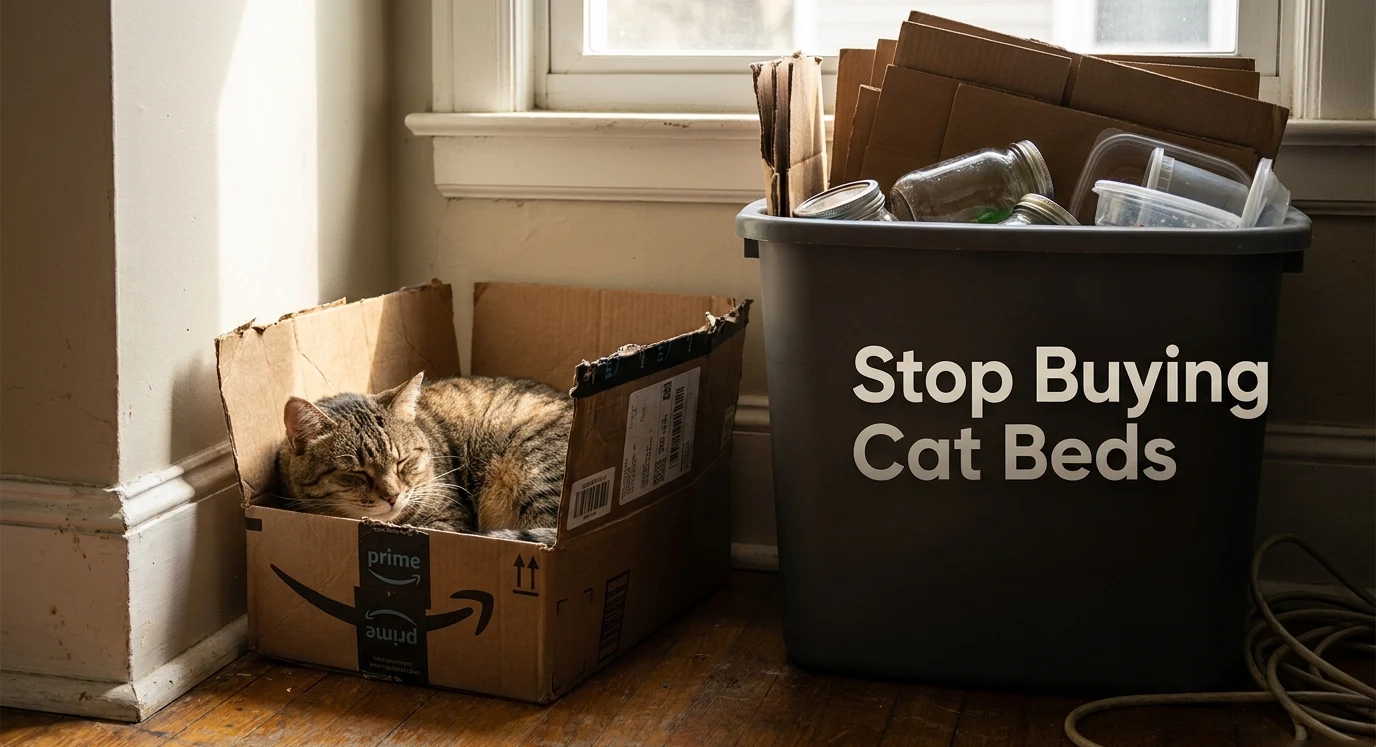
Luna ignored every cat bed I bought her for three years. Plush donut beds, heated pads, window perches — she walked past all of them and slept in a cardboard box I had left near the recycling bin.
That cardboard box taught me something I wish I had understood earlier. Cats do not want comfort the way we define it. They want security, elevation, enclosure, and control over their environment. A cat house that delivers those four things will be used. Everything else collects dust.
Cat House Indoor spend their entire lives within four walls. The spaces we create inside those walls directly affect their stress levels, physical health, and behavioral wellbeing. This guide covers everything you need to choose, place, and maintain the right cat house — plus an interactive tool to match your cat to the right option.
Quick Comparison Table
| Type | Best For | Size Range | Price Range | Durability | Enrichment Value |
|---|---|---|---|---|---|
| Enclosed cube house | Anxious / shy cats | 14–18 inch | $25–$60 | Medium | High — security focus |
| Wall-mounted cat shelf house | Space-limited homes | 16–24 inch | $40–$120 | High | Very high — elevation |
| Multi-level condo | Active / multi-cat | 18–24 inch base | $80–$200 | Medium-High | Very high — variety |
| Heated indoor cat house | Senior / cold-climate cats | 16–20 inch | $35–$90 | Medium | Medium — comfort focus |
| Outdoor-style indoor house | Large / confident cats | 20–30 inch | $60–$180 | High | High — space + privacy |
| Window perch house | Bird-watchers / curious cats | 12–16 inch | $30–$80 | Medium | High — stimulation |
| Cardboard cat house | Kittens / budget option | 12–18 inch | $10–$30 | Low | Medium — replaceable |
Why Indoor Cats Need a Dedicated House — Not Just a Bed
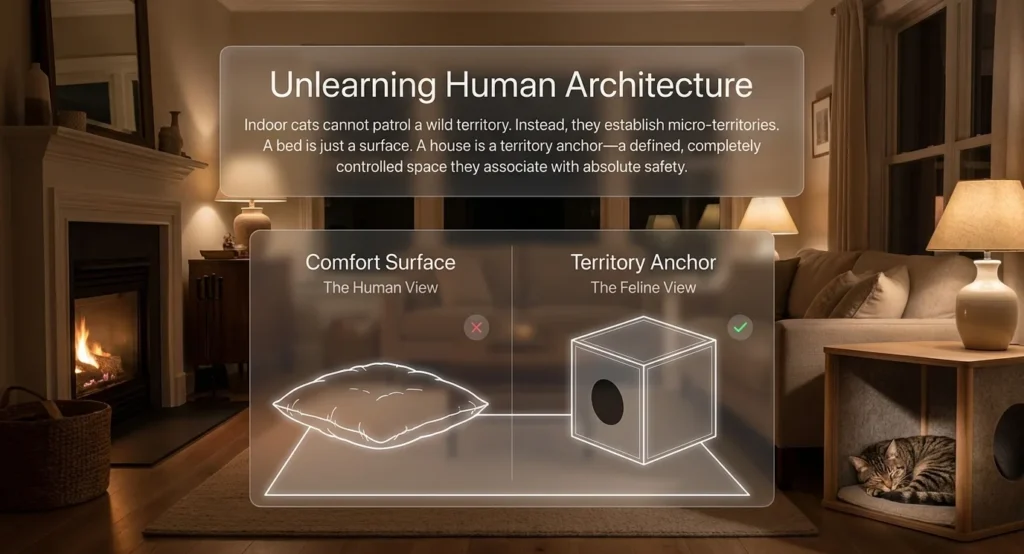
This distinction matters more than most cat owners realize.
A bed is a comfort surface. A cat house is a territory anchor — a defined space your cat controls completely, retreats to when stressed, and associates with safety. These are not the same thing, and confusing them is why so many cat beds go unused.
In the wild, cats spend significant energy identifying and defending core territories within their home range. Indoor cats cannot patrol a territory in any meaningful sense — their world ends at the front door. What they can do is establish micro-territories within the home: specific chairs, windowsills, the top of the refrigerator.
A properly chosen and positioned cat house formalizes that instinct. It gives your cat a space that is unambiguously theirs — enclosed enough to feel secure, positioned well enough to feel strategic, and consistent enough to become a genuine anchor in their daily routine.
The behavioral benefits are measurable. Cats with established retreat spaces show lower cortisol indicators in stress studies, engage in fewer inter-cat conflicts in multi-cat households, and recover from environmental disruptions — visitors, loud noises, schedule changes — more quickly than cats without defined retreat options.
That is not a luxury. For an indoor cat whose entire world is your home, it is a genuine welfare consideration.
The Four Things Every Indoor Cat House Must Deliver
Before product recommendations, here is the framework I use to evaluate every cat house I review.
Enclosure. The structure must have at least one fully enclosed side with a defined entry point. Open-top structures — bowls, hammocks, flat perches — do not function as houses. True enclosure creates the psychological security that makes a space a genuine retreat rather than just another surface.
Appropriate size. Your cat must be able to fully enter, turn around, and lie in a stretched position without contact with walls. Too small creates discomfort. Counterintuitively, too large reduces security — cats in oversized enclosures often position themselves in corners, recreating the snugness they need. A correct-fit enclosure is 1.5 times your cat’s body length on its longest interior dimension.
Stable construction. A cat house that wobbles when your cat enters it will be abandoned after one or two uses. Cats will not repeatedly enter a structure that feels unstable underfoot. Test stability before placement — it should not shift when you press firmly on the entry point.
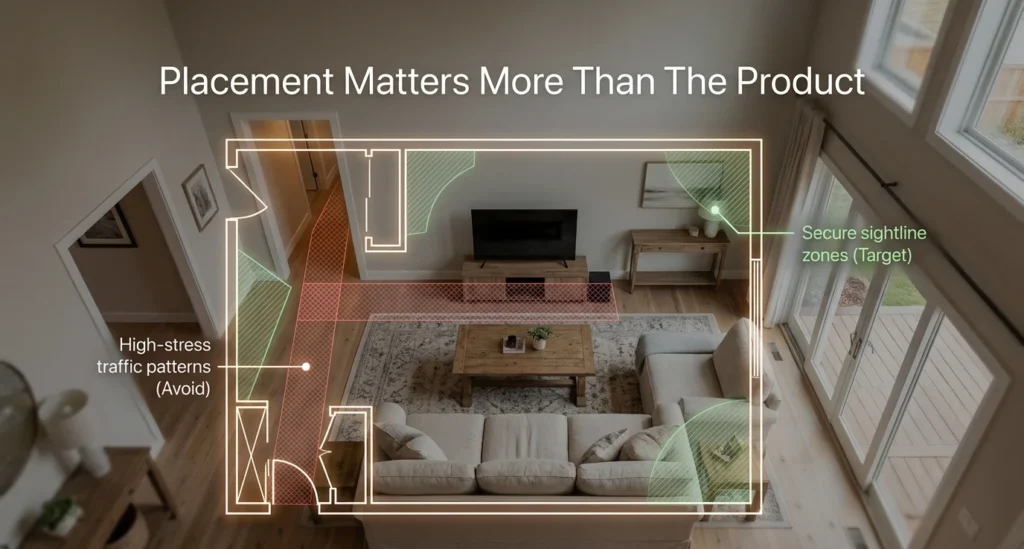
Strategic placement. The best cat house in the world fails if it is positioned in the middle of a high-traffic hallway. Cats need sight lines — the ability to observe the room from a position of safety. Placement against a wall, at elevation when possible, and away from the primary human traffic pattern of your home is the consistent factor across every cat house that actually gets used.
Types of Indoor Cat Houses — What Each One Actually Does
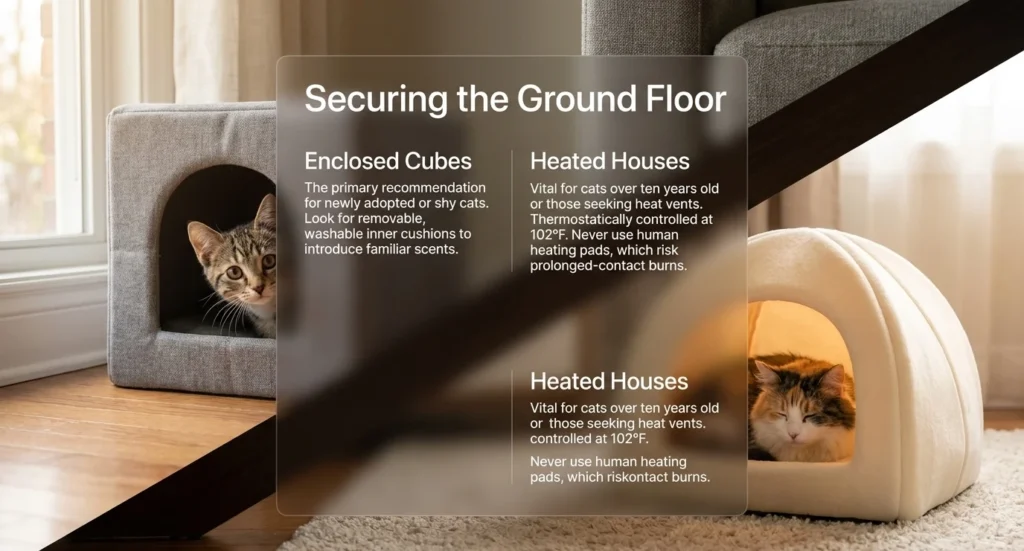
Enclosed Cube Houses
The most common format and genuinely the most versatile. A fabric or wood cube with a single circular or arched entry point delivers the core requirements — enclosure, stability, defined territory — at the most accessible price point.
For anxious cats, shy cats, newly adopted cats, or any cat navigating a recent environmental change, the enclosed cube is the first structure I recommend. The single entry point gives the cat complete visibility of anyone approaching — the same reason cats prefer to sit with their backs to walls.
Look for removable and washable inner cushions. Cats reject houses that smell unfamiliar. A washable interior that you can introduce with the cat’s existing scent dramatically improves initial acceptance.
Wall-Mounted Cat Shelf Houses
The elevation benefit of wall-mounted structures is genuinely significant for indoor cats. Height equals safety in feline instinct — elevated cats can observe without being observed, which reduces ambient stress throughout the day.
Wall-mounted cat shelf houses — enclosed platforms mounted at height on the wall — combine the enclosure benefit of a traditional house with the behavioral benefit of vertical territory. For apartments and small homes where floor space is limited, wall mounting is often the most enrichment-dense option available per square foot.
Installation requires wall studs or appropriate anchors. Weight capacity matters — most cat shelf houses support 15–25 lbs. Always verify for your cat’s weight before mounting.
Multi-Level Cat Condos
For active cats, younger cats, or multi-cat households, a multi-level condo provides a range of options within a single structure — enclosed houses at different heights, open perches, scratch posts, and dangling toys in one footprint.
The enrichment value is high. The durability concern is real. Multi-level condos use significant amounts of sisal rope and carpet material that degrades with heavy use. Budget for replacement every two to three years in active households, or invest in a higher-end modular system where individual components can be replaced.
Heated Indoor Cat Houses
Senior cats, cats in cold-climate homes, or cats with arthritis benefit meaningfully from heated options. Thermostatically controlled heating pads maintain warmth at approximately 102°F — close to a cat’s natural body temperature — without overheating risk.
For cats over ten years old showing reduced movement or stiffness, a heated enclosure can meaningfully improve daily comfort. The behavioral signal is simple: if your senior cat is consistently seeking warm spots — vents, sunny patches, your laptop — a heated house addresses that need directly.
Always verify that heated units use low-voltage systems with automatic shut-off. Do not use human heating pads as substitutes — they are not designed for the prolonged contact patterns of sleeping animals.
Window Perch Houses
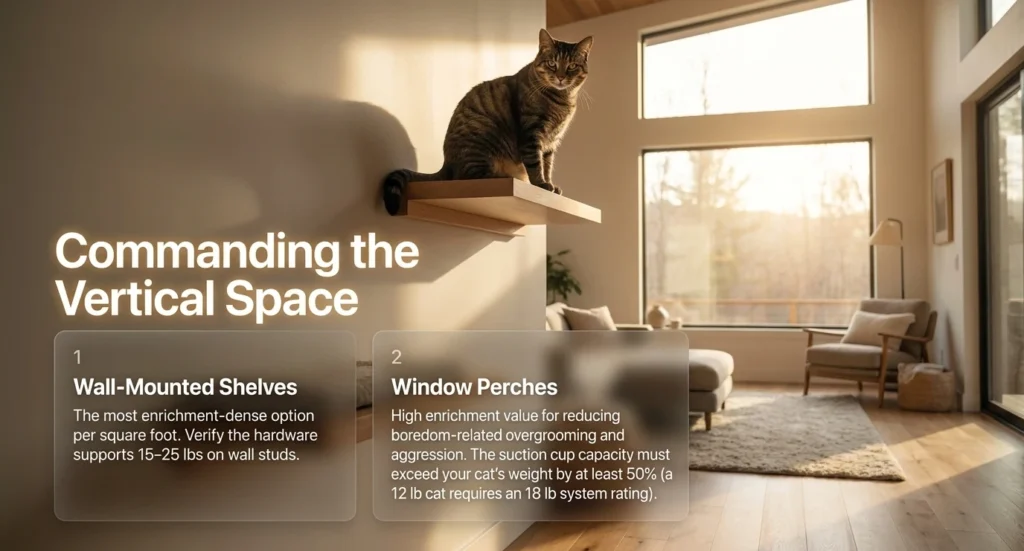
The combination of enclosure and outdoor visual access makes window perch houses one of the highest enrichment-value options for indoor cats. Bird watching, observing street activity, and tracking seasonal changes provides cognitive stimulation that reduces boredom-related behavioral issues — overgrooming, aggression, and excessive vocalization.
Installation requires suction cup stability testing for your specific window surface, or a freestanding frame. Suction cup capacity should exceed your cat’s weight by at least 50% — a 12 lb cat needs suction cup systems rated for at least 18 lbs.
How to Get Your Cat to Actually Use the House
Buying the right house is step one. Getting your cat to use it consistently is step two — and where most owners give up too early.
Introduce scent before structure. Place a worn item of your clothing inside the house before your cat’s first interaction. Your scent signals safety. Leave the house in a low-pressure location — not directly in your cat’s path — for 24 hours before encouraging investigation.
Use food, not force. Place a small treat or a pinch of dry food just inside the entry point for the first three days. Never push or place your cat inside the house. Let investigation and entry happen entirely on the cat’s terms. Forced introduction creates avoidance associations that are difficult to reverse.
Position correctly from day one. You will not successfully relocate a cat house after your cat has started using it. Get the placement right initially — wall-adjacent, elevated if possible, sight lines to the room’s main entry point, away from the household’s primary traffic pattern.
Be patient with the timeline. Some cats investigate and accept a new house within hours. Others take two weeks of gradual exposure before making first entry. Neither timeline indicates a problem — it indicates individual personality variation. Do not remove the house before three weeks of exposure have passed.
Find the Right Cat House for Your Cat
🏠 Purreats Cat House Finder
Which indoor cat house fits your cat?
Answer 3 quick questions — get a matched recommendation with placement tips.
1 of 3 — How would you describe your cat’s personality?
2 of 3 — What best describes your home setup?
3 of 3 — What is your primary goal for the cat house?
—
—
Placement: The Decision That Matters More Than the Product
I have watched owners spend $150 on a premium cat condo and place it in the center of a busy hallway — then wonder why their cat refuses to use it.
Placement is not secondary to product choice. For many cats it is more important.
The rules are consistent regardless of house type.
Against a wall, never freestanding in open space. An enclosed house in open space still exposes your cat on three sides. Wall placement reduces the approach angles a cat needs to monitor — from four to one or two — which meaningfully reduces ambient vigilance stress.
Elevated when possible, always for active cats. Even 18–24 inches of elevation — the height of a low shelf or side table — changes a cat's relationship to their space. Height equals security. A house on the floor and the same house on a shelf at shoulder height are behaviorally different environments.
Sight lines to the room's main entry point. Cats are most comfortable when they can see who enters the room before that person sees them. Position the house facing the primary door — not facing a wall.
Away from appliances that create unpredictable noise. Washing machines, dishwashers, and HVAC vents are common placement mistakes. A cat startled repeatedly in their retreat space will stop using it within days.
Key Takeaways
- A cat house is a territory anchor, not a comfort surface — enclosure, stability, and placement matter more than material or aesthetics
- The correct interior size is 1.5 times your cat's body length — too large reduces the security benefit of enclosure
- Wall-adjacent placement, facing the room's entry point, at elevation when possible — these three placement rules determine whether any house gets used
- Shy and anxious cats need a single-entry enclosed cube before any other structure
- Senior cats benefit specifically from heated options — temperature regulation declines with age
- In multi-cat homes, provide at least one more resting space than you have cats to prevent resource conflict
- Never force a cat into a new house — scent introduction and food-based encouragement produce faster acceptance than any direct placement
Start Here This Week
- Assess your cat's personality type using the interactive tool above — shy, active, senior, or social determines the structure type
- Identify one wall-adjacent, elevated placement location in the room your cat uses most
- Choose a house type that fits that location — wall-mount, cube, or heated based on your cat's primary need
- Place a worn item of your clothing inside before your cat's first interaction — scent acceptance before structural acceptance
- Allow three full weeks before evaluating whether the house is being used — patience with the timeline is the most common place owners give up too early
Related on Purreats: Best Dry Cat Food for Indoor Cats · Best Cat Food for Indoor Cats · Purina Indoor Cat Food · Whiskas Temptations Indoor Care Chicken Treats .How to Read a Cat Food Label