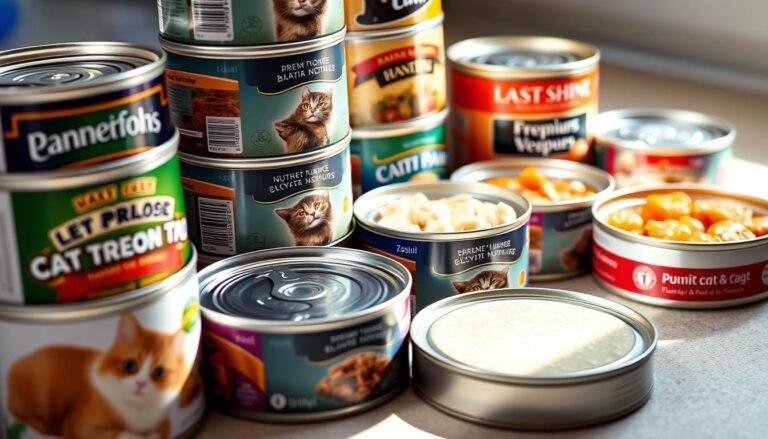
Purina Indoor Cat Food: An Honest Line-by-Line Review (2026)
Direct Answer
Purina makes three indoor cat food lines worth knowing: Cat Chow Indoor (budget, acceptable), ONE Indoor Advantage (solid mid-range), and Pro Plan Indoor Care (the best of the three by a clear margin). Pro Plan is the only Purina indoor formula I recommend without reservation — real chicken first, 45% protein DMB, and research-backed formulation.
Purina is the most purchased cat food brand in the United States. That fact alone means millions of indoor cats eat some version of a Purina indoor formula every single day.
The problem is that “Purina indoor cat food” covers a range so wide it’s almost misleading to group them together. Cat Chow Indoor and Pro Plan Indoor share a brand name and almost nothing else — different ingredients, different protein quality, different nutritional outcomes.
I’ve spent time analyzing every Purina indoor formula on the market. Here’s exactly what each one delivers, where each one falls short, and which one is actually worth your money.
Quick Comparison Table
| Formula | Protein DMB | Cal/Cup | First Ingredient | Fiber Source | Cost/Day | Verdict |
|---|---|---|---|---|---|---|
| Purina Cat Chow Indoor | 36% | ~260 kcal | Chicken | Powdered cellulose | ~$0.30 | Acceptable — not ideal |
| Purina ONE Indoor Advantage | 43% | ~371 kcal | Chicken | Natural fiber | ~$0.60 | Solid mid-range |
| Purina Pro Plan Indoor Care | 45% | ~394 kcal | Chicken | Natural fiber blend | ~$0.70 | Best Purina indoor pick |
| Purina Pro Plan Indoor Hairball | 44% | ~389 kcal | Chicken | Turtlegrass + fiber | ~$0.75 | Best for hairballs |
| Purina Pro Plan Wet Indoor | 52% | ~180 kcal/can | Chicken | N/A — wet formula | ~$1.20 | Best Purina wet option |
Based on a healthy 10 lb adult indoor cat. DMB = Dry Matter Basis.
Why Purina Dominates — And Why That’s Complicated
Walk into any grocery store, big-box retailer, or pet supply chain in America and Purina occupies more shelf space than any other brand. That is not an accident and it is not purely marketing.
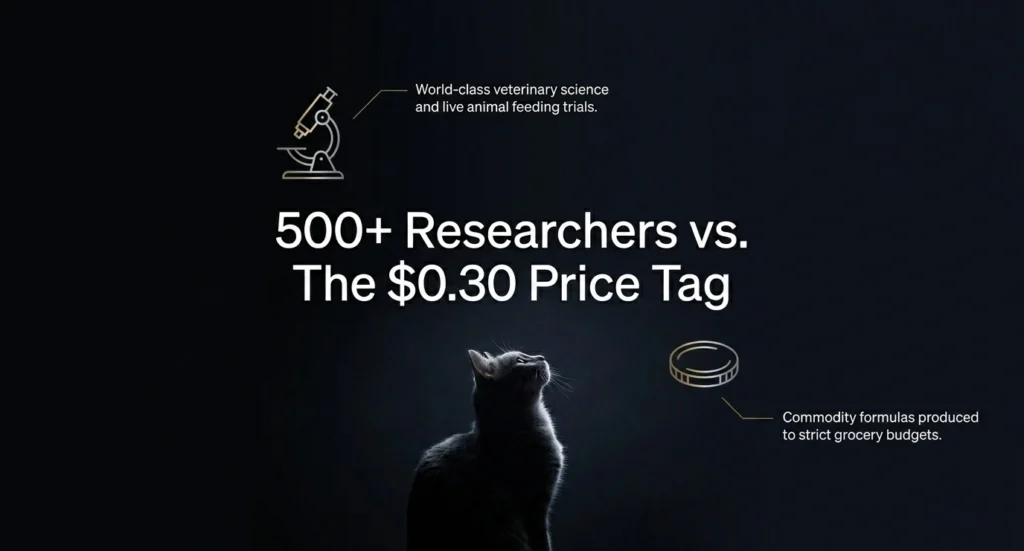
Purina employs over 500 veterinary nutritionists, animal scientists, and researchers across their facilities. They have published peer-reviewed nutritional research. Their feeding trials use actual animals rather than just calculated formulations. For a mass-market brand, that level of investment in nutritional science is genuinely unusual.
But here is the complication.
Purina is not one thing. It is a brand family spanning a price range from $0.30 to $1.20 per day — and the formulas at the lower end of that range are not the output of that impressive research infrastructure. They are commodity pet food produced to a cost target, competing on price, and sold on brand recognition.
When a veterinarian recommends “Purina” for your cat, they almost certainly mean Pro Plan. When a grocery store shopper reaches for “Purina” because it feels trustworthy, they often go home with Cat Chow.
Those are different products delivering different nutrition. Understanding where each formula sits on that spectrum is exactly what this review is for.
Purina Cat Chow Indoor — The Honest Assessment
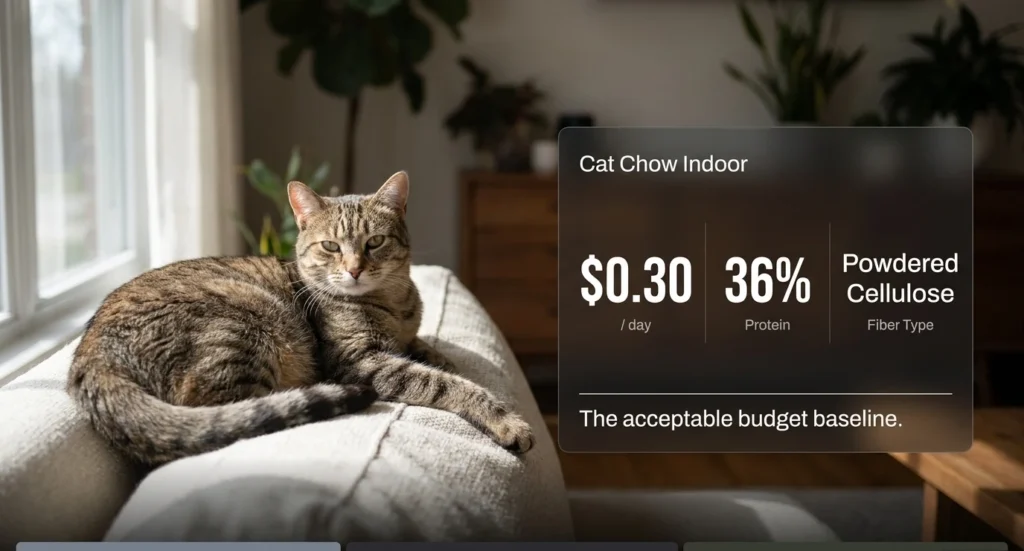
Cat Chow Indoor is the entry point of the Purina indoor lineup and the most widely purchased option in the range.
Chicken is listed first on the ingredient panel — a legitimate positive. But look at what follows immediately: corn meal, soy flour, corn gluten meal, beef tallow. Corn and soy are providing a significant share of the protein and caloric content in this formula.
Protein on a dry matter basis sits at approximately 36%. That is below the 40% threshold I use as a baseline recommendation for indoor cats. It is not dangerously low. It is simply not impressive for a cat whose primary dietary requirement is quality animal protein.
The fiber source is powdered cellulose — the cheapest and least functional fiber option in cat food. It adds bulk to the diet, reducing how much your cat eats per serving, and does relatively little for hairball management beyond that mechanical effect.
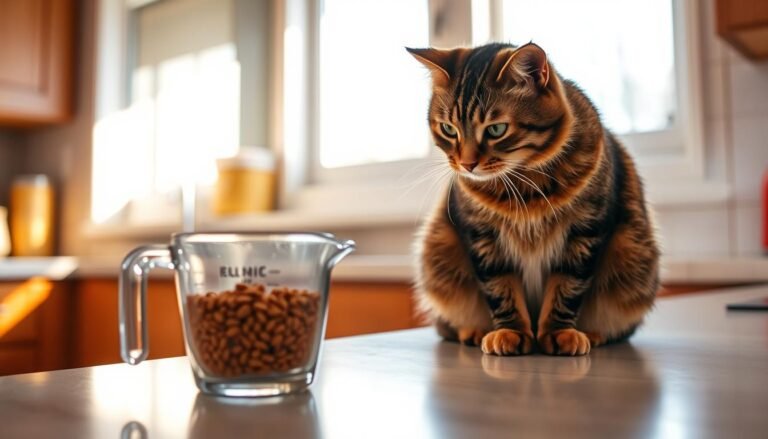
Calorie density at ~260 kcal per cup is actually a genuine positive. For a free-feeding household — which Cat Chow Indoor is often used in — lower calorie density provides some natural protection against overconsumption. That said, free-feeding any kibble, regardless of calorie density, remains the single biggest driver of indoor cat obesity.
Who should feed Cat Chow Indoor
A healthy adult indoor cat with no weight issues, no hairball problems, no urinary history, and no digestive sensitivities will not be harmed by Cat Chow Indoor as a daily food. It meets AAFCO minimum standards for adult maintenance. It is not an embarrassing choice.
But it is not the best choice at its price point. Iams Indoor Weight & Hairball delivers comparable nutrition with a better fiber source for approximately $0.15 more per day. And Purina’s own ONE Indoor Advantage delivers meaningfully better protein for $0.30 more.
The bottom line: Cat Chow Indoor is acceptable budget food. If it is genuinely all the budget allows, it is a defensible option for a healthy cat. If $0.30 more per day is possible, spend it — either on ONE or on a single daily wet food meal with Fancy Feast Classic Paté.
Purina ONE Indoor Advantage — The Underrated Middle Option
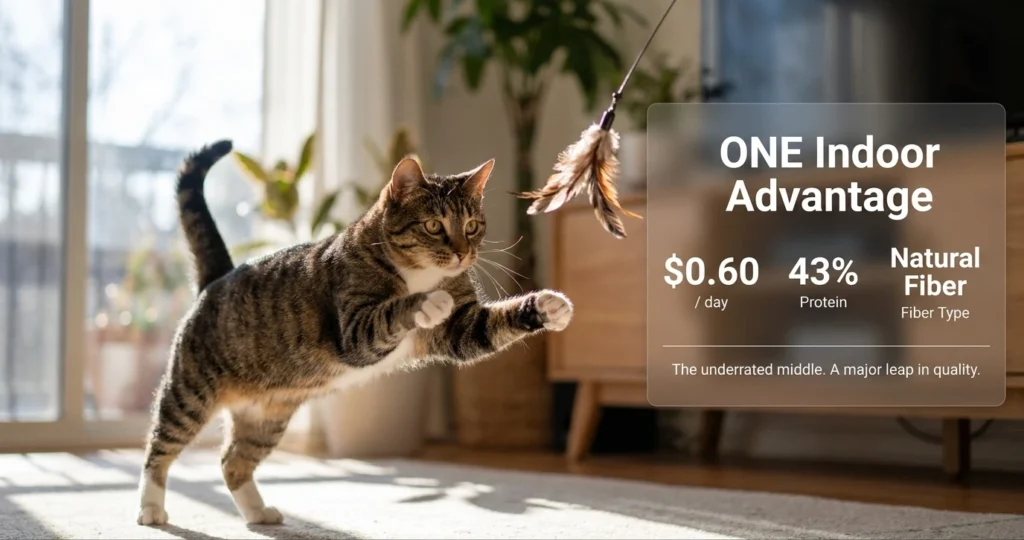
Purina ONE Indoor Advantage sits between Cat Chow and Pro Plan in both price and quality — and in my experience, it is consistently underrated by cat owners who either buy down for price or buy up for prestige.
Real chicken leads the ingredient list. Protein reaches approximately 43% on a dry matter basis — a solid seven-point improvement over Cat Chow. The formula drops the heavy corn-and-soy structure of the budget line and builds its protein base more firmly on animal sources.
There are no artificial colors or preservatives. Natural fiber sources are used for hairball control rather than pure cellulose. Calorie density at ~371 kcal per cup is appropriate for indoor adults.
Palatability is consistently high. This matters more than ingredient lists acknowledge. The most nutritionally impressive food on the planet fails your cat if they walk away from the bowl. ONE Indoor Advantage has strong palatability across a wide range of cats — picky eaters included.
Where ONE Indoor Advantage falls short
The ingredient list, while better than Cat Chow, still includes some corn content. It is not grain-free. For cats with known grain sensitivities or confirmed digestive responses to corn or wheat, this formula is not appropriate — Wellness CORE Indoor is a better fit in that case.
The gap between ONE and Pro Plan in nutritional quality is real but not dramatic. At $0.10 more per day for Pro Plan, most owners should make that jump. But ONE Indoor Advantage is a genuinely good food — not a compromise.
The bottom line: If Pro Plan pricing is slightly out of reach or your cat simply won’t accept Pro Plan’s texture, ONE Indoor Advantage is a confident recommendation. Better protein than Cat Chow, clean enough ingredient deck, strong palatability, and a price that works for most households.
Purina Pro Plan Indoor Care — The Best Purina Indoor Formula
Pro Plan Indoor Care is where Purina’s research investment becomes visible in the bag.
Real chicken is the first ingredient and the formula stays anchored to animal protein throughout. Protein reaches approximately 45% on a dry matter basis. Fat is appropriately moderate. Carbohydrates are present — as they are in every dry food — but not dominating the formula the way they do in Cat Chow.
The fiber blend is more sophisticated than either of the lower-tier formulas — designed to reduce hairball formation through improved gut motility, not just mechanical bulk. Calorie density at ~394 kcal per cup is slightly higher than ONE, which means portion control is important — but the protein quality justifies the density.
Palatability across Pro Plan products is the most consistent I’ve tested in mainstream dry food. Cats who have rejected multiple premium grain-free formulas often accept Pro Plan without resistance. That consistency is not accidental — it reflects genuine investment in formulation testing with real animals.
Pro Plan Indoor Care vs. Wellness CORE Indoor
This is the most common comparison I get asked about — and the honest answer is nuanced.
Wellness CORE Indoor delivers higher protein at 50% DMB and a fully grain-free formula. For cats with grain sensitivities or owners who prioritize a cleaner ingredient deck, CORE Indoor is the better nutritional choice.
Pro Plan Indoor Care delivers more consistent palatability, stronger veterinary backing, and broader availability. For cats with no sensitivities who need a reliable daily food that any grocery store or pet supply chain carries, Pro Plan is the easier long-term commitment.
Neither choice is wrong. The right answer depends on your cat’s specific needs and your willingness to source food outside mainstream retail.
The bottom line: Pro Plan Indoor Care is the only Purina indoor formula I recommend as a first choice rather than a fallback. If you are feeding any other Purina indoor formula and budget allows an upgrade to Pro Plan, make that move.
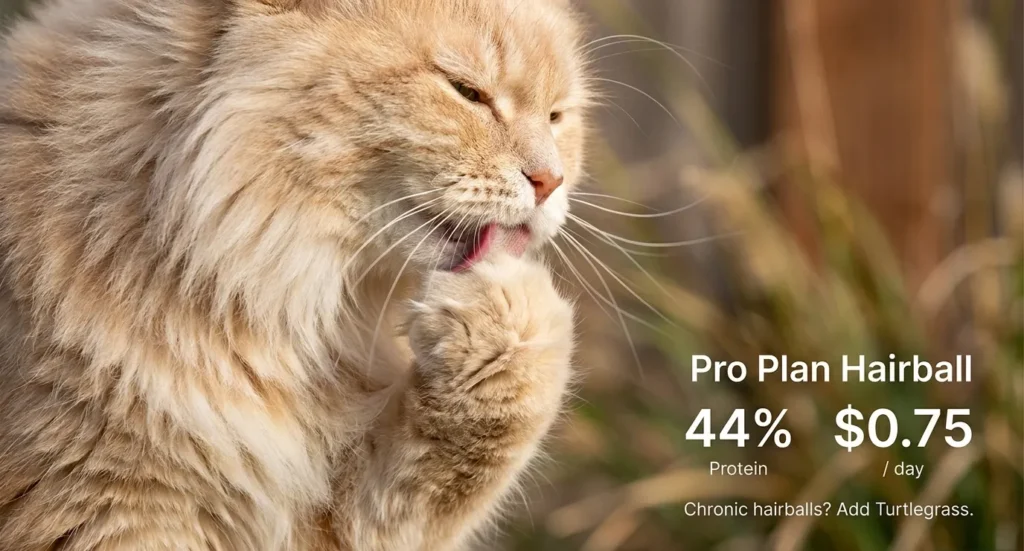
Purina Pro Plan Indoor Hairball — For Chronic Hairball Cases
If your cat vomits hairballs more than once a week on a standard dry formula, Pro Plan Indoor Hairball is worth considering as a targeted solution within the Purina range.
The formula adds turtlegrass and an enhanced fiber blend on top of the standard Pro Plan base. Protein stays at approximately 44% DMB — nearly identical to the standard Indoor Care formula. The caloric difference is negligible.
In real-world use, readers who switch chronic hairball-producing cats to this formula consistently report a reduction in frequency within three to four weeks — not elimination, but meaningful reduction.
One honest note: If your cat is producing hairballs more than twice weekly regardless of food, a vet check is worthwhile before attributing the issue entirely to diet. Excessive grooming can indicate anxiety, skin irritation, or other underlying issues that food changes alone won’t address.
Purina Pro Plan Wet Indoor — The Often-Overlooked Option
Most discussions of Purina indoor cat food focus entirely on dry formulas. That misses one of the brand’s strongest offerings.
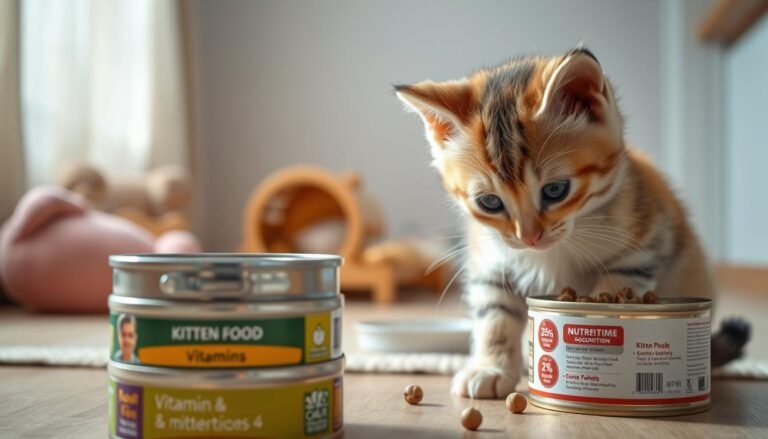
Purina Pro Plan wet food — specifically the Indoor Salmon & Rice and Indoor Chicken & Rice entrées — delivers approximately 52% protein on a dry matter basis, moisture content around 78%, and a clean ingredient structure built on real named fish or poultry.
For indoor cats with any history of urinary issues, chronic dehydration symptoms, or significant weight gain on dry food, adding one Pro Plan wet meal daily — even while maintaining Pro Plan dry food as the second meal — makes a meaningful nutritional difference.
Cost comparison: At approximately $1.20/day for a 10 lb cat, Pro Plan wet runs about $0.50 more per day than Pro Plan dry. That $15/month difference buys a meaningfully better hydration outcome — and potentially avoids a veterinary urinary care visit that costs many times more.
The Real Purina Ranking — Straight Answer
If someone asks me which Purina indoor cat food to buy, the answer is always the same:
Pro Plan Indoor Care first. Research-backed, consistent quality, strong palatability, widely available. If your cat has chronic hairballs, choose the Hairball variety instead.
ONE Indoor Advantage second. A genuine mid-range option — not a compromise — for households where Pro Plan pricing is a stretch.
Cat Chow Indoor last. Acceptable for a healthy adult cat on a genuine budget. Not recommended when better options are within reach.
Add a wet meal daily regardless of which formula you choose. No dry food — including the best Pro Plan formula — addresses the moisture limitation that every dry diet carries.
Switching Between Purina Formulas
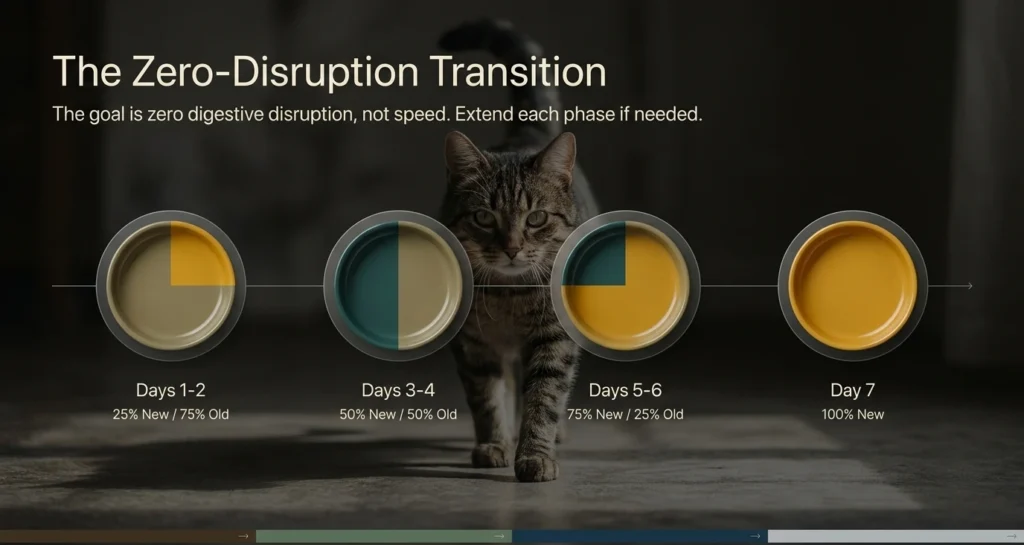
Moving from Cat Chow to ONE, or ONE to Pro Plan, still requires a transition schedule even within the same brand family. Different formulas have different fiber content, fat levels, and ingredient structures. A cold switch between any two foods risks digestive upset.
Use the standard seven-day ratio: 75% old food, 25% new food for two days. Then 50/50 for two days. Then 25% old, 75% new for two days. Full transition on day seven.
For particularly sensitive cats, extend each phase by one additional day. The goal is zero disruption — not speed.
Key Takeaways
- Purina indoor cat food covers a wide quality range — Cat Chow, ONE, and Pro Plan are three meaningfully different products sharing a brand name
- Pro Plan Indoor Care is the only Purina indoor formula worth recommending as a first choice — 45% protein DMB, research-backed formulation, consistent palatability
- ONE Indoor Advantage is a solid mid-range option that outperforms its price point and is consistently underrated
- Cat Chow Indoor is acceptable for a healthy adult on a genuine budget — not the best value at its price point
- Add at least one wet meal daily regardless of which Purina dry formula you choose — no dry food solves the moisture limitation
- Transition between formulas on a seven-day schedule even within the same brand family
Start Here This Week
- Identify which Purina formula you are currently feeding and calculate its protein on a dry matter basis
- If you are on Cat Chow Indoor and budget allows, upgrade to ONE or Pro Plan using the seven-day transition schedule
- Add one wet meal daily — Fancy Feast Classic Paté at $0.55/day is the most affordable entry point
- If hairballs are a consistent issue, switch to Pro Plan Indoor Hairball and monitor for four weeks
Sarah Mitchell reviews all products independently. No brand — including Purina — pays for placement or review framing on Purreats.com. Affiliate links support independent publishing.
Related on Purreats: Best Dry Cat Food for Indoor Cats · Best Cat Food for Indoor Cats · Best Wet Cat Food for Indoor Cats · How to Read a Cat Food Label