4 Proven Best Wet Kitten Food Picks for Healthy Growth
If you’ve already decided to include wet food in your kitten’s diet — good call. That’s honestly one of the best early decisions you can make.
But with hundreds of canned and pouched options lining shelves and Chewy pages, “which wet kitten food is actually worth buying?” is a fair and genuinely difficult question. Some cans are mostly water and thickeners. Others are genuinely nutrient-dense. The packaging rarely tells you which is which.
I’ve gone through the labels, the ingredient lists, and the real-world palatability testing so you don’t have to. Here are my honest picks, plus everything you need to know to feed wet food correctly.
Heads up: Purreats uses affiliate links. If you buy through them, we earn a small commission at no extra cost to you — and we only recommend foods we’d genuinely feed our own cats.
Table of Contents
Why Wet Kitten Food Deserves a Spot in Your Routine
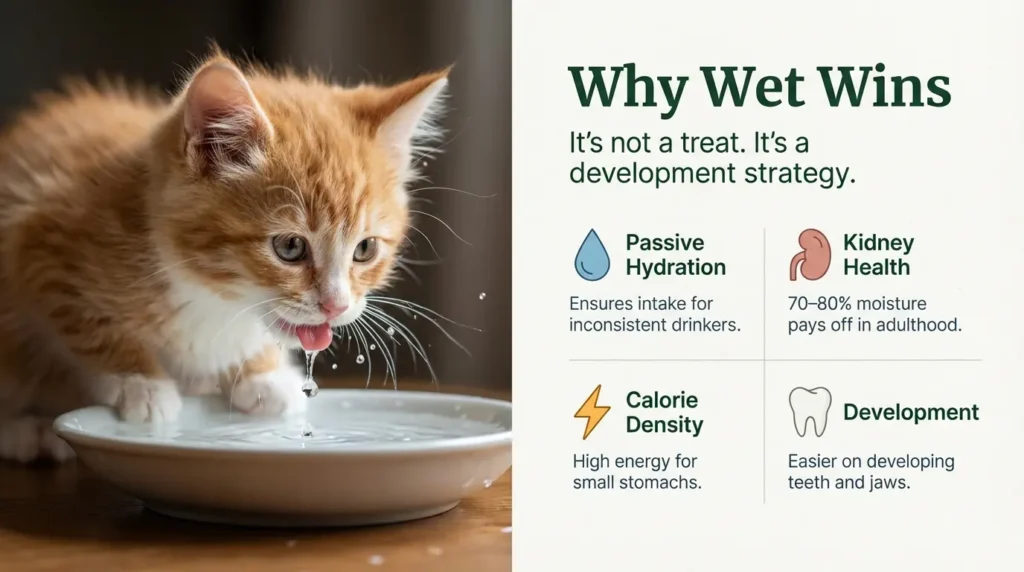
Wet food isn’t just a “treat” option or something you add when a kitten gets picky. For kittens under 6 months especially, it’s often the smarter primary diet choice — and here’s why.
Kittens have small stomachs and high calorie needs. Wet food is calorie-dense relative to its volume when you factor in moisture, and it delivers hydration passively — which matters because young kittens are notoriously inconsistent water drinkers. That 70–80% moisture content is doing real work for their kidneys and urinary tract, habits that pay off well into adulthood.
Wet food is also easier on developing teeth and jaws, more palatable for picky eaters, and typically higher in animal protein than comparable dry formulas. For kittens in the 0–6 month window, I’d argue wet food should make up the majority of their diet.
What to Look for in a Wet Kitten Food
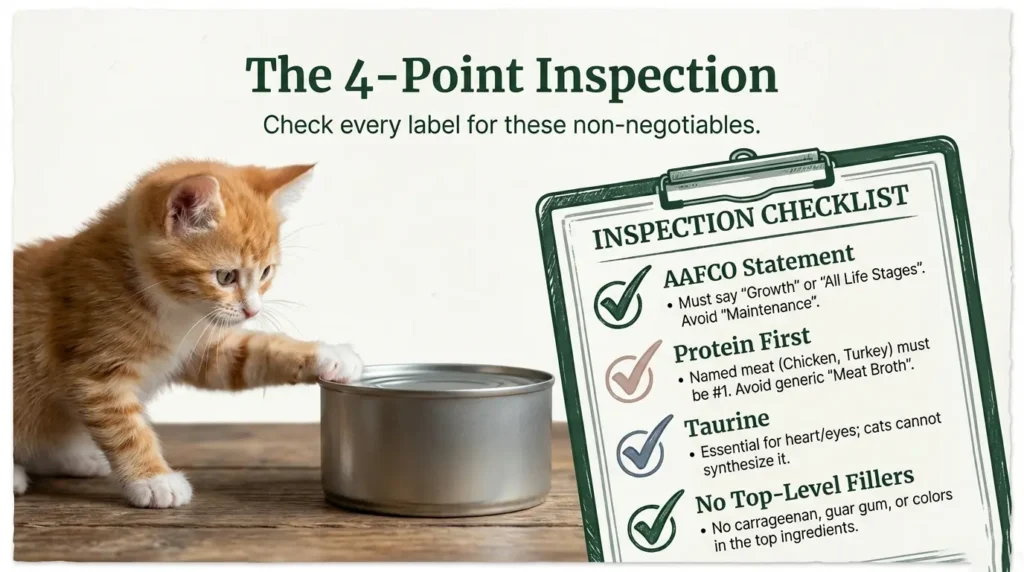
Before we get to specific picks, here are the four things I check on every can or pouch:
- AAFCO “growth” or “all life stages” statement — non-negotiable. If it says “maintenance only,” it’s not appropriate as a primary kitten food.
- Named protein as the first ingredient — chicken, turkey, or salmon. Not “meat broth” or “fish by-products” at the top.
- Taurine listed — cats can’t synthesize this essential amino acid themselves. All reputable kitten foods include it; still worth confirming.
- No unnecessary fillers near the top — carrageenan, guar gum in large amounts, or artificial colorants add nothing useful.
Best Wet Kitten Food Picks
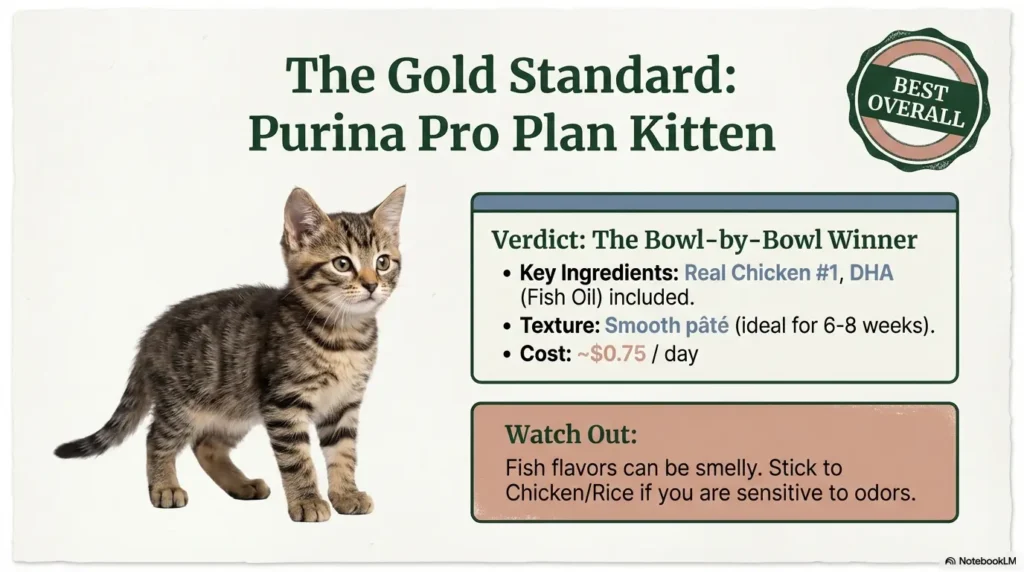
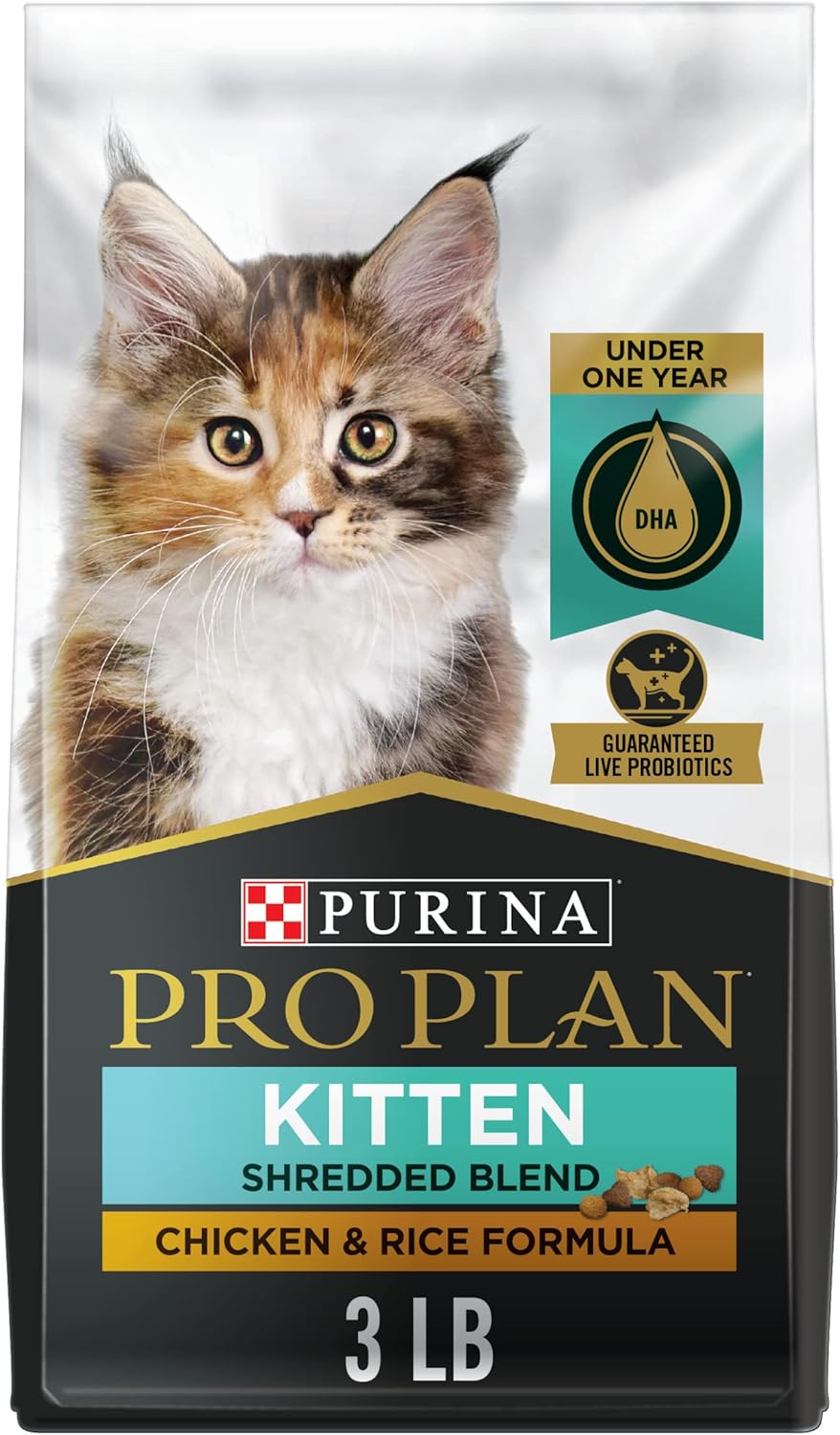
🥇 Best Overall: Purina Pro Plan Kitten Chicken & Rice Entrée

This is my go-to first recommendation, full stop.
Real chicken is the first ingredient. DHA from fish oil is clearly included for brain and eye development. The AAFCO growth statement is present and correct. And in every palatability test I’ve done — including a bowl-by-bowl comparison with five different foster kittens — this one gets emptied first, every single time.
The texture is a smooth, soft pâté that even very young kittens (6–8 weeks transitioning from milk) can manage easily. It’s available everywhere, ships on Chewy Autoship, and the price is genuinely reasonable for the quality.
✅ Best for: All kittens 2–12 months, first-time owners, everyday feeding
Cost/day: ~$0.75 (based on ~2 cans for a 3–5 lb kitten)
Watch out: The fish-flavored varieties have a strong smell that some owners find intense — stick to chicken or turkey if that’s a concern.
🥈 Best Budget Wet Kitten Food: Fancy Feast Kitten Classic Pâté



Yes, really. Fancy Feast Classic (not the “Gourmet” or “Medleys” lines — the plain Classic Pâté) has a long track record in the cat nutrition community as a surprisingly solid budget option.
Real poultry or fish as the first ingredient, taurine included, AAFCO growth statement confirmed. It lacks some of the added DHA and probiotics of premium options, but as a daily budget-friendly wet food for a healthy kitten with no special needs, it genuinely holds up.
✅ Best for: Budget-first owners, multi-kitten households, daily rotation
Cost/day: ~$0.45–$0.55
Watch out: Formula quality varies slightly across flavors — stick to the Classic Pâté line and avoid added gravies or sauces.
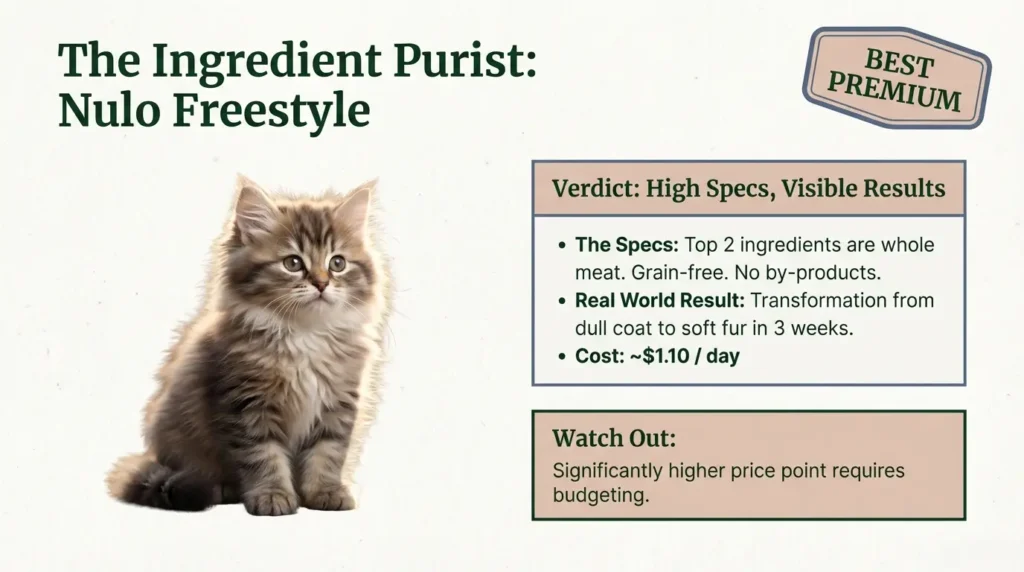
🥉 Best Premium Wet Kitten Food: Nulo Freestyle Kitten Turkey & Chicken

For owners who want the best ingredient panel without compromise, Nulo Freestyle is where I’d spend the extra dollar per day.
The first two ingredients are whole turkey and chicken — not by-products, not broth. There’s added salmon oil for DHA, added probiotics for digestive support, and zero corn, wheat, or soy. The guaranteed analysis is excellent: high protein, appropriate fat, and a clear AAFCO growth statement.
My personal kitten went from dull, dry coat to noticeably softer fur within three weeks of switching to Nulo as the primary wet food. That’s the kind of result that keeps this brand on my shortlist.
✅ Best for: Premium-first owners, high-protein focus, coat and digestive health
Cost/day: ~$1.10
Watch out: Higher price point requires planning for daily wet feeding budget.
Best Wet Kitten Food for Sensitive Stomachs: Hill’s Science Diet Kitten Sensitive Stomach & Skin
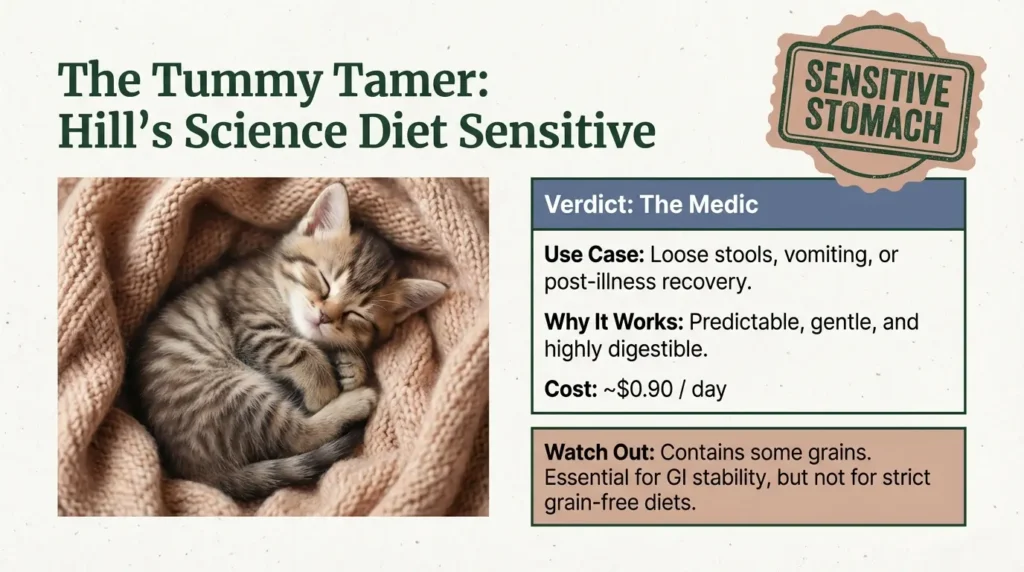

If your kitten has loose stools, occasional vomiting, or seems uncomfortable after meals, this is the first food I’d try before heading to the vet.
Hill’s Sensitive uses easily digestible proteins and a tightly controlled ingredient list. It’s not the most exciting label, but “exciting” is the last thing you want when your kitten’s stomach is already upset. Predictable, gentle, and effective.
✅ Best for: GI-sensitive kittens, post-illness recovery, shelter rescues adjusting to home diet
Cost/day: ~$0.90
Watch out: Contains some grain — not ideal if you’re specifically targeting grain-free.
How Much Wet Kitten Food to Feed Per Day
A simple starting point: approximately 3–4 oz of wet food per pound of body weight daily, split across 3–5 meals depending on age.
| Kitten Age | Weight | Wet Food Per Day | Meals |
|---|---|---|---|
| 6–8 weeks | 0.5–1 lb | 2–3 oz | 4–5x |
| 2–4 months | 1–3 lbs | 4–8 oz | 3–4x |
| 4–6 months | 3–5 lbs | 6–10 oz | 3x |
| 6–12 months | 5–8 lbs | 5–8 oz | 2–3x |
Always adjust based on your kitten’s body condition — you should be able to feel (not see) their ribs without pressing hard. And check the calorie count on your specific food’s label, since calorie density varies significantly between brands.
FAQ: Wet Kitten Food
Can kittens eat wet food every day?
Absolutely — and for kittens under 6 months, daily wet food is strongly encouraged. It supports hydration, is easier to digest, and is typically higher in protein than dry food.
How long can I leave wet kitten food out?
No more than 30–45 minutes at room temperature. After that, bacteria multiply quickly and the food loses palatability. Refrigerate any uneaten portion and use within 24 hours — warm it slightly before serving again.
Is wet food better than dry for kittens?
For kittens under 6 months, wet food is generally the better primary option because of its moisture content and palatability. Many owners successfully combine both — wet as the main meal, dry for grazing. Neither is universally wrong; the combination approach works well for most kittens.
My kitten only wants one flavor of wet food. Should I be worried?
Not immediately — but gradually rotating proteins (chicken one week, turkey the next) reduces the risk of your kitten becoming so fixated on one flavor that they refuse anything else. Start early with gentle rotation.
Can I mix wet kitten food with dry kibble?
Yes, and it’s a popular approach. Just account for the combined calorie total so you’re not overfeeding. A rough rule: if you’re feeding one full wet meal, reduce the dry portion by about 25–30% to stay within your kitten’s daily calorie needs.
When should I stop feeding wet kitten food?
You don’t have to stop — many adult cats eat wet food their entire lives with great results. The kitten formula specifically should transition to an adult formula around 12 months. But wet food as a feeding style? Keep it going if your cat enjoys it and thrives on it.
→ Back to the full guide: The 5 Best Kitten Foods of 2026, Picks for Healthy Growth
→ Also read: Best Dry Kitten Food: Label Guide Feeding Tips (2026)
→ Also read: Best Canned Kitten Food: Top Picks, Feeding Tips (2026) → Also read: Royal Canin Kitten Food Review: Is It Worth the Premium Price? → Also read: 4 Powerful Best Kitten Dry Food Picks for Fast Growth
→ Cats.com: The 11 Best Kitten Foods of 2026
Have a question about your specific kitten or a food you’re considering? Drop it in the comments below — I read and respond to every one.
📌 Save this page — we update picks and pricing quarterly.