Best Grain Free Dry Cat Food: 6 Brands That Don’t Cut Corners
Quick Answer: What You Need to Know Right Now
Grain free dry cat food replaces wheat, corn, rice, and oats with peas, potatoes, or lentils—but the best formulas deliver 40%+ protein from real meat (chicken, turkey, salmon), keep carbs under 20%, and cost $2-5 per pound. The top-rated options are Orijen Original (44% protein, 15% carbs, premium quality), Wellness CORE (45% protein, 18% carbs, best value), and Taste of the Wild (42% protein, 19% carbs, budget-friendly). What matters most: the first three ingredients should be named animal proteins, not pea protein or vague “meat meal.” Dry food needs binders to form kibble, so even grain-free formulas contain some carbs—the question is whether it’s minimal sweet potato for structure or excessive pea flour padding the formula.
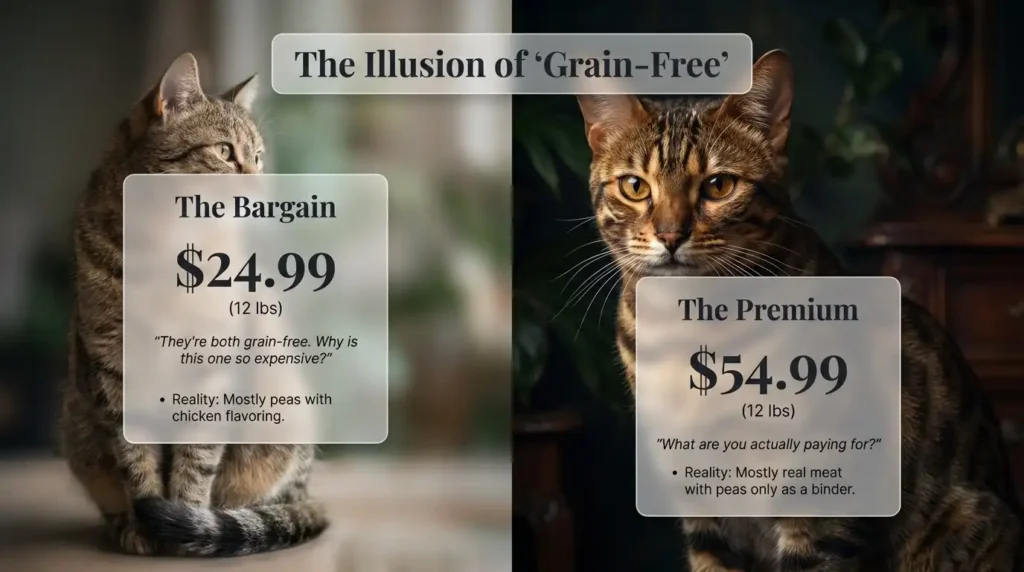
I was at Petco last week when I watched a woman compare two bags of grain-free dry cat food. One was $24.99 for 12 pounds. The other was $54.99 for the same size.
“They’re both grain-free,” she muttered. “Why is this one so expensive?”
I glanced at the labels. The cheap one listed peas, pea protein, and pea fiber in the first five ingredients—three different forms of the same plant used to inflate protein numbers without using real meat. The expensive one had chicken, chicken meal, turkey meal, and salmon meal as the first four ingredients.
“The cheap one is mostly peas with chicken flavoring,” I told her. “The expensive one is mostly meat with peas as a binder. That’s the price difference.”
That’s the grain-free dry food trap. The label creates an illusion of premium nutrition, but ingredient quality varies wildly. Some grain-free kibbles are genuinely high-protein, low-carb formulas built around whole meat. Others are just regular kibble with peas instead of corn—same nutritional profile, higher price tag.
Table of Contents
What Separates Good Grain Free Dry Food from Junk
Dry cat food needs carbohydrates to form kibble. You can’t make crunchy pieces out of pure meat—you need starches to bind the ingredients together during the extrusion process.
The difference between quality grain-free kibble and garbage is how much plant material and what kind.
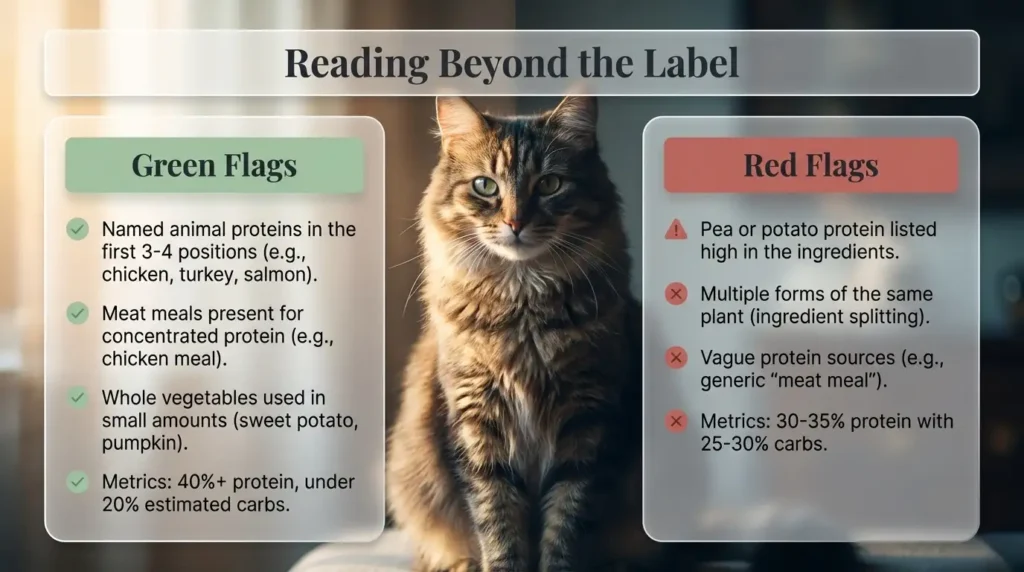
Good Grain Free Dry Food:
- Named animal proteins in the first 3-4 positions (chicken, turkey, salmon)
- Meat meals for concentrated protein (chicken meal, turkey meal—these are good)
- Whole vegetables in small amounts (sweet potato, pumpkin for fiber)
- Minimal legumes (one or two types max)
- 40%+ protein, under 20% estimated carbs
Bad Grain Free Dry Food:
- Pea protein or potato protein high in the ingredient list
- Multiple forms of the same plant (peas, pea protein, pea fiber = ingredient splitting)
- Vague protein sources (“meat meal” instead of “chicken meal”)
- 30-35% protein with 25-30% carbs
The Best Grain Free Dry Cat Foods
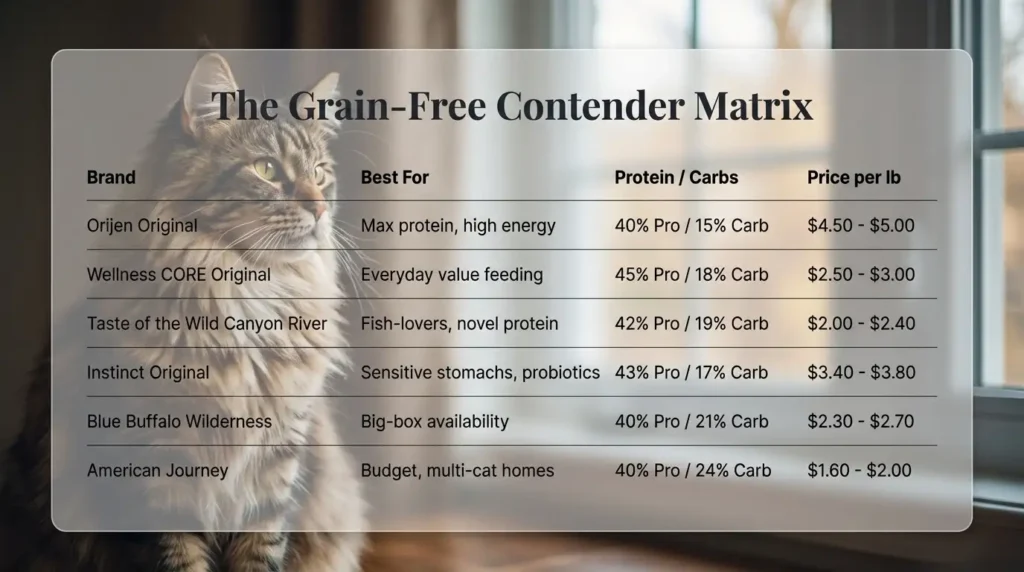
1. Orijen Original Grain-Free
Best for: Maximum protein, high energy cats, whole-prey nutrition
Orijen is the gold standard. The first fifteen ingredients are all animal-based: chicken, turkey, whole flounder, chicken liver, turkey liver, chicken heart, turkey heart, whole herring. They use muscle meat, organs, and cartilage to mimic what cats would eat in nature.
Protein: 40% as-fed (44% dry matter basis). Estimated carbs: 15%—exceptional for dry food.
Watch-outs: Premium pricing at $4.50-$5.00/lb. Cats transitioning from lower-protein foods need a slow two-week switch.
2. Wellness CORE Original Formula
Best for: Everyday feeding, best quality-to-price ratio
This is my most-recommended formula. First three ingredients: deboned turkey, turkey meal, chicken meal—all real animal proteins. Protein hits 45% crude.
Estimated carbs around 18%, driven by peas and potatoes as binders. Includes added taurine, salmon oil for omega-3s, and probiotics.
Watch-outs: Contains peas and potatoes. If your cat has legume sensitivities, skip this.
Price: Around $2.50-$3.00/lb, widely available
3. Taste of the Wild Canyon River
Best for: Fish-loving cats, novel protein source
Centers on trout and salmon—good for cats with poultry sensitivities. Protein: 42%, ocean fish meal and smoked salmon as concentrated sources. Estimated carbs: 19%.
Watch-outs: Strong fish aroma. Fish-based foods can contribute to urinary pH issues in some cats—monitor if your cat has a history of crystals.
Price: Around $2.00-$2.40/lb
4. Blue Buffalo Wilderness Chicken
Best for: Transitioning from grocery store brands, wide availability
Widely available at big-box stores. Chicken and chicken meal are solid protein sources, 40% protein. Includes LifeSource Bits with added vitamins and antioxidants.
Watch-outs: More peas than premium brands. Estimated carbs around 21%. Blue Buffalo has had quality control issues—check for recalls.
Price: Around $2.30-$2.70/lb
5. Instinct Original Grain-Free
Best for: Sensitive stomachs, probiotic support
Uses cage-free chicken with a clean ingredient list. Features freeze-dried raw coating on each kibble piece for added aroma. Protein: 43%, estimated carbs: 17%. Includes probiotics for digestive health.
Watch-outs: Freeze-dried coating can be messy.
Price: Around $3.40-$3.80/lb
6. American Journey Grain-Free
Best for: Budget feeding, multi-cat households
Chewy house brand = lower prices. Chicken and chicken meal first, 40% protein. Estimated carbs 23-24%—higher than premium brands, but acceptable for the price.
Watch-outs: Chewy exclusive. Higher pea content—not ideal for legume sensitivities.
Price: $1.60-$2.00/lb
How to Choose the Right Formula
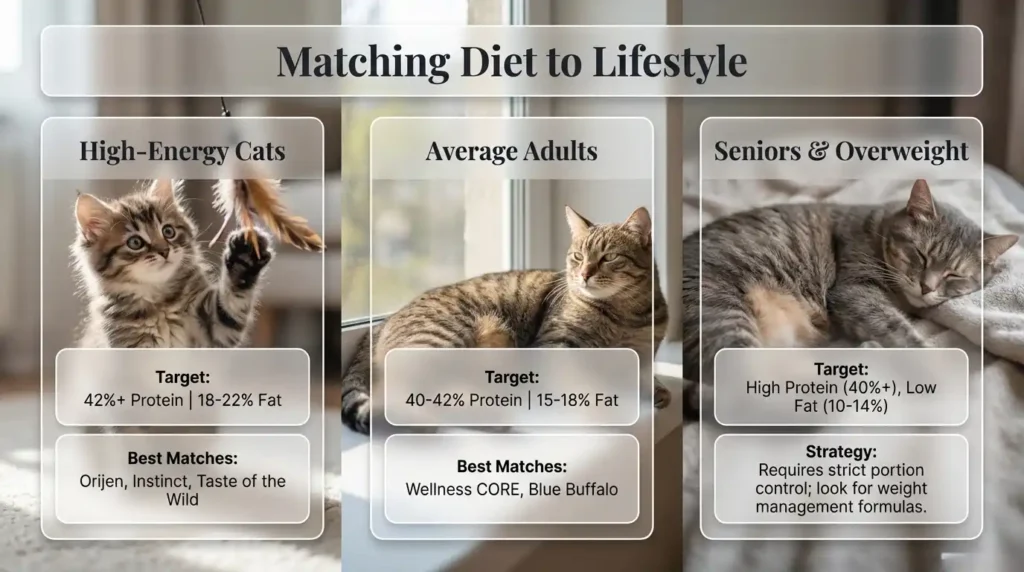
Match to Activity Level
High-energy cats: 42%+ protein, 18-22% fat (Orijen, Instinct, Taste of the Wild)
Average adults: 40-42% protein, 15-18% fat (Wellness CORE, Blue Buffalo)
Seniors/less active: 38-40% protein, 12-15% fat (look for “indoor” or “weight management” formulas)
Overweight cats: High protein (40%+), low fat (10-14%), with portion control
Read Beyond the Label
The guaranteed analysis shows protein percentage, but not where it comes from.
Example 1: Protein: 40%, First 3 ingredients: Chicken, chicken meal, turkey meal = High-quality animal protein
Example 2: Protein: 40%, First 3 ingredients: Chicken, peas, pea protein = Plant protein inflating the number
Both show 40% on the label, but only Example 1 delivers bioavailable animal-based nutrition.
Calculate Real Monthly Costs
Calculate Real Monthly Costs Don’t compare bag prices—compare actual monthly costs. (Bag price ÷ pounds) × (pounds cat eats/month) = Monthly cost Most 10-pound cats eat 1/3 to 1/2 cup daily = roughly 4-6 pounds per month. Example: Orijen: $60 for 12 lbs = $5/lb × 5 lbs/month = $25/month American Journey: $32 for 12 lbs = $2.67/lb × 5 lbs/month = $13.35/month
Common Mistakes to Avoid
Overfeeding High-Protein Food
High-protein kibble is more calorie-dense. If you feed the same volume as before, your cat will gain weight. Always check feeding guidelines and adjust portions.
Ignoring Hydration
Dry food is only 10% moisture. Cats eating kibble-only need to drink significantly more water.
Solutions:
- Add water to kibble (let it soak 5 minutes)
- Feed wet food as 25-50% of daily calories
- Use a cat water fountain
- Provide multiple water bowls
Assuming All Grain Free Foods Are Equal
Quality ranges from Orijen (85% animal ingredients) to bargain brands (pea protein with chicken flavor). Both are “grain-free,” but not remotely comparable.
Always read ingredient lists, calculate carbs, and check protein sources.
Frequently Asked Questions
What You Need to Remember
The best grain-free dry cat foods use named animal proteins as the first three ingredients, keep carbs under 20%, and avoid pea protein as a primary ingredient. Top picks: Orijen for premium quality, Wellness CORE for best value, American Journey for budget feeding.
Action steps:
- Check first three ingredients are animal-based
- Calculate carbs: 100 – protein – fat – fiber – moisture – ash (use 6% if ash not listed)
- Compare monthly costs, not bag prices
- Transition slowly over 10-14 days
- Monitor weight, coat quality, and stool consistency
The grain-free label is just the starting point. Ingredient quality determines whether you’re feeding premium nutrition or overpriced pea flour.
Have a question about your specific Grain Free Cat Food food you’re considering? Drop it in the comments below — I read and respond to every one.
→ FULL GUIDE : 5 Best Grain Free Cat Food Picks for 2026
→ Deep dive: The 10 Best Grain Free Cat Foods
Bookmark this page — product picks and pricing verified quarterly.