How Much Should I Feed My Cat?
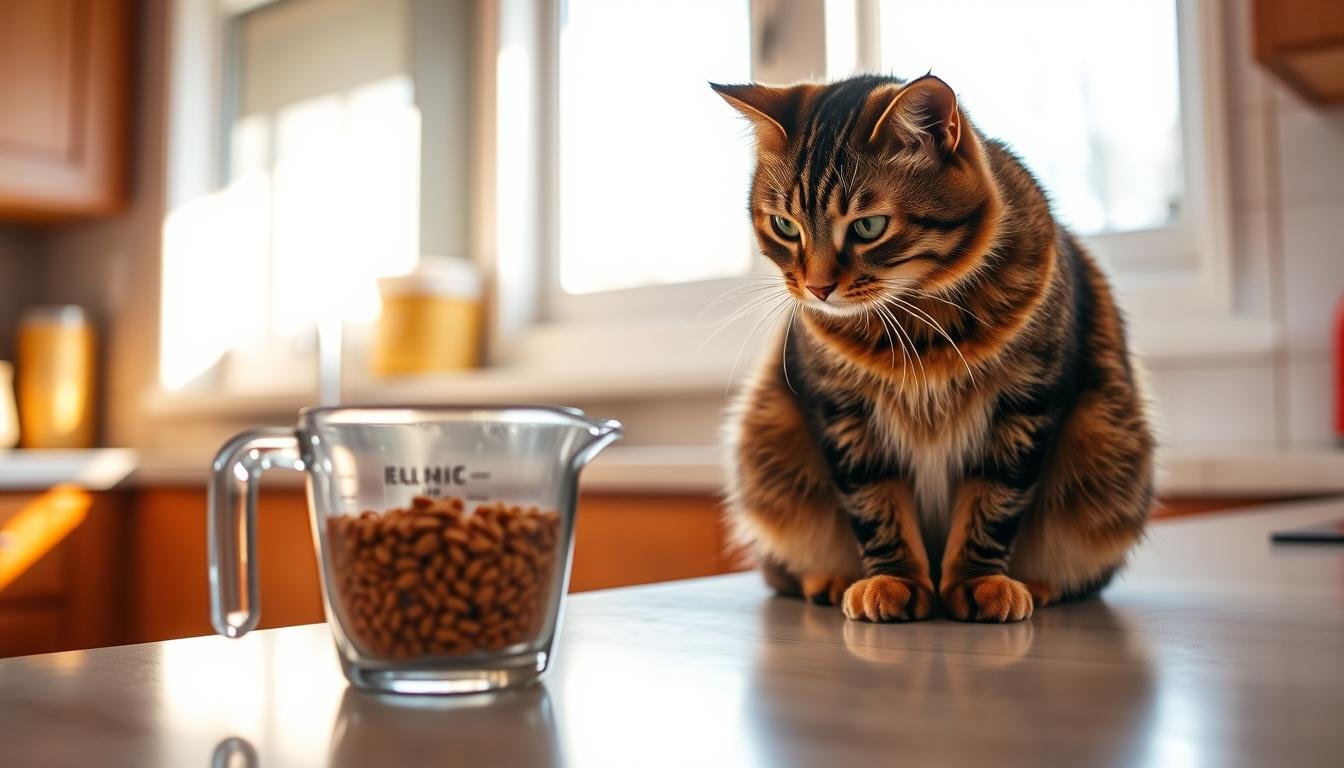
Ever thought about if the scoop you use is helping your cat thrive? How Much Should I Feed My Cat? Or if it’s quietly adding pounds that could lead to diabetes or arthritis?
Feeding your cat right is key for their long-term health and weight control. This article offers clear, evidence-based tips for feeding your cat. You’ll learn how to set the right portion sizes and daily calorie targets.
You’ll get a feeding schedule, a sample chart, and practical tips for typical domestic cats in the U.S. Advice covers kittens, adults, seniors, indoor and outdoor cats, and common medical adjustments. Remember, these are general guidelines. Always talk to your vet for specific care.
Pet food labels list calories per serving. Owners often need to convert between grams, ounces, and cups. You’ll use daily calories, grams or cups of food, and body condition scoring.
Quick tips: weigh your cat regularly, use a body condition score to check their weight, and track daily calorie intake when changing foods or routines. These steps help you answer how much to feed your cat with confidence.
Table of Contents
Understanding Cat Nutrition Requirements
First, learn about cat nutrition basics. This helps you follow feeding guidelines and set right portions. Cats need high-quality animal protein and specific nutrients that plants can’t provide.
Essential nutrients your cat needs
Protein is key for cats. They need complete proteins with amino acids like taurine. Taurine is good for their heart and eyes.
Arachidonic acid and preformed vitamin A are also crucial. Cats can’t make vitamin A from beta-carotene like humans do.
AAFCO standards ensure commercial diets meet these needs. Cats need more protein, moderate fat, and little carbs. Wet food adds moisture, which is good for their urinary health.
Minerals like calcium and phosphorus must be balanced. Kittens need the right calcium:phosphorus ratio for bone growth. Homemade or raw diets must also meet these mineral targets.
How life stage affects nutritional needs
Kittens grow quickly. They need food rich in protein and fat. Feed them small meals often to match their energy.
Adult cats need diets that help them keep muscle and stable weight. Their calorie needs vary based on activity, age, and metabolism.
Senior cats may need fewer calories. Their diets often include joint support and higher moisture for kidney and dental health.
Indoor vs. outdoor cats: activity level and calorie needs
Outdoor cats burn more energy. They need more calories to stay healthy. Indoor cats are less active and may gain weight if not fed right.
Play and toys can keep indoor cats active. Regular play sessions and environmental enrichment help manage their appetite. Adjust feeding for each cat’s lifestyle, especially in multi-cat homes.
When setting cat portions, remember these nutrition tips. Use guidelines as a starting point. Adjust portions to keep your cat at a healthy weight.
how much should i feed my cat
You want clear guidance on feeding amounts for cats without guesswork. Start by assessing your cat’s weight and body condition. Use a scale at home or at the vet, then compare results to a body condition score (BCS) chart on a 1–9 or 1–5 scale to see if your cat is underweight, ideal, or overweight.
Ribs should be easy to feel but not plainly visible for an ideal condition. Look for a visible waist from above and a gentle abdominal tuck from the side. Palpate gently to confirm fat cover. These visual and palpation cues guide portion changes and cat feeding recommendations from your veterinarian.
Using your cat’s weight and body condition to estimate portions
Calculate Resting Energy Requirement (RER) with: RER = 70 × (body weight in kg)^0.75. Convert pounds to kilograms by dividing by 2.2046. Multiply RER by a lifestyle factor: 1.2–1.4 for neutered adult indoor cats, 2.0–3.0 for growing kittens, or higher for active outdoor cats. This gives daily calories to aim for when you decide cat food portion sizes.
Example: a 10 lb cat = 4.54 kg. RER = 70 × 4.54^0.75 ≈ 316 kcal. For a neutered indoor adult use 1.2–1.4, so daily need ≈ 379–442 kcal. Translate calories to feeding amounts for cats using the food’s kcal per cup or per can.
Interpreting pet food labels and calorie information
Look for metabolizable energy listed as kcal/kg or kcal per can/serving. If labels only show guaranteed analysis, check the manufacturer’s calorie chart or AAFCO guides to estimate kcal. Wet food is less calorie-dense than dry food. A typical 8-oz (225 g) can may contain 180–300 kcal. A cup of dry food can range 300–500 kcal depending on brand.
Convert calories to portions by dividing your cat’s daily kcal need by kcal per serving. Use a kitchen scale to weigh grams of kibble when possible. Volume measures like cups vary with kibble density and cause inaccuracies in cat food portion sizes.
Limit treats and human food. Treats should not exceed 10% of daily calories. Extra snacks quickly undo careful feeding amounts for cats and increase weight risk.
Adjusting feeding amounts for neutered/spayed cats and medical conditions
Neutered or spayed cats often need fewer calories because metabolism slows and appetite can rise. A common starting guideline is to reduce calories by about 20% compared with an intact cat of similar activity. Personalize adjustments based on BCS and weight trends, and follow your vet’s cat feeding recommendations.
Certain medical conditions need tailored nutrition. Diabetes requires consistent carbohydrates and weight control. Chronic kidney disease often needs controlled phosphorus, adjusted protein, and higher moisture. Pancreatitis benefits from low-fat diets. Urinary disorders may require prescription wet diets that manage minerals and increase hydration.
Do not change therapeutic diets abruptly. When switching food, transition gradually over 7–10 days while monitoring appetite, stool, and weight. Work with your veterinarian for monitored adjustments and written feeding plans that reflect your cat’s unique needs and safe cat food portion sizes.
Creating a Practical Cat Feeding Schedule and Chart
Getting your cat on a clear, practical routine makes feeding simpler for you and healthier for your cat. A sensible cat feeding schedule helps control weight, lets you track appetite changes, and works well in multi-cat homes. Use the guidance below to choose a plan and convert calories into real servings.
Meal frequency options: free-feeding vs. scheduled meals
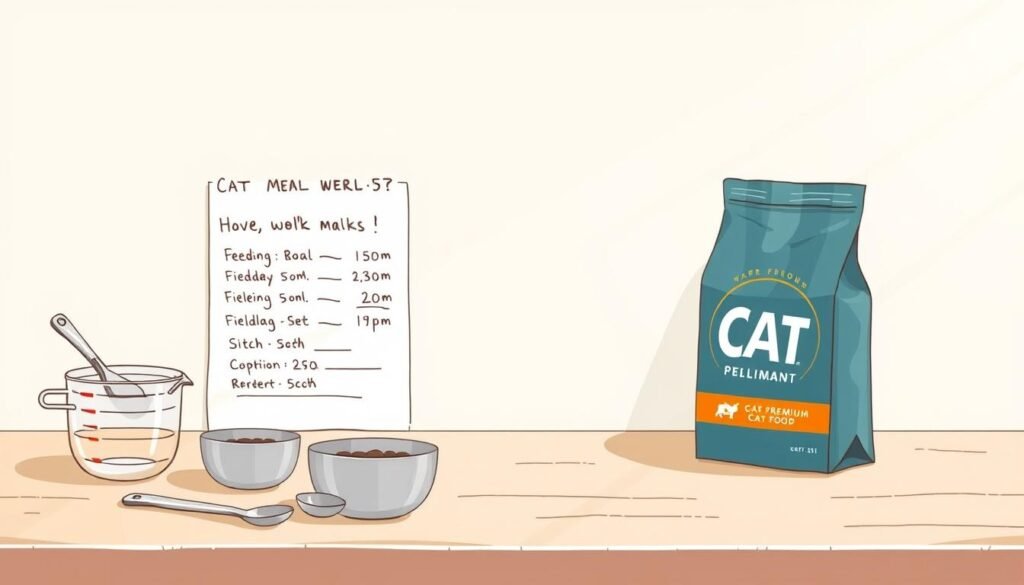
Free-feeding means dry food is available all day. It is easy for busy households but can lead to overeating in many cats. Scheduled meals are set feedings, one to four times daily with measured portions. Scheduled feeding gives you portion control and helps spot appetite changes early.
For weight management, multi-cat homes, and pets on therapeutic diets, scheduled meals are usually best. Most adult cats do well with two meals per day. Kittens typically need three to four meals. Puzzle feeders and timed feeders slow fast eaters and add mental stimulation.
Sample cat feeding chart by weight and activity level
Below is a sample framework that shows daily calorie ranges and approximate portion examples for common weights and activity levels. Use the kcal/serving on your pet food label to convert these ranges to cups of dry food or cans of wet food.
| Weight (lb) | Activity Level | Daily Calorie Range (kcal) | Approx. Dry Food (cups/day)* | Approx. Wet Food (cans/day)* |
|---|---|---|---|---|
| 6 | Low | 150–180 | 1/3–1/2 | 1–1.25 |
| 6 | Moderate | 180–220 | 1/2–2/3 | 1.25–1.5 |
| 6 | High | 220–260 | 2/3–3/4 | 1.5–1.75 |
| 8 | Low | 190–230 | 1/2–2/3 | 1.25–1.5 |
| 8 | Moderate | 230–280 | 2/3–3/4 | 1.5–1.75 |
| 8 | High | 280–330 | 3/4–1 | 1.75–2 |
| 10 | Low | 220–270 | 2/3–3/4 | 1.5–1.75 |
| 10 | Moderate | 270–330 | 3/4–1 | 1.75–2 |
| 10 | High | 330–380 | 1–1.25 | 2–2.25 |
*Portion examples assume a dry food at ~350–400 kcal/cup and wet food at ~70–120 kcal/can. Use your product label to calculate exact cat food portion sizes.
Use the cat feeding chart as a starting point. Weigh your cat weekly and change portions by about 5–10% every 2–4 weeks until your cat reaches an ideal body condition. Manufacturer guides from Hill’s Pet Nutrition, Purina, and Royal Canin help convert calories into specific servings for their formulas.
How to transition between feeding schedules safely
Make changes gradually over 7–14 days. If your cat is free-fed, reduce access slowly while offering measured meals at regular times. If you change foods, mix increasing amounts of the new food with the old food over 7–10 days to lower the risk of stomach upset.
Watch stool quality, appetite, and energy during the transition. Slow the pace if you see loose stools, refusal to eat, or low energy. Cats with sensitive digestion or medical conditions should have a plan from their veterinarian.
Keep feeding locations and times consistent to reduce stress. Consistency helps your cat accept a new cat feeding schedule and makes monitoring easier for you.
Proper Cat Feeding Tips and Troubleshooting
Feeding your cat right keeps them healthy and prevents weight issues. Use precise tools, watch for changes in appetite, and seek vet help for illness signs. These tips help you feed your cat well.
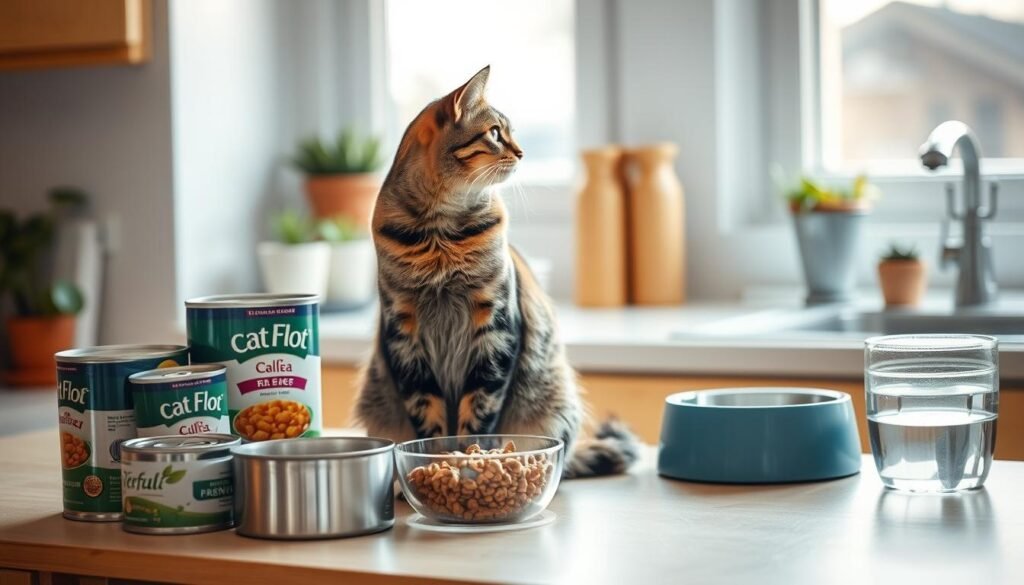
Measuring portions: tools and tips for accuracy
For the most accurate portions, use a digital kitchen scale. It measures in grams or ounces. If you prefer cups, make sure they’re calibrated to your kibble brand. Or, use the scoop provided by the manufacturer.
Keep a feeding log or use an app to track your cat’s food and treats. For homes with many cats, use microchip-activated feeders or separate feeding stations. This stops food-stealing and ensures each cat gets their food.
Store dry food in airtight containers and keep opened wet food in the fridge. Always check the “use by” dates to keep food fresh and nutrient-rich.
Dealing with picky eaters and appetite changes
Warm wet food slightly to make it more appealing. Offer different textures like pate and chunks. Slowly introduce new brands to avoid digestive issues.
Add a small amount of low-sodium chicken broth or a vet-approved topper to entice your cat. Watch for dental pain, GI upset, stress, or changes in the environment as reasons for reduced appetite. If an adult cat stops eating for 24–48 hours, seek vet care quickly.
For cats that beg for human food, avoid onions, garlic, chocolate, alcohol, and xylitol. These are toxic and can lead to unbalanced nutrition.
When to consult a veterinarian about feeding and weight concerns
Get vet advice for sudden weight loss or gain, persistent loss of appetite, repeated vomiting or diarrhea, changes in water intake, or trouble eating. These signs may indicate metabolic disease, dental issues, or other health problems.
Schedule regular wellness exams and weight checks at least once a year for healthy adults. Kittens and seniors need more frequent visits. For weight management, a vet or a nutritionist can help set calorie targets and create a plan.
Follow these guidelines to make safe feeding choices. Proper feeding reduces risks and supports your cat’s long-term health.
Conclusion
Figuring out how much to feed your cat is simple. It depends on their age, weight, body condition, and how active they are. Also, their neuter status and any health issues play a role. Start with RER-based calculations, read food labels carefully, and measure portions to know exactly what you’re giving.
Most cats do better with scheduled meals and measured portions than free-feeding. Weigh your cat often and use a body-condition score to track changes. Use tools like a kitchen scale or a calibrated scoop for accurate measurements.
Adjust portions slowly and watch your cat’s weight closely. This helps avoid sudden weight changes.
Remember, feeding charts from manufacturers and the sample chart in this article are just starting points. Your vet can offer personalized advice, especially for kittens, neutered cats, seniors, or those with health issues. To feed your cat right, use chart guidance and vet recommendations together.
Take a simple step: weigh your cat, check their body condition, and see how much kcal their food has. Then, write a basic feeding plan. Start tracking daily portions and weekly weight. Adjust amounts until your cat has the perfect body condition.