How Often Should I feed My Cat?
Ever thought your cat might be hungry or just bored? This question is key to figuring out how often should I feed my cat. It’s important for their health, behavior, and keeping them at a good weight.
Setting the right feeding schedule does more than just feed your cat. It can reduce begging, lower the risk of obesity, and help with dental and metabolic health. Vets from the American Veterinary Medical Association (AVMA) and the American Association of Feline Practitioners (AAFP) say it’s all about tailoring feeding to your cat’s age, activity level, and health needs.
This guide will show you the best feeding times for kittens, adults, and seniors. It will also explain the difference between meal feeding and free-feeding. You’ll learn when to make changes based on your cat’s health and lifestyle. Plus, get tips on setting up a consistent feeding schedule that works for your home and cat.
Table of Contents
Key Takeaways
- Kittens generally need more frequent meals; adults and seniors often do well on scheduled feedings.
- Meal feeding and free-feeding lead to different hunger cues and weight outcomes.
- Feeding frequency for cats should be adjusted for age, activity, and medical conditions.
- Follow veterinarian guidance and respected sources like AVMA and AAFP when changing routines.
- Practical tools—timers, portion measures, and automatic feeders—help maintain ideal cat feeding intervals.
how often should i feed my cat
Deciding how often to feed your cat depends on several factors. You want a routine that fits your cat’s needs. This includes their body condition, activity level, age, and any health issues. Use feeding guidelines as a starting point, not a hard rule.
Factors that determine feeding frequency
Body condition is key. Underweight cats might need smaller, more frequent meals. This helps them gain weight. On the other hand, overweight cats benefit from portion control and fewer meals.
Activity level also plays a role. Active cats burn more energy and might need more food or more meals. Sedentary cats, however, need fewer calories and closer monitoring of their food intake.
Spayed and neutered cats have lower metabolic rates. Adjust their feeding to manage weight after surgery. The calorie density of their food also affects meal timing. High-calorie wet foods can mean fewer meals than low-calorie kibble.
How age affects meal timing
Kittens need small, frequent meals to support their growth. Plan for four or more feedings for very young kittens. As they grow, you can taper off the number of meals.
Most adult cats do well with two meals a day. Some owners choose to free-feed dry food. However, you must watch their weight and behavior to avoid overeating.
Senior cats may need adjustments. Dental pain, reduced appetite, or chronic illness can make smaller, more frequent meals more comfortable. This also helps with digestion.
Health considerations that change feeding needs
Certain health conditions require changes in feeding. Diabetes, for example, needs meal timing that matches insulin doses. Kidney disease, pancreatitis, gastrointestinal issues, and hyperthyroidism each require tailored feeding strategies.
Medications can also affect meal timing. Dental problems or swallowing issues may mean wet or softened food. This should be served more often in smaller portions.
Always tailor feeding to your cat’s individual needs. Work with your veterinarian to create a feeding plan. This should match your cat’s weight, health status, and lifestyle.
Understanding cat feeding schedule basics

Having a clear cat feeding schedule helps manage weight and spot appetite changes. It also reduces mealtime stress. A steady plan brings routine to your home and gives your cat predictable cues for when food arrives. Below you will find plain definitions, behavior insights, and sample routines to match indoor and outdoor lifestyles.
Definitions: meal feeding vs. free-feeding
Meal feeding means you offer measured portions at set times, such as morning and evening. This approach makes portion control simple and lets you notice appetite shifts that may signal health issues.
Free-feeding leaves dry food available all day. It can suit casual grazers and busy households, but it raises the risk of overeating and obesity for many cats.
A hybrid approach pairs measured wet meals with timed access to kibble or uses portion-controlled bowls. That method balances convenience with better control of calorie intake.
How feeding frequency impacts behavior and hunger cues
Cats on a consistent feeding routine for felines usually show reliable hunger cues and calmer mealtime behavior. You know when they expect food and can respond before stress builds.
Free-fed cats may pace or graze without strong mealtime anticipation. They sometimes develop begging or overeating habits that mask real appetite changes.
Frequent snack-style feeding can hide early signs of illness. When meals are spaced and measured, changes in cat meal timing or appetite become easier to detect.
Typical schedules for indoor vs. outdoor cats
Indoor cats often do well with two feedings per day, timed to your morning and evening routines. This reduces the chance of weight gain and keeps cat meal timing predictable.
Outdoor or highly active cats may need extra calories or more frequent portions. You can offer higher-calorie meals or provide measured access to food when hunting chances are low.
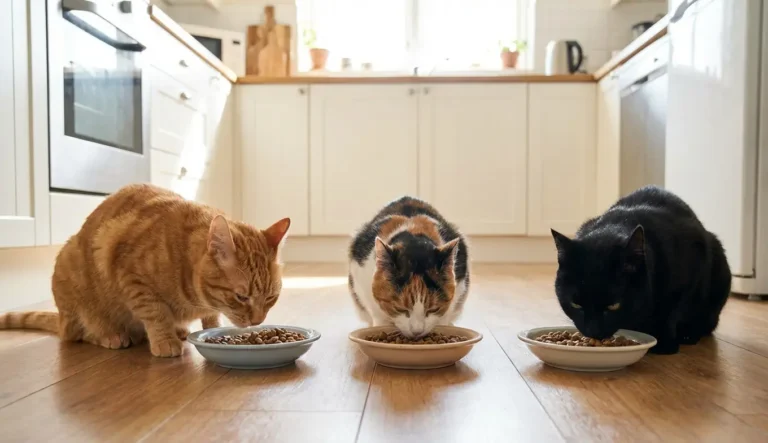
In multi-cat homes, staggered feedings or separate stations help prevent competition and uneven weight. Automatic feeders and puzzle feeders can create smaller, more frequent servings that mimic natural hunting behavior.
| Cat Type | Common Schedule | Benefits | Tools |
|---|---|---|---|
| Indoor adult | Twice daily (morning, evening) | Weight control, clear hunger cues | Measured bowls, automatic feeders |
| Outdoor/active | Two meals plus optional afternoon snack | Meet higher energy needs, support activity | Timed feeders, higher-calorie portions |
| Kittens | 3–4 times daily | Supports growth, stable energy | Small measured meals, frequent monitoring |
| Free-feeding setup | Dry food available all day | Convenience, constant access | Portion-controlled dispensers, gravity feeders |
| Multi-cat household | Staggered or separate stations | Prevents competition, balances weight | Microchip feeders, separate bowls |
Feeding frequency for kittens, adults, and seniors
Creating a feeding plan that fits your cat’s life stage and health needs is key. Here are guidelines for different stages to help you figure out how often to feed your cat. These tips also cover what to watch for as your cat ages.
Recommended intervals for young kittens
Newborns up to 6 weeks need to nurse often. If you’re caring for an orphaned kitten, use kitten milk replacer every 2–3 hours. From 6–12 weeks, start solid food and feed four small meals a day. This supports steady growth and stable blood sugar.
Between 3–6 months, reduce to three meals a day as growth slows. By 6–12 months, many kittens can go to two meals a day. But, keep them on kitten formulas until your vet says it’s okay.
Adult cat feeding routines and portion control
Most adult cats do well with two meals a day, one in the morning and one in the evening. This helps with weight control and keeps routines consistent. Use calorie targets based on your cat’s ideal weight and activity level.
Start with guidelines from brands like Purina, Hill’s, or Royal Canin. Then, adjust portions based on body condition score and monthly weigh-ins. Tracking portions helps prevent overeating and keeps your cat healthy.
Adjusting meal timing for senior cats and medical needs
Senior cats, aged 10 years and older, often need smaller, more frequent meals. Appetite may decrease with age due to dental pain, arthritis, or chronic disease. Place food and water in easy spots and consider raised bowls for comfort.
For cats with kidney disease, diabetes, or other chronic conditions, align feeding times with medication and appetite. Work with your vet to find the right feeding intervals for treatments and monitor appetite closely.
Transitioning and consistency
When changing meal frequency, do it gradually over 7–14 days. This reduces digestive upset and stress. Keep portions consistent while changing timing. Record your cat’s response and adjust based on weight, energy, and stool quality.
Clear routines help you answer the question of how often to feed your cat confidently, based on age and health.
Best cat feeding practices and portion guidance
Begin by creating a feeding plan that fits your cat’s age, weight, and activity level. Proper portion control and regular feeding times are key. They help avoid weight gain and digestive problems.

How to calculate portion sizes by weight and activity level
First, find your cat’s ideal weight. Then, multiply it by about 20 calories per pound for a typical indoor cat. Active cats need more calories. Use feeding tables from Royal Canin, Hill’s, or Purina to convert calories into grams or cups.
Weigh kibble on a kitchen scale for accuracy. Track your cat’s weight weekly to adjust portions as needed.
Choosing between wet and dry food and mixed feeding strategies
Wet food adds moisture, which is good for urinary and kidney health. It’s also for cats that don’t drink much water. Dry food is convenient and cost-effective. It works well for timed portioning.
Many owners feed measured wet meals twice a day. They also offer a small, weighed portion of dry kibble for daytime grazing. Check the calorie density on product labels to keep daily calories in check.
Feeding routine for felines with special diets or sensitivities
If your cat has food sensitivities, try an elimination diet under vet supervision. Consider single-source protein or hydrolyzed diets. For gastrointestinal sensitivity, split the daily ration into smaller, more frequent meals.
Use bland, easily digestible options. Prescription diets need strict portioning and timing for conditions like pancreatitis or kidney disease.
Practical tips to put feeding routine for felines into practice
Measure dry food by weight and avoid free-feeding high-calorie diets. Store opened wet food in the refrigerator. Use manufacturer charts from trusted brands and consult your vet when unsure.
Consistent monitoring and simple adjustments keep your cat at a healthy weight. This follows the feeding guidelines for cats.
Feeding frequency for cats with health conditions
If your cat has a chronic illness, their meal timing and portion plans need to change. You must follow clear feeding guidelines that match their diagnosis, medications, and appetite. Small, frequent meals often help cats stay stable and comfortable.
Diabetes, kidney disease, and digestive or dental issues
For diabetic cats, consistent meal timing and steady carbohydrate content help keep blood glucose steady. Many veterinarians instruct you to feed at the same time you give insulin, often right before or just after the injection.
Cats with chronic kidney disease may do better with multiple small meals to support appetite and hydration. Prescription renal diets from Hill’s Prescription Diet, Royal Canin Veterinary Diet, or Purina Pro Plan Veterinary Diets are commonly used under veterinary guidance.
If your cat has gastrointestinal disease, more frequent small portions can reduce nausea and vomiting. Dental disease may mean soft or wet diets in smaller servings to make eating less painful.
Working with your veterinarian on individualized feeding guidelines for cats
You should consult your veterinarian for diagnosis, caloric needs, and diet selection. Labs such as CBC, chemistry panels, thyroid testing, and urine checks let your vet track response to changes in feeding frequency for cats.
Ask about specific prescription brands and how to schedule meals around medications. Regular weight checks and scheduled follow-ups help maintain the right cat meal timing and prevent complications.
Signs that feeding frequency needs adjustment
Watch for unintended weight loss or gain over weeks, big appetite changes, or recurrent vomiting and diarrhea. Behavioral shifts at mealtime, like guarding food or losing interest, signal a problem.
In diabetic cats, symptoms of hypoglycemia—weakness, tremors, confusion—can mean your feeding schedule is not aligned with insulin. Keep a log of feeding times, amounts, and reactions to discuss with your veterinarian.
Do not change a sick cat’s regimen abruptly. Document what you observe and seek veterinary guidance before altering feeding frequency for cats or trying new feeding guidelines for cats.
Practical tips to implement a consistent feeding routine
Begin with a simple plan that suits your life and your cat’s needs. A regular feeding schedule helps reduce stress, controls weight, and makes your cat’s behavior easier to understand. Choose mealtimes that fit your work and sleep schedule, and always keep water fresh for them.
Using automatic feeders and scheduled meal tools
Choose a feeder that matches your food and goals. Gravity feeders are great for dry food. Programmable feeders give out set portions. Timed feeders work well for wet food but might need to be kept cold.
Consider brands like SureFeed, PetSafe, Cat Mate, and PetKit. These tools help keep a steady feeding schedule, manage portions for multiple cats, and work even when your day is unpredictable. Make sure to pick durable designs, as some cats might try to open flimsy ones.
Transitioning your cat to a new feeding schedule gradually
Change meal times slowly to avoid upsetting your cat’s stomach and causing stress. Increase meal times by 15–30 minutes every few days. When switching to fixed mealtimes, start by limiting free food and gradually introduce set times over 7–14 days.
Use positive reinforcement to help your cat adjust. Give them a small treat, praise them gently, or offer a warm scoop of wet food. For cats that are picky, warm the wet food slightly or mix it with their favorite food.
Monitoring weight and behavior to fine-tune feeding intervals
Check your cat’s weight every 2–4 weeks and use a body condition score to check muscle and fat. Watch their appetite, litter-box habits, activity level, and any stress or aggression at mealtime. Small changes in calories are better than big ones.
If your cat gains or loses more than 10% of their body weight, or if their appetite and behavior change, talk to your vet. They can help adjust the feeding schedule and practices for your cat.
| Tool | Best use | Pros | Cons |
|---|---|---|---|
| Gravity feeder | Free-feeding dry food | Low maintenance, simple refill | Not portion-controlled; can lead to overeating |
| Programmable portion feeder | Measured dry servings | Accurate portions, supports multiple meals | Some models noisy; check reliability |
| Timed wet-food dispenser | Pouches or small cans | Mimics meal feeding, good for wet diets | Limited capacity; many require refrigeration |
| Micro-feeder or bowl gate | Individual portions for multi-cat homes | Prevents resource guarding, custom portions | Can be expensive; may need training |
Conclusion
There’s no one-size-fits-all answer to how often to feed your cat. It depends on their age, health, how active they are, and their unique behavior. Kittens need to eat often, while most adult cats do well with two meals a day. Seniors or cats with health issues might need a special feeding plan made with your vet.
For a good feeding schedule, pick a consistent method like meal feeding to help with weight control. Figure out the right amount of food based on your cat’s ideal weight and body condition. Use automatic feeders and make slow changes to help your cat adjust without stress.
Keep an eye on your cat’s appetite, weight, and behavior. If you notice any big changes, talk to your vet about changing their feeding schedule. Following the best feeding practices and a regular routine helps prevent obesity. It also supports your cat’s health and makes it easier to catch any problems early.