Top Rated Wet Cat Food for Strong Feline Health

Ever seen your cat circle the kitchen and ignore the food you offer? You want something that will comfort and nourish them, not just another flavor they won’t eat. This guide will show you the top rated and best wet cat food options that meet your cat’s needs for nutrition, hydration, and taste.
In the pages that follow, you’ll learn how premium and recommended wet cat food supports your cat’s health. We’ll cover how it helps with hydration, urinary tract health, and building lean muscle with high-quality protein. You’ll also understand U.S. labeling standards, including AAFCO feeding trials versus nutrient profiles, and how these impact your choices at PetSmart, Chewy, or your vet’s clinic.
Expect clear, practical analysis: we’ll break down ingredients, explain how to read guaranteed analysis, compare brands, and discuss veterinary-recommended formulas. We’ll also share real owner feedback on canned versus pouch formats. By the end, you’ll be ready to find the best wet cat food for your cat’s life stage, health needs, and your budget.
Key Takeaways
- Top rated wet cat food improves hydration and can support urinary tract health.
- Look for high-quality animal protein and minimal fillers in the best wet cat food.
- Premium wet cat food often offers better acceptance for picky eaters.
- Understand AAFCO feeding trials vs. nutrient profiles when comparing labels.
- We compare canned and pouch formats and include veterinary-recommended options.
Why Wet Food Matters for Your Cat’s Health
Choosing the right diet is key for your cat’s health. Wet food offers many benefits for cats of all ages. It can make a big difference, especially for cats with special needs.
Hydration and Urinary Tract Health
Wet cat food has about 70–80% moisture, compared to dry kibble’s 10%. This high moisture helps keep your cat hydrated and dilutes their urine. It also lowers the risk of urinary tract disease and struvite crystals.
The American Association of Feline Practitioners and the American Animal Hospital Association recommend hydration for cats. This is especially true for cats prone to urinary problems and senior cats. Wet food helps support kidney function in older cats and those with chronic kidney disease.
Digestibility and Weight Management
Wet formulas often have more protein and less carbs than dry food. This supports lean muscle and helps manage weight and blood sugar. Animal proteins like chicken, turkey, and salmon are more digestible for cats.
Wet food has fewer calories per volume, making it easier to control portions for weight loss. Choose high-quality wet food with recognizable animal proteins for better digestibility.
Palatability and Appetite Stimulation
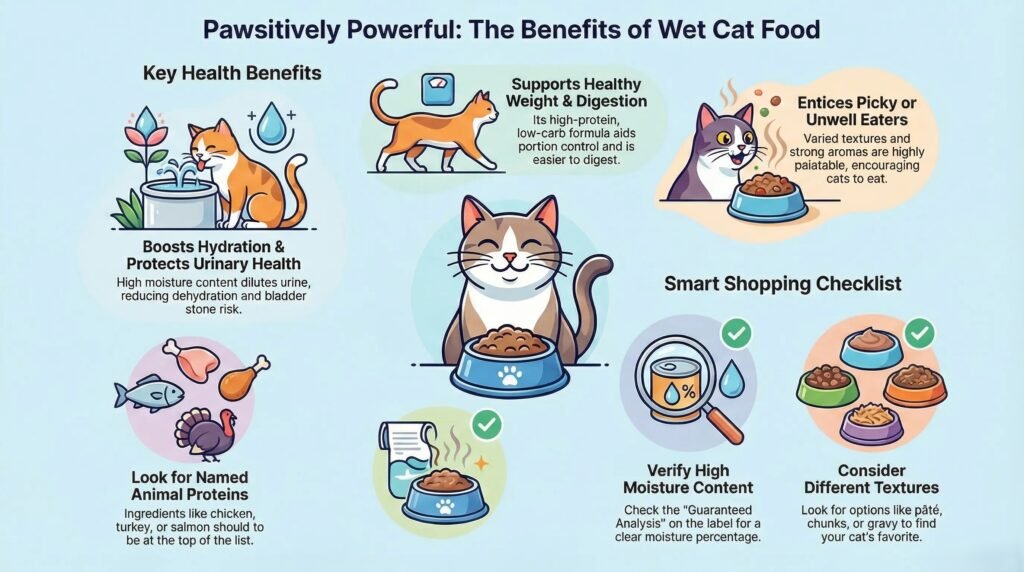
Texture and smell are important for your cat’s acceptance. Pâté, chunks in gravy, and shredded varieties are often more appealing. They can also stimulate appetite in picky or recovering cats.
Transitioning to new wet food over 7–10 days helps avoid digestive upset. Start by mixing it with your cat’s current food and gradually increase the new portion. For long-term satisfaction, choose reputable brands that balance flavor with nutrition.
top rated wet cat food: How to Choose the Best Wet Cat Food
Start by reading the labels on wet cat food. Ingredients are listed by weight, with water or broth first. Look for the first named meat or meat meal to find real protein sources.
Check the guaranteed analysis to see the amounts of protein, fat, fiber, and moisture. Convert these to a dry matter basis for fair comparisons. Check that the packaging includes an AAFCO statement stating it’s “complete and balanced” for your cat’s specific life stage.
Understanding Ingredient Lists and Guaranteed Analysis
Named proteins like chicken, turkey, salmon, and tuna tell you what your cat eats. Avoid vague terms like “meat” or “animal by-products.” These hide quality differences that affect nutrition and taste.
When comparing wet cat foods, focus on protein percentage on a dry matter basis. This shows true protein content after removing water. Use the guaranteed analysis to find foods that meet your cat’s needs.
Protein Sources, Additives, and Fillers to Avoid
Limit foods with high levels of plant-based fillers like corn, wheat, and rice. Cats need animal-based proteins. Too many carbs can cause weight gain and reduce nutrient density, even in top-rated foods.
Look for omega-3 fatty acids (EPA/DHA), taurine, and joint-support ingredients like glucosamine. Avoid artificial colors, excessive sodium, and preservatives like BHA/BHT.
Life Stage, Health Conditions, and Special Diets
Choose formulas based on life stage: kitten for growth, adult for maintenance, and senior for aging support. For medical issues, use veterinary therapeutic diets under a vet’s guidance. Hill’s Prescription Diet c/d and Royal Canin Urinary SO help with urinary health. Hill’s k/d and Royal Canin Renal Support are good for kidney concerns.
For food sensitivities, try elimination diets or novel proteins like rabbit, duck, or venison. Work with your vet to find the best diet for your cat.
Budget Considerations vs. Premium Wet Cat Food Benefits
Premium wet cat food uses higher-quality meats and has tighter quality control. This increases the cost. However, it may lower vet bills by improving health and reducing feeding issues.
Calculate the cost per meal by dividing kcal per serving by the recommended portion. Mix premium and mid-tier options, buy in bulk, or use subscription discounts to balance cost and quality. For special needs, talk to your vet about cost-effective options.
Top Wet Cat Food Brands and Highest Rated Wet Cat Food Options
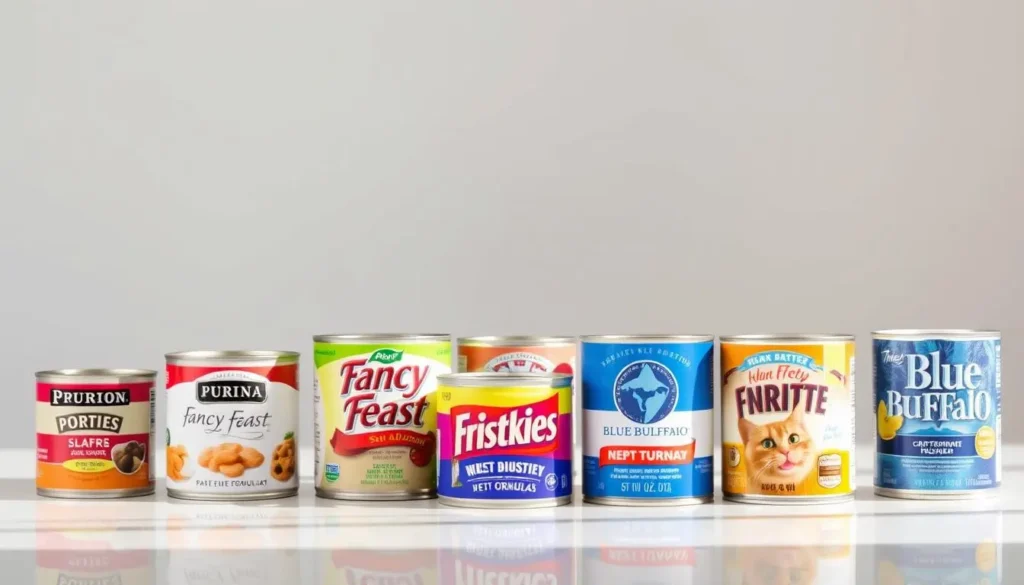
Choosing the right wet cat food can be tough. You want quality, taste, and the right formula for your cat. This section covers premium options, vet-recommended lines, and textures that even picky eaters love.
Premium Wet Cat Food Brands Known for Quality
Brands like Wellness, Blue Buffalo, and Merrick are at the top for premium wet cat food. They use human-grade ingredients and offer grain-free or high-protein options. Purina Beyond and Tiki Cat are known for sustainable ingredients and unique proteins.
Choosing these brands means your cat gets more meat, cleaner ingredients, and recipes made for their health.
Veterinary-Recommended and Therapeutic Wet Formulas
For medical needs, Hill’s Prescription Diet, Royal Canin, and Purina Pro Plan Veterinary Diets have therapeutic formulas. They include Hill’s c/d and k/d, Royal Canin Urinary SO and Renal Support, and Purina Pro Plan Veterinary UR and NF. These diets help with urinary health and protein levels.
Your vet must approve these diets, as they’re for specific health issues.
Top Rated Wet Cat Food Picks for Picky Eaters
Some cats love strong smells and textures. Tiki Cat’s fish-based recipes and scent can win over even the pickiest eaters. Fancy Feast’s Classics and Gourmet Naturals offer a variety of textures and flavors.
Weruva and Royal Canin also have options that many cats enjoy. Try different styles like pâté, loaf, gravy, and flaked. Warming the food can make it more appealing.
Look for top rated wet cat food that fits your budget and your cat’s needs. If unsure, ask your vet for recommendations. Testing a few small portions can help you find your cat’s favorite without wasting food.
Wet Cat Food Reviews and Wet Cat Food Comparison
This section offers practical reviews and comparisons to help you choose the best wet cat food. We looked at texture, flavor, and nutrients. We also considered what owners say and the pros and cons of cans versus pouches. Plus, we shared tips on storage and cost.
How we evaluated texture, flavor, and nutritional value
We started by checking the ingredients and protein sources on labels. We compared protein and fat levels. Texture variety was important, as was the aroma.
We checked for nutrients like taurine and omega-3s. We used manufacturer data and lab reports when we could.
Real-world testing: owner feedback and cat acceptance
Owners say fish-flavored foods from Tiki Cat and Fancy Feast are great for picky eaters. Many cats started eating again after switching. It’s important to watch your cat’s weight and behavior after changing food.
Comparing canned vs. pouch wet cat food
Cans have thicker textures, while pouches are saucier. Pouches are good for single servings, while cans are better for recycling. Choose based on what your cat likes and your lifestyle.
Storage, serving tips, and cost-per-meal analysis
Keep unused food in the fridge for up to 48 hours. Warm it up to make it smell better. Use a measuring cup to give the right amount.
To compare costs, divide the price by the number of meals. Premium brands like Royal Canin and Blue Buffalo may cost more but are higher quality. Use a spreadsheet to budget for long-term feeding.
| Comparison Point | Canned (Examples) | Pouch (Examples) | What to Watch For |
|---|---|---|---|
| Typical Texture | Paté, loaf (Fancy Feast Classic, Royal Canin) | Chunks in gravy, minced (Tiki Cat, Wellness) | Match to your cat’s chewing ability and preference |
| Aroma & Acceptance | Moderate aroma, steady acceptance | Stronger aroma, often higher immediate acceptance | Stronger smell can help picky eaters but may be messier |
| Packaging & Storage | Recyclable, resealable container needed after opening | Convenient single-serve, harder to reseal | Use airtight containers for both once opened |
| Cost per Meal | Often lower cost per ounce (bulk cans) | May be higher per ounce for single-serve convenience | Calculate using price ÷ servings ÷ kcal for accurate comparison |
| Nutrient Density | Comparable across brands when formulas match | Comparable across brands when formulas match | Check guaranteed analysis and dry matter basis for true comparison |
| Best Use | Home feeding, multi-serve portions | Travel, single meals, picky eaters | Choose based on your routine and your cat’s preference |
Our full list includes top rated wet cat food options. These reviews and comparisons help you choose the best diet for your cat. Try new recipes at home and watch your cat’s response over two weeks.
Conclusion
Choosing top rated wet cat food is all about keeping your cat hydrated and healthy. It helps with their urinary system and makes them more interested in eating. Look at the ingredients and nutritional information to ensure it’s good for your cat.
Consider your cat’s age and health when picking a food. Your vet can help with this. Read reviews to compare different types of wet food. Try a little bit to see what your cat likes best.
Think about the cost too. While good food is worth it, it should fit your budget. Choose brands that use real meat and have all the nutrients your cat needs.
Watch your cat closely after changing their food. Check their appetite, stool, and energy. Pick a food that’s tasty, nutritious, and affordable for the long run.