
How Much Cat Food Per Day: Feeding Your Feline Right

Have you ever felt a special bond with your cat when they jump into your lap? That moment is priceless. It makes you want to do everything right for them, especially feeding. Figuring out how much cat food to give is crucial for their health and happiness.
Several things affect how much cat food your pet needs. These include calories, life stage, weight, activity level, and health status. The Association of American Feed Control Officials (AAFCO) sets nutritional standards. Veterinarians and board-certified veterinary nutritionists help make these standards fit your cat’s needs.
Many people use cups or grams to measure food. But, calorie-based feeding is more accurate. This is because different brands and formulas have different calorie densities. Knowing both measures helps you compare labels and adjust portions safely.
In this article, you’ll learn about factors that influence portion sizes. You’ll also learn how to read packaging and understand life-stage recommendations. We’ll cover tips for measuring wet versus dry food, feeding schedules, and how to make medical adjustments. Plus, we’ll discuss tools to help you keep portions right.
Table of Contents
how much cat food per day
Figuring out how much cat food per day is simple. First, know your cat’s weight, activity, age, and any health issues. Then, use these details with feeding guidelines and the food package’s calorie info to find the right amount for your pet.
Factors that influence daily food amount
Body weight and body condition score (BCS) are key. The 1–9 BCS scale shows cats from very thin to very fat. Aim for a score of 4–5 for a healthy cat. Cats that are overweight need less food, while underweight cats need more.
Activity level is also crucial. Indoor, neutered cats might need about 20 kcal per pound per day. But active or outdoor cats could need 30–35 kcal per pound per day. Age and life stage also affect needs. Kittens need more calories for growth, while seniors may need less due to slower metabolisms.
Being neutered or spayed also changes how much food a cat needs. Health issues and medications can also impact appetite and metabolism. For example, hyperthyroidism, diabetes, kidney disease, and steroids can all change a cat’s needs. Even breed and body type can play a role, with muscular breeds needing more.
How to interpret feeding guidelines on packaging
Packaging often gives recommended ranges based on body weight. These ranges assume average calorie density and activity levels. Look for kcal per cup or can on the label or the brand’s website.
To find the right amount, first calculate your cat’s daily kcal need based on weight and activity. Then, divide that by kcal per serving to get portion size. Finally, adjust for your cat’s BCS and any vet advice.
Remember, some guidelines are based on free-feeding or higher activity. Cups can vary by scoop shape. Weighing food in grams is more accurate than using cups.
Real-world examples by cat weight and activity level
Use these examples as a starting point. Check your cat’s weight and BCS weekly and adjust as needed.
| Example | Weight | Estimated kcal/day | Dry food (300–400 kcal/cup) | Wet food (80–120 kcal/can) |
|---|---|---|---|---|
| Example A | 8 lb indoor neutered adult | ~160 kcal (20 kcal/lb) | 0.4–0.5 cup (about 40–55 g) | 1.5–2 cans |
| Example B | 12 lb active adult | ~300–360 kcal (25–30 kcal/lb) | 0.8–1.2 cup (about 80–120 g) | 2.5–4 cans |
| Example C | 3-month kitten (rapid growth) | ~50–70 kcal/lb (high need) | Multiple small meals; follow kcal/kg from your vet | Frequent wet meals to meet growth needs |
These examples help you start planning. Combine them with cat feeding guidelines and your vet’s advice to find the best food amount for your cat.
Understanding feline nutrition requirements for health
Cats need high-quality animal protein for energy and amino acids like taurine. Diets for growth or maintenance should meet AAFCO nutrient profiles. This ensures your cat gets the necessary nutrients.
Fat is a key source of energy and essential fatty acids like omega-3 and omega-6. Cats don’t use carbs like omnivores do. So, a balanced diet should have limited carbs. It should also include vitamins and minerals like vitamin A, B-complex, calcium, and phosphorus.
Calorie density varies in cat food. Dry food has about 300 to 500 kcal per cup. Wet food has 60 to 150 kcal per can, depending on size and formulation. Always check the kcal per serving to know the daily intake.
How nutrients and calories interact affects health. Too many calories can lead to obesity, diabetes, arthritis, and liver disease. Too few calories or an unbalanced diet can cause poor coat, weakened immunity, and nutrient deficiencies.
Hydration is crucial. Wet food helps cats stay hydrated, which is good for their urinary and kidney health. Always provide fresh water for your cat.
Portion control is key to a healthy diet. It matches calorie needs with activity level and life stage. Consistent portion control prevents weight gain and ensures nutrient delivery.
Routine vet checkups and bloodwork are important. They help ensure your cat’s diet meets their changing needs. This is especially true for kittens, seniors, and cats with chronic conditions.
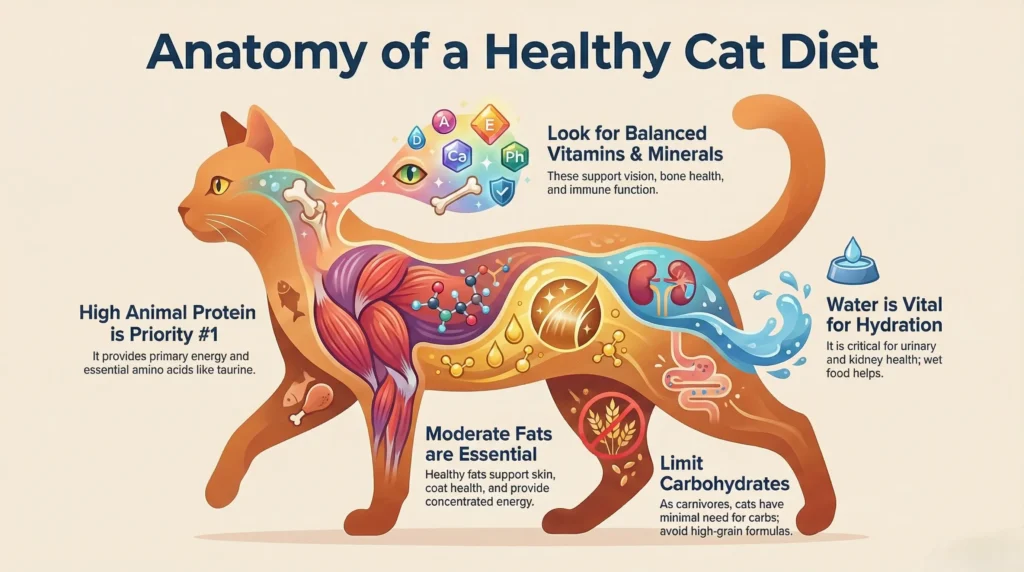
Recommended daily cat food intake by life stage
Feeding your cat the right amount changes as they grow. Below, you’ll find clear guidance on how much to offer at each life stage. You’ll also get practical examples and tips to help you judge portion size for cats without guesswork.
Kittens: growth-focused portioning
Kittens burn more calories than adults. Young kittens need about 50–70 kcal per pound per day, depending on age and activity. Feed them 3–4 meals daily until they’re about six months old, then switch to 2–3 meals as they grow closer to adulthood.
Use a commercial kitten formula that meets AAFCO growth standards. Watch for steady weight gain. Consult your vet for breed-specific growth curves, especially for large breeds like the Maine Coon.
| Age | Weight (lb) | Approx kcal/day | Example serving (wet) | Example serving (dry) |
|---|---|---|---|---|
| 8 weeks | 2 | 120–140 | ~1/2 can (3 oz cans vary) | ~25–30 g kibble |
| 3 months | 4 | 200–280 | ~3/4 can or mixed meals | ~50–70 g kibble |
| 6 months | 6 | 300–420 | 1 can plus small dry portion | ~80–100 g kibble |
Adult cats: maintenance and portion control
For many neutered adult cats, start with about 20 kcal per pound per day. A 10-lb cat would begin at roughly 200 kcal/day. Keep an eye on body condition and adjust as needed.
If your cat is overweight, cut intake by 10–20% and watch their progress. Underweight or very active cats might need more calories. Always measure servings and avoid free-feeding dry food to control total calories.
- Choose a complete adult formula labeled for maintenance.
- Rotate protein sources occasionally to keep meals interesting.
- Use portion size for cats based on calories, not just cup volume.
Senior cats: adjusting amounts for metabolism changes
Senior cats, often 7+ years, can have two opposite trends. They might need less calories due to lower activity or more calories to maintain weight due to muscle loss.
Weigh your senior cat every 1–3 months and get vet checks for issues that affect appetite or nutrient needs. Feed nutrient-dense foods and consider palatability enhancers if appetite drops. Adjust portion size for cats based on weight trends and vet advice.
Across life stages, use the recommended daily cat food intake as a starting point. Combine that with regular weighing and body condition scoring to decide how much cat food per day your individual should receive.
Portion size for cats: measuring wet vs dry food
It’s important to have clear ways to measure your cat’s food. This helps avoid overfeeding and keeps their weight stable. Read labels, weigh portions, and keep a simple routine to track how much cat food per day your pet actually eats.

Dry kibble can vary by brand and shape, so volume measures are rough. An 8-ounce measuring cup is a common household standard you can use as an approximate volume measure. Expect one cup of kibble to weigh between 80–120 grams depending on size and density.
Use a leveling technique when scooping: fill the cup, sweep a flat edge across the top, then transfer to a bowl. This reduces variation from heaped scoops. Note any grams-per-cup figure printed by Purina, Hill’s Science Diet, Royal Canin, or the manufacturer on the bag.
For best accuracy, switch to a gram scale. A digital kitchen scale accurate to ±1 g gives repeatable cat food measurement. Tare the empty bowl, add kibble until you reach the desired gram amount, then record the number for future meals.
Reading wet-food labels helps you convert cans and pouches to grams or calories. Look for kcal per can or per ounce. If a label omits calories, check the manufacturer’s site for official kcal values from brands like Purina or Royal Canin.
Convert using either calories or weight. To use calories, divide total kcal per can by your cat’s daily kcal need to find how many cans meet how much cat food per day. To use weight, convert ounces to grams (1 oz ≈ 28.35 g) and total grams to match your grams-per-day target.
Example: a 5.5‑oz can labeled 200 kcal. If your cat needs 200 kcal/day, one full can supplies that daily amount. If your cat requires 100 kcal/day, feed half the can, which equals roughly 78 grams (5.5 oz × 28.35 g/oz ÷ 2).
A kitchen scale is the best tool for consistent portion control. Tare the empty bowl, place wet or dry food until you hit the target grams, then log the weight. Do test weighs to learn how a cup or scoop maps to grams for your chosen brand.
Useful tools include calibrated measuring cups, gram scales, portion-control automatic feeders, and storage containers with single-serving compartments. Clean and recalibrate your scale periodically to maintain accurate cat food measurement.
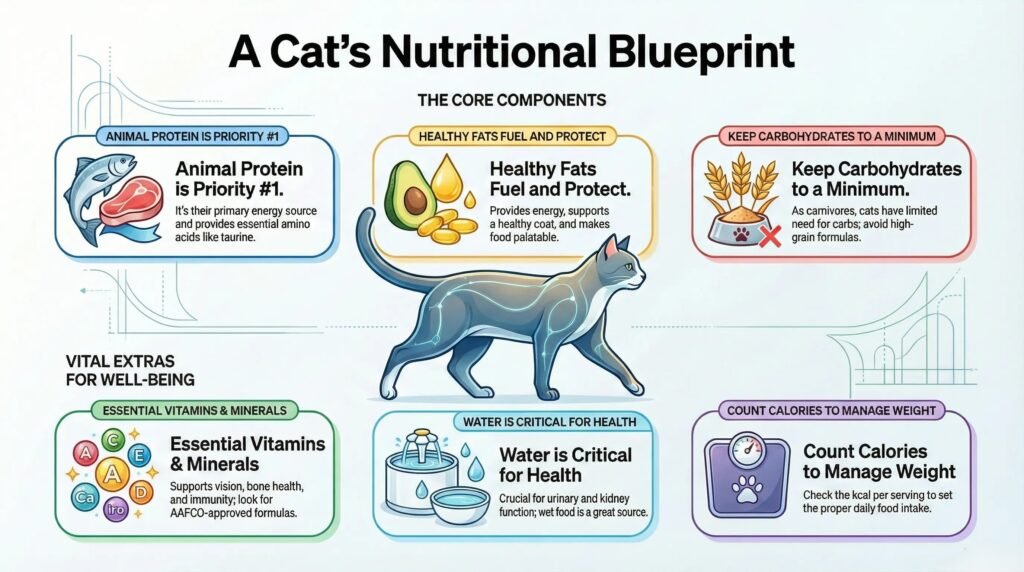
Feeding schedule for cats: timing and frequency
Setting a clear feeding schedule for cats helps manage their food intake and spot health problems early. Free feeding, where dry kibble is available all the time, is easy but can lead to overeating and weight gain. If you free feed, weigh and record your cat’s food intake to match feeding guidelines.
Meal feeding involves two or three set feedings a day. Most adult cats do well with two meals, one in the morning and one in the evening. This helps you track their appetite and notice any changes in eating habits. Keeping to a schedule helps your cat learn routine and keeps litter-box patterns regular.
Kittens and sick cats need more frequent, smaller meals. Kittens should have three to four small meals a day to support their growth. For cats that are ill or recovering, follow your vet’s advice on how much food to give based on their weight and calorie needs.
Combination feeding mixes scheduled meals with limited wet food. Serve measured wet portions at meals and keep a small amount of dry kibble for grazing. This way, you can follow feeding guidelines while also giving the benefits of wet food, like added moisture and taste.
In multi-cat homes, it’s best to feed cats separately. Use microchip feeders or timed feeders to prevent one cat from eating another’s food. Separate feeding reduces stress, food guarding, and competition, which can affect how much food each cat eats.
Sample schedules make planning easier. Kittens: 3–4 meals spread across the day. Adult cats: two meals, morning and evening, splitting daily kcal equally or slightly heavier at night. Senior or medical cases: tailor timing and portion size to vet advice, with more frequent smaller meals if needed.
Keep feeding times consistent so appetite aligns with your schedule. Use feeding moments to observe behavior, watch for changes in appetite, and note any vomiting or reduced intake. These signs tell you when to consult your veterinarian and review feeding guidelines and portion targets.
Adjusting portions for weight management and medical needs

Start by assessing your cat’s health. Look at their shape, feel their ribs, and observe their activity. Use these signs to adjust their diet and consult with your vet.
Recognizing underweight and overweight signs
Feel the ribs of your cat. They should be slightly covered in fat. Look for a waistline behind the ribs and a slight tuck in the belly.
Overweight cats have thick fat over their ribs and little waist. They might also have a hanging belly. Underweight cats have visible ribs and flanks, with less muscle.
Being too heavy or too light can be dangerous. Obesity can lead to diabetes and arthritis. Being underweight can cause malnutrition and make your cat more prone to diseases.
Creating a weight-loss or gain plan with your vet
First, get a vet check-up and basic blood tests. Then, set goals and a schedule to track progress.
For weight loss, aim for slow progress. Your vet will help you figure out how many calories your cat needs. Use special weight-management foods like Hill’s Science Diet Metabolic.
For weight gain, increase calories by 10–20%. Choose foods that are high in calories but still tasty. Also, treat any underlying health issues.
Check your cat’s weight and body condition every 2–4 weeks. Adjust their food as needed. Knowing the right amount of food depends on these changes.
Special diets: kidney disease, diabetes, allergies
Kidney disease diets have less phosphorus and moderate protein. Increase wet food and water to help with hydration. Use formulas like Hill’s Prescription Diet k/d.
Diabetes diets need consistent carbs and regular meals. This helps manage insulin levels. Your vet can recommend a diet plan.
For food allergies, try an elimination diet. Use novel or hydrolyzed proteins to find the culprit. Measure food carefully to avoid accidental exposure.
Always get approval from your vet before starting a special diet. Follow the feeding instructions while adjusting amounts for your cat’s needs.
Cat food measurement and tracking tips for pet owners
Keeping accurate records helps you answer the big question: how much cat food per day should you offer? Track brand, formula, grams or kcal, meal times, treats and any changes in appetite or stool. Note vomiting, diarrhea, litter box frequency and energy level so you spot trends early.
We recommend weekly weight checks on the same home scale and logging body condition score (BCS). If you see rapid weight loss or gain, or if your cat stops eating for 24–48 hours, contact your veterinarian promptly.
Use a simple log with columns for date, time, food brand and formula, grams or kcal given, treats, and short notes on behavior or stool. This habit makes cat food tracking straightforward and useful during vet visits.
Apps and online calculators can estimate the optimal cat food amount. Try calculators from reputable sources like Purina, Royal Canin, or PetMD, and pet-tracking apps such as PetDesk or Pawprint to store records.
Smart feeders dispense measured portions on a schedule and help when you share feeding duties. Microchip feeders can prevent other pets from stealing meals in multi-cat homes. Pair a feeder with a kitchen scale and labeled containers for pre-measured servings.
Common measurement mistakes are easy to avoid. Do not rely only on cup measures printed on packages. Weigh dry food with a kitchen scale instead.
Don’t forget treats and table scraps when tallying calories. Treats add up fast and change the optimal cat food amount your pet needs.
Account for differences in calorie density between wet and dry food. Using different scoops or containers leads to inconsistent portions and creeping calorie increases over time.
Update portions after weight changes, aging or shifts in activity. Regular cat food measurement and cat food tracking keep your feeding plan aligned with your cat’s needs.
Conclusion
Every cat is different, so there’s no one-size-fits-all answer to cat food portions. You need to figure out how much your cat needs based on their weight, age, and how active they are. Then, use the food label to measure out the right amount.
Start by following the daily food intake guidelines. But, it’s crucial to watch your cat’s body condition and adjust their food as needed. This ensures they stay healthy and at a good weight.
Here’s what to do next: find out your cat’s body condition score and weight. Then, calculate how many calories they need each day. Use a kitchen scale to measure their food accurately.
Stick to a regular feeding schedule and keep a log of their meals. This helps you track their progress. Use the guidelines on the food packaging to convert calories into cups, grams, or cans. This way, you can feed them the right amount every day.
Remember, your vet can give you personalized advice, especially for kittens, seniors, or cats with health issues. Use the tips and tools in this article as a guide. Make small changes gradually to keep your cat healthy and happy for years to come.


Hello colleagues, its enormous article regarding cultureand completely defined, keep it up all the time.
This is a topic that’s near to my heart… Many thanks! Where are your contact details though?
https://www.purreats.com/contact-us/
Hello my loved one! I wish to say that this post is amazing, great written and include approximately all significant infos. I would like to peer extra posts like this .
Great work! This is the type of info that should be shared around the internet. Shame on Google for not positioning this post higher!
THANK YOU FOR SUPPORT
Thanks for the new stuff you have unveiled in your short article.
Hi my loved one! I wish to say that this post is amazing, great written and come with approximately all important infos. I would like to look more posts like this .
A lot of of what you assert happens to be astonishingly accurate and it makes me wonder why I hadn’t looked at this in this light before. This particular piece truly did turn the light on for me personally as far as this particular subject goes. Nonetheless at this time there is one position I am not too comfortable with so while I try to reconcile that with the central theme of your issue, let me see just what all the rest of the subscribers have to say.Well done.
Thank you for taking the time to share this.
I appreciate your thoughtful feedback. It means a lot to hear that the article helped you see the topic from a new angle.
I also respect that there is one point you are still unsure about. Healthy discussion makes the content stronger. If you would like, feel free to share which part you are not fully comfortable with. I would be happy to clarify my reasoning or provide additional sources.
Looking forward to hearing your thoughts and continuing the conversation.