
How Old Are Cats? Discover the Typical Cat Age

Ever wonder if your cat is still a playful kitten or getting older?
This guide answers the big question: How Old Are Cats? You’ll learn about chronological age and physiological age. Plus, what vets call senior years, usually around 7+ years, but it depends on the cat.
We’ll explore the aging process and growth stages of cats. You’ll find out how to guess a cat’s age and understand cat years conversion. We’ll also cover average lifespan, factors that affect it, and when to see a vet.
This article aims to help you care for your cat based on its age. It’s about spotting early signs of aging and making smart choices about food, exercise, and vet visits. For expert advice, check out the American Veterinary Medical Association (AVMA), Cornell Feline Health Center, and the American Association of Feline Practitioners (AAFP).
Table of Contents
Table of Contents
Key Takeaways
- Chronological age and physiological age are different but both matter for care.
- You will learn practical signs to estimate an unknown cat’s age.
- The feline aging process and cat growth stages explain behavior and needs.
- Cat years conversion and cat age chart are helpful but imperfect.
- Veterinary guidance from AVMA, Cornell, and AAFP can guide age-related decisions.
How Old Are Cats?
Knowing your cat’s age is key to giving the right care. It helps with vaccinations, spaying/neutering, dental care, and diet. The American Veterinary Medical Association and the American Association of Feline Practitioners suggest age-specific care for better health.
Why knowing your cat’s age matters for care and health
If you don’t know your cat’s age, a vet can help. They can set up a vaccination schedule and check for parasites. Kittens and adults have different needs, like vaccinations and parasite control.
Spaying or neutering depends on your cat’s growth stage. Dental care starts early to prevent disease. Diet should match your cat’s age to avoid weight issues or nutrient gaps.
How age affects behavior and daily needs
Kittens need lots of play and socialization. They eat often. Adolescents may test boundaries and have bursts of energy. Adults settle into routines and need regular exercise to stay fit.
Seniors sleep more, move slower, and groom less. Watching these changes helps spot aging signs early. Daily needs change with age. Kittens need more calories and eat often. Adults need two meals a day with enrichment. Seniors may need special diets and gentler play.
When to consult a vet about age-related concerns
See your vet for sudden weight changes, appetite or thirst issues, mobility problems, or frequent accidents. Persistent vomiting, diarrhea, bad breath, dental pain, or vision or hearing loss need quick attention. For unknown-age cats, an initial vet visit sets up vaccinations, screens for disease, and starts monitoring aging.
| Life Stage | Typical Age Range | Key Care Focus |
|---|---|---|
| Kitten | 0–6 months | Vaccination series, parasite control, socialization, frequent feeding |
| Adolescent | 6 months–2 years | Spay/neuter timing, behavior guidance, high activity and training |
| Adult | 2–7 years | Weight management, dental checks, routine preventive care |
| Senior | 7+ years | Monitor for cat aging signs, joint support, tailored diets, more frequent vet checks |
Cat growth stages and expected milestones
Understanding cat growth stages is key to tracking their development. It helps spot normal progress and early signs of trouble. This guide ties milestones to care, feeding, and vet checks, answering the question: how old are cats?

Kitten development: birth to 6 months
Kittens rely fully on their mother at birth. Eyes open around day 7 to 10. Ear canals open soon after. Keep them warm and handle them gently.
From two to seven weeks, socialization is vital. Introduce safe handling, varied people, and gentle sounds. Weaning starts at four to eight weeks as kittens shift to solid food.
Vaccinations start at six to eight weeks with boosters every three to four weeks until 16 weeks. Growth is rapid, and calorie needs are high. Spay or neuter is often recommended between four and six months.
Adolescence: 6 months to 2 years and maturity signs
Sexual maturity often occurs between five and nine months. Intact cats may mark or roam. Training and continued socialization are key to shape behavior.
Growth slows during adolescence, and body composition stabilizes. Many cats switch to adult food near 12 months. Track progress on a cat age chart to compare growth patterns.
Adult years: stable health and activity levels
Between two and seven years, cats reach full physical maturity. Activity levels tend to be steady. Focus on preventive care like annual exams, dental checks, parasite control, and weight management.
Behavior stays relatively stable. Keep mental enrichment and consistent routines to help your cat thrive. Use reliable references to translate age into human terms for better context when planning care.
Senior transition: what changes to expect
Around seven years and up, many cats begin a senior transition. You may notice reduced mobility, longer sleep, dental issues, or weight changes. Early organ function changes can show as subtle signs.
Shift to more frequent veterinary monitoring every six to twelve months. Diet adjustments can support kidneys, joints, or weight. Remember that “senior” is approximate; individual cats and breeds age differently.
If you track milestones with a cat age chart and use sensible cat years conversion, you’ll be better prepared to meet changing needs at every life stage.
Cat years conversion and cat age chart
Understanding how cats age is key to knowing their age. Converting cat years to human years is helpful for planning care. It’s good to use this guide when talking to your vet.
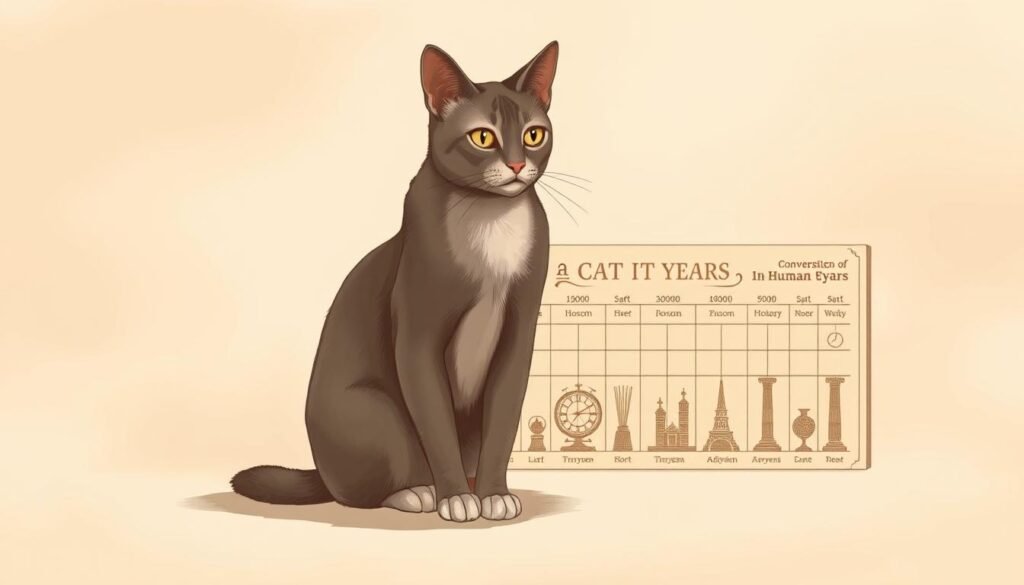
Common methods to convert cat years to human years
The old rule of multiplying by seven is outdated. Modern methods show cats grow fast early on. The first year of a cat’s life is like 15 human years.
The second year is like adding nine human years. After that, each year adds about four to five human years. This depends on the vet’s model.
Simple cat age chart for quick reference
| Cat age | Approximate human equivalent | Life stage |
|---|---|---|
| 6 months (0.5 year) | 10–13 years | Adolescent |
| 1 year | 15 years | Young adult |
| 2 years | 24 years | Mature adult |
| 3 years | 28–29 years | Adult |
| 4 years | 32–33 years | Adult |
| 5 years | 36–37 years | Adult |
| 7 years | Early 40s | Senior onset |
| 10 years | Mid-50s | Senior |
| 12–15 years | 60s–70s | Senior to geriatric |
| 18+ years | 80s–90s | Geriatric |
Limitations of conversion charts and individual variation
Any cat age chart is just an estimate. It shows typical growth, not health or behavior.
Many factors affect a cat’s aging, like breed and lifestyle. Two eight-year-old cats can look and act very differently.
Use cat years conversion to talk with your vet. It helps understand life stages, but remember, every cat is unique.
Average cat lifespan and factors that influence longevity
Your cat’s life span is influenced by many factors. Indoor cats usually live 12–18 years. Some may even reach their late teens or early twenties.
Outdoor or indoor-outdoor cats, however, often have shorter lives. They face dangers like traffic, fights, and diseases.
Indoor versus outdoor cats: survival differences
Keeping a cat indoors reduces risks. It lowers exposure to diseases like FIV and FeLV. It also reduces the chance of injuries from cars and predators.
You can control their diet, parasites, and environment. This helps support their long-term health.
Breed, genetics, and predisposed health issues
Breed is important. Maine Coons often face heart problems. Persians are more likely to have kidney disease. Siamese cats may have dental issues and amyloidosis.
Mixed-breed cats, like domestic shorthairs and longhairs, may be healthier. But they still need checks for age-related problems.
Nutrition, preventive care, and lifestyle impacts
Good nutrition is key. It supports growth, weight, and health of joints and kidneys. Talk to your vet about the right diet for your cat.
Preventive care, like vaccinations and dental cleanings, is crucial. It helps your cat stay healthy at any age.
Safe spaces and play reduce stress and injury risks. Microchipping helps find your cat if it gets lost. Controlling food portions and playing regularly keeps your cat healthy and happy.
Aging in cats: signs, health checks, and care at different ages
As your cat ages, you’ll see changes in their behavior and needs. Knowing about aging in cats helps you catch problems early. Keep an eye on their appetite, litter box habits, and how they move and sleep.
Physical signs of aging to watch for
Look for weight changes, a thin coat, and less grooming. Stiffness and limping are common signs. Changes in sleep and vocalization can also signal issues.
Dental problems show as bad breath and eating difficulties. Hearing and vision loss are other signs. Catching these early makes treatment easier.
Common age-related conditions and when to seek help
Chronic kidney disease causes thirst, urination, and weight loss. If you suspect CKD, ask your vet for tests. Hyperthyroidism shows as weight loss and restlessness; blood tests confirm it.
Diabetes causes excessive thirst and urination. Osteoarthritis makes moving stiff; talk to your vet about pain relief. Dental disease needs professional cleaning. Cognitive dysfunction affects sleep and orientation; environmental changes can help.
Practical care tips for senior cats: diet, exercise, and enrichment
Switch to senior diets when your vet suggests it. These diets are easier to digest and support health. Manage food portions to match their activity level.
Play gently and regularly to keep muscles strong. Use low-impact toys and short play sessions. Add ramps, soft bedding, and easy-access litter boxes.
Provide enrichment like puzzle feeders and scent games. Social interaction and new scents reduce stress. This supports their health at all ages.
How to adjust veterinary care and monitoring as your cat ages
See your vet more often, every six to twelve months. Start with baseline tests like blood work and urinalysis. Track dental health and discuss anesthesia risks.
Work with your vet on a care plan for chronic conditions. Keep a log of your cat’s health. Early intervention improves their quality of life.
Conclusion
Figuring out how old a cat is involves watching them closely and getting a vet’s opinion. Look at their teeth, coat, and how they act. A vet can give a clear age based on these signs.
The first two years of a cat’s life are the fastest in aging. So, paying attention to their early years is key.
Charts can show how old a cat is in human years, but they’re not always right. Look for signs like less activity, weight changes, and dental issues. These signs help you adjust their care to fit their age.
To keep your cat healthy and happy, make sure they live indoors and get regular vet visits. Also, keep their teeth clean, feed them well, and give them fun activities every day. If you’re not sure how old your cat is, start with a vet visit.
As your cat gets older, see the vet more often. If you’re worried about your cat’s health, talk to a vet. Keeping a health journal can help. A simple chart can help you and your vet plan the best care for your cat.