Can Cats Drink Regular Milk? 8 Safety Tips for Your Cat
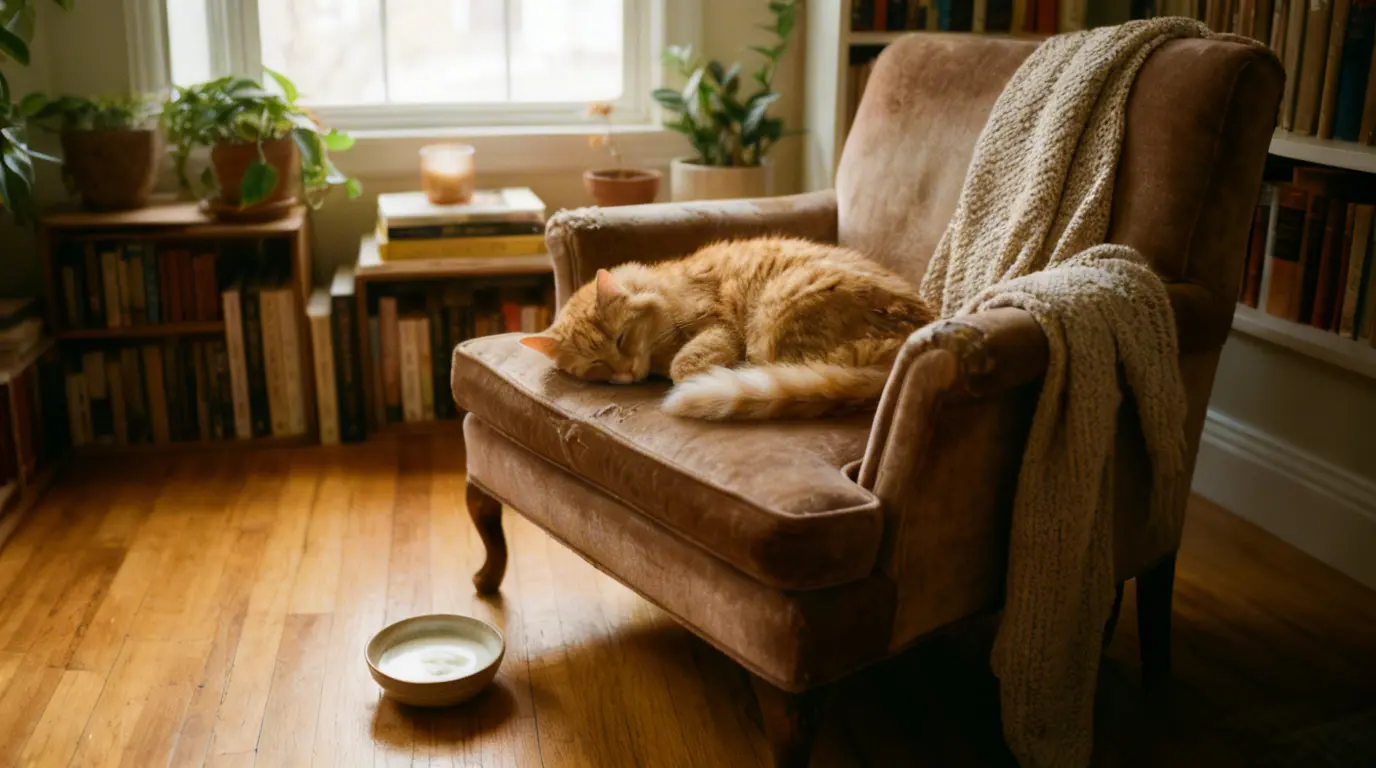
I’ll never forget the morning I found my cat Luna sitting on the kitchen counter, her entire face buried in my cereal bowl, enthusiastically lapping up the leftover milk. She looked so happy, so natural, so… exactly like every cat in every movie I’d ever seen.
“How cute!” I thought, snapping a quick photo for Instagram.
Six hours later, I was scrubbing diarrhea off my bathroom rug and feeling like the world’s worst cat parent.
If you’ve ever wondered whether Can Cats Drink Regular Milk? The Truth Behind the Classic Myth – or if you’ve already learned this lesson the hard way like I did – you’re not alone. The image of cats and milk is so deeply embedded in our culture that it feels almost wrong to separate them. But here’s the truth: no, cats should not drink regular milk, and I’m about to explain exactly why.
Can Cats Drink Regular Milk?: No, Cats Cannot Safely Drink Regular Milk
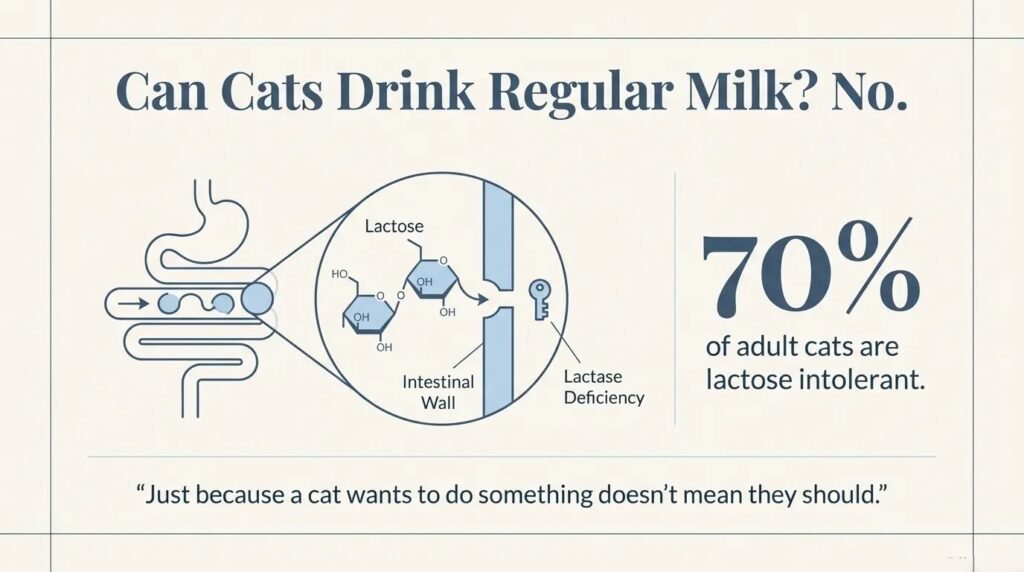
Let me be completely clear from the start: regular cow’s milk is not safe or appropriate for cats.
I know this goes against everything you’ve seen in cartoons, read in children’s books, or watched in old movies. The cultural association between cats and milk is so strong that even my vet told me she still gets surprised looks when she tells people not to give their cats dairy.
“But cats LOVE milk!” people protest. “I’ve been giving my cat milk for years!”
Yes, cats love milk. They also love eating houseplants, chewing on electrical cords, and knocking glasses off tables. Just because a cat wants to do something doesn’t mean they should.
Here’s the science: approximately 70% of adult cats are lactose intolerant, meaning they lack sufficient amounts of the enzyme lactase needed to properly digest lactose (the sugar found in milk). When lactose-intolerant cats drink regular milk, it triggers a cascade of digestive problems ranging from mild discomfort to severe diarrhea.
Why Cats Are Attracted to Milk (Even Though It Makes Them Sick)
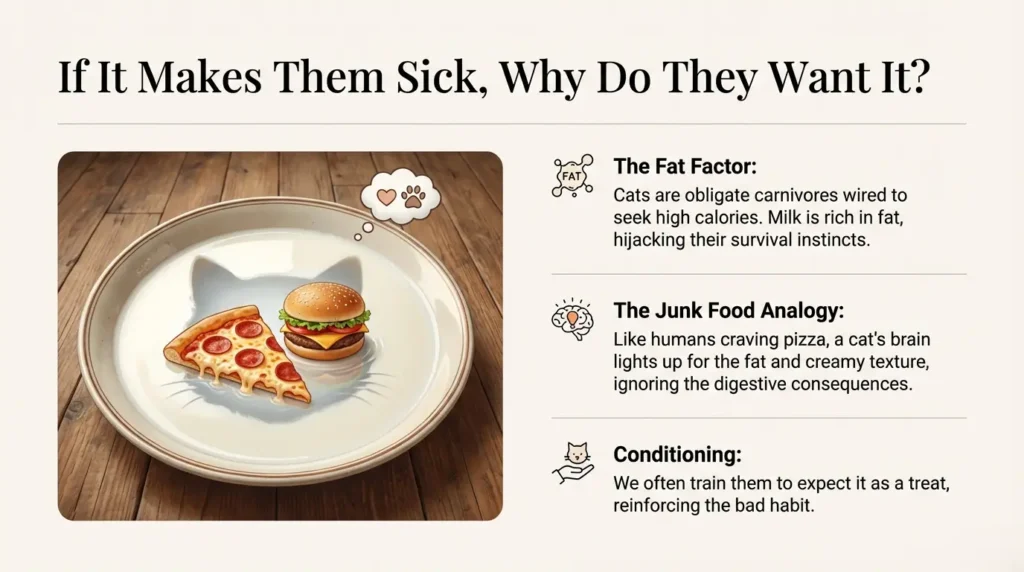
This is the question that baffled me after Luna’s milk incident. If milk makes cats sick, why do they act like it’s the most delicious thing on earth?
The Fat Factor
Cats are obligate carnivores, meaning their biology is designed to seek out and consume meat. In the wild, cats would hunt prey with high fat and protein content. Milk is high in fat, which triggers their instinct to consume calorie-dense foods.
When Luna smelled that milk in my cereal bowl, her brain essentially said: “High fat content = valuable calories = must consume immediately!” Her biology was doing exactly what it evolved to do – seek out rich, fatty foods for survival.
The problem? Her digestive system couldn’t handle what her instincts were telling her to eat.
The Creamy Texture Appeal
Cats are also attracted to the creamy, smooth texture of milk. It’s different from water, it coats their mouth pleasantly, and the richness is genuinely appealing to their sensory experience.
Think of it like humans and junk food. Pizza, ice cream, french fries – we know they’re not health food, but our brains light up when we eat them because of the fat, salt, and sugar content. Cats experience something similar with milk, except they don’t have the cognitive ability to understand the consequences.
Cultural Conditioning
Here’s something I didn’t consider until my vet pointed it out: some cats have been conditioned to expect milk because well-meaning owners have been giving it to them regularly.
My friend’s cat had been getting a saucer of milk every single day for five years. The cat expected it, begged for it, and seemed to “handle it fine” according to my friend. But when we looked closer, the cat had chronic soft stools, occasional vomiting, and was slightly underweight.
Once she stopped the daily milk routine, those issues resolved within two weeks.
What Actually Happens When Cats Drink Regular Milk
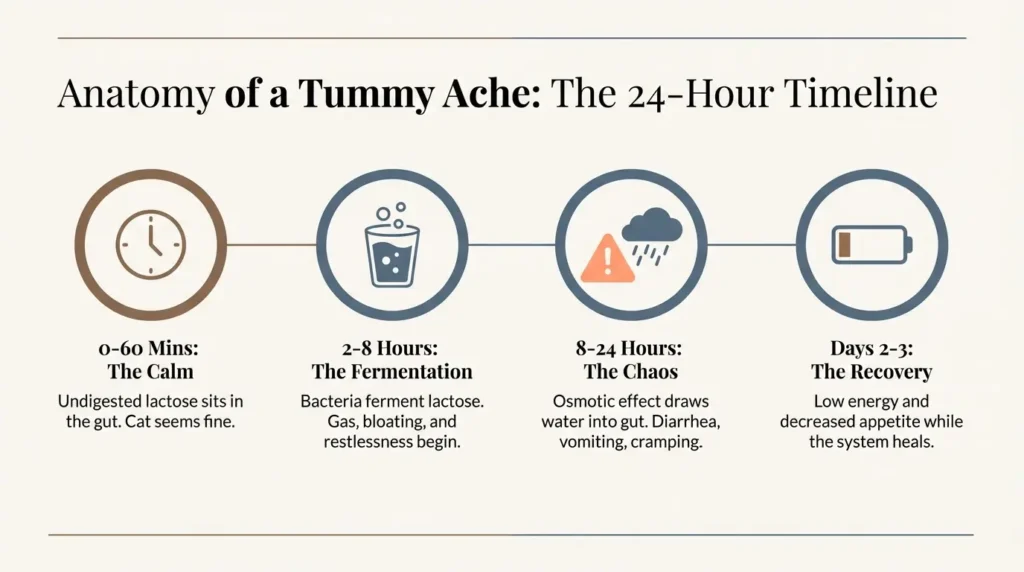
Let me walk you through the biological disaster that unfolds when a lactose-intolerant cat drinks cow’s milk. This is what happened inside Luna’s digestive system after her cereal bowl incident:
The First 30-60 Minutes: The Calm Before the Storm
Luna seemed perfectly fine initially. She was happy, purring, grooming herself contentedly. I had no idea what was coming.
During this time, the milk was traveling through her stomach into her small intestine. Since she lacked sufficient lactase enzyme, her body couldn’t properly break down the lactose. The undigested lactose just sat there, waiting to cause problems.
Hours 2-8: The Symptoms Begin
This is when I started noticing something was wrong. Luna became restless, pacing around the apartment. Her stomach was making gurgling sounds I could hear from across the room.
What was happening: Bacteria in her gut were fermenting the undigested lactose, producing gas and causing bloating. The lactose was also drawing water into her intestines through osmosis, setting the stage for diarrhea.
Luna looked uncomfortable but not yet in distress. I thought maybe she’d just eaten too fast. Oh, how wrong I was.
Hours 8-24: Full Digestive Chaos
This is when the real nightmare began. Luna had multiple bouts of diarrhea – and I’m not talking about slightly soft stool. I’m talking about liquid mess that didn’t always make it to the litter box in time.
She also vomited twice, looking absolutely miserable between episodes. The worst part was seeing her try to find comfortable positions, clearly experiencing cramping and pain.
Days 2-3: Recovery Period
Even after the worst symptoms passed, Luna wasn’t back to normal. Her appetite was decreased, her energy was low, and her digestive system was still recovering from the assault.
It took almost three full days before she was completely back to her usual self.
All of this from maybe two tablespoons of milk.
The Spectrum of Reactions: Why Some Cats “Seem Fine”
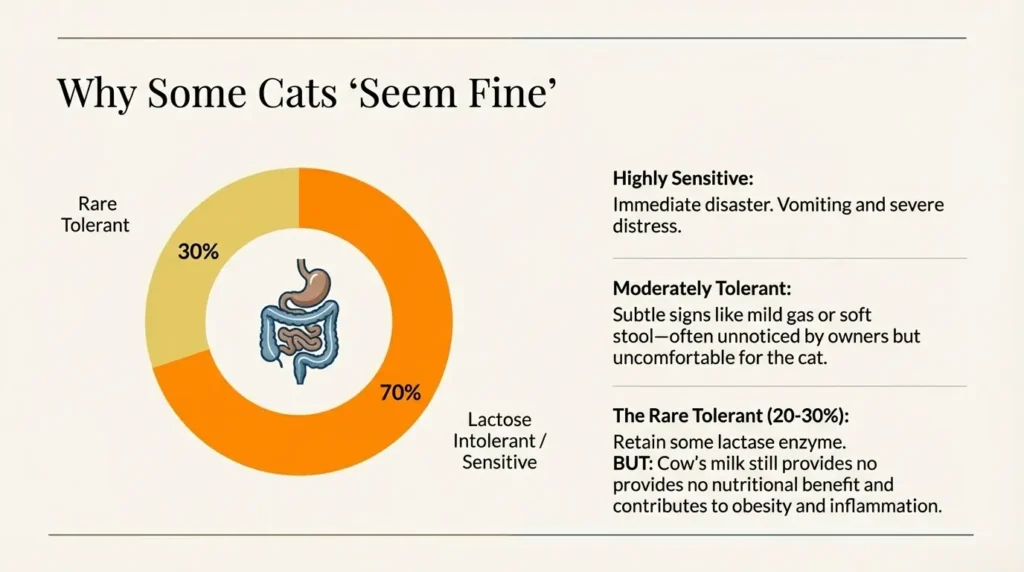
Here’s where things get tricky and why the milk myth persists: not all cats react the same way.
Highly Sensitive Cats
Some cats, like Luna, have severe reactions to even small amounts of milk. These are cats who retained very little lactase production after weaning. For them, any dairy equals digestive disaster.
Moderately Tolerant Cats
Some cats retain a bit more lactase enzyme and can handle tiny amounts of milk without dramatic symptoms. They might have mild gas or slightly soft stool that their owners don’t even notice.
This doesn’t mean milk is good for them. It just means the damage is less obvious.
The Rare Lactose-Tolerant Cat
A small percentage of cats – maybe 20-30% – retain higher levels of lactase production into adulthood. These cats can consume small amounts of dairy without immediate symptoms.
But even for these cats, milk provides no nutritional benefit and comes with long-term risks like weight gain, nutritional imbalance, and potential chronic inflammation.
My neighbor insists her cat “loves milk and never gets sick.” What she doesn’t mention is that her cat is overweight, has chronic hairball issues, and frequently vomits. Could the regular milk be contributing? Quite possibly.
The Kitten Exception (Sort Of)
“But kittens drink their mother’s milk!” people argue. “So milk must be natural for cats!”
This is technically true but completely misses the point.
Mother’s Milk vs. Cow’s Milk
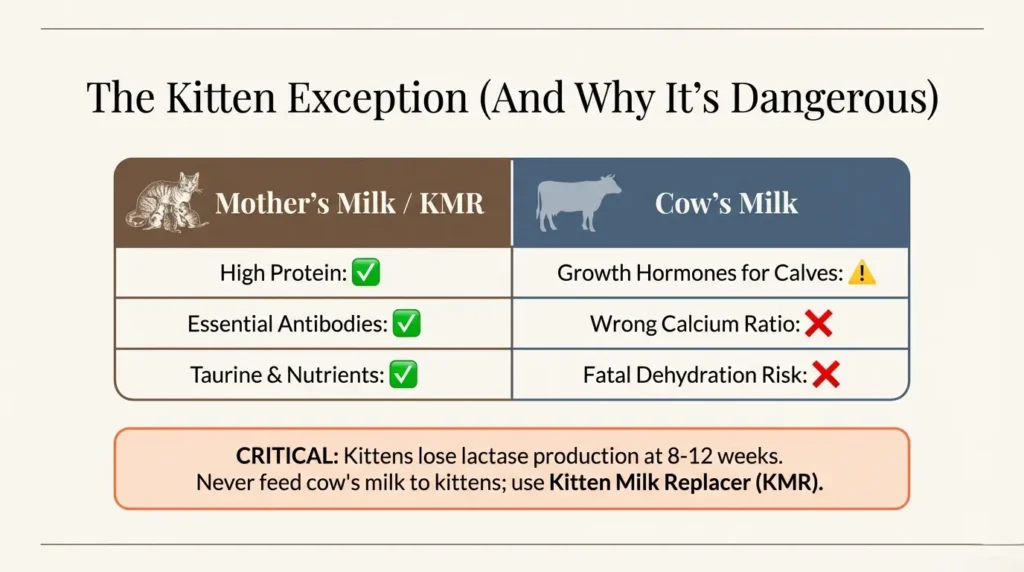
Kittens are designed to drink their mother’s milk, which has a completely different nutritional composition than cow’s milk:
- Higher in protein (perfect for rapid kitten growth)
- Different fat composition (supports brain development)
- Contains taurine (essential for feline heart and eye health)
- Has antibodies that protect kittens from disease
- Perfect calcium-to-phosphorus ratio for cats
Cow’s milk, by contrast, is formulated by nature to turn a 90-pound calf into a 1,200-pound cow. The nutritional profile is all wrong for cats.
The Lactase Drop-Off
Here’s the crucial part: even kittens start losing their lactase production around 8-12 weeks of age. Once they’re weaned from their mother, their bodies stop making the enzyme because they’re biologically designed to never need it again.
Giving a weaned kitten cow’s milk can cause the same digestive problems as giving it to an adult cat – diarrhea, dehydration, and in severe cases, failure to thrive.
If you have orphaned kittens, use kitten milk replacer (KMR) specifically formulated to match mother cat’s milk. Brands like PetAg KMR are available at pet stores. Never use regular cow’s milk – it can literally be the difference between life and death for a fragile newborn kitten.
The Long-Term Consequences Nobody Talks About
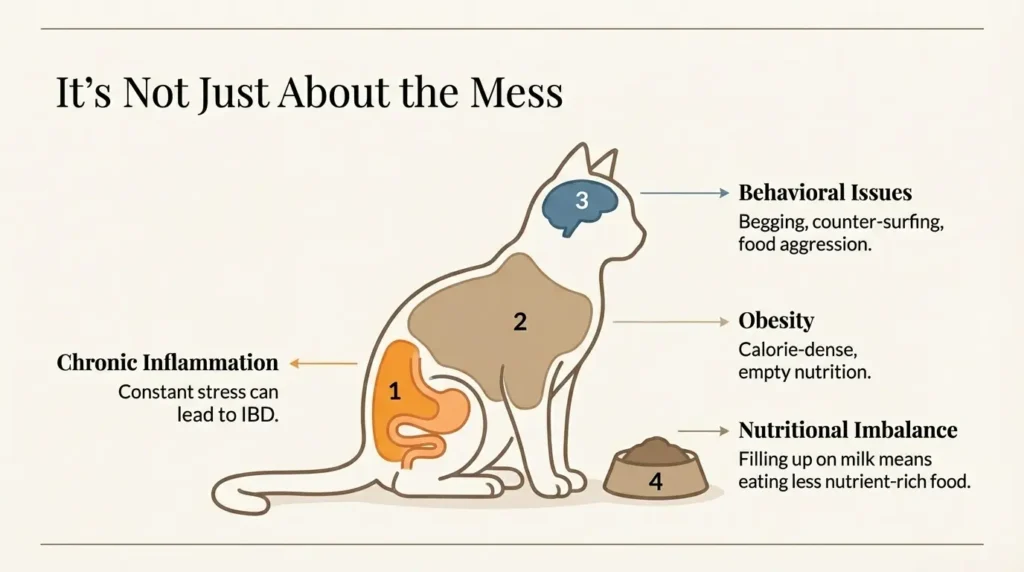
Most people focus on the immediate symptoms – the diarrhea, the vomiting, the mess. But regular milk consumption can cause subtler long-term problems:
Chronic Inflammation
Regularly consuming foods your body can’t properly digest leads to low-grade chronic inflammation in the digestive tract. Over time, this can contribute to inflammatory bowel disease (IBD) and other GI issues.
Nutritional Imbalance
When cats fill up on milk (which provides minimal appropriate nutrition), they eat less of their actual cat food. This can lead to deficiencies in essential nutrients like taurine, which cats need for heart health.
Weight Gain
Milk is calorie-dense but nutritionally empty for cats. Regular milk treats can contribute to obesity, which brings its own host of health problems – diabetes, joint issues, heart disease.
Behavioral Issues
Some cats become so focused on getting milk that they develop begging behaviors, counter-surfing habits, or food aggression. I’ve seen cats knock over glasses, swipe at people’s cereal bowls, and generally become pests around dairy products.
What to Give Your Cat Instead of Regular Milk
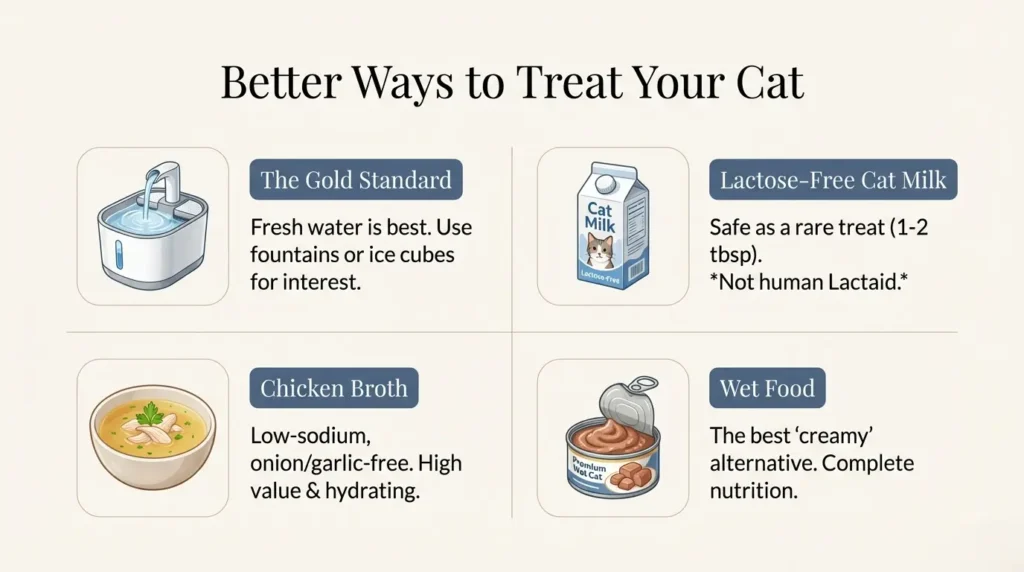
Okay, I’ve spent a lot of time telling you what NOT to do. Let’s talk about what you SHOULD do if you want to give your cat something special.
Plain Water: The Unsexy Truth
Water is genuinely all your cat needs to drink. I know it’s boring. I know it doesn’t feel special. But it’s the foundation of feline health.
How I got Luna to drink more water:
- Bought a cat water fountain (tripled her intake overnight)
- Placed water bowls in multiple locations
- Cleaned bowls daily (cats are picky about freshness)
- Switched to wide, shallow dishes (whisker-friendly)
- Added ice cubes for entertainment value
Lactose-Free Cat Milk
If you really want to give your cat something milk-like, lactose-free cat milk products (like Whiskas Cat Milk) are actually safe. The lactose has been broken down, so it won’t cause digestive upset.
Important notes:
- Still just a treat, not a meal replacement
- Limit to 1-2 tablespoons, 2-3 times per week max
- Some cats may still have reactions
- Not nutritionally necessary
I give Luna lactose-free cat milk about twice a week as a special treat. She loves it, and I love that it doesn’t turn my apartment into a biohazard zone.
Low-Sodium Chicken Broth
This is honestly Luna’s favorite thing in the world. I simmer plain chicken in water (no seasonings, no onions, no garlic) and keep it in the fridge.
A tablespoon of this broth is more exciting to her than any milk product, plus it’s actually providing some nutritional value from the chicken.
Wet Food for Hydration
The best “milk alternative” is actually high-quality wet food. It’s 70-80% water, provides complete nutrition, and satisfies that desire for something rich and creamy.
When I switched Luna to a primarily wet food diet, she stopped begging for milk entirely. Turns out what she really wanted was moisture and richness in her diet, which wet food provides perfectly.
Emergency Guide: Your Cat Just Drank Milk
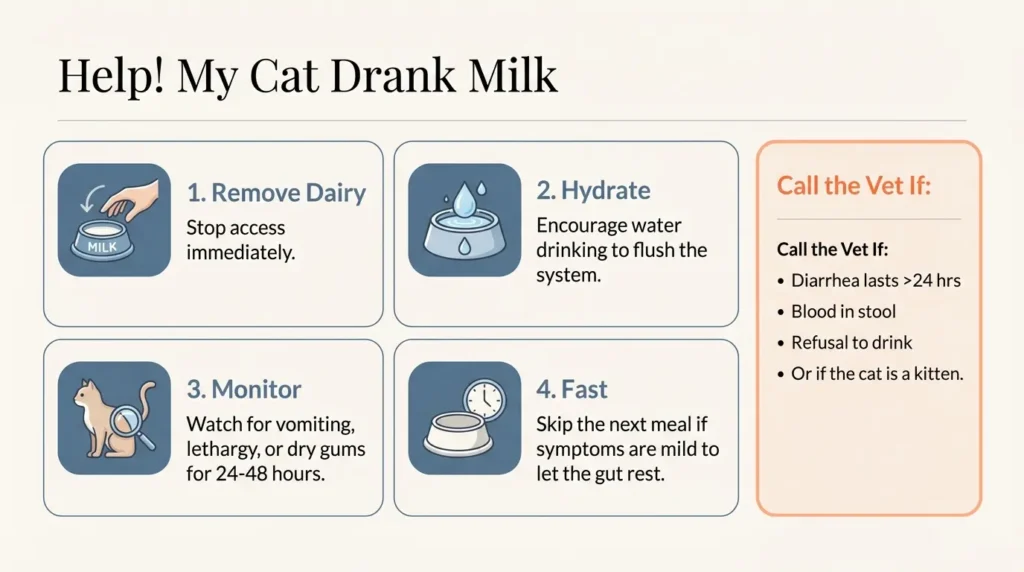
If your cat got into milk (like Luna did with my cereal), here’s exactly what to do:
Don’t panic. Most cats will have unpleasant symptoms but will recover on their own.
Remove all dairy immediately. Make sure your cat can’t access any more milk.
Offer fresh water. Encourage drinking to help flush the system and prevent dehydration.
Monitor closely for 24-48 hours. Watch for:
- Diarrhea (note frequency and consistency)
- Vomiting
- Lethargy
- Loss of appetite
- Signs of dehydration (dry gums, sunken eyes)
Consider fasting the next meal if symptoms are mild. This gives the digestive system time to recover.
Call your vet if:
- Diarrhea continues more than 24 hours
- You see blood in stool or vomit
- Your cat won’t drink water
- Your cat seems lethargic or in pain
- Your cat is a kitten (they dehydrate much faster)
When Luna had her milk incident, I called my vet just to be safe. They walked me through monitoring protocols and reassured me that most cats recover fine. Luna was back to normal in three days, and I learned a very valuable (and messy) lesson.
Breaking the Cultural Myth
The hardest part of the “cats and milk” conversation isn’t the science – it’s overcoming decades of cultural conditioning.
Every classic children’s book shows cats drinking milk. Every cartoon features cats with saucers of cream. My own grandmother kept a bowl of milk on her porch for the neighborhood cats, and she genuinely believed she was doing something kind.
We need to update this image. Cats and milk don’t belong together any more than dogs and chocolate cake do. Both are harmful, even if the animals want them.
When my six-year-old niece visited and tried to give Luna milk, I had to explain: “Movies show cats drinking milk, but that’s like showing kids eating candy for every meal. It looks fun, but it makes them sick.”
She got it immediately. Sometimes we need to be that direct.
The Bottom Line on Cats and Regular Milk
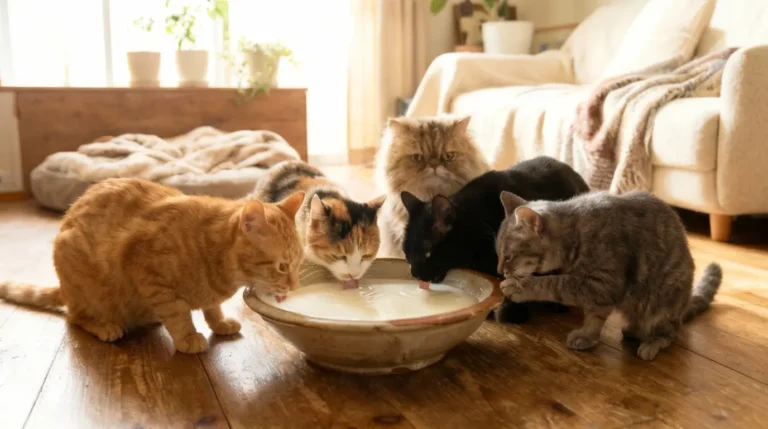
Can cats drink regular milk? Physically, yes – they’re capable of lapping it up and swallowing it. Should they? Absolutely not.
Regular cow’s milk causes digestive upset in the majority of cats, provides no nutritional value, and perpetuates a harmful cultural myth that needs to die. The adorable image of a cat with a saucer of milk is right up there with giving dogs chocolate – it looks cute, but it’s genuinely harmful.
Luna is four years old now and hasn’t had regular milk since that disastrous cereal bowl incident. She’s perfectly happy with her water fountain, her high-quality wet food, and occasional chicken broth treats. She’s healthier, her digestive system is happier, and I don’t have to clean up disasters anymore.
Your cat deserves better than upset stomachs and outdated stereotypes. Give them what they actually need: fresh water, quality nutrition, and your informed love.
Want more truth about cat nutrition myths? Check out our complete guide to foods cats can and can’t eat, or read about safe treat alternatives for your feline friend.
- Can Cats Drink Milk?: The Safe Truth About Feline Dairy
- Can Cats Drink Milk?: PetMD
Have a cat milk disaster story to share? Drop it in the comments – we’ve all been there, and there’s no judgment here!