Best Kitten Milk Replacer Brands for Lifesaving Growth
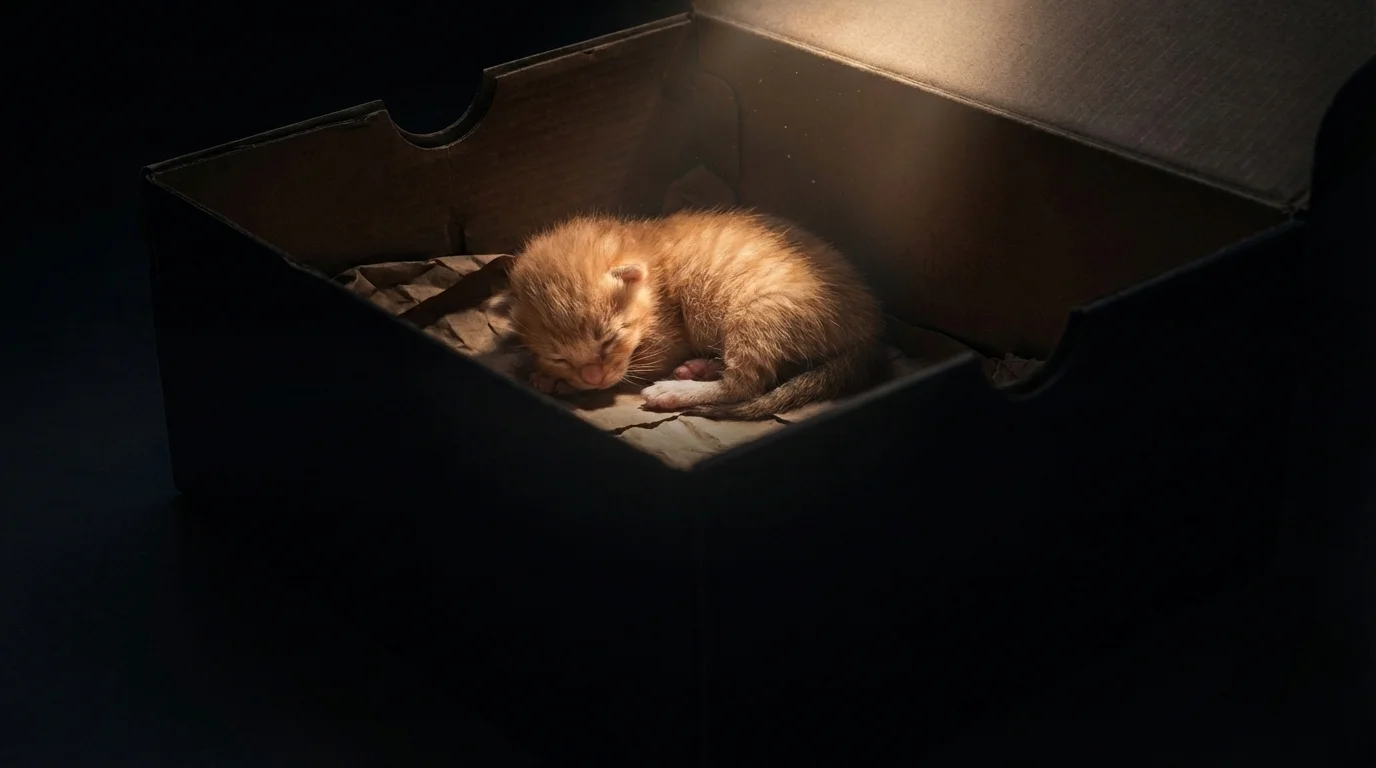
Three years ago, I got a frantic call at midnight from my friend who’d found a shoebox of newborn kittens abandoned behind her apartment building. Eyes sealed shut, umbilical cords barely dried, no mother anywhere.
“What do I do?” she whispered, terrified. “I have regular milk in the fridge—”
“Stop right there,” I said. “Do NOT give them regular milk. I’m bringing kitten milk replacer right now.”
Those five kittens survived because we used proper KMR and feeding techniques from hour one. I’ve seen too many orphaned kittens die because well-meaning people didn’t understand that kitten milk replacer isn’t optional – it’s the difference between life and death for babies under 8 weeks old.
If you’re facing orphaned kittens right now, what you do in the next few hours matters desperately. Let me show you exactly what works.
Affiliate Disclosure: This article includes affiliate links. You buy through these links and support this site at no extra cost to you.
Table of Contents
What Makes Kitten Milk Replacer Different from Regular Milk
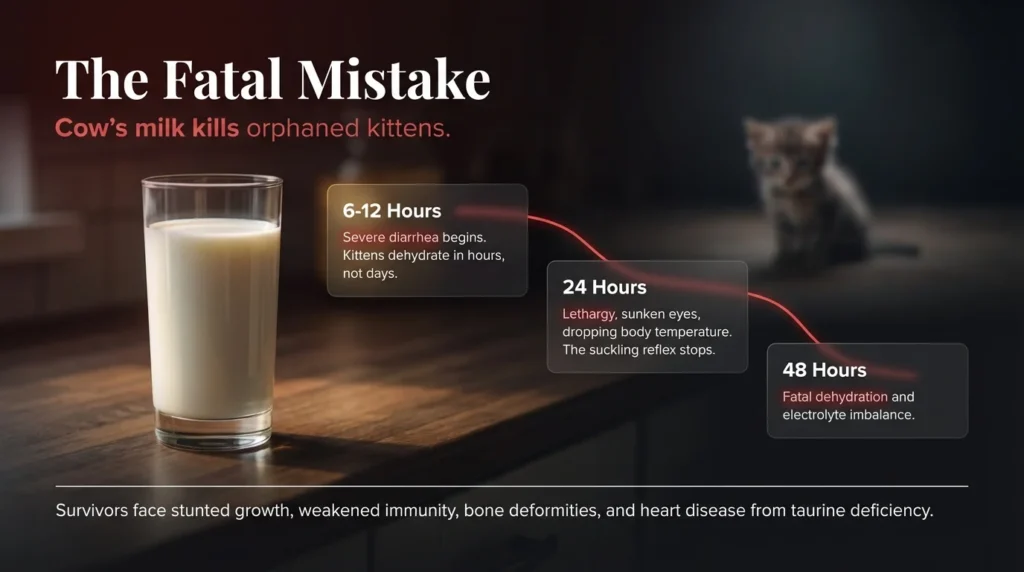
This is life-or-death information: cow’s milk kills orphaned kittens.
The Critical Nutritional Differences
Mother cat’s milk is evolutionary perfection for explosive kitten growth. Cow’s milk is designed for calves. The gap is massive.
Mother cat’s milk provides:
- 40-45% protein (kittens double birth weight in 7-10 days)
- 25% fat for rapid brain and nervous system development
- High taurine content (essential amino acid cats can’t produce)
- Antibodies providing immune protection
- 1.3:1 calcium-to-phosphorus ratio (perfect for feline bone growth)
- 4.5% lactose (digestible amount for kittens)
Cow’s milk contains:
- Only 28% protein (30% less than kittens need)
- Wrong fat composition (doesn’t support feline brain development)
- Zero taurine (leads to heart disease and blindness)
- No feline-specific antibodies
- Wrong mineral ratios
- Too much lactose (causes severe diarrhea even in nursing kittens)
What happens when you use cow’s milk:
Within 6-12 hours: Severe diarrhea begins. Tiny kittens dehydrate in hours, not days.
Within 24 hours: Dehydration causes lethargy, sunken eyes, cold body temperature. Kittens stop nursing.
Within 48 hours: Many kittens die from dehydration and electrolyte imbalance.
Survivors develop: Stunted growth, weakened immune systems, heart problems from taurine deficiency, bone deformities from wrong minerals.
I’ve volunteered at rescue organizations for years. We’ve lost kittens because finders used cow’s milk before bringing them to us. By the time they arrived, dehydration was too severe to reverse.
Don’t let this happen to your kittens.
Best Kitten Milk Replacer Brands (What Actually Works)
Not all KMR is created equal. Here’s what professional rescuers and breeders actually use.
PetAg KMR (Kitten Milk Replacer) – My First Choice


This is the gold standard and what I reach for first.
Why it’s best:
- Most widely available (pet stores, Amazon, even some Walmarts)
- Closest match to mother cat’s milk composition
- 42% protein, 25% fat – perfect ratios
- Includes DHA for brain/eye development
- Contains taurine for heart health
- Fortified with vitamins and minerals
- Available in powder (economical) and liquid (convenient)
Forms I keep stocked:
- Powder can (mix fresh as needed, most economical)
- Ready-to-feed liquid bottles (emergency middle-of-night feedings)
- Single-serve packets (portable, travel-friendly)
Cost: $15-20 for powder making 80+ bottles. $8-12 for liquid 8oz bottle.
Real results: I’ve raised four litters of orphaned kittens on PetAg KMR. All gained weight appropriately, developed normally, and are healthy adults.
Breeder’s Edge Nurture Mate – For Weak or Premature Kittens
My second choice, especially for struggling babies.
Why it works:
- Higher fat content (28% vs 25%) – better for underweight or weak kittens
- Includes probiotics for digestive health
- Very close to actual mother cat’s milk composition
- Many professional breeders prefer this formula
- Easier digestion for sensitive stomachs
When I use it:
- Premature kittens
- Underweight or failing-to-thrive babies
- Kittens with digestive sensitivities
- Kittens not gaining weight on standard formulas
Cost: $25-30 per container. More expensive but worth it for at-risk kittens.
Royal Canin Baby Cat Milk – Premium Emergency Option
The most expensive but sometimes necessary for critical cases.
Why it’s premium:
- Pharmaceutical-grade formulation
- Highest protein content (44%)
- Ultra-digestible for premature or medically fragile kittens
- Excellent for kittens with persistent diarrhea on other formulas
- Microencapsulated nutrients for better absorption
When I use it:
- Only for rescue cases with premature or critically ill kittens
- When other formulas have failed
- Kittens with severe digestive issues
Cost: $35-45. Worth every penny when a kitten’s life depends on it.
What NEVER to Use
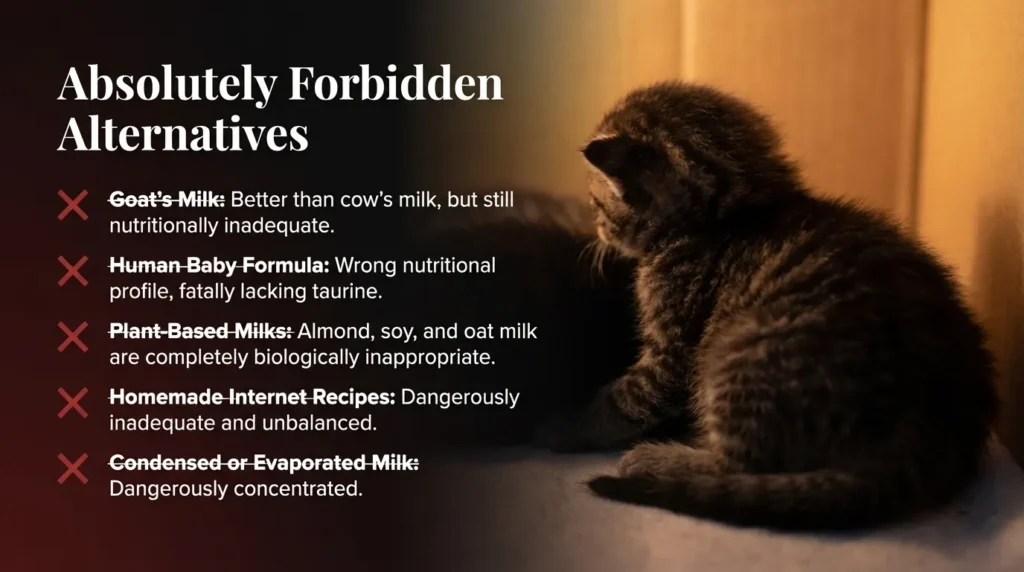
Absolutely forbidden:
- Cow’s milk (whole, 2%, skim, organic – all deadly)
- Goat’s milk (better than cow but still inadequate)
- Human baby formula (wrong nutritional profile, missing taurine)
- Almond, soy, oat milk (plant-based = completely inappropriate)
- “Homemade kitten formula recipes” from random websites (dangerously inadequate)
- Condensed or evaporated milk (way too concentrated)
How to Properly Prepare Kitten Milk Replacer
Preparation technique prevents illness and death. Here’s the exact process.
Mixing Powder Formula Correctly
Step-by-step process:
- Read instructions carefully. Usually 1 part powder to 2 parts water, but verify on YOUR container.
- Use warm water (not hot) – around 100°F, same as body temperature. Test on your wrist like baby formula.
- Mix thoroughly. Shake or whisk until completely smooth with zero lumps. Lumps cause choking and uneven nutrition.
- Prepare small batches. Mix only what you’ll use in 24 hours. Formula degrades and bacteria multiply.
- Store properly. Refrigerate mixed formula immediately. Discard after 24 hours.
My mixing method: I mix a full day’s worth each morning, store in fridge, then warm individual bottles in a cup of hot water before each feeding.
Temperature is Critical
Correct temperature: 100°F (body temperature). Test on your wrist – should feel warm but not hot.
Too cold causes:
- Kittens refuse to eat
- Digestive shutdown
- Hypothermia risk
- Reduced nutrient absorption
Too hot causes:
- Mouth and esophagus burns
- Kittens refuse to eat after being burned once
- Internal injury
Never microwave. Microwaves create dangerous hot spots that can burn kitten’s mouth even if bottle feels okay. Always use warm water bath.
Using Pre-Made Liquid KMR
Advantages: No mixing errors, perfect for emergency midnight feedings, consistent concentration every time.
Proper use:
- Shake vigorously before each use
- Pour needed amount into bottle
- Warm in water bath to body temperature
- Test on wrist before feeding
- Refrigerate opened container
- Discard 48 hours after opening
Feeding Schedule by Kitten Age

Get this wrong and kittens die. It’s that serious.
Newborn to 1 Week Old
Feeding frequency: Every 2 hours, 24/7. Yes, including overnight.
Amount per feeding: 2-6ml depending on kitten size and appetite.
What this looks like: Set alarms every 2 hours through the night. You’ll be exhausted. Do it anyway.
When I fostered newborns, I was a complete zombie for two weeks. But all five kittens survived because I stuck to the schedule.
1-2 Weeks Old
Feeding frequency: Every 2-3 hours.
Amount per feeding: 5-10ml.
Sleep possibility: You might get a 3-4 hour stretch at night if kittens are gaining weight well.
Development to watch: Eyes start opening, more active between feedings, beginning to hear sounds.
2-3 Weeks Old
Feeding frequency: Every 3-4 hours.
Amount per feeding: 10-15ml.
Sleep improvement: You can actually sleep in 4-hour chunks now.
Development: Fully open eyes, wobbling around, starting to play with siblings.
3-4 Weeks Old
Feeding frequency: Every 4-6 hours, start introducing wet kitten food.
Amount per feeding: 15-20ml KMR, plus increasing amounts of wet food gruel.
Weaning begins: Mix wet kitten food with KMR to make soupy gruel. Gradually thicken as they learn to eat solids.
4-8 Weeks Old
Primarily solid food with KMR as supplement.
By 8 weeks, kittens should be completely weaned onto wet and dry kitten food. Some may self-wean earlier.
Proper Feeding Technique (Preventing Aspiration Death)
Feeding technique kills more bottle-fed kittens than bad formula. Learn this correctly.
The Fatal Mistake: Back Position
NEVER EVER feed kittens on their backs like human babies.
This is the number one cause of aspiration pneumonia in bottle-fed kittens. Formula goes into lungs instead of stomach. Kittens drown internally and die.
Correct Position: Belly Down
Proper feeding position:
- Kitten on stomach (belly-down)
- Head level with or slightly higher than body
- Natural nursing position like they’d use with mama cat
- Never tilted backward
My technique: I place kittens on a soft towel on my lap, belly-down, supporting their chest with my palm. Head stays level or angles slightly up.
Bottle and Nipple Selection
Use actual kitten nursing bottles. PetAg and Miracle Nipple brand work best. Regular bottles are too large.
Nipple hole size matters:
- Too small: Kitten gets frustrated, exhausted, doesn’t eat enough
- Too big: Formula flows too fast, causes choking and aspiration
Test: Invert bottle. Formula should drip slowly, not stream. One drop per second is perfect.
Making holes: If nipple has no hole, heat a needle and poke through. Start small – you can always make it bigger.
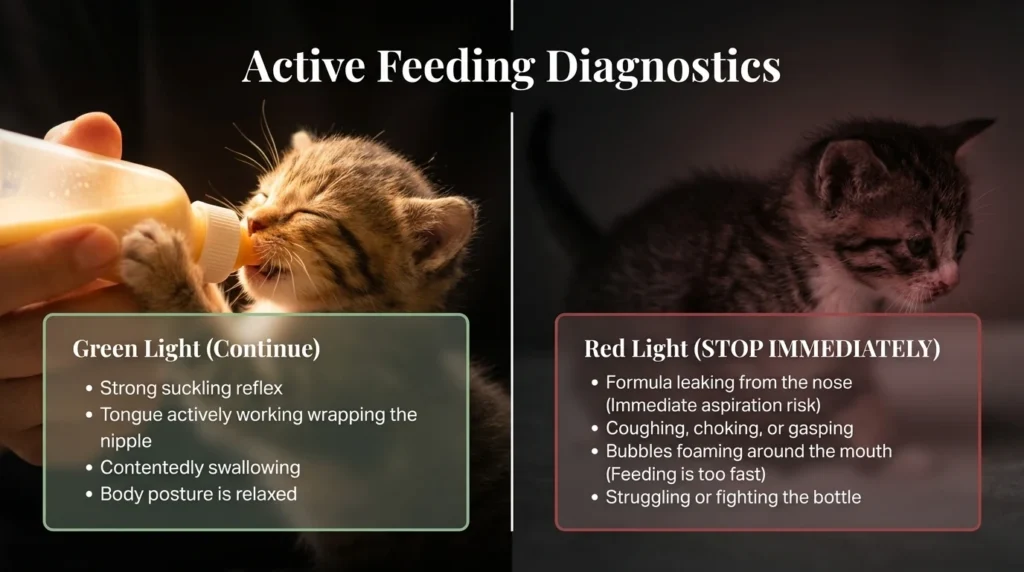
During Feeding Watch For
After Feeding Critical Steps
Burping: Gently pat back to release air bubbles.
Stimulation for elimination: Kittens under 3-4 weeks can’t pee or poop alone. Use warm, damp washcloth to gently rub genital area until they urinate and defecate. Do this after every single feeding.
Weight tracking: Weigh kittens daily on kitchen scale. Should gain 10-15 grams per day. No gain or weight loss = vet emergency.
Emergency Situations and When to Call the Vet
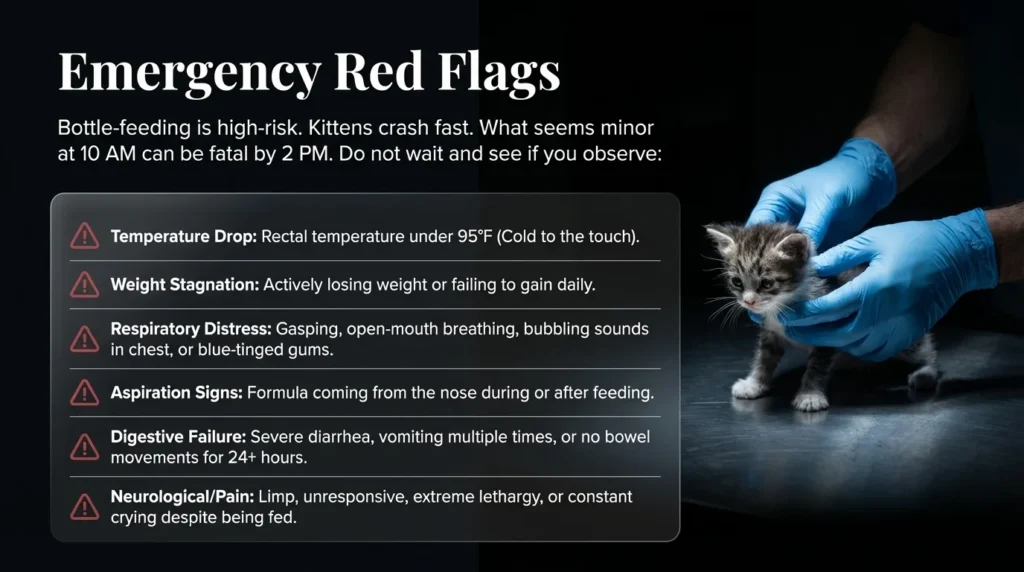
Don’t wait and see. Kittens crash fast. What seems minor at 10 AM can be fatal by 2 PM.
The kittens my friend found had one baby who developed aspiration pneumonia despite careful feeding. We caught it early because I knew the signs – gasping after feeding, bubbling sounds in chest. Emergency vet visit and antibiotics saved her life.
The Bottom Line on Kitten Milk Replacer
Kitten milk replacer isn’t a nice-to-have for orphaned kittens under 8 weeks – it’s absolute survival.
Use proper commercial KMR (PetAg, Breeder’s Edge, or Royal Canin). Never use cow’s milk, goat’s milk, or internet recipes except in true 24-hour emergencies.
Feed every 2-4 hours depending on age, warmed to body temperature, with kitten positioned belly-down to prevent deadly aspiration.
It’s exhausting. Those first two weeks of every-2-hours overnight feedings will destroy you. I’m not sugar-coating it.
But watching those tiny, helpless babies grow into healthy, playful kittens is worth every sleepless night.
The five kittens from that midnight call? They’re three years old now. All healthy, all thriving, all in loving forever homes. They made it because we used proper kitten milk replacer and technique from the first feeding.
Your orphaned kittens deserve the same chance at life.
What’s the best kitten milk replacer brand? ▼
PetAg KMR (Kitten Milk Replacer) is the best overall choice for most situations – it’s widely available, well-balanced with 42% protein and 25% fat matching mother cat’s milk, includes essential taurine and DHA for development, and is affordable at $15-20 for powder making 80+ bottles. It’s been the rescue industry standard for decades with proven results.
For weak, premature, or underweight kittens, Breeder’s Edge Nurture Mate works better due to higher fat content (28%), added probiotics, and easier digestibility. Royal Canin Baby Cat Milk ($35-45) is the premium option for critically ill or medically fragile kittens with its pharmaceutical-grade formulation and ultra-digestible nutrients. Never use cow’s milk, goat’s milk, human baby formula, or plant-based milks – these lack essential nutrients and cause fatal diarrhea and malnutrition in kittens.
How do I know if I’m feeding kitten milk replacer correctly? ▼
You’re feeding correctly if kittens gain 10-15 grams daily (weigh on kitchen scale), nurse eagerly with strong suckling, have soft but formed stools after stimulation, sleep contentedly between feedings, have warm bodies and pink gums, and show increasing activity as they grow. Feed warmed to body temperature (test on wrist), every 2-4 hours depending on age, with kittens positioned belly-down – never on their backs.
Signs of problems requiring immediate vet attention: no weight gain or weight loss, formula coming from nose (aspiration risk), constant crying despite feeding, cold body temperature, lethargy or unresponsiveness, severe diarrhea or no bowel movements, vomiting after feedings, or gasping/labored breathing. After each feeding, stimulate kittens under 3-4 weeks with warm damp cloth to help them urinate and defecate – they can’t eliminate on their own yet. Mix powder formula exactly per instructions (usually 1:2 powder to water ratio), store mixed formula refrigerated for maximum 24 hours, and never microwave (creates dangerous hot spots).
Got questions about what your cat should or shouldn’t eat? Check out our guide to safe and toxic foods for cats, or drop a comment below with your specific situation.
Sources & Further Reading:
- petmd.com : Can Cats Drink Milk?
- Can Cats Drink Lactose-Free Milk? Finally, Some Good News!
- Can Cats Drink Regular Milk? 8 Safety Tips for Your Cat
- Can Cats Drink Milk? The Safe Truth About Feline Dairy
- Can Cats Drink Almond Milk? 11 Safety Facts Owners Need
- 3 Best Emergency Kitten Milk Recipes Guaranteed to Work
And if you’ve got a “my cat drank milk” horror story, share it – sometimes we all need to know we’re not alone in our pet parenting mistakes!