6 Powerful Senior Canned Cat Food Picks for Healthy Aging

Quick Answer: The best senior canned cat food is Tiki Cat Senior for kidney support and maximum hydration (78% moisture, controlled phosphorus), Wellness CORE Grain-Free Senior for maintaining muscle mass with high-quality protein, and Fancy Feast Senior Classic for affordability and picky eaters. Senior canned cat food is essential because it provides 70-80% moisture versus dry food’s 10%, which is critical for aging kidneys, declining thirst drives, and cats with dental disease who need softer textures. Choose based on your cat’s primary health concern – kidney function, weight management, dental pain, or appetite issues.
I’ll never forget the morning I found Leo standing at his dry food bowl, sniffing it, then walking away hungry. This happened three days in a row before I realized: his teeth hurt too much to crunch kibble anymore.
At 14 years old with missing teeth and painful gums, he needed senior canned cat food – not eventually, but immediately. The problem? I had no idea where to start.
Twelve brands and $200 in trial-and-error later, I figured out what actually works. Not what the packaging promises, but what aging cats with real health issues will actually eat and benefit from.
If you’re watching your senior cat struggle with food, lose weight, or deal with kidney issues, let me save you the expensive mistakes I made.
Quick Comparison: Best Senior Canned Cat Food
| Product | Best For | Moisture | Texture | Key Benefit | Price |
|---|---|---|---|---|---|
| Tiki Cat Senior Pate | Kidney support | 78% | Smooth pate | Highest moisture, low phosphorus | $$$ |
| Wellness CORE Grain-Free Senior | Muscle maintenance | 78% | Smooth/chunky | Premium protein quality | $$$ |
| Fancy Feast Senior Classic | Picky eaters/budget | 78% | Ultra-smooth | Most palatable, affordable | $ |
| Royal Canin Aging 12+ | Very old cats (12+) | 79% | Thin slices | Easy to eat, immune support | $$$$ |
| Hill’s Science Diet Senior 11+ | Clinical nutrition | 78% | Smooth pate | Vet-recommended formulation | $$$ |
| Blue Buffalo Healthy Aging | Weight control | 78% | Pate | Low calorie, high protein | $$$ |
Why Senior Canned Cat Food Matters More Than You Think
Before I dive into specific brands, you need to understand why switching to senior canned cat food changed Leo’s health completely.
The Moisture Crisis in Aging Cats
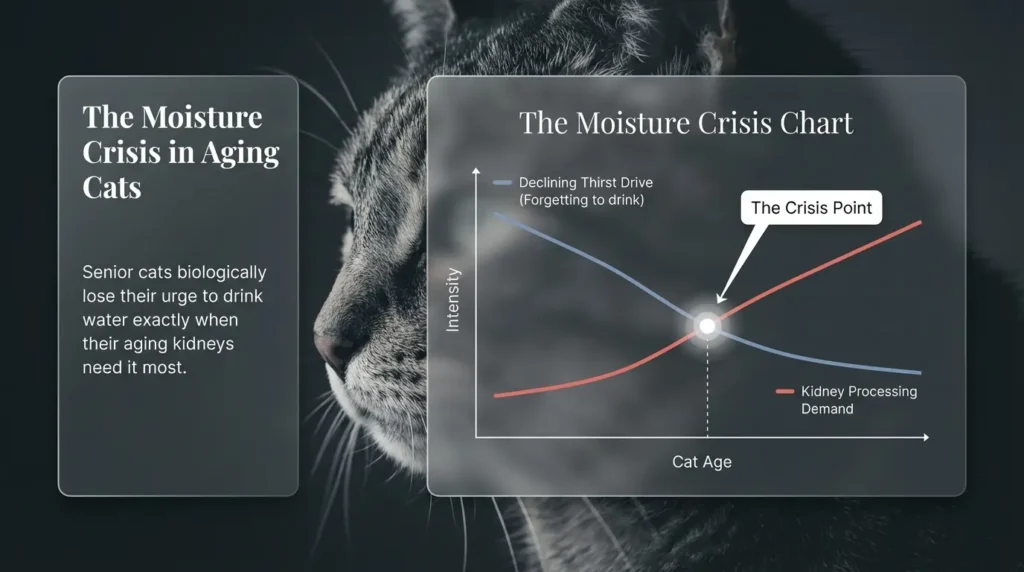
Senior cats have a declining thirst drive – they literally forget to drink enough water. Meanwhile, their kidneys are aging and becoming less efficient.
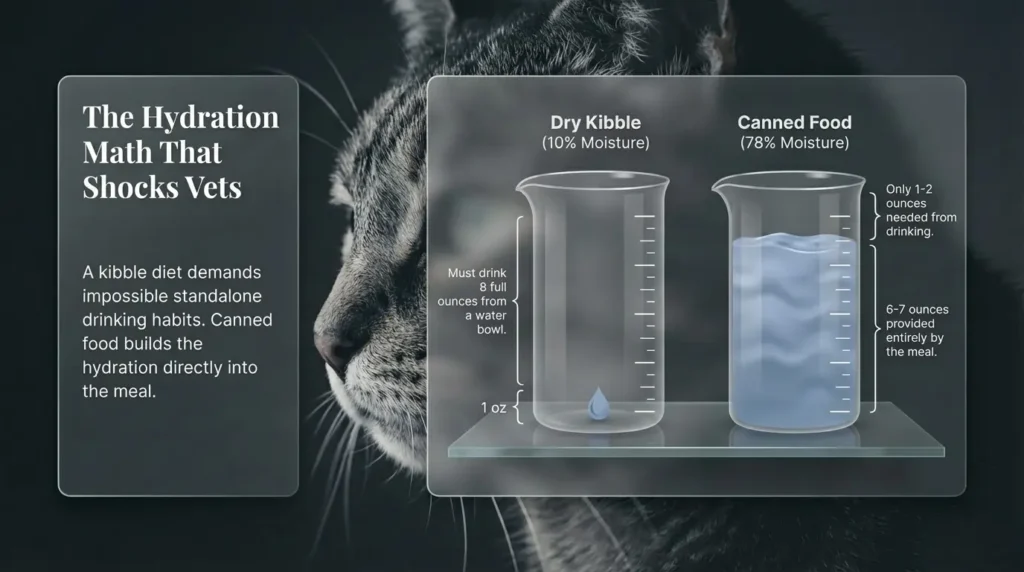
The hydration math that shocked my vet:
A 10-pound cat needs 8 ounces of water daily. On dry food (10% moisture), they must drink ALL of that from a bowl. On senior canned cat food (78% moisture), they get 6-7 ounces through food and only need 1-2 ounces from drinking.
When Leo’s kidney values started climbing at age 13, my vet didn’t prescribe medication first. She prescribed senior canned cat food. Three months later, his values had stabilized.
“The moisture content did this,” she told me. “This is exactly what I wanted to see.”
Beyond Hydration: What Canned Food Provides
Easier on dental disease. Leo’s painful gums and missing teeth made dry kibble torture. Smooth pate let him eat comfortably for the first time in months.
Stronger aroma for fading senses. As cats age, their sense of smell declines dramatically. Senior canned cat food’s strong smell triggers appetite when dry food doesn’t register.
Better protein digestibility. The moisture helps aging digestive systems break down and absorb nutrients more efficiently.
Precise portion control. Cans make it easy to measure exact amounts – critical for weight management in seniors.
When I finally committed to feeding Leo exclusively senior canned cat food, his weight stabilized, his coat improved, and most importantly, eating stopped being painful.
How to Choose the Right Senior Canned Cat Food
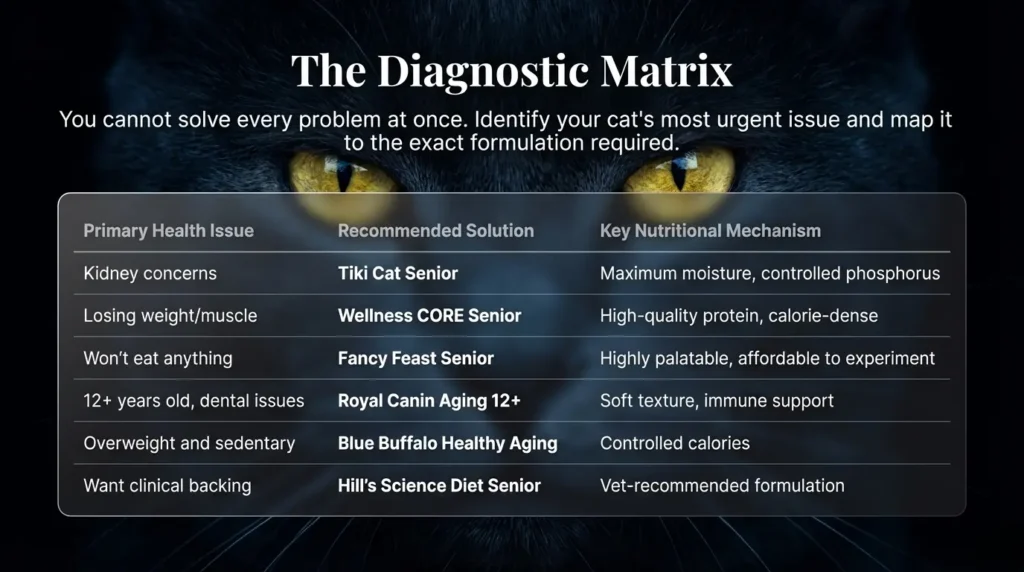
Here’s my actual decision-making framework when Leo’s needs changed.
Match Food to Primary Health Issue
Kidney concerns? → Tiki Cat Senior (maximum moisture, controlled phosphorus)
Losing weight/muscle? → Wellness CORE Senior (high-quality protein, calorie-dense)
Won’t eat anything? → Fancy Feast Senior (highly palatable, affordable to experiment)
12+ years old with dental issues? → Royal Canin Aging 12+ (soft texture, immune support)
Overweight and sedentary? → Blue Buffalo Healthy Aging (controlled calories)
Want clinical backing? → Hill’s Science Diet Senior (vet-recommended formulation)
You can’t solve every problem at once. Pick the most urgent issue and address it first.
Consider Texture Preferences
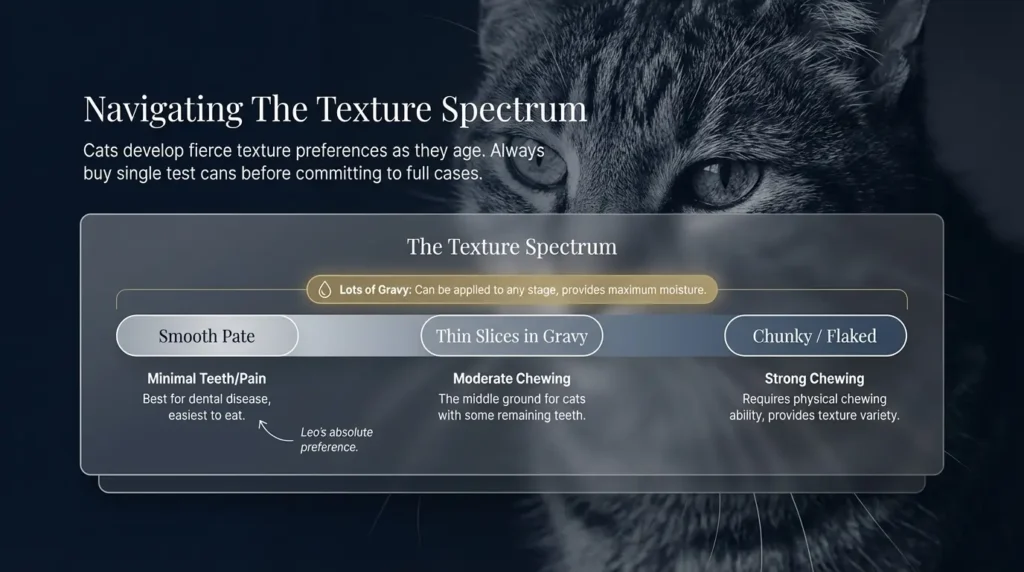
Cats develop strong texture preferences, especially as they age.
Smooth pate: Best for dental disease, easiest to eat, works for most seniors
Chunky/flaked: Provides texture variety, requires some chewing ability
Thin slices in gravy: Middle ground for cats with some teeth remaining
Lots of gravy: Maximum moisture, appealing to many cats
Buy single cans of different textures before committing to cases. Leo loves smooth pate but hates chunky varieties.
Calculate Sustainable Cost
Premium approach: $2.50 per 5.5oz can × 2 cans daily = $5/day = $150/month
Budget approach: $0.85 per 3oz can × 2.5 cans daily = $2.12/day = $64/month
Mixed strategy: 1 premium + 1 budget can daily = $3.35/day = $100/month
The mixed approach is what I actually do. Leo gets Tiki Cat in the morning (kidney support) and Fancy Feast in the evening (palatability). Best of both worlds.
Common Senior Canned Cat Food Mistakes
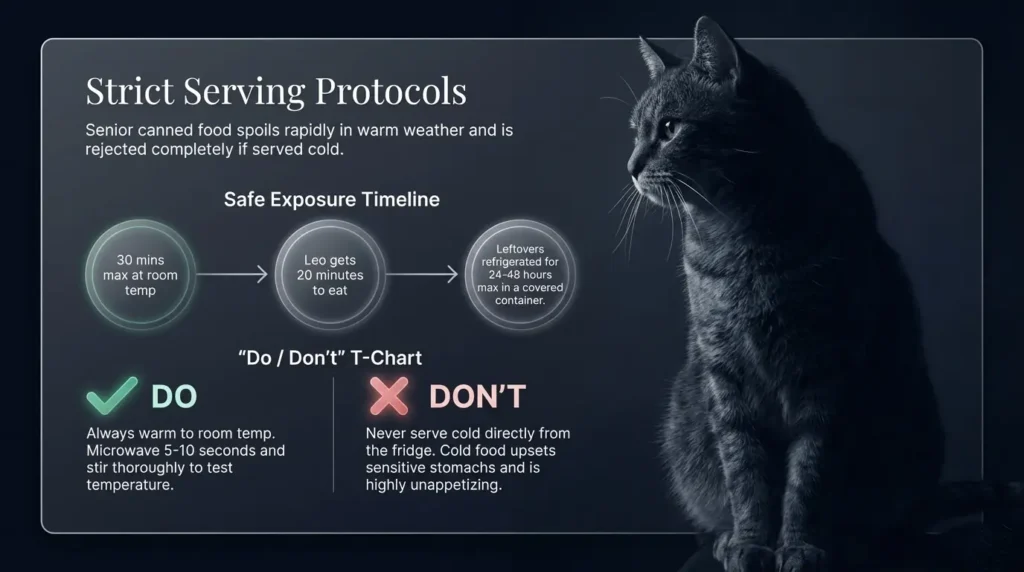
Leaving Food Out Too Long
Senior canned cat food spoils quickly, especially in warm weather.
Safe guidelines:
- Room temperature: 30 minutes maximum
- Refrigerated: 24-48 hours in covered container
- Always warm to room temp before serving (cats hate cold food)
Leo gets 20 minutes to eat, then I refrigerate or discard leftovers.
Serving Cold From the Fridge
Cold food is unappetizing and can upset sensitive stomachs. Let it sit 15-20 minutes or microwave 5-10 seconds (stir thoroughly, test temperature).
Ignoring Body Condition Changes
Package feeding guides are starting points, not rules.
If your cat is losing weight: Increase portions 25%
If gaining unwanted weight: Reduce portions 15-20%
I weigh Leo monthly and adjust immediately based on trends.
Assuming All “Senior” Labels Are Equal
Some senior canned cat food is just rebranded adult food with clever marketing. Read actual ingredients. Look for age-appropriate formulation – controlled phosphorus, quality proteins, appropriate calories.
When You Need Prescription Canned Cat Food
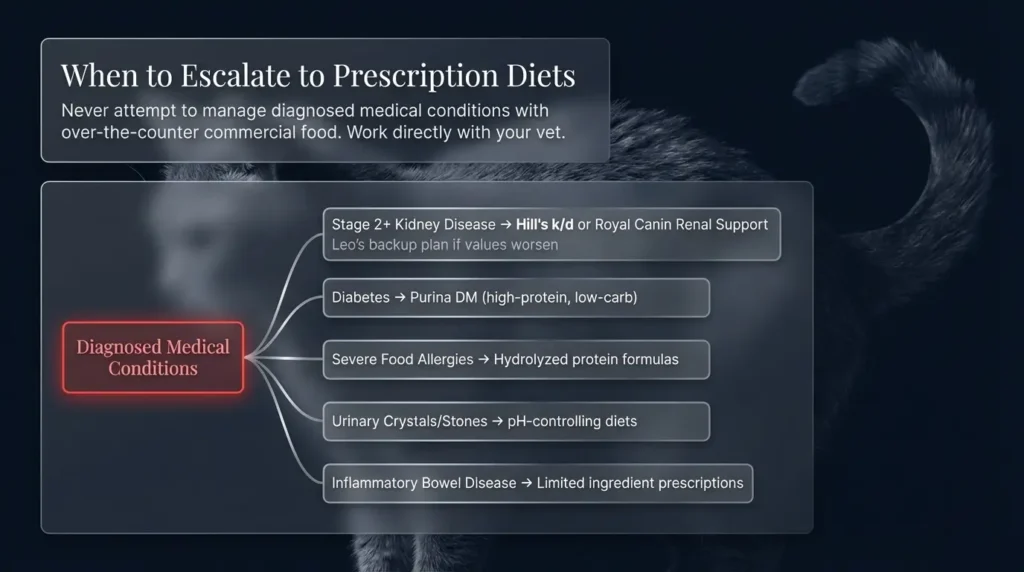
Sometimes commercial senior canned cat food isn’t enough.
You need prescription food for:
- Stage 2+ kidney disease → Hill’s k/d, Royal Canin Renal Support
- Diabetes → Purina DM (high-protein, low-carb)
- Severe food allergies → Hydrolyzed protein formulas
- Urinary crystals/stones → pH-controlling diets
- Inflammatory bowel disease → Limited ingredient prescriptions
Don’t try managing diagnosed medical conditions with over-the-counter food. Work with your vet.
Leo’s still on commercial senior canned cat food, but I know prescription k/d is ready if his kidney values worsen.
The Bottom Line on Senior Canned Cat Food
The best senior canned cat food solves YOUR cat’s specific problem. Kidney support? Tiki Cat. Muscle maintenance? Wellness CORE. Picky appetite? Fancy Feast. Dental issues at 12+? Royal Canin Aging 12+.
Canned food is essential for most senior cats because the hydration alone supports kidney function, prevents urinary issues, eases dental pain, and improves overall health in ways dry food cannot match.
Yes, it costs more than kibble. Yes, it smells terrible. Yes, it requires refrigeration and feeding schedules.
But Leo is 16 with stable kidney values, healthy weight, and comfortable eating. Senior canned cat food made that possible.
Your aging cat’s kidneys, teeth, and long-term health are worth every dollar and inconvenience.
How much canned food should a senior cat eat per day? ▼
Most senior cats need approximately 20 calories per pound of ideal body weight daily. A 10-pound senior cat requires about 200 calories per day, which typically equals 2-2.5 cans of 3oz food or 1.5-2 cans of 5.5oz food, depending on calorie density (usually 70-100 calories per 3oz can of senior canned cat food).
However, adjust based on your cat’s actual body condition and activity level, not package guidelines alone. Underweight seniors may need 25-50% more calories, while overweight seniors require controlled portions or weight-management formulas. Monitor weight monthly and adjust portions by 10-15% if your cat is consistently losing or gaining. Split daily portions into 2-3 smaller meals for better digestion and to prevent food spoilage.
What is the best canned food for senior cats with bad teeth? ▼
The best canned food for senior cats with dental disease is smooth pate texture that requires no chewing – specifically Fancy Feast Senior Classic Pate (ultra-smooth, most affordable), Tiki Cat Senior Pate (smooth with high moisture), or Hill’s Science Diet Senior Pate (vet-backed smooth formula). These can be easily lapped up by cats with missing teeth, painful gums, or severe dental disease.
For cats with some remaining teeth but difficulty chewing hard chunks, Royal Canin Aging 12+ Thin Slices provides a middle ground – soft enough to gum if necessary but with some texture. Avoid chunky or flaked varieties if your cat has dental pain. Always warm food to room temperature to enhance aroma and palatability for cats with dental issues who may have reduced appetite.
Can I mix different brands of senior canned cat food? ▼
Yes, absolutely – mixing different brands or formulas of senior canned cat food is perfectly safe and often beneficial. Many cat owners (including myself) rotate between 2-3 brands to provide nutritional variety, prevent boredom, and balance cost. For example, feeding premium food (Tiki Cat) in the morning for kidney support and budget food (Fancy Feast) in the evening for palatability creates a balanced, affordable approach.
Mixing also helps if one food doesn’t provide complete coverage for all your cat’s needs. Just introduce new foods gradually over 7-10 days to avoid digestive upset, ensure all foods meet AAFCO standards for complete nutrition, and avoid mixing if your cat has diagnosed food sensitivities (stick with known safe proteins). For cats on prescription diets, check with your vet before adding other foods, as therapeutic formulas often require exclusive feeding.
Have a question about your specific cat? Drop a comment below with their name, age, and what you’re seeing. I read every single one — and I often write new articles based on the questions I get most.
📌 Bookmark this page — product picks and pricing are reviewed quarterly.
- → Also read: FULL GUIDE CAT FOOD REVIEWS
- → Related: 10 Best Cat Foods for Senior Cats
- → Related: 8 Best Senior Cat Food: Vet-Informed Picks by Age
- → Related: 6 Powerful Best Senior Cat Food Picks for Healthy Aging
- → PETMD.COM: Senior Cat Nutrition