6 Amazing Senior Wet Cat Foods for the Ultimate Feline Diet
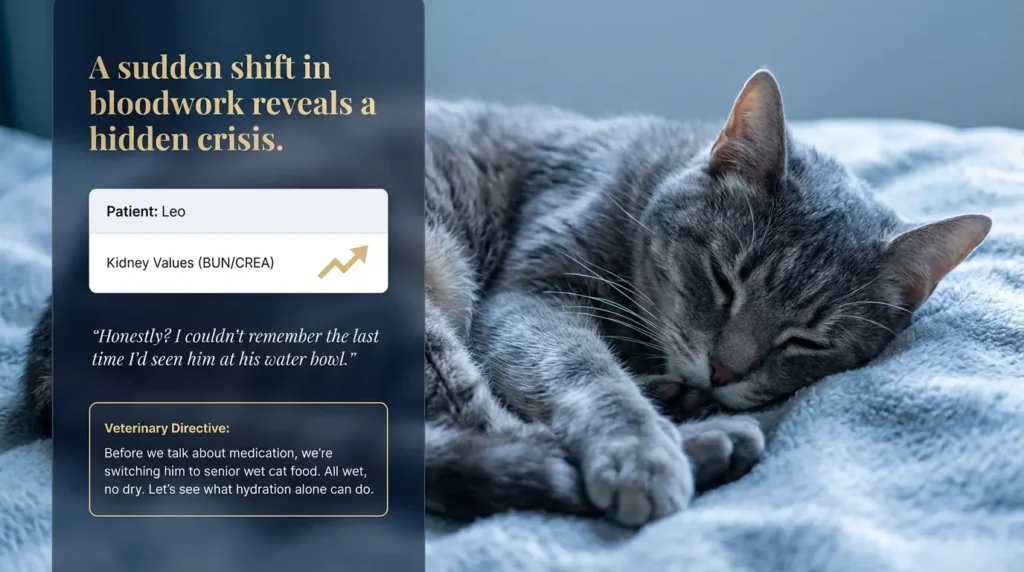
Last year, my vet handed me Leo’s bloodwork and pointed to a number that made my stomach drop. His kidney values were elevated – not emergency-level, but definitely trending wrong.
“How much water does he drink?” she asked.
I thought about it. Honestly? I couldn’t remember the last time I’d seen him at his water bowl.
“Here’s what we’re going to do,” she said. “Before we talk about medication, we’re switching him to senior wet cat food. All wet, no dry. Let’s see what hydration alone can do.”
I was skeptical. How much difference could wet versus dry food really make?
Three months later, his kidney values had stabilized. Not improved dramatically, but stopped climbing. My vet smiled and said, “This is the power of moisture. Keep doing exactly what you’re doing.”
If you’re wondering whether senior wet cat food is worth the extra cost and hassle, or if your aging cat really needs it, let me tell you: for most senior cats, wet food isn’t just better – it’s essential.
Why Senior Wet Cat Food Is Different From Regular Wet Food
You might be thinking: “Wet food is wet food. What makes ‘senior’ formulas special?”
Fair question. The truth is, not all senior wet cat food is genuinely different. Some companies just slap “senior” on the label and call it a day. But quality senior formulas address specific aging-related needs.
Higher protein quality for muscle maintenance. Senior cats become less efficient at processing protein. They need higher-quality sources – real chicken, turkey, salmon – not plant proteins or mysterious “by-products.”
Moderate phosphorus for kidney protection. As cats age, kidney function naturally declines. Senior wet cat food typically contains 0.5-0.7% phosphorus (dry matter basis) versus 0.8-1.2% in regular adult formulas. This small difference matters long-term.
Enhanced palatability for fading senses. Older cats lose their sense of smell. Senior formulas often have stronger aromas and richer flavors to compensate. If they can’t smell it, they won’t eat it.
Softer textures for dental issues. Many senior wet cat foods come in smooth pates or thin slices specifically because dental disease is so common in older cats.
Added joint support and antioxidants. Omega-3s for inflammation, glucosamine for joints, vitamins E and C for aging immune systems.
When I compared Leo’s old “adult” wet food to his current senior formula, the ingredient quality difference was obvious. The senior food had actual chicken as the first ingredient versus “chicken meal” in the adult version.
The Hydration Factor: Why It Matters So Much
Let me explain why moisture content is genuinely critical for senior cats, not just marketing hype.
The Math That Changed My Perspective
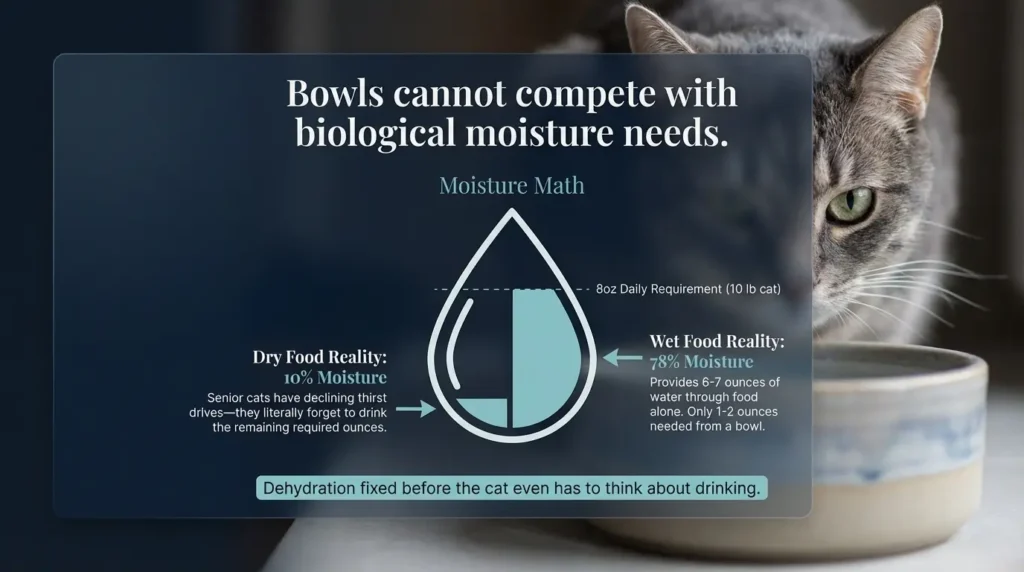
Dry food: About 10% moisture, 90% dry matter.
Senior wet cat food: About 78% moisture, 22% dry matter.
A 10-pound cat needs roughly 8 ounces of water daily. If they’re eating only dry food, they need to drink ALL of that from a bowl. But senior cats have declining thirst drives – they literally forget to drink enough.
With wet food, they’re getting 6-7 ounces of water through food alone. They only need to drink 1-2 ounces from a bowl. Suddenly, dehydration becomes much less likely.
Leo was chronically dehydrated on dry food, and I didn’t even realize it until his bloodwork showed concentrated urine. Switching to senior wet cat food fixed a problem I hadn’t known existed.
What Dehydration Does to Aging Cats
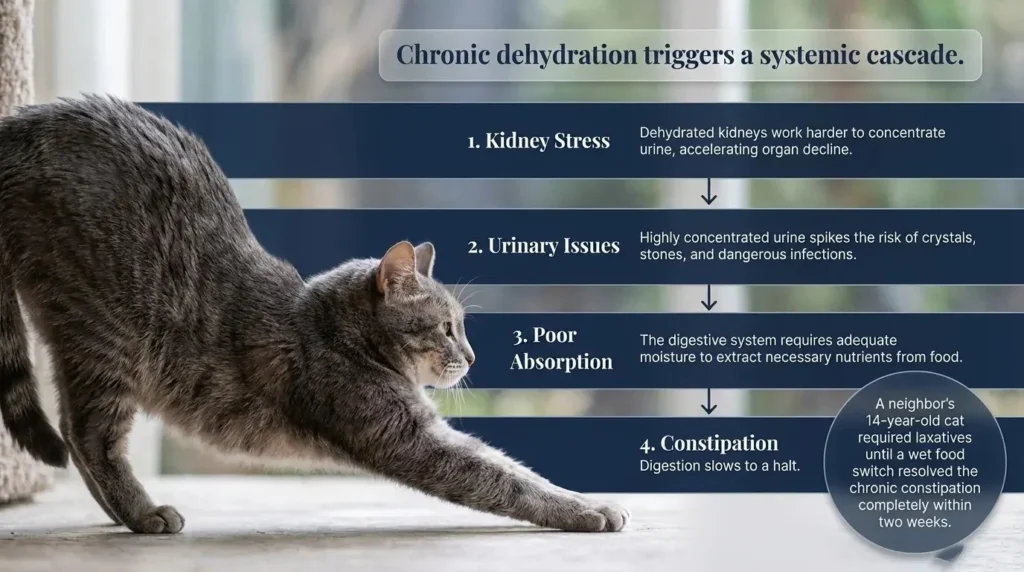
Kidney stress. Dehydrated kidneys work harder to concentrate urine, accelerating decline.
Urinary issues. Concentrated urine increases risk of crystals, stones, and infections.
Constipation. Senior cats already struggle with digestion. Dehydration makes it worse.
Poor nutrient absorption. The digestive system needs adequate moisture to function properly.
My neighbor’s 14-year-old cat had chronic constipation that required laxatives. Her vet suggested switching to senior wet cat food before trying stronger medications. Within two weeks, the constipation resolved completely. Just from moisture.
How Much Senior Wet Cat Food to Feed
This confuses people because wet food portions look huge compared to dry.
The General Formula
Most senior cats need about 20 calories per pound of ideal body weight daily.
A 10-pound cat needs roughly 200 calories per day.
Senior wet cat food typically contains 70-100 calories per 3oz can, or 140-200 calories per 5.5oz can.
So that 10-pound cat needs:
- About 2-2.5 cans of 3oz food daily, OR
- About 1.5-2 cans of 5.5oz food daily
Adjust Based on Reality, Not Theory
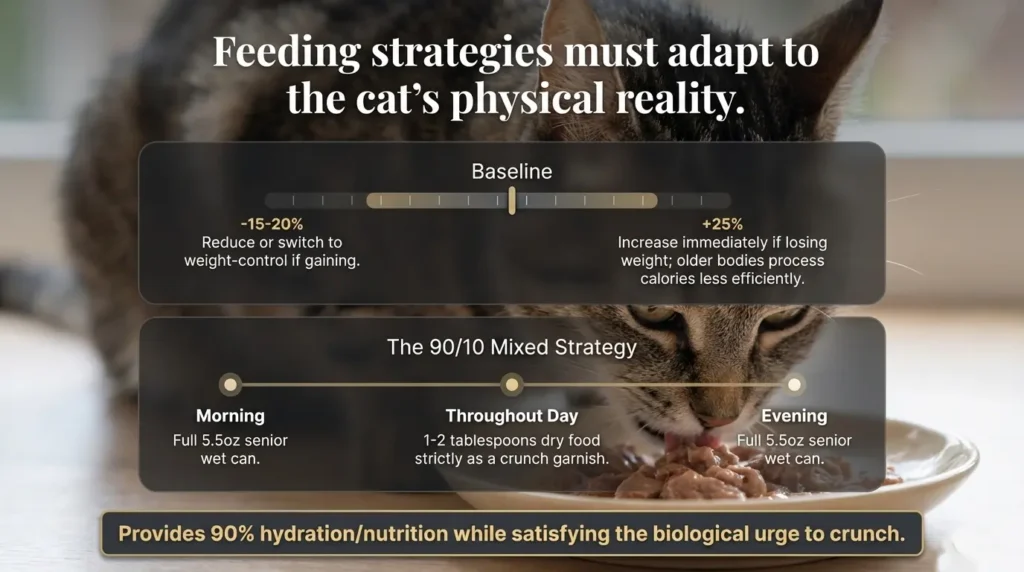
Feeding guides are starting points. Your cat’s actual body condition matters more.
If your cat is losing weight: Increase portions by 25%. Some seniors need MORE calories as their bodies become less efficient.
If your cat is gaining unwanted weight: Reduce portions by 15-20% or switch to a weight-control formula.
I weigh Leo monthly. If his weight drops, I increase food immediately. If it climbs, I cut back. Simple.
Mixed Feeding Strategy
This is what I actually do and what works for most people:
Morning: Full can of senior wet cat food (5.5oz) Evening: Full can of senior wet cat food (5.5oz) Throughout day: 1-2 tablespoons dry food available for snacking
He gets 90% of calories from wet food (hydration, nutrition) but has dry available if he wants to crunch something. Best of both worlds.
Common Concerns About Senior Wet Cat Food
“It’s Too Expensive”
Let’s do the actual math. Premium senior wet cat food costs about $2.50 per 5.5oz can. A 10-pound cat eating two cans daily costs $150 monthly.
Sounds high until you compare it to one emergency vet visit for dehydration ($300-800) or ongoing kidney medication ($50-100 monthly).
I spent more money treating Leo’s health issues when he was on cheap dry food than I now spend on quality wet food that prevents those issues.
Budget hack: Mix premium and budget wet foods. Half Tiki Cat ($2.50/can) and half Friskies ($0.75/can) still gives better hydration than any dry food.
“My Cat Won’t Eat It”
Some cats resist change, especially seniors set in their ways.
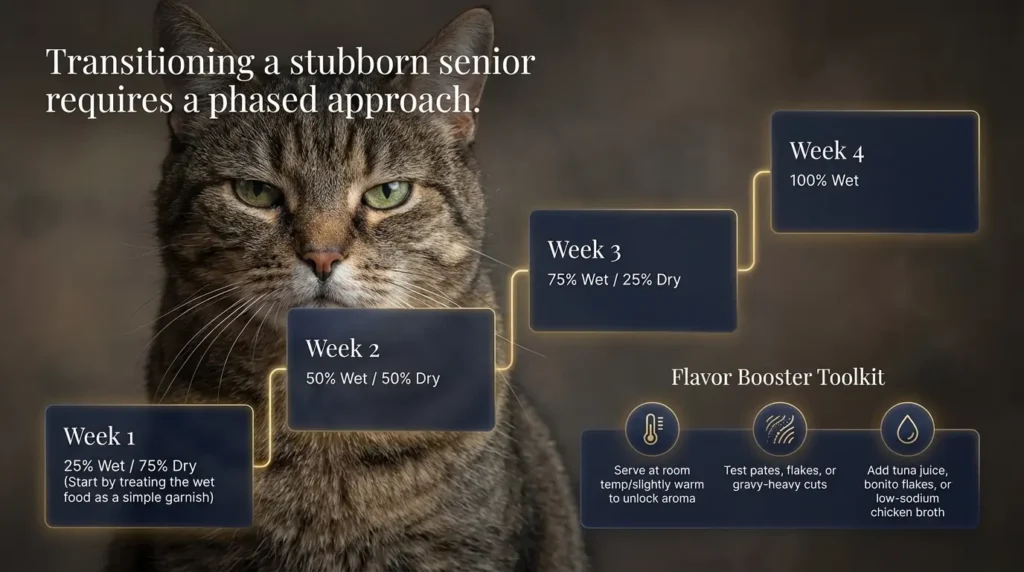
Transition slowly: Mix 25% wet with 75% dry for a week, then 50/50, then 75/25, then 100% wet over 3-4 weeks.
Warm it up: Room temperature or slightly warm releases more aroma.
Try different textures: Pate, flakes, chunks, gravy-heavy – cats have preferences.
Add flavor boosters: Tiny bit of tuna juice, bonito flakes, or low-sodium chicken broth.
Leo refused wet food initially. I started by putting a teaspoon on top of his dry food. Gradually increased until the dry food was just garnish. Now he won’t touch dry.
“It Smells Terrible”
Yes. Yes, it does. Senior wet cat food with strong aromas smells awful to humans but appetizing to cats.
Coping strategies: Feed in a well-ventilated area. Dispose of empty cans immediately. Use covered trash cans. Accept that cat nutrition sometimes smells bad.
Small price to pay for healthy kidneys and proper hydration.
“It Goes Bad Too Quickly”
Wet food spoils faster than dry, especially in warm weather.
Storage tips: Refrigerate opened cans immediately. Use within 24-48 hours. Bring to room temp before serving (cats don’t like cold food). Buy smaller cans if your cat can’t finish larger ones in two days.
I buy mostly 3oz cans because Leo eats them in one sitting. Less waste, always fresh.
When Prescription Wet Food Is Necessary
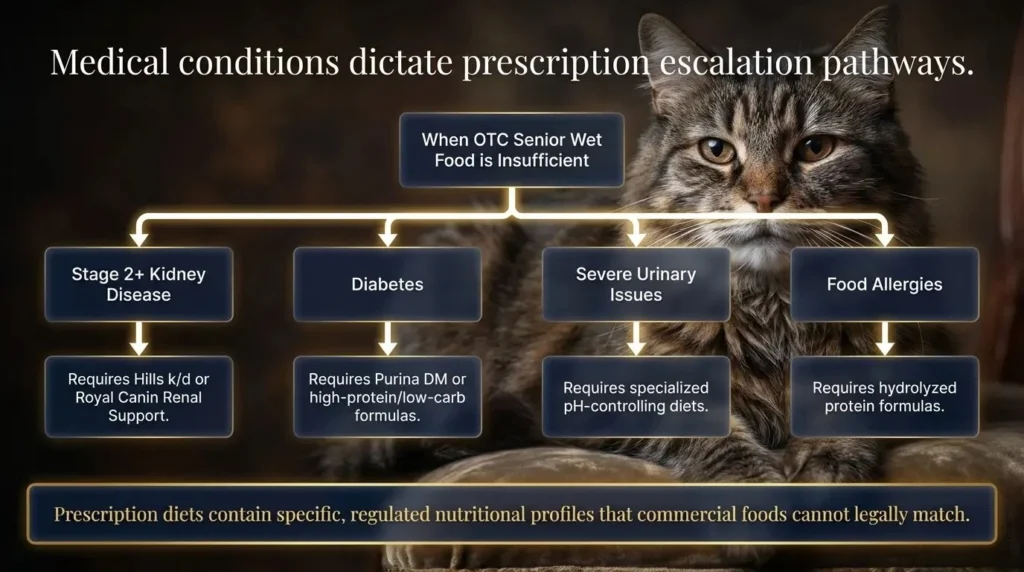
Sometimes over-the-counter senior wet cat food isn’t enough.
You need vet-prescribed wet food if your cat has:
- Stage 2+ kidney disease (Hills k/d, Royal Canin Renal Support)
- Diabetes (Purina DM, high-protein low-carb formulas)
- Severe urinary issues (specialized pH-controlling foods)
- Food allergies requiring hydrolyzed proteins
Don’t try to manage serious medical conditions with regular senior wet cat food. Prescription diets have specific nutritional profiles that commercial foods can’t match.
Leo’s still on over-the-counter senior wet cat food, but I know prescription options exist if his kidney values worsen.
The Bottom Line on Senior Wet Cat Food
After watching Leo’s health transform with this single dietary change, I’m convinced: senior wet cat food is one of the most important things you can do for an aging cat.
The hydration alone supports kidney function, prevents urinary issues, aids digestion, and improves nutrient absorption. Add in better protein quality, appropriate phosphorus levels, and enhanced palatability, and it’s a complete package.
Yes, it costs more than dry food. Yes, it smells worse. Yes, it requires refrigeration and can’t sit out all day.
But Leo is 16, his kidneys are stable, he’s maintaining healthy weight, and he still has energy to play. My vet credits the switch to senior wet cat food as the single biggest factor in his healthy aging.
Your senior cat’s kidneys, digestion, hydration, and overall health are worth the extra effort and cost. Make the switch. Monitor the results. Watch your cat thrive.