Wet vs Dry Cat Food: Discover the Best Choice for Your Cat

I remember when my cat wouldn’t eat her kibble. She looked at her bowl like it was a mystery. Many pet owners in the U.S. face this dilemma. Choosing between wet and dry cat food depends on your cat’s health, your schedule, and your budget.
This guide compares wet and dry cat food. It helps you find the best food for kittens, adults, and seniors. You’ll learn about the differences between wet and dry food, how to feed your cat, and how to switch foods safely. Our goal is to give you the information you need to make the right choice for your cat.
In the U.S., cats often face obesity, urinary tract disease, and kidney disease. These issues can be affected by diet. Our advice is based on veterinary nutrition, AAFCO guidelines, and studies on cat health. We also consider recommendations from the American Veterinary Medical Association and the American Association of Veterinary Nutritionists.
As you read, you’ll get evidence-based advice and practical tips. Whether you prefer wet, dry, or a mix of both, this article will guide you. We aim to help you make the best choice for your cat’s health, convenience, and your budget.
Key Takeaways
- Wet vs dry cat food affects hydration, calorie density, and feeding routines.
- Wet food for cats can help with hydration and urinary health; dry food for cats offers convenience and cost advantages.
- Choose foods based on life stage: kittens, adults, and seniors have different needs.
- Follow veterinary nutrition guidelines (AAFCO, AVMA) and peer-reviewed research when deciding.
- This guide gives practical tips for transitioning foods and spotting feeding concerns.
Understanding Wet vs Dry Cat Food
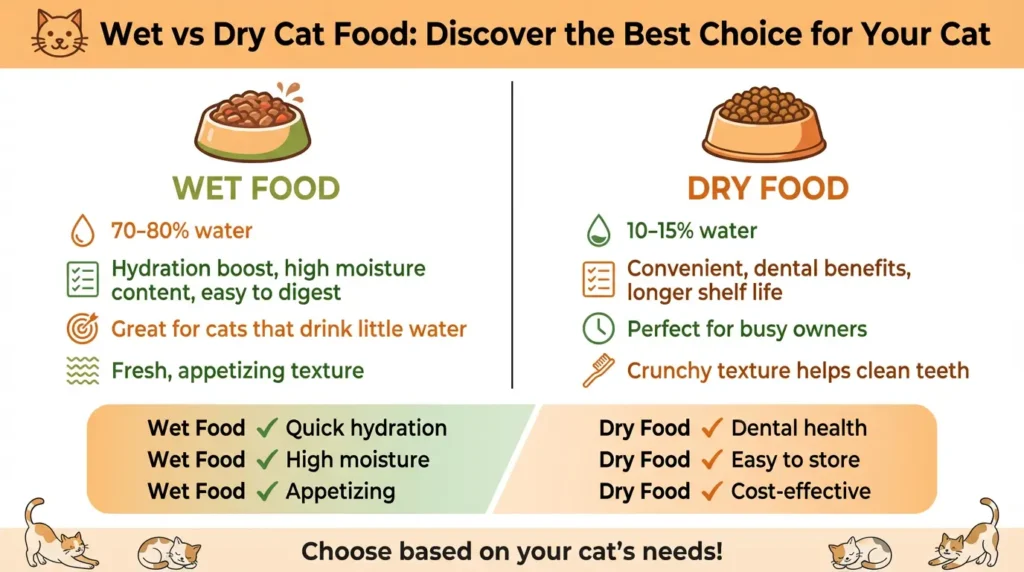
When you look at wet vs dry cat food, you see big differences. These include moisture, texture, and how they fit into your routine. Your cat’s taste, health needs, and feeding style help decide between canned, pouched, or kibble.
What defines wet cat food and common types
Wet cat food has 70–85% moisture and comes in cans, pouches, or trays. You can find pate, chunks in gravy, loaf, and stews from brands like Royal Canin and Hill’s Science Diet. Blue Buffalo, Purina Pro Plan, and Weruva also offer these options.
Wet food focuses on animal proteins and water-rich broths. It has fewer carbs than dry food. After opening, keep it refrigerated and use it within 24–48 hours to avoid spoilage.
What defines dry cat food and common types
Dry cat food has low moisture, around 6–10%. It’s made by extrusion, then baked or puffed. You’ll find standard kibble, dental formulas, high-protein/low-carb options, and grain-free recipes. Major U.S. brands include Purina ONE and Iams.
Dry food is calorie-dense and has more carbs. It lasts longer in the pantry. But, keep kibble fresh and sealed to prevent rancidity and pests.
Key differences in moisture, texture, and ingredients
Moisture is a big difference: wet food helps with hydration, while dry food is calorie-dense. This affects how much your cat needs to eat for the same energy level.
Texture also matters. Wet food is softer and more aromatic, which can tempt picky eaters. Dry kibble offers crunch that some cats enjoy and may support dental health.
Ingredient ratios differ too. Wet food has higher animal-protein-to-carbohydrate ratios. Dry diets rely more on carbs and fats for calories. Processing methods change nutrient availability, shelf life, and cost.
Labeling is important. Both types must meet AAFCO profiles. Check the guaranteed analysis and ingredient lists. Consider portion control, feeding style, and calorie content when comparing cat nutrition options and evaluating wet cat food benefits for your pet.
Health Benefits of Wet Cat Food (wet cat food benefits)
Choosing wet food can change how you manage your cat’s health. This section explains the benefits of wet food for cats. It also compares it with kibble in everyday care. Use these points when you weigh a cat food comparison or discuss wet vs dry cat food with your veterinarian.
Hydration and urinary tract health
Wet diets give cats a lot of water through the food itself. This extra moisture helps dilute urine. It lowers the risk of feline lower urinary tract disease.
Many veterinarians suggest wet food or encouraging water intake for cats with urinary issues or chronic kidney disease. Better hydration reduces urine concentration. This can limit struvite or calcium oxalate crystal formation in susceptible cats.
Palatability and appetite stimulation for picky eaters
Wet food for cats has a stronger aroma and softer texture than dry kibble. These traits can entice cats with reduced appetite after surgery or during illness.
Older cats, cats with dental pain, and felines experiencing nausea may accept wet formats more readily. Brands like Hill’s Prescription Diet and Royal Canin offer veterinary wet recipes. These are aimed at palatability and hydration support.
Protein content and ingredient quality considerations
Many wet formulas have higher percentages of animal protein and lower carbohydrates than kibbles. Animal-based proteins like chicken, turkey, and fish supply essential amino acids such as taurine.
Look for named protein sources and minimal fillers when assessing ingredient lists. Reputable brands like Purina Pro Plan, Hill’s Science Diet, and Blue Buffalo provide clear nutritional information. They also have quality control that helps judge protein quality.
Be aware of trade-offs. Wet food can cost more per calorie and requires refrigeration after opening. Some formulations include added sodium or flavor enhancers. Consult your veterinarian if your cat has hypertension or cardiac disease when comparing wet vs dry cat food.
Advantages of Dry Cat Food (dry cat food advantages)
Dry kibble has many benefits that many cat owners find appealing. It fits well into busy lives, helps with dental health, and aids in weight management. These points make it a popular choice.
Convenience, cost, and storage benefits
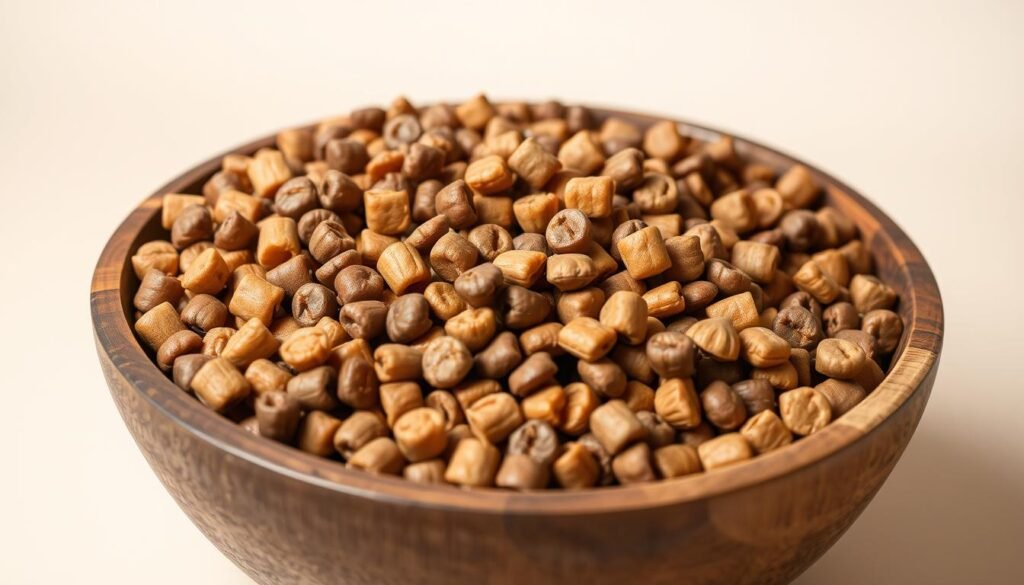
Dry cat food is cheaper than most canned options. You can buy big bags and keep them without refrigeration. This is great for homes with many cats and those watching their budget.
Free-feeding and automatic feeders work well with kibble. Unlike wet food, it’s less likely to spoil quickly. You can find it easily at big-box stores and online, making it easy to follow a feeding plan.
Dental health claims and how they actually help
Some kibbles are marketed for dental health. Brands like Hill’s Prescription Diet t/d and Royal Canin Dental use special textures to help. They can reduce tartar on teeth in some cats.
These kibbles can help with plaque control if your cat chews well. But, they shouldn’t replace brushing, vet cleanings, or dental checks. Some cats might swallow pieces without chewing, which limits the benefit.
Calorie density and feeding control for weight management
Dry food usually has more calories than wet food. Brands list calories per cup or 100 g, making it easy to measure. This is helpful for controlling portions.
There are special weight-control formulas like Hill’s Metabolic and Purina OM. They have fewer calories and help with feeding plans. However, many dry foods have more carbs, which can affect hunger levels in cats.
Keep an eye on your cat’s weight and adjust their food as needed. Obesity is a big health risk for cats in the US. A good feeding plan is crucial in any cat food comparison.
Comparing Nutrition: Cat Food Comparison for Different Life Stages
Choosing between wet and dry cat food depends on your cat’s age, health, and your lifestyle. This guide compares the main nutrition options for kittens, adults, and seniors. It helps you pick the right diet for your cat’s life stage.
Kittens:
Kittens need lots of calories, protein, fat, and DHA for brain growth. Look for diets that support growth or are for all life stages. Wet food adds hydration and tastes better, helping kittens eat enough.
Dry kitten food is easy to feed often and helps with dental health. Brands like Royal Canin, Hill’s Science Diet, and Purina Pro Plan offer both wet and dry options. These support steady growth.
Feed kittens small meals often, 3–4 times a day. Have a vet check their growth and body condition.
Adult cats:
Adult cats need balanced protein, fat, and essential amino acids like taurine. Choose foods for adult maintenance and adjust feeding based on activity and metabolism.
You can feed wet, dry, or a mix. Compare cat food to see which has more calories and better ingredients. Wet food is more hydrating and often has more protein. Dry food is convenient, lasts longer, and helps control portions.
Keep an eye on your cat’s body condition and weight. Adjust their food to keep them at a healthy weight.
Senior cats and medical conditions:
Seniors may eat less, have dental issues, and kidney problems. Wet food is easier to chew and helps with hydration. For kidney disease, choose low-phosphorus diets like Hill’s k/d or Royal Canin Renal.
Diabetic cats do better on low-carb wet diets. Always work with your vet to manage diabetes with diet and insulin.
Always talk to your vet for special diets and plans for chronic conditions. They can help you choose the best wet vs dry food for your cat’s needs.
Practical Considerations for Choosing the Best Cat Food Choices
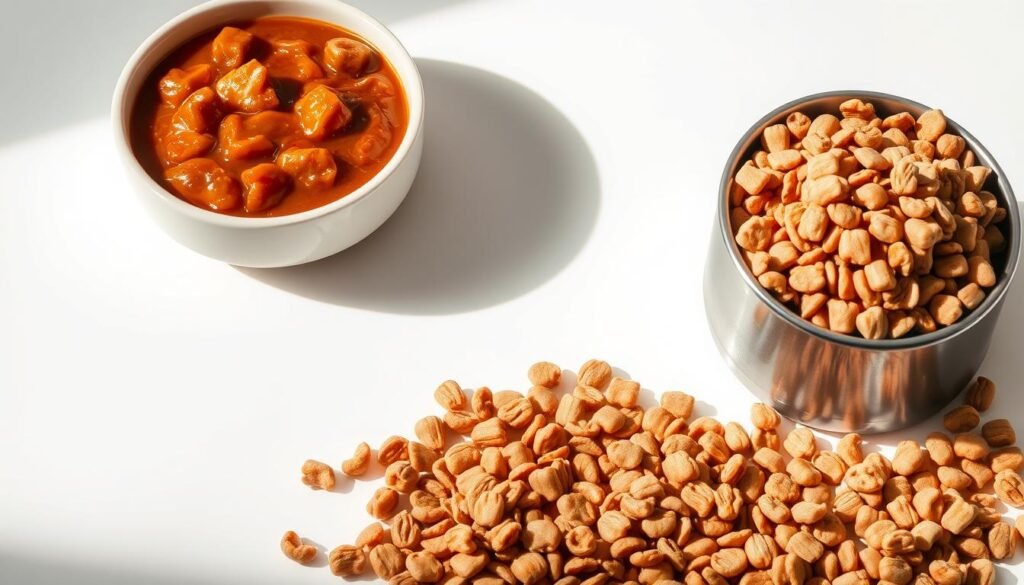
Choosing the right food for your cat is more than just looking at labels. Think about your budget, daily life, and how you feed your cat. A detailed comparison of cat food helps match your needs with the right choice. This includes comparing wet and dry options for your home.
Budget, lifestyle, and feeding routine
Dry kibble is often cheaper than canned food. However, wet food might save you vet bills for urinary or dehydration issues. Make sure to compare calories per can or cup to get a fair price comparison.
If you travel or use timers, dry kibble or sealed wet meal packs are better. In homes with multiple cats, measure each portion to prevent food theft. Scheduled meals help control calories and prevent obesity.
Use puzzle feeders or timed dispensers to add fun. If you work long hours, leave a measured portion of dry food and serve wet food at home. This boosts hydration and taste.
Mixing wet and dry: pros, cons, and recommended approaches
Mixing both formats offers the best of both worlds. Wet food increases moisture and flavor. Dry food provides convenience and a crunchy texture.
Mixed feeding makes calorie tracking harder. Cats might prefer wet over dry, leaving kibble uneaten. Wet food can spoil, so avoid leaving it out too long.
First, figure out your cat’s daily calorie needs. Then, divide calories between wet and dry food. Use weight or caloric labels for accurate portions. A good tip is to serve wet food at meals and a little dry kibble between.
How to transition between foods and spot intolerance or allergies
Gradually switch foods over 7–10 days. Start with 25% new food and 75% old for a few days. Then, move to 50/50, then 75/25 before switching fully. For sensitive cats, extend this to several weeks.
Watch for vomiting, diarrhea, itching, hair loss, or sudden appetite changes. These could be signs of intolerance more than allergy. Keep a symptom and food log to help your vet if needed.
Seek vet care for persistent vomiting, severe diarrhea, weight loss, or other systemic signs. For suspected food allergy, vets might suggest hydrolyzed or novel-protein diets like Hill’s z/d, Royal Canin Ultamino, or Purina HA.
Label reading and final tips
Read labels for named meat sources, guaranteed analysis, AAFCO statements, and calorie counts. Limited-ingredient diets can help with intolerances. Compare brands like Hill’s Science Diet, Royal Canin, and Purina Pro Plan for a balanced choice.
Balance your budget and lifestyle while keeping your cat’s health central. Thoughtful choices about wet vs dry cat food and wet vs dry pet food will help you find the best cat food choices for your home.
Conclusion
You now know the difference between wet and dry cat food. Wet food helps with hydration and taste, great for picky eaters. Dry food is easy to use, cheaper, and works well for busy homes.
Choosing the right food means looking at your cat’s age and health. Talk to your vet about changing foods, especially for kittens or seniors. Brands like Hill’s and Royal Canin offer good options.
Healthy cats can do well with a mix of wet and dry food. But, cats with health issues need special diets. Always check your cat’s weight and health with your vet to find the best food.