Canned Cat Food Sitting Out: How Long is Safe?

Ever wonder if that open can of Fancy Feast or Purina can wait until tomorrow without harming your cat?
This article will tell you how long canned cat food can safely stay at room temperature. It also covers the shelf life of opened canned cat food and how to keep your pet safe. Bad food can make cats vomit, have diarrhea, or get sick from bacteria. It can even spread germs to people who touch it.
You’ll find quick answers to common questions like how long canned cat food can sit out and when it’s bad. The advice comes from vets, the USDA/CDC, and well-known pet food brands like Hill’s Science Diet and Royal Canin.
Later, we’ll dive into quick answers, the science of spoilage, and safe storage times. You’ll also learn about serving and leftover handling, special care for kittens and seniors, and a quick summary.
Key Takeaways
- Learn the typical safe duration canned cat food can remain at room temperature.
- Understand how shelf life canned cat food changes once opened.
- Find simple refrigeration and handling tips to reduce bacterial risk.
- Know the signs of spoiled food to protect kittens and older cats.
- Get fast, vet-backed answers for everyday feeding decisions.
how long can canned cat food sit out
When time is tight, you need a quick answer. For most indoor settings, opened canned cat food should not stay out more than 2 hours. If it’s hotter than 90°F (32°C), cut that time down to 1 hour. Unopened cans are safe until the best-by date if kept cool and dry.
Short answer for busy cat owners
Stick to the two-hour rule for fresh servings. This guideline is similar to human food safety rules. It’s also backed by vets and brands like Hill’s Science Diet and Purina.
Factors that change the time frame
Temperature affects bacterial growth and fat spoilage. High humidity can lead to mold on leftovers. If your cat licks the can, it introduces bacteria, shortening the safe time. Serving smaller portions more often helps keep food fresh longer.
Why precise timing matters for health and spoilage
Following a strict timing schedule prevents harmful bacteria like Salmonella or E. coli. It’s especially important for kittens and seniors. It also stops spoilage, keeping the food fresh and nutritious for your cat.
| Situation | Safe duration | Notes |
|---|---|---|
| Indoor, typical room temperature | Up to 2 hours | Follow recommended time canned cat food; serve small portions when possible |
| Hot environment (≥90°F / 32°C) | 1 hour or less | Heat accelerates bacterial growth and rancidity |
| Unopened canned food | Until best-by date | Store in a cool, dry place away from direct sunlight |
| Food licked by cat from can | Reduce safe time | Saliva introduces bacteria; prefer serving in a bowl |
| High-humidity storage | Shorter than typical | Increased mold risk on exposed leftovers |
Understanding spoilage of canned cat food and bacterial risks
Canned cat food is sterile when sealed. But once you open it, air, your cat’s saliva, and kitchen microbes get in. The moisture and nutrients make a perfect home for bacteria and molds if not handled properly.
How canned cat food can support bacterial growth once opened
Wet food has water activity and proteins that bacteria love. Fats start to oxidize and proteins break down. This creates off-odors and textures.
If you leave food at room temperature, microbes can grow fast. They can exceed the safe duration canned cat food.
Common pathogens and signs of contamination
Pathogens like Salmonella, Listeria, and Clostridium can appear in bad pet food. These can cause vomiting, diarrhea, or serious illness in cats and people.
Watch for clear warning signs: a sour smell, visible mold, a slimy surface, or a texture change. Some bacteria don’t change smell or look. Not seeing spoilage doesn’t mean it’s safe.
Difference between spoilage and reduced palatability
Spoilage means food is unsafe or unfit to eat due to microbial or chemical changes. Reduced palatability means mild changes that make your cat not want to eat. This can include slight drying or a duller smell.
Rancid fats can smell bad but might not cause immediate illness. But eating rancid food long term can harm health.
If you’re unsure about an opened can, throw it away. Being cautious protects your cat and anyone who handles the food. Follow simple storage steps and handle canned cat food right at every meal.
Safe duration canned cat food: room temperature and refrigerated guidelines
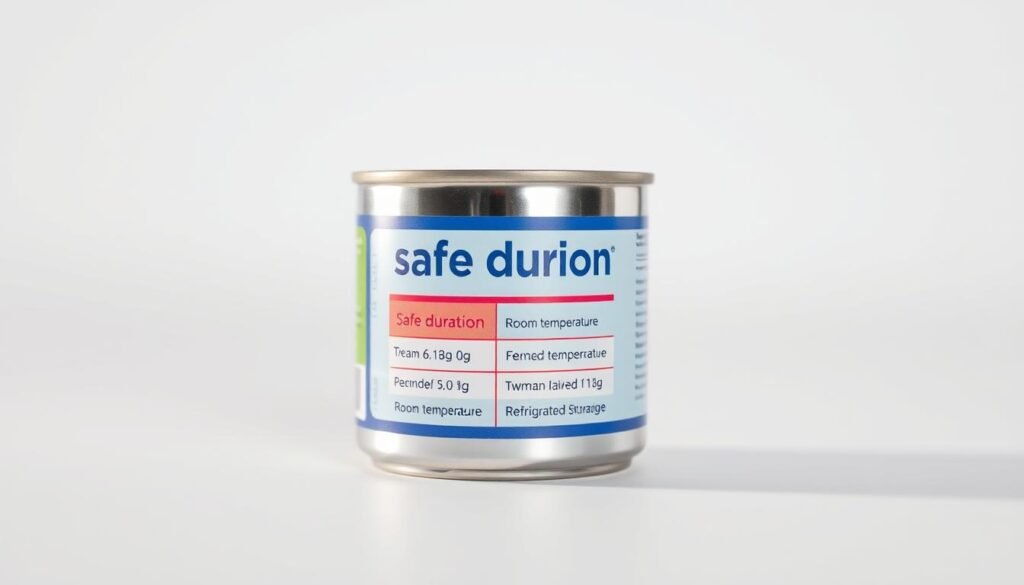
When you open a can, knowing how to handle leftovers is key. The safety of canned cat food depends on the temperature, packaging, and serving method. Follow simple steps to keep your cat healthy and cut down on waste.
Recommended time at typical indoor temperatures
At normal indoor temperatures (about 68–78°F), don’t leave opened wet food out for more than 2 hours. If your home is warm, sunlight hits the bowl, or you feed in a hot car, limit exposure to 1 hour or less. These guidelines match the recommended time canned cat food should sit before spoilage risk rises noticeably.
When refrigeration is required and how it extends safety
Refrigerate opened canned food promptly in a covered container or resealed can. Keeping it at 40°F (4°C) slows bacterial growth and usually extends the shelf life canned cat food maintains to about 3–4 days for most brands.
Some manufacturers and veterinarians advise using refrigerated leftovers within 3 days for best quality. Other products may list 5–7 days, depending on preservatives and packaging. Always check the brand guidance and pick the shorter window when unsure.
Never refreeze opened wet cat food after thawing. Unopened cans can be frozen until the best-by date, but once opened, freezing and thawing changes texture and can affect safety.
Safe handling after feeding and leftover management
Scoop food into a clean bowl with a spoon or spatula rather than letting your cat eat straight from the can. This reduces saliva transfer and slows bacterial spread.
Wash bowls and utensils after each meal. Stainless steel or ceramic bowls clean easily and resist biofilm. For multi-meal feeding, portion what you need and refrigerate the rest immediately.
Discard any leftovers that passed the safe timeframe or show signs of spoilage such as off-odor, unusual texture, or mold. Proper handling preserves freshness and keeps the recommended time canned cat food remains safe for your pet.
Best storage canned cat food practices to maximize freshness
Keeping food safe and making mealtime easier is key. Follow a few simple steps to store opened canned cat food. This way, it stays fresh, smells neutral, and is safe for your cat.
How to reseal and store opened cans properly
Don’t leave leftovers in the opened can without a tight lid. Move food to a clean, airtight container within two hours. Make sure the can rim is smooth when opening to fit a lid tightly.
Store the container on a fridge shelf, not the door, for better temperature control. Label it with the date opened and a use-by date to avoid confusion.
Containers and tools that prolong shelf life
Choose BPA-free, food-grade airtight containers made from glass or high-quality plastic. Glass is great for keeping smells out and is easy to clean. Stainless-steel bowls are good for serving and don’t trap smells.
Use silicone covers or reusable can lids for a quick seal. Clean these items between uses. For opened pate or chunks, use airtight jars to reduce air and bacterial growth.
Labeling, rotation, and using-by reminders for opened cans
Write the date opened and the use-by date on each container. Most wet diets last three days, but check the brand’s advice. This includes Purina, Hill’s Science Diet, or Royal Canin.
Use a first-in, first-out method for both opened and unopened cans. Set reminders or use a fridge chalkboard for multiple varieties. These tips help avoid waste and keep your cat healthy.
For the best results, follow proper handling canned cat food routines. Choose the best storage canned cat food solutions for your home. Store unopened cans in a cool, dry pantry away from sunlight and heat. Small habits lead to fresher meals and fewer spoiled jars.
Proper handling canned cat food: serving, leftovers, and travel tips
Warm canned cat food to room temperature or slightly warm it. This makes it more appealing to your cat. Cold food might not be as attractive. To warm it, place the sealed can in warm water for a few minutes.
If using a microwave, move the food to a safe dish. Stir well and check for hot spots before serving.
Use portion control to prevent spoilage. Give your cat food amounts they can finish in 1–2 hours. For free-feeding, consider dry kibble or a timed feeder instead.
At home, remove uneaten food after 1–2 hours. Clean dishes with hot soapy water and refrigerate leftovers in sealed containers. Label containers with the time opened to track storage.
When traveling, keep food in an insulated cooler with ice packs. Transfer leftovers to small sealed containers to reduce contamination risk. Single-serve pouches are great for day trips, reducing waste and spoilage.
Carry a dedicated portable bowl and water set for on-the-go meals. Use small sealed containers instead of a partially used can. Single-serve wet food pouches from brands like Tiki Cat or Purina Fancy Feast are convenient and reduce exposure.
Know when to throw away spoiled food. Look for mold, unusual colors, or slime. Trust your nose: sour, rotten, or very fishy smells mean it’s bad. Check the texture for sliminess or separation that won’t blend back.
If your cat suddenly stops eating a meal, check it closely. Cats often notice spoilage before we do. When in doubt, it’s better to throw it away than risk your cat’s health.
Recommended time canned cat food for special situations (kittens, seniors, outdoors)
Feeding cats with special needs requires clear rules. Kittens, seniors, and sick cats can’t handle spoiled food as well as healthy adults. Feeding outdoors, in shelters, or in homes with many cats increases the risk of cross-contamination. Here are practical steps you can start using today.
Shorter safe durations for vulnerable cats
Kittens and cats with weak immune systems should only eat food that’s been opened or refrigerated recently. Try to serve wet food within an hour of opening, if possible.
If you can’t refrigerate it right away, throw it away. This shorter time frame helps prevent vomiting and diarrhea caused by bacteria.
Managing canned food outdoors, at shelters, and multi-cat homes
Outside and in shelters, the heat can spoil food quickly. Use coolers and shaded feeding areas. Also, feed at times that match the best storage canned cat food practices.
In hot weather, don’t leave wet food out. In homes with many cats, use several shallow bowls. Clean bowls after each meal to prevent contamination.
Veterinary guidance for sensitive or sick cats
If your cat needs a special diet, follow the manufacturer’s instructions and your vet’s advice. Some formulas need to be refrigerated immediately after opening.
If your cat gets sick after eating, call your vet. Bring a sample of the food if you can. This helps figure out if spoiled food caused the illness and how long canned cat food can safely sit out.
| Situation | Safe out-of-fridge time | Best storage canned cat food tip |
|---|---|---|
| Kittens (under 6 months) | Under 1 hour | Serve fresh from can or chilled, discard leftovers |
| Seniors / immunocompromised | Under 1 hour | Use refrigerated portions and single-serve bowls |
| Healthy adult indoor cats | Up to 2 hours at room temperature | Cover and refrigerate opened cans within 2 hours |
| Outdoor feeding / shelters | Less than 30 minutes in heat; limit exposure | Use coolers, timed feedings, single-serve pouches |
| Multi-cat households | Depends on sharing behavior; err on side of caution | Multiple bowls, frequent cleaning, monitor resource guarding |
Conclusion
When you ask how long canned cat food can sit out, remember the 2-hour rule. Don’t leave opened food at room temperature for more than two hours. If it’s hotter than 90°F, cut that time to one hour. This rule helps prevent bacteria and keeps your cat’s food safe.
To keep canned cat food safe, refrigerate it right away in airtight, BPA-free containers. Use it within 3–4 days or follow the manufacturer’s advice. Practical storage tips include portioning meals, labeling containers, and washing bowls after each use.
Be extra careful with kittens, senior cats, and those with weak immune systems. They need even shorter times and vet advice. If food smells bad, shows mold, or is slimy, throw it away without question. These habits keep your cat safe and make handling leftovers easy and safe.