Best Grain Free Wet Cat Food: 5 Top Picks That Actually Work
The Short Answer: What You Need to Know Right Now
Grain free wet cat food combines high moisture content (75-80%+) with animal-based protein and no wheat, corn, rice, or oats. The best grain-free wet foods use real meat as the first ingredient, contain less than 5% carbohydrates, and skip the gums, fillers, and plant proteins that cheaper brands rely on. Here’s the truth: wet food is already naturally lower in carbs than dry kibble, so the “grain-free” label matters less than ingredient quality and protein source. Most grain-free wet foods replace grains with peas, tapioca, or potato starch—which means you could still be feeding a high-carb formula if you’re not reading labels carefully. The real win with grain-free wet food isn’t the absence of grains—it’s the combination of high moisture for hydration, quality animal protein for nutrition, and minimal plant-based filler.
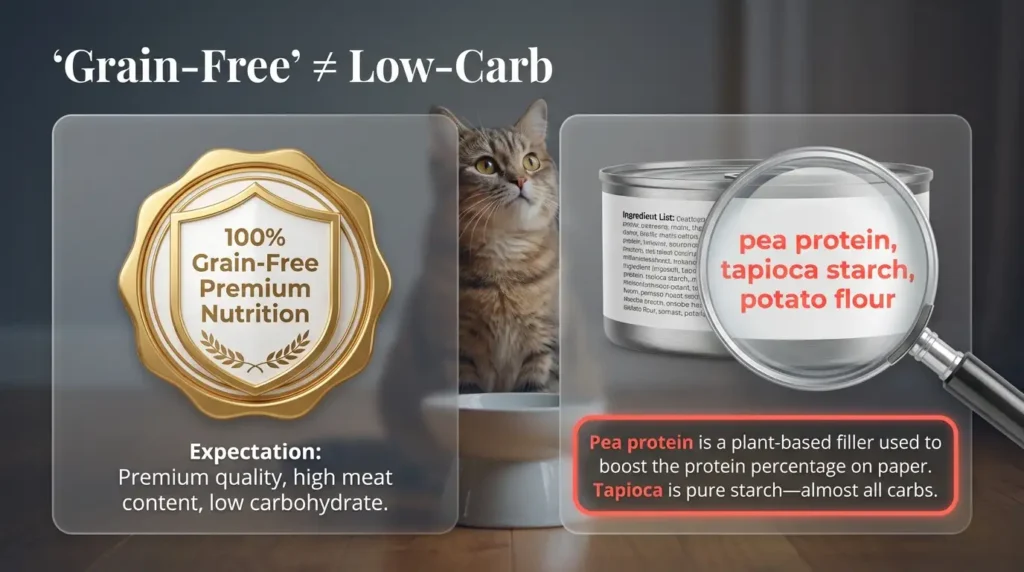
I was helping my friend Lauren choose wet food for her cat Pepper last month when she grabbed a can labeled “grain-free” and said, “This must be the healthiest option, right?”
I flipped it over and read the ingredients: water, chicken, pea protein, tapioca starch, guar gum, carrageenan.
“See the third ingredient?” I pointed. “Pea protein. That’s a plant-based filler they’re using to boost the protein percentage on paper. And tapioca is pure starch—almost all carbs.”
Her face fell. “But it says grain-free. I thought that meant low-carb.”
That’s the problem with grain-free wet cat food marketing. The label creates an expectation of premium quality, but it doesn’t actually guarantee better nutrition. Some grain-free wet foods are genuinely excellent—whole meat in broth with minimal additives. Others are just expensive junk with clever packaging.
Table of Contents
Quick Comparison: Top Grain Free Wet Cat Foods
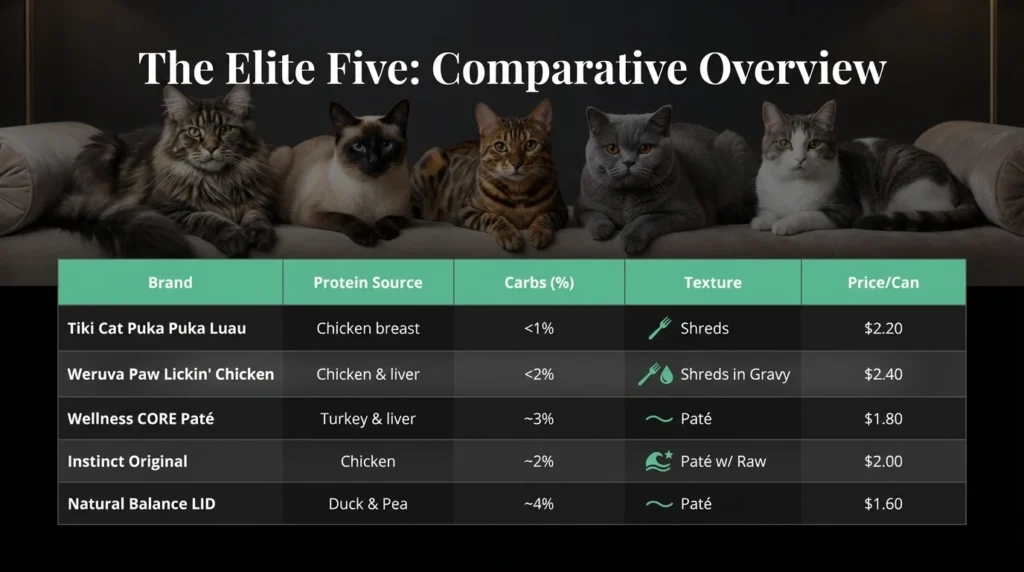
Prices for standard 3 oz cans, approximate retail pricing
What Makes Grain Free Wet Cat Food Different
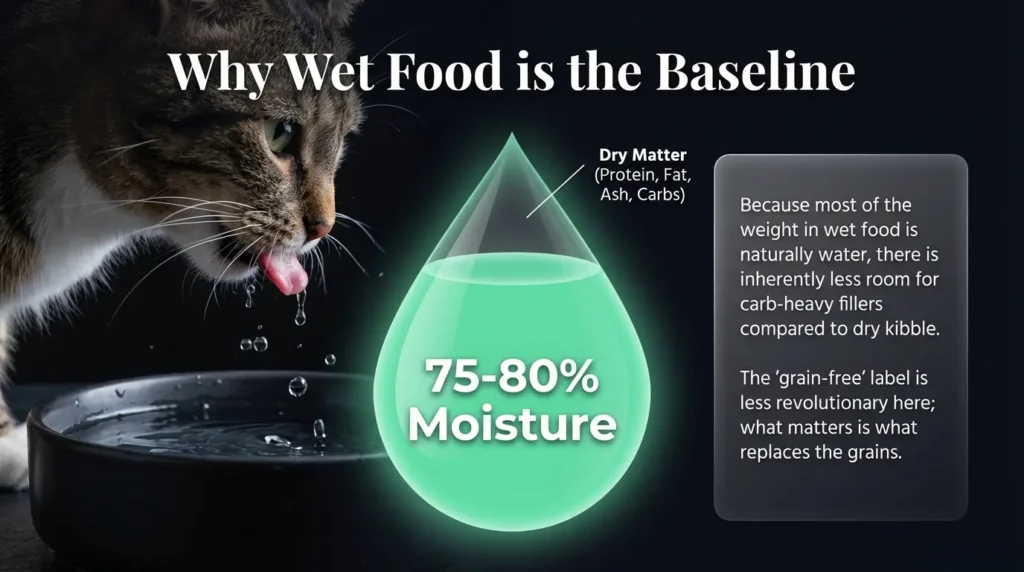
Wet cat food is already naturally lower in carbohydrates than dry kibble because most of the weight is water. A typical wet food is 75-80% moisture, which leaves less room for carb-heavy fillers. That’s why the “grain-free” label on wet food is less revolutionary than it sounds.
What really matters is what the manufacturer uses to replace grains. The best grain-free wet foods use minimal plant ingredients—maybe a bit of sweet potato or pumpkin for fiber. The worst ones pack in pea protein, tapioca starch, and potato flour to cut costs while maintaining the grain-free claim.
Here’s what to look for:
- First ingredient: Named animal protein (chicken, turkey, salmon—not “meat” or “poultry”)
- Minimal gums and thickeners: A little carrageenan or guar gum for texture is fine, but it shouldn’t dominate the ingredient list
- No plant-based proteins: Pea protein or potato protein should not appear in the top five ingredients
- High moisture: 75% minimum, ideally 78-82%
- Low estimated carbs: Under 5% on an as-fed basis
The 5 Best Grain Free Wet Cat Foods
1. Tiki Cat Puka Puka Luau Succulent Chicken
Best for: Picky eaters, cats needing hydration, maximum protein with minimal processing
This is as close to “just meat” as you can get in a commercial wet food. The ingredient list is shredded chicken breast and chicken consommé. That’s it. No gums. No gravy thickeners. No mystery ingredients.
The texture is shredded muscle meat with visible grain—cats with strong prey drive love this. At 80% moisture, it’s one of the best foods for cats who don’t drink enough water or have urinary issues.
Watch-outs: It’s not calorie-dense, so you’ll feed more volume than paté-style foods. Budget around $1.40-$1.60 per day for a 10-pound cat.
Key stats:
- Protein: 14% as-fed (~70% dry matter)
- Carbs: <1%
- Moisture: 80%
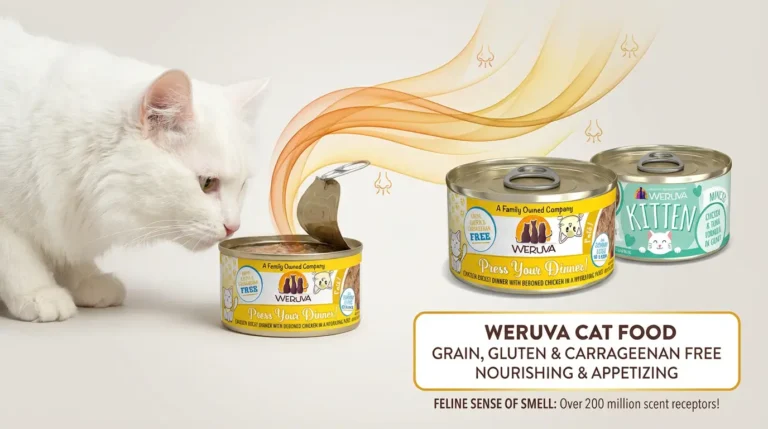
2. Weruva Paw Lickin’ Chicken in Gravy
Best for: Cats who need variety, good balance of quality and palatability
Weruva uses human-grade ingredients—actual chicken breast you could eat yourself. The addition of chicken liver provides nutrient density and strong aroma that appeals to picky cats.
The “gravy” is just thickened chicken broth, not starchy filler. The texture falls between shreds and chunks, which works well for cats who don’t like pure paté but find whole shreds too chewy.
Watch-outs: Some cats get addicted to the gravy and lick it off without eating the meat. If your cat does this, try the non-gravy varieties.
Key stats:
- Protein: 10% as-fed (~50% dry matter)
- Carbs: <2%
- Moisture: 80%
3. Wellness CORE Grain-Free Turkey & Chicken Liver Paté
Best for: Budget-conscious feeding, cats who prefer smooth texture
This is the most affordable option on this list without sacrificing ingredient quality. Turkey and turkey liver are the first two ingredients, followed by turkey broth. The paté texture is smooth and consistent—good for cats with dental issues or seniors.
The estimated carbs are around 3%, which is higher than Tiki Cat but still very low for wet food. The formula includes added taurine, omega-3s from salmon oil, and cranberries for urinary health.
Watch-outs: Contains some gums (guar gum, carrageenan) for texture. Not a problem for most cats, but some with sensitive stomachs do better with cleaner formulas.
Key stats:
- Protein: 11% as-fed (~48% dry matter)
- Carbs: ~3%
- Price: Around $1.30-$1.50 per day for a 10 lb cat
4. Instinct Original Grain-Free Real Chicken Recipe
Best for: Cats transitioning from lower-quality food, good all-around option
Instinct uses cage-free chicken as the first ingredient with a short, clean ingredient list. The paté texture is firm but not dry—most cats accept it readily.
What sets Instinct apart is the addition of freeze-dried raw coating on top of the paté, which boosts aroma and adds texture variety. Cats with moderate prey drive respond well to this.
Watch-outs: The freeze-dried raw pieces can be messy. Some cats eat around them, others devour them first.
Key stats:
- Protein: 11% as-fed (~52% dry matter)
- Carbs: ~2%
- Added probiotics for digestive health
5. Natural Balance L.I.D. Limited Ingredient Diets Duck & Pea
Best for: Cats with food sensitivities, elimination diets
This uses a single animal protein (duck) and a single primary carb source (peas), making it ideal for identifying food sensitivities. Duck is a novel protein for most cats, which means they’re less likely to have developed an allergy to it.
The formula is free of chicken, beef, fish, corn, soy, and dairy—common allergen triggers. It’s also formulated without artificial colors, flavors, or preservatives.
Watch-outs: Contains peas, so the carb content is slightly higher (~4%). Also, some cats just don’t like duck—it has a stronger flavor than chicken or turkey.
Key stats:
- Protein: 9% as-fed (~45% dry matter)
- Carbs: ~4%
- Single protein source for food trials
How to Choose the Right Grain Free Wet Food
Start with Your Cat’s Specific Need
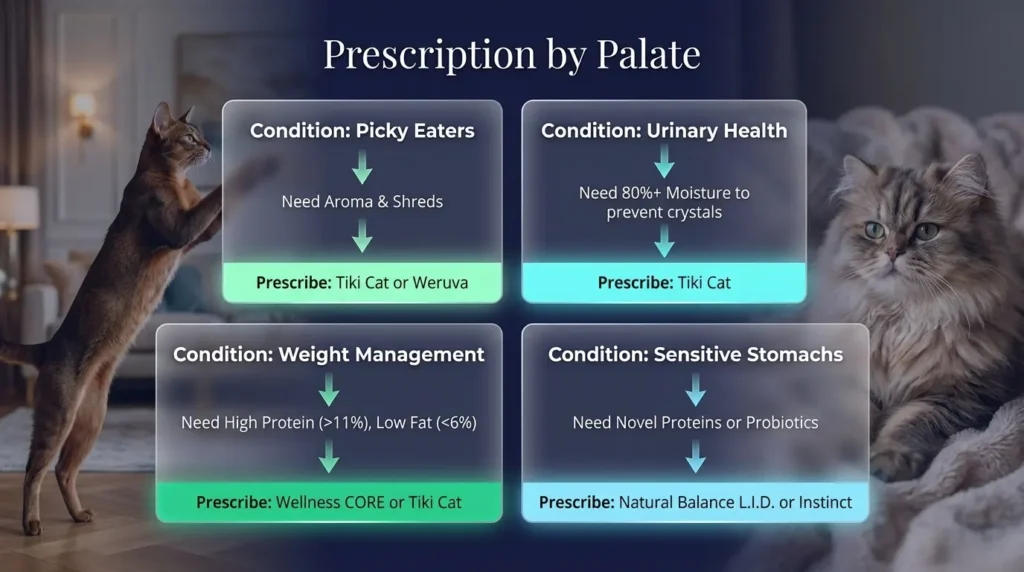
Don’t just buy the most expensive option. Match the food to your cat’s situation:
For picky eaters: Try Tiki Cat or Weruva—the texture and aroma are usually irresistible.
For sensitive stomachs: Natural Balance L.I.D. or Instinct with probiotics work well.
For urinary health: High-moisture options like Tiki Cat (80%+ moisture) help prevent crystal formation.
For weight management: Look for high protein (11%+ as-fed), low fat (under 6%), and moderate calories.
For budget feeding: Wellness CORE offers the best quality-to-price ratio.
Read the Ingredient List, Not Just the Label
The first three ingredients tell you what the food actually is. Here’s what you want to see:
Good example: Chicken, chicken liver, chicken broth
Bad example: Chicken broth, chicken, pea protein, potato starch
In the bad example, water (broth) is the main ingredient by weight, followed by some chicken, then plant-based fillers. That’s not a meat-based food—it’s flavored water with protein powder.
Calculate Real Monthly Costs
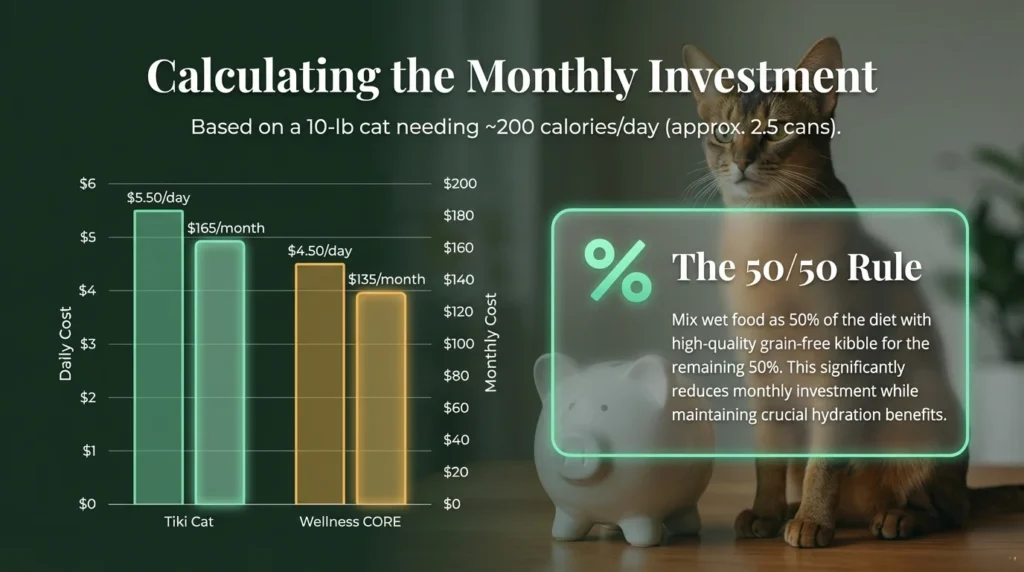
Wet food seems expensive until you realize how little you actually need to feed. A 10-pound cat needs about 200 calories per day. Most 3 oz cans contain 70-90 calories, which means you’ll feed 2-3 cans per day depending on the brand.
Example cost breakdown:
Tiki Cat at $2.20/can × 2.5 cans/day = $5.50/day = $165/month
Wellness CORE at $1.80/can × 2.5 cans/day = $4.50/day = $135/month
If you’re mixing wet and dry food, you can reduce these costs significantly. Many cat owners feed wet food as 50% of the diet and use high-quality grain-free kibble for the other 50%.
Common Mistakes When Feeding Grain Free Wet Food
Assuming All Grain Free Wet Foods Are Low-Carb
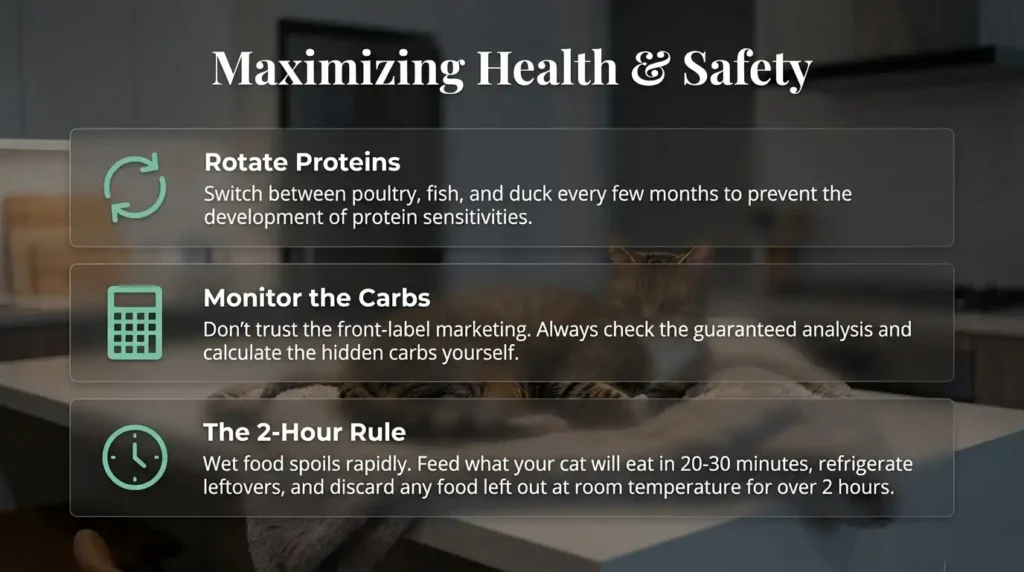
Some grain-free wet foods contain tapioca, potato starch, or pea flour that drive carbs up to 6-8%. That’s still lower than dry food, but it’s not ideal. Always check the guaranteed analysis and estimate carbs using this formula:
Carbs = 100 – Protein – Fat – Fiber – Moisture – Ash
(Use 2% for ash if it’s not listed on wet food labels)
Not Providing Enough Variety
Cats can develop protein sensitivities if they eat the same protein source exclusively for years. Rotate between chicken, turkey, fish, and duck every few months to reduce this risk.
Leaving Wet Food Out Too Long
Wet food spoils quickly at room temperature. Feed what your cat will eat in 20-30 minutes, then refrigerate leftovers. Discard any food that’s been out for more than 2 hours.
Frequently Asked Questions
Is grain free wet cat food better than regular wet food?
Not necessarily. Wet food is already naturally low in carbohydrates because most of the weight is water. The “grain-free” label matters less than the quality of the protein source and the absence of plant-based fillers. A grain-inclusive wet food with real meat as the first ingredient can be just as good—sometimes better—than a grain-free formula packed with pea protein and tapioca starch. Focus on ingredient quality, not the grain-free label.
How much grain free wet food should I feed my cat daily?
A typical 10-pound adult cat needs about 200 calories per day. Most 3 oz cans of wet food contain 70-90 calories, which means you’ll feed 2-3 cans daily for complete nutrition. Check the feeding guidelines on your specific brand—they vary based on calorie density. If you’re mixing wet and dry food, adjust portions accordingly. Cats eating only wet food may need slightly more volume because wet food is less calorie-dense than kibble.
Can I mix grain free wet food with dry food?
Yes, and many cat owners do this successfully. A common approach is feeding wet food in the morning and evening with a small amount of high-quality dry food left out for grazing. This gives you the hydration benefits of wet food while making feeding more affordable and convenient. Just make sure to adjust total daily calories—you can’t feed full portions of both wet and dry without overfeeding. A 50/50 split by calories is a good starting point.
What You Need to Remember
Grain-free wet cat food can be excellent for your cat—but only if you choose formulas with real meat as the primary ingredient and minimal plant-based fillers. The grain-free label doesn’t automatically mean better nutrition. Always read ingredient lists carefully, calculate estimated carbs, and match the food to your cat’s specific needs rather than buying based on price or marketing claims.
The best grain-free wet foods—like Tiki Cat, Weruva, and quality options from Wellness CORE—offer high moisture content, clean protein sources, and minimal processing. They’re worth the investment for cats with food sensitivities, urinary issues, or picky appetites.
Your action plan:
- Identify your cat’s primary need (hydration, picky eating, food sensitivities, or weight management)
- Choose 2-3 grain-free wet foods from this guide that match that need
- Buy small quantities to test before committing to cases
- Rotate protein sources every few months to prevent sensitivities
- Monitor your cat’s stool quality, coat condition, and appetite over 3-4 weeks
Have a question about your specific Grain free canned cat food food you’re considering? Drop it in the comments below — I read and respond to every one.
→ This is a supporting guide in our Best Grain Free Cat Food pillar series.
→ Also helpful: The 10 Best Grain Free Cat Foods
Sarah Mitchell is a feline nutrition researcher and founder of Purreats. She’s spent over a decade helping cat owners decode ingredient labels and find foods that actually work—not just foods that market well. Her cat, Moose, has strong opinions about wet food texture and has vetoed more brands than he’s accepted.