Get the Ultimate Cat Wet and Dry Food Dispenser
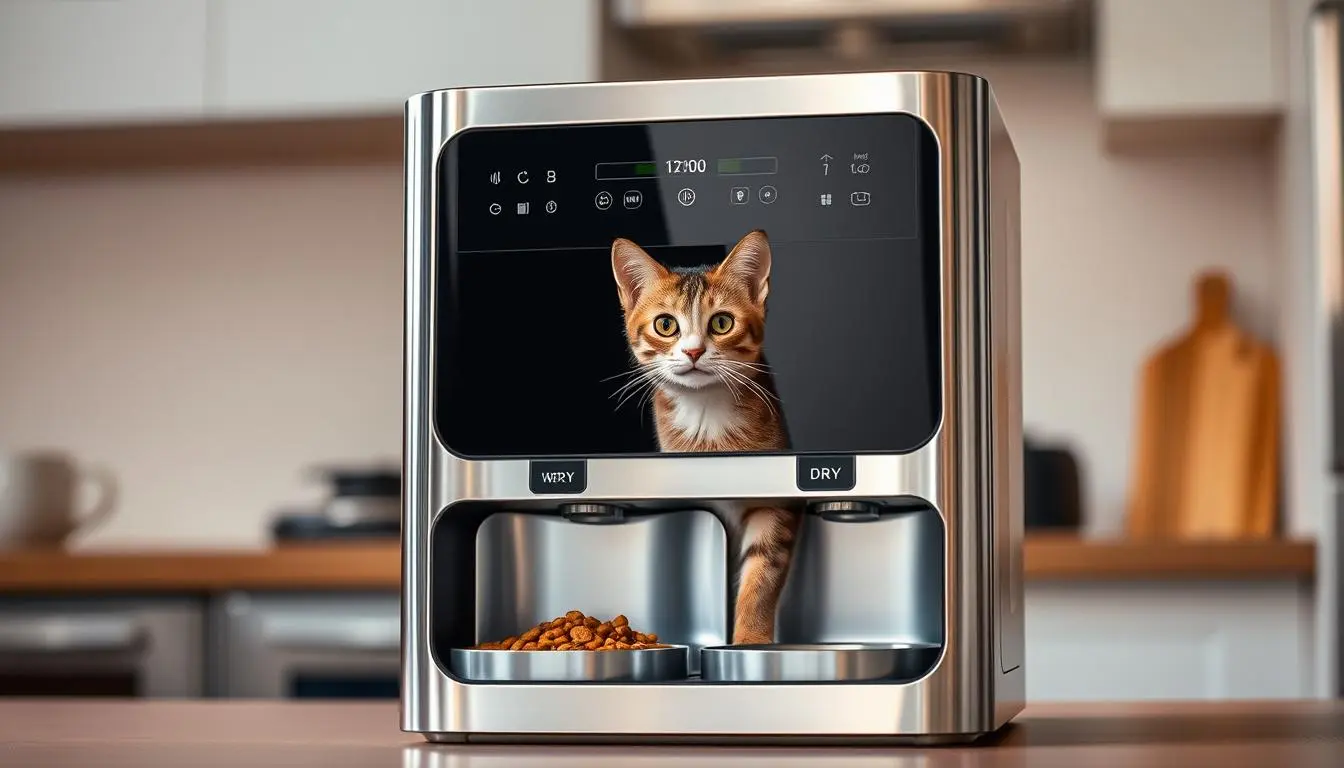
Ever rush out the door, worried if your cat ate on time? That feeling is why a cat wet and dry food dispenser is a game-changer. It ensures your cat eats on schedule, reduces waste, and meets dietary needs.
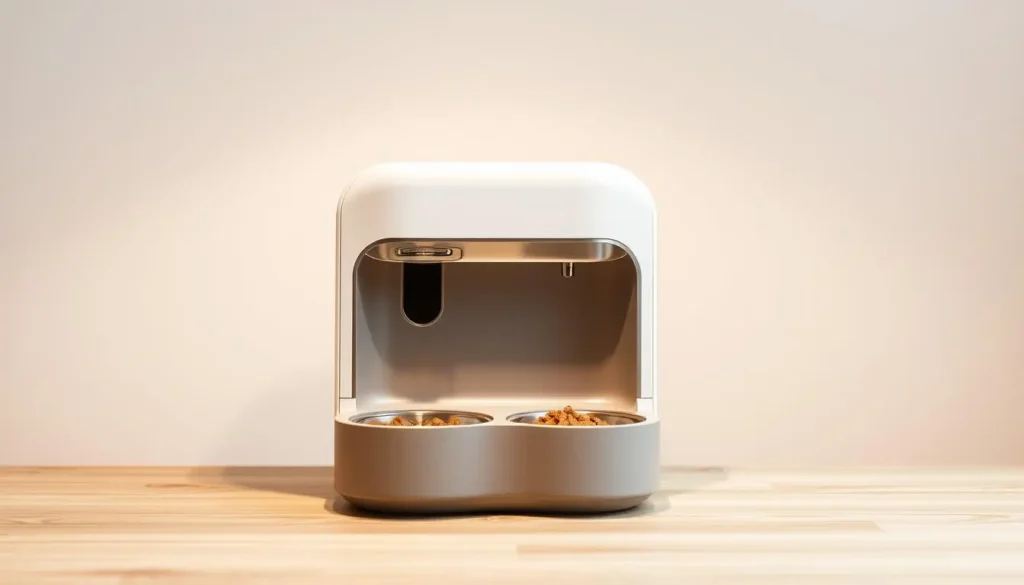
A cat food dispenser can store and dispense both kibble and canned food. It can do so on a set schedule or when your cat wants it. You can choose from simple gravity-fed models to smart feeders with app control. A programmable feeder helps manage portions and timing, even when you’re away.
This guide is for U.S. cat owners looking for a practical solution. We’ll compare top brands like PetSafe, WOPET, Cat Mate, and Petkit. You’ll learn which features are best for busy homes, multi-cat families, and cats with special diets.
Table of Contents
Why a Cat Wet and Dry Food Dispenser Is a Smart Choice for Your Pet
Choosing a cat wet and dry food dispenser makes daily feeding easier. It removes stress from mealtime. You get consistent portions and set schedules, even when you’re away.
Benefits for busy pet owners
An automatic cat feeder or programmable pet feeder feeds your cat on time. You can schedule feedings and adjust servings from your phone. This keeps your cat on a steady plan, even when you’re away.
Health and portion control advantages
Timed feedings and measured portions help prevent overeating and obesity. A programmable pet feeder dispenses exact amounts. This is especially helpful for cats with diabetes or special diets.
Smaller, frequent meals mimic a cat’s natural hunting pattern. Using a cat food dispenser for multiple servings per day can reduce begging and stress. It keeps your cat active and content.
Reducing food waste and maintaining freshness
Separate compartments and airtight seals keep kibble crunchy and wet food fresh. Modern designs include leakproof chambers and single-serve trays. Some even have refrigeration for wet food.
This reduces spoilage and saves money. It also lowers environmental waste while keeping meals safe and tasty for your cat.
| Advantage | How an automatic cat feeder helps | Why it matters |
|---|---|---|
| Consistent schedule | Programmable pet feeder dispenses at set times | Reduces stress and supports digestion |
| Portion control | Measured servings prevent overeating | Helps manage weight and medical needs |
| Freshness | Separate, airtight compartments for wet and dry | Preserves flavor and prevents bacterial growth |
| Convenience | Remote scheduling and app control | Fits busy lifestyles and travel plans |
| Cost and waste reduction | Single-serve and leakproof designs minimize spoilage | Less waste, lower long-term expenses |
Key Features to Look For in an Automatic Cat Feeder
Choosing the right automatic cat food dispenser is key. It should fit your pet’s routine and your lifestyle. You need a feeder that keeps meals on time, portions right, and wet food fresh. Here are the important features to look at before buying.
Programmable feeding schedules and portion sizes
Find a feeder that lets you set meals for the day. Good ones offer 2 to 12 micro-meals and let you adjust portions. An easy-to-use interface is important. LCD controls are great for simple setups. Smartphones apps are useful for wifi feeders. Manual dials are best for those who like simple timed feeders.
It’s crucial for the feeder to keep portion sizes accurate. This is especially important if your cat needs medication with their food. Make sure the feeder holds settings well over time without changing.
Separate compartments for wet and dry food
A good feeder separates wet and dry food to keep them fresh. Dry hoppers usually hold 2 to 6 liters. Wet chambers vary, but some can hold single-serve pouches or multiple cans.
If you have more than one cat, look for feeders with multiple stations. This stops food stealing and helps keep each cat’s weight right.
Leakproof and airtight design for wet food
Seals are vital for keeping wet food fresh. Look for silicone gaskets, snap lids, or vacuum closures. Removable, dishwasher-safe bowls make cleaning easy and cut down on bacteria.
Some top models have refrigerated parts to keep food safe longer. Always follow safety tips: wet food shouldn’t sit at room temperature for more than two hours.
Battery backup and power options
Think about power when you’re away or during outages. Most feeders run on AC. Some use AA batteries or rechargeable lithium packs. Hybrid models use AC with battery backup to keep feeding during power outages.
Look for low-battery alerts and app notifications. Make sure the feeder has safety certifications. Use a surge protector for plugged models to protect the feeder.
| Feature | Why it matters | Typical options |
|---|---|---|
| Feeding schedule | Keeps meals consistent for weight control and meds | 2–12 feeds/day; LCD, app control, manual dial |
| Portion control | Prevents overeating and supports diet plans | Grams, scoops, adjustable dispenser settings |
| Wet vs. dry separation | Maintains texture and prevents contamination | Sealed wet chambers, separate dry hoppers (2–6 L) |
| Sealing technology | Extends freshness and avoids leaks | Silicone gaskets, snap lids, vacuum seals |
| Cleaning | Health and hygiene for frequent use | Removable, dishwasher-safe bowls and trays |
| Power options | Reliability during travel and outages | AC, AA batteries, rechargeable packs, hybrid |
| Alerts & safety | Prevent missed meals and electrical hazards | Low-battery alerts, app notifications, safety certifications |
Comparing Types: Cat Food Dispenser, Programmable Pet Feeder, and Smart Cat Feeder
Choosing the right feeder is about finding the right mix of convenience, control, and cost. Here’s a detailed comparison of the most common types. This will help you find the perfect match for your cat’s needs and your daily routine.
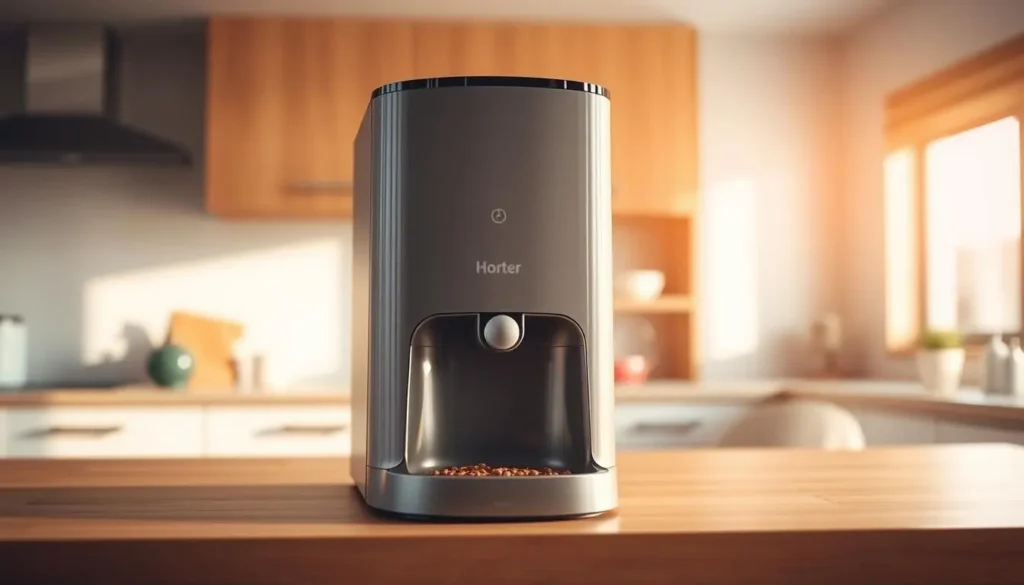
Basic gravity-fed dispensers offer kibble without needing power. They’re affordable and easy to maintain. However, they lack portion control, making them unsuitable for managing your cat’s weight or for wet food.
Automatic cat food dispenser models use motors or timed mechanisms for portion control. They prevent overeating and can handle wet food. But, they cost more upfront and need occasional maintenance.
Basic gravity-fed dispensers vs. automatic cat food dispensers
- Gravity-fed: low price, simple, constant access; risk of overeating.
- Automatic: timed portioning, supports wet and dry food; more precise for diets.
- Choose gravity for budget and low fuss; pick automatic for health goals or multi-cat households.
Smart features: wifi cat feeder and app integration
Smart cat feeders connect to apps for scheduling meals and tracking history. Some come with cameras and work with voice assistants. This makes managing your cat’s diet easier and helps with vet visits.
When buying a wifi cat feeder, think about security. Look for devices with encrypted connections, regular updates, and strong passwords. This keeps your feeder and home network safe from unauthorized access.
Timed cat feeder mechanisms and reliability
Feeders use different mechanisms like augers, rotating trays, and sliding doors. Each affects how well it works over time. Augers are steady; trays rotate; sliding doors are simple but prone to crumbs.
Watch out for common issues like motor burnout, food bridging, and clogging with wet food. Brands like PetSafe and Petkit offer good warranties and parts. Always read reviews to see how well a feeder works in real life before buying.
Price ranges and value for money
| Type | Typical U.S. Price | Best for |
|---|---|---|
| Gravity-fed cat food dispenser | $15–$40 | Budget buyers, free-feeding dry food |
| Timed cat feeder / programmable pet feeder | $60–$150 | Portion control, daily schedules, dry or simple wet setups |
| Smart cat feeder / wifi cat feeder | $150–$350+ | App control, cameras, wet-food compatibility, smart home integration |
Consider what you need and what you’re willing to spend. If you want to control your cat’s diet from afar, a smart feeder is worth it. For simple needs, a mid-range feeder is a good choice. Remember to factor in extra costs like batteries or app subscriptions when comparing prices.
How to Choose the Best Automatic Cat Food Dispenser for Your Cat
Choosing the right automatic cat feeder is key. It should fit your cat’s eating habits and health needs. Consider if your cat eats throughout the day or at set times. Also, think about any special diets or health conditions that require specific portions.
Before making a change, talk to your vet. They can help if your cat has medical needs.
Try out a new feeder with your cat. Start with familiar amounts and watch their weight and behavior for a week or two. If they seem stressed or won’t eat, adjust the portion size or feeder type.
For cats on strict diets, a feeder that offers small, consistent portions is best.
Space, cleaning, and maintenance considerations
Measure the space for the feeder. Place it near water and away from traffic. Choose a model with easy-to-clean, dishwasher-safe bowls.
Make a maintenance plan. Check seals, clean food paths, and update firmware on smart feeders regularly.
Compatibility with wet food types and packaging
Make sure the feeder works with your cat’s food. Some accept pouches, others cans, and some need special cartridges. Wet foods can clog some feeders, so choose one designed for them.
Check the size of cans or pouches it can handle. Also, ensure it safely stores opened cans.
Safety features and materials to avoid
Choose feeders made from BPA-free, food-grade materials. Look for safety features like anti-tipping bases and secure lids. Avoid feeders with small parts or rough edges.
Check for UL or ETL listings for extra safety assurance.
When comparing feeders, consider their features. Smart feeders offer remote control and alerts, while basic ones are simpler and more durable. Choose based on your cat’s needs and your lifestyle.
Conclusion
Choosing the right cat wet and dry food dispenser makes life easier. It helps with portion control and keeps food fresh. An automatic feeder also reduces waste and fits into your daily routine.
When shopping, think about your cat’s feeding schedule and wet food needs. Look for reliable power, durable materials, and if you want a smart feeder. A smart feeder offers remote control and logs to track your cat’s habits.
Here’s a quick guide to buying: check if it works with wet and dry food, has programmable portions, and keeps food fresh. Make sure it’s easy to clean and has reliable power. Also, look for a trusted brand.
Investing in a good cat food dispenser saves time and cuts waste. It also helps your cat stay healthy in the long run. Choose one that fits your routine and needs for peace of mind at every meal.
FAQ
What is a cat wet and dry food dispenser and how does it differ from a regular feeder?
A cat wet and dry food dispenser stores and dispenses both kibble and wet food. It does this on a schedule or by command. Unlike gravity feeders, these feeders actively portion meals and protect food freshness.
They often include features like portion control, timers, or smartphone control. Smart cat feeders and wifi models add remote scheduling and notifications for convenience.
Who benefits most from using an automatic cat food dispenser?
Busy pet owners, frequent travelers, and those with cats on strict diets benefit the most. Timed feeders maintain routine when you’re away. They also help with medication and portion control for weight management.
Even short trips or unexpected delays are easier with a reliable feeder.
Can a single unit really handle wet and dry food without spoilage?
Yes, quality models separate wet and dry compartments to prevent spoilage. Look for leakproof seals and silicone gaskets. Some premium units include refrigerated modules or single-serve canisters for wet food.
Wet food should not sit unrefrigerated for more than two hours unless the feeder includes cooling.
How accurate is portion control on programmable feeders?
Accuracy varies by mechanism. Mid- and high-end feeders offer measured portions in grams or adjustable scoops. They can deliver multiple micro-meals per day.
Mechanisms like motorized cups or augers tend to be more precise than simple rotating trays. For cats with medical needs, choose feeders with fine portion increments and reliable repeatability.
Will my cat accept a new automatic feeder right away?
Many cats adapt quickly, but some need a brief transition. Start by placing familiar food in the new feeder and feeding alongside your usual bowl. Gradually move entirely to the dispenser over several days.
Observe eating behavior and adjust food texture or portion size if your cat seems hesitant. For picky eaters, models that accommodate different wet-food formats increase acceptance chances.
What power options should I look for and is battery backup necessary?
Feeders come in AC-only, battery-only, or hybrid designs. Battery backup is highly recommended to maintain scheduled feedings during power outages. Some feeders use AA batteries; others have rechargeable lithium packs.
Choose units with low-battery alerts or app notifications to avoid missed meals, especially for long trips.
Are smart cat feeders and wifi cat feeders secure to use on my home network?
Most reputable smart cat feeders use encrypted connections and require account authentication. When shopping, choose feeders with up-to-date security practices. Look for two-factor authentication options if available and regular firmware updates from the manufacturer.
Avoid devices with poor review histories on security and change default passwords during setup.
Can a feeder handle different wet-food packaging like pouches, cans, and trays?
Compatibility depends on the model. Some automatic cat food dispensers accept standard bowls and trays, while others require proprietary cartridges or support only certain pouch sizes. Chunky or gravy-based wet foods may clog mechanisms.
Check manufacturer specifications for accepted can or pouch dimensions and whether the unit stores opened cans safely.
How easy are these feeders to clean and maintain?
Choose models with removable, dishwasher-safe bowls and accessible reservoirs for easy routine cleaning. Regular maintenance includes inspecting seals monthly, cleaning food pathways to prevent bridging, checking batteries, and updating firmware for wifi models.
Units with simple disassembly will reduce bacterial buildup and extend the feeder’s lifespan.
What safety materials and certifications should I prioritize?
Choose feeders made from BPA-free, food-grade plastics or stainless steel bowls to avoid chemical leaching. Look for anti-tipping bases, secure lids, pinch-free mechanisms, and motor shutoff features to prevent injury. Electrical components should carry safety listings such as UL or ETL where applicable.
Avoid products with exposed small parts or rough edges that a cat could chew.
How do I choose between a basic gravity-fed dispenser and a more advanced automatic feeder?
If your cat grazes and overeating isn’t a concern, a gravity-fed dispenser is low-cost and low-maintenance. If you need portion control, scheduled meals, wet-food compatibility, or remote control, an automatic cat food dispenser or smart cat feeder is the better investment.
Balance features with price—budget gravity feeders cost roughly –40, mid-range automatic dispensers –150, and premium smart feeders with wet-food capability and cameras 0–350+.
What common reliability issues should I watch for?
Common problems include motor jams, food bridging in dry hoppers, wet-food clogging, and battery failure. Mechanism type affects risks—augers and motorized cups are generally reliable, while rotating trays can jam with irregular kibble.
Read user reviews for long-term reliability, confirm warranty and support from brands like PetSafe, WOPET, Cat Mate, or Petkit, and check availability of replacement parts.
Is there anything special to consider for multi-cat households?
For multiple cats, seek feeders with selective access, multiple feeding stations, or key-tag recognition to prevent food stealing. Larger dry-food capacities (2–6 liters) help for several cats, but portion control remains crucial.
Place feeders in separate zones to reduce competition and stress, and monitor each cat’s weight and behavior to ensure fair feeding.
How should I match a feeder to a cat with medical needs?
Cats with diabetes, renal disease, or obesity require precise portions and consistent schedules. Choose feeders with accurate gram-based dosing, fine increments, and reliable repeatability. Always consult your veterinarian before switching feeding systems and test the feeder while monitoring your cat’s blood sugar or weight.
App-logged feeding histories can be helpful for vet consultations.
Are there ongoing costs associated with automatic feeders?
Yes, there may be ongoing costs like replacement batteries, proprietary wet-food cartridges or trays, and optional subscription fees for cloud services or advanced app features. Also factor in replacement parts over time. For basic models, ongoing costs are minimal, but smart feeders with peripherals may add to lifetime expense.
Where can I find trusted brands and models in the U.S. market?
Reputable U.S. market options include brands such as PetSafe, WOPET, Cat Mate, and Petkit. These manufacturers offer a range from simple automatic cat food dispensers to wifi-enabled smart cat feeders and units designed for wet and dry food. Check specs for wet-food compatibility, portioning accuracy, power options, and customer support before purchasing.