How Long Can Wet Cat Food Safely Stay Out? 3 Risky Mistakes to Avoid
How Long Can Wet Cat Food Safely Stay Out? “Freshness isn’t just a luxury—it’s a necessity for health.” This insight from chef Julia Child applies perfectly to feline nutrition. Ensuring your cat’s meals stay safe and appetizing requires attention to timing, especially when serving moisture-rich dishes.
Pet owners often wonder about the ideal window for leaving meals out. Experts agree that perishable items shouldn’t remain at room temperature beyond two hours. After this period, bacteria like Salmonella or E. coli can multiply rapidly, threatening your pet’s digestive health.
Unlike dry kibble, canned varieties create an environment where pathogens thrive. Proteins and moisture accelerate spoilage, while dehydration reduces both flavor and hydration benefits. Recognizing these risks helps prevent stomach upsets and maintains meal quality.
This guide explores practical strategies to balance convenience with safety. You’ll learn storage tips, serving best practices, and signs of spoiled meals—all backed by veterinary science. Let’s prioritize your companion’s well-being without compromising their dining experience.
Table of Contents
Understanding Wet Cat Food Safety
The clock starts ticking the moment you open a can of moist feline meals. Unlike dry alternatives, these protein-packed dishes become a playground for invisible threats if mishandled. Let’s explore why timing matters and how preparation methods affect meal integrity.
The Role of Bacterial Growth
Moisture-rich meals create ideal conditions for harmful microorganisms. Salmonella and Listeria can double their numbers every 20 minutes in room-temperature environments. This rapid multiplication occurs most aggressively between 40–140°F—the “danger zone” for perishable items.
Differences Between Wet and Dry Cat Food
Processing methods drastically impact safety profiles. Dry kibble undergoes high-heat manufacturing that eliminates most pathogens during production. Its low moisture content further discourages microbial activity, even when left uneaten for hours.
| Factor | Moist Meals | Dry Kibble |
|---|---|---|
| Processing Temperature | Moderate heat | Extreme heat |
| Moisture Content | 75–85% | 5–10% |
| Bacterial Risk Window | 2 hours max | 24+ hours |
While canned varieties offer hydration benefits, their sealed environment becomes risky once exposed to air. Always prioritize refrigeration for leftovers and discard uneaten portions promptly.
Guidelines: How Long Can Wet Cat Food Be Left Out?
Timing is critical when serving moisture-rich meals to felines. Balancing freshness with practicality requires understanding both safety thresholds and environmental variables that accelerate spoilage.
Safe Timeframe at Room Temperature
Most veterinarians recommend a strict two-hour rule for perishable pet meals left uncovered. Beyond this window, bacterial colonies multiply exponentially, particularly in warm environments. During heatwaves or in poorly ventilated spaces, discard uneaten portions within 60 minutes to mitigate health risks.
Factors Influencing Spoilage
Three primary elements determine how quickly meals become unsafe:
- Ambient heat: Temperatures above 70°F halve the safe exposure period
- Portion size: Larger servings develop surface crusts faster, trapping bacteria beneath
- Ingredient quality: Formulas with natural preservatives resist microbial growth longer than budget options
Airflow also plays a role—stagnant environments allow pathogens to thrive. Always store opened cans in airtight containers and refrigerate immediately if saving leftovers. Monitoring these variables helps maintain nutritional value while reducing digestive upset risks.
Proper Serving and Storage Practices
Mastering meal management transforms how you preserve nutrition and safety. Strategic portioning and smart refrigeration techniques keep feline dishes fresh while minimizing health risks. These methods ensure every serving meets quality standards your companion deserves.
Portion Control for Cat Meals
Standard cans often exceed single-meal needs. Measure servings based on your pet’s weight and activity level—typically ½ to 1 ounce per pound daily. Transfer unused portions to airtight containers immediately after opening.
Refrigerated meals stay safe for 48-72 hours. Glass or BPA-free containers prevent odor transfer and texture changes. Label containers with dates to track freshness windows accurately.
Refrigeration and Leftovers Management
Discard uneaten bowls after two hours—never combine fresh and old meals. Bacteria from licked surfaces contaminates new food. For chilled servings, warm containers in warm water for 30 seconds before offering.
Follow these fridge guidelines:
- Store at 40°F or below
- Use dedicated pet food containers
- Discard after three days maximum
Proper techniques reduce waste while maintaining flavor and moisture. Your cat gets appealing meals, and you avoid preventable vet visits.
Temperature and Texture: Key Considerations
Feline dining experiences hinge on two critical factors most owners overlook. Serving conditions dramatically affect both safety and acceptance of meals. Let’s explore how environmental elements shape your companion’s eating habits.
Impact of Room Temperature on Food Quality
Cold meals straight from refrigeration often get snubbed. Cats prefer dishes around 68–72°F—similar to prey’s natural warmth. Chilled portions lose aromatic appeal, making them less enticing.
Use microwave bursts (10 seconds max) to gently warm refrigerated meals. Always stir and test before serving. Overheating destroys nutrients and creates dangerous hot spots.
“Warming enhances scent molecules—critical for feline appetite stimulation.”
Maintaining Ideal Texture for Palatability
Exposure to air alters consistency rapidly. Moisture evaporation creates unappealing crusts within 30 minutes. Protein-rich formulas dry fastest, losing hydration benefits.
| Texture Type | Safe Window | Preferred By |
|---|---|---|
| Pâté | 45 minutes | Senior cats |
| Chunks in Gravy | 35 minutes | Active adults |
| Shredded | 25 minutes | Kittens |
Choose formulas matching your pet’s preferences to reduce waste. Store leftovers in airtight containers immediately after serving to preserve moisture and prevent texture changes.
Troubleshooting Feeding Challenges
When your feline companion starts ignoring their bowl, it’s time to play detective. Behavioral shifts during mealtimes often signal deeper issues requiring attention. Observing patterns helps separate picky eating from genuine health concerns.
Identifying Unusual Cat Behavior
Sudden appetite changes frequently point to medical or environmental factors. Dental pain, kidney dysfunction, or digestive disorders make chewing uncomfortable. Respiratory infections can dull scent perception—a critical factor for feline food interest.
Stressors like new pets or relocated bowls often disrupt routines. Cats thrive on consistency, and even minor household changes might trigger avoidance behaviors. Watch for these red flags:
- Sniffing food but refusing to eat
- Pawing at bowls without consuming meals
- Eating smaller portions than usual
Senior cats face unique challenges. Age-related declines in smell or taste sensitivity reduce meal appeal. Whisker fatigue—caused by narrow bowls irritating facial sensors—also deters some pets from finishing portions.
“Persistent food avoidance lasting over 24 hours warrants immediate veterinary evaluation.”
Track eating habits using a feeding journal. Note portion sizes, leftovers, and behavioral cues. This data helps veterinarians pinpoint issues faster, ensuring timely care for your cat’s well-being.
Customizing Your Cat’s Feeding Routine
Tailoring mealtimes to your feline’s preferences promotes healthier eating habits. Structured routines prevent uneaten portions while satisfying nutritional needs. Let’s explore strategies to balance consistency with excitement at the bowl.
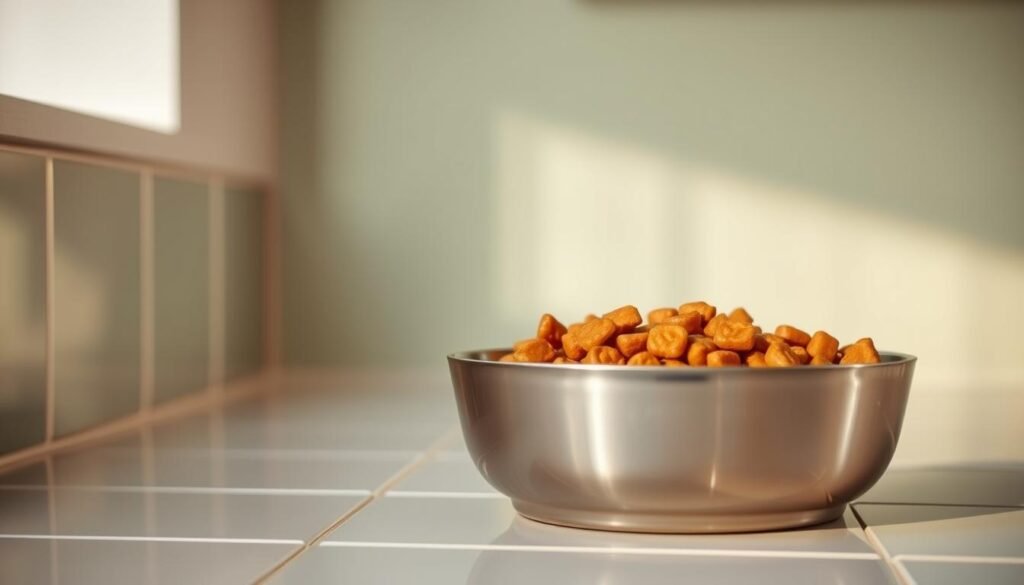
Establishing Regular Mealtime Schedules
Consistency transforms feeding into a stress-free ritual. Serve meals at fixed times daily—most cats thrive with morning and evening servings. This approach helps manage portions and reduces grazing behavior.
Consider this comparison:
| Approach | Benefits | Drawbacks |
|---|---|---|
| Scheduled Feedings | Prevents overeating Simplifies monitoring | Requires time commitment |
| Free-Choice Dry Food | Convenient | Reduces wet food interest |
Combine moist and crunchy options strategically. Offer wet meals when hunger peaks, typically after play sessions. Limit dry kibble access to maintain appetite for scheduled servings.
Incorporating Variety to Enhance Appetite
Rotate protein sources like chicken, fish, and turkey weekly. Texture diversity—pâtés, shreds, or gravies—keeps meals engaging. “Cats often reject repetitive menus,” notes Dr. Sarah Mitchell, feline behaviorist. “Novelty triggers natural foraging instincts.”
Follow these tips:
- Introduce new flavors gradually
- Pair preferred textures with less familiar options
- Use puzzle feeders for dry snacks
Store uneaten wet portions properly and refresh bowls promptly. This balance ensures nutritional variety without compromising safety standards.
Conclusion
Feeding your cat properly is one of the most important parts of cat parenthood. If you remember one thing from this guide, let it be the two-hour rule for perishable meals. Discarding uneaten portions promptly prevents bacterial growth and protects your feline’s digestive health.
Store opened cans in airtight containers and refrigerate immediately. Proper storage preserves nutrients while reducing contamination risks. Pair these habits with consistent feeding schedules to support your companion’s well-being.
A balanced approach to meal management ensures every serving contributes to a happy, healthy life. Monitor portion sizes, prioritize freshness, and stay alert to behavioral changes. Your vigilance directly impacts their vitality and longevity.
“Safety isn’t just about rules—it’s about creating routines that work,” summarizes feline nutrition expert Dr. Lisa Carter. By applying these principles, you transform everyday care into lifelong wellness for your cherished pet.