Purina Kitten Food: Honest Review of Every Line

You’ve probably noticed that Purina shows up everywhere in the kitten food conversation — on vet recommendation lists, shelter supply orders, and just about every pet store shelf in the US. That kind of ubiquity can feel reassuring. It can also feel suspicious.
Is Purina kitten food actually good? Or is it just everywhere because it’s the biggest brand with the biggest marketing budget?
The honest answer is: it depends entirely on which Purina line you’re buying. Purina isn’t one product — it’s a family of sub-brands ranging from budget grocery-store formulas to research-backed premium lines. Treating them as interchangeable is one of the most common mistakes new kitten owners make.
This review breaks down every Purina kitten food line worth knowing, label by label, so you can make a genuinely informed decision.
Transparency note: Purreats uses affiliate links. If you purchase through our links, we earn a small commission at no extra cost to you. Every recommendation here is one I’d make to a friend.
Why Purina Appears on So Many Vet Recommendation Lists
Before getting into the specific products, it’s worth understanding why Purina — and specifically Purina Pro Plan — shows up on so many veterinary shortlists.
Purina employs a full team of board-certified veterinary nutritionists and conducts extensive feeding trials on their formulas. Unlike brands that meet AAFCO standards through nutrient calculation alone (on paper), many Purina Pro Plan products have been validated through actual animal feeding studies. That distinction matters when you’re choosing food for a growing kitten.
This doesn’t mean every Purina product is premium quality. It means the company has the research infrastructure to produce genuinely excellent food — and some of their lines reflect that fully, while others are straightforward budget formulas.
Knowing which is which is the whole point of this article.
Purina Kitten Food Lines: What Actually Exists
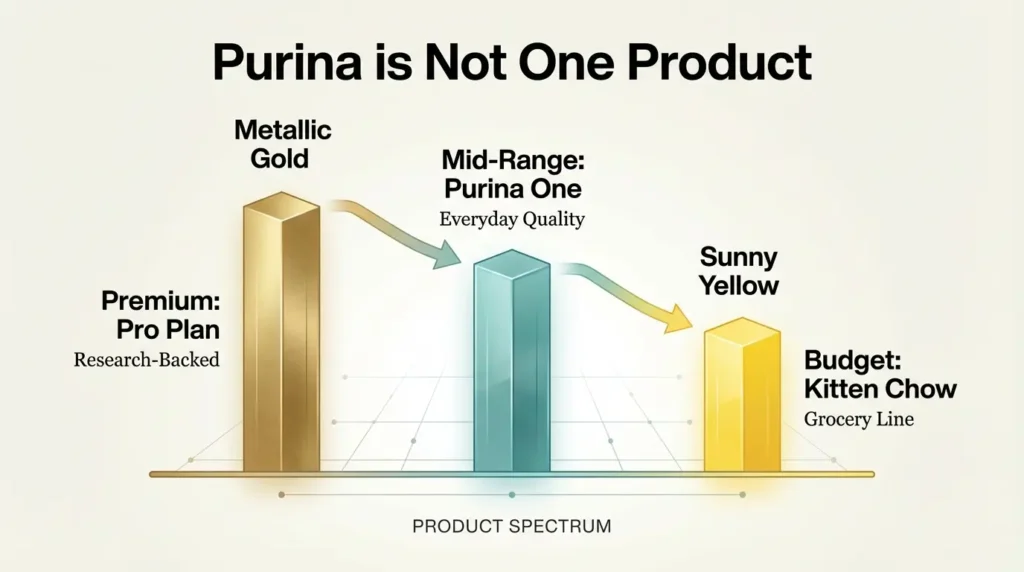
Purina produces kitten-specific products across three main sub-brands:
- Purina Pro Plan — the premium research-backed line
- Purina One — the mid-range “everyday quality” line
- Purina Kitten Chow — the budget grocery-store line
Each targets a different buyer, a different price point, and delivers a meaningfully different nutritional profile.
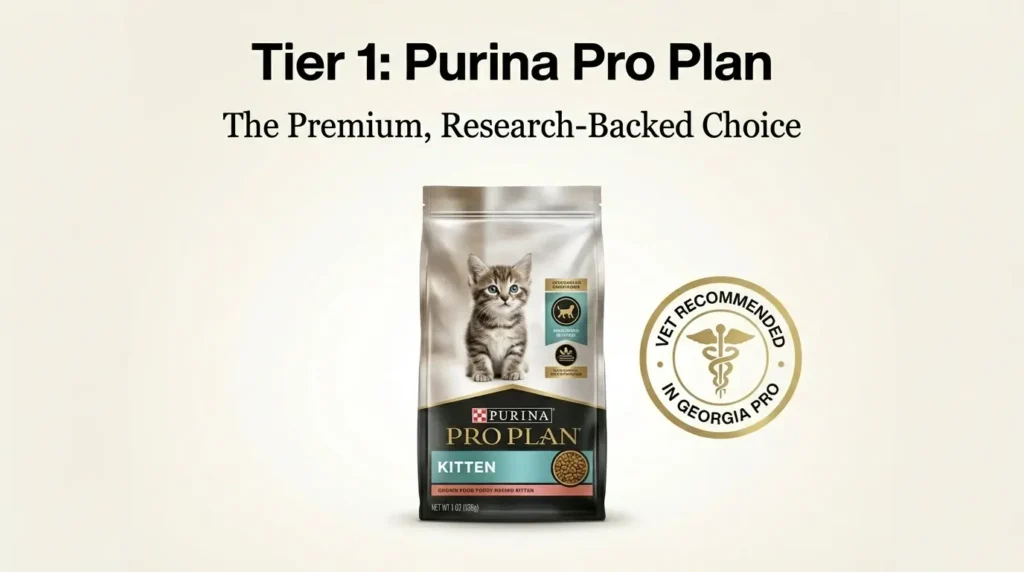
Purina Pro Plan Kitten: The One That Earns the Reputation
What’s in it
Purina Pro Plan Kitten Chicken & Rice Entrée (wet) leads with real chicken as the first ingredient. The formula includes DHA sourced from fish oil for brain and vision development — clearly listed on the label, not vaguely implied. Taurine is confirmed. The AAFCO “growth” statement is present and legitimate.
On the dry side, Purina Pro Plan Kitten Chicken & Rice Formula achieves something genuinely impressive: 42% crude protein in a dry kibble at a mid-range price point. That’s a number you’d typically associate with premium or boutique brands. The first ingredient is real chicken. Fat sits at 18%, appropriate for active kitten growth.
Real-world performance
In practical feeding tests with foster kittens ranging from 8 weeks to 6 months, Pro Plan wet consistently earns near-100% bowl clearance. The pâté texture is smooth enough for young kittens learning to eat solid food, and the chicken aroma is strong enough to get even hesitant eaters interested.
Stool quality on Pro Plan tends to be firm and consistent — a reliable signal of appropriate digestibility. Coat condition over 4–6 weeks of primary feeding is noticeably better than on budget formulas.
Who it’s best for
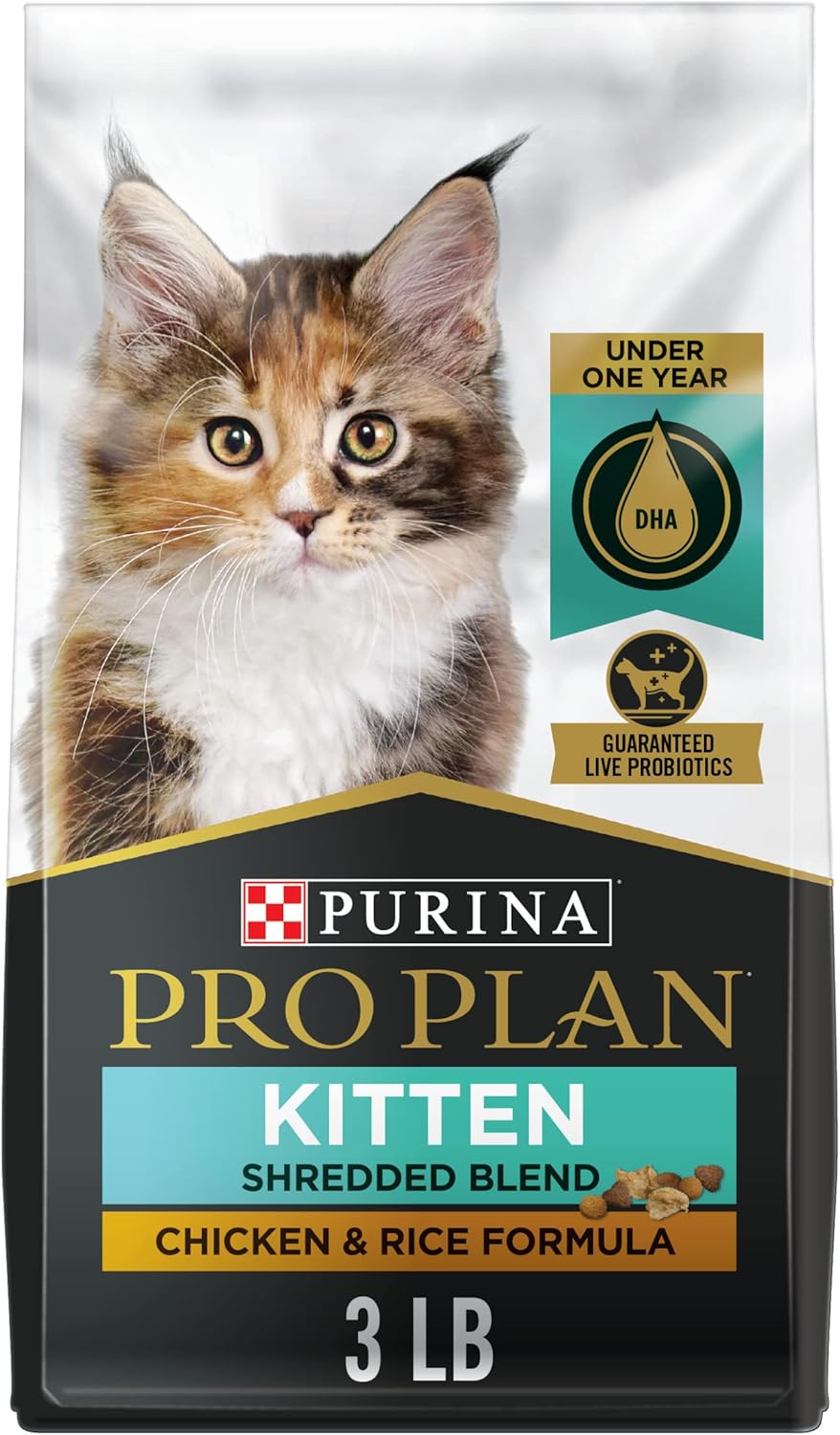

This is the Purina line I recommend to most kitten owners as a starting point. If you want reliable quality, strong palatability, veterinary confidence, and reasonable price — Pro Plan is the answer.
✅ Best for: All kittens 8 weeks–12 months, first-time owners, everyday feeding
First ingredient (wet): Chicken
First ingredient (dry): Chicken
Crude protein (dry): 42%
AAFCO: Growth ✓
Cost/day: ~$0.45–$0.75 depending on wet/dry ratio
Purina One Kitten: Solid Mid-Range Value
What’s in it
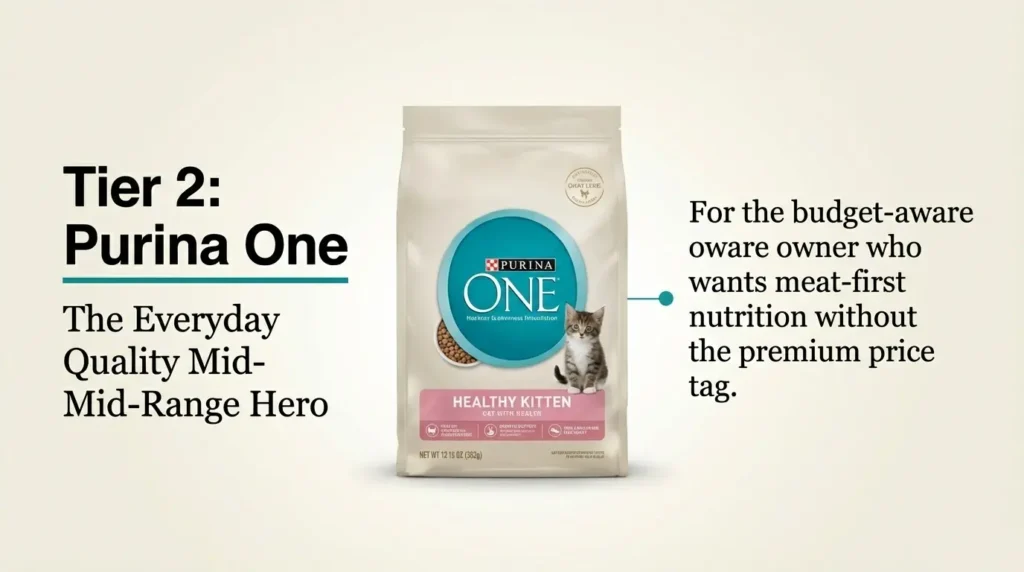
Purina One Healthy Kitten Formula uses real chicken as the first ingredient in both wet and dry formats. Protein levels are lower than Pro Plan — the dry formula sits around 34% crude protein — but still above the 30% minimum I’d want for a growing kitten.
It doesn’t include the explicitly added DHA that Pro Plan does, though some omega-3 fatty acids are present from fish oil further down the ingredient list. The AAFCO growth statement is confirmed.
Who it’s best for
If Pro Plan is slightly out of your regular budget but you want to step above Kitten Chow, Purina One is a reasonable middle ground. It’s a nutritionally complete, well-formulated option — not cutting-edge, but genuinely solid.
✅ Best for: Budget-aware owners who want above-baseline quality, mixed wet + dry routines
First ingredient: Chicken
Crude protein (dry): ~34%
AAFCO: Growth ✓
Cost/day: ~$0.35–$0.55
Purina Kitten Chow Nurturing Formula: Budget Done Honestly
What’s in it
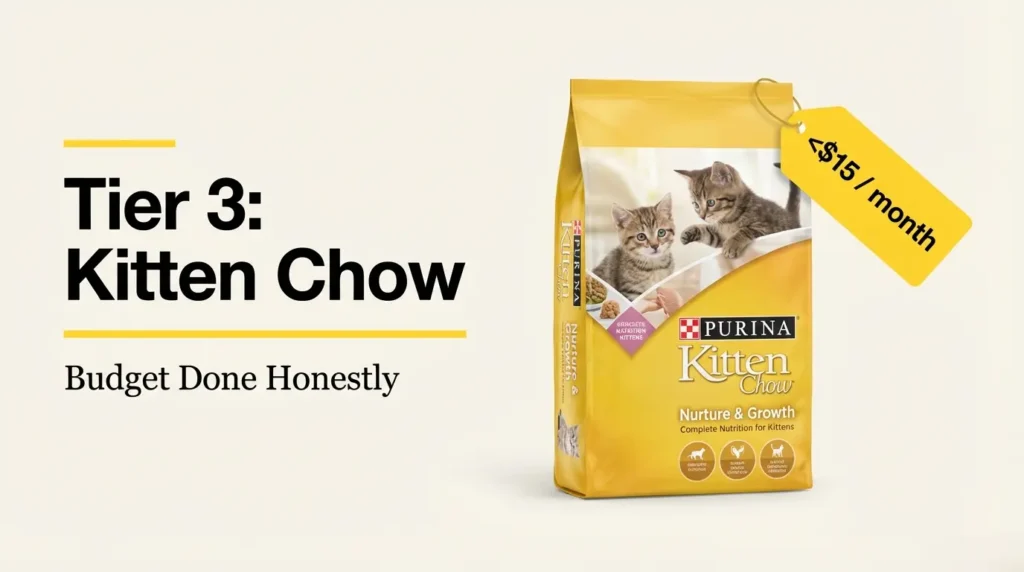
Ground yellow corn is the first ingredient in Purina Kitten Chow. That’s a fact worth knowing upfront — not to dismiss the product, but to set accurate expectations.
Whole chicken appears third, and crude protein sits at 34%. The AAFCO growth statement is present. Taurine is included. This is a nutritionally complete formula for kitten growth — it just achieves that through a more grain-forward ingredient architecture than premium lines.
Who it’s best for
Kitten Chow is not a food I’d choose if budget weren’t a constraint. But if your realistic monthly budget for kitten food is under $15, this formula keeps your kitten fed with a complete-and-balanced growth diet. Pair it with one affordable wet food meal per day (Fancy Feast Classic Pâté works well) and you significantly improve the overall nutritional balance.
✅ Best for: Tight budget owners, multi-kitten households, short-term or transitional use
First ingredient: Ground yellow corn
Crude protein: ~34%
AAFCO: Growth ✓
Cost/day: ~$0.25–$0.35
Purina Kitten Food at a Glance
| Product | Format | First Ingredient | Crude Protein | AAFCO | Cost/Day |
|---|---|---|---|---|---|
| Pro Plan Kitten (wet) | Wet | Chicken | ~12% (wet basis) | Growth ✓ | ~$0.75 |
| Pro Plan Kitten (dry) | Dry | Chicken | 42% | Growth ✓ | ~$0.50 |
| Purina One Kitten (dry) | Dry | Chicken | ~34% | Growth ✓ | ~$0.40 |
| Kitten Chow Nurturing | Dry | Ground corn | ~34% | Growth ✓ | ~$0.30 |
Which Purina Kitten Food Should You Actually Buy?
Here’s the honest decision tree:
- If budget is flexible: Start with Purina Pro Plan Kitten — wet as primary, dry as supplement. This is the formula that earns the vet recommendations. The 42% protein dry and clearly labeled DHA wet are genuinely among the best value propositions in the kitten food market.
- If you need to balance quality and cost: Purina One Kitten is a legitimate step down from Pro Plan without compromising the core nutritional profile. Real chicken first ingredient, AAFCO growth confirmed.
- If budget is the primary constraint: Purina Kitten Chow paired with daily wet food (even budget wet food) is a more complete approach than Kitten Chow alone. The grain-forward formula is the trade-off; the growth statement and accessibility are the advantages.
What I’d avoid: the specialty Fancy Feast-style Purina products marketed for “all life stages” in novelty packaging. They’re fine for adult cats but don’t carry the growth-specific nutritional profile your kitten needs right now.
How to Switch Your Kitten to Purina (Without Stomach Upset)
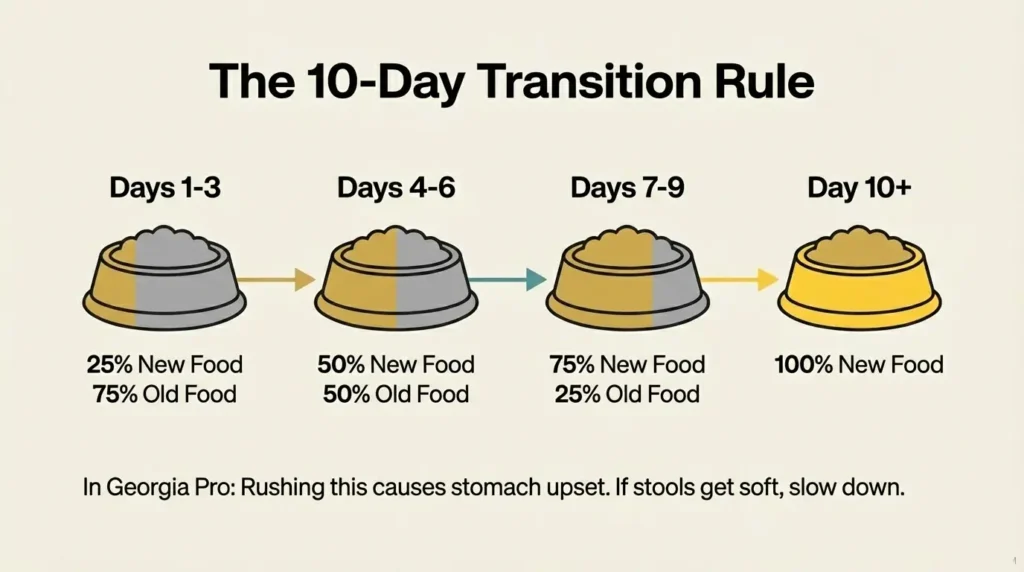
If your kitten is currently on a different food and you’re switching to any Purina formula, use the standard 7–10 day gradual transition:
- Days 1–3: 75% old food, 25% Purina
- Days 4–6: 50/50 split
- Days 7–9: 25% old food, 75% Purina
- Day 10+: 100% Purina
If you notice soft stools at any stage, slow down and spend a few extra days at that ratio before advancing. Rushing this step is the single most common cause of unnecessary GI upset during food changes.
FAQ: Purina Kitten Food
FAQ
→ Back to the full guide: The 5 Best Kitten Foods of 2026, Picks for Healthy Growth
→ Also read: Best Dry Kitten Food: Label Guide Feeding Tips (2026)
→ Also read: Best Canned Kitten Food: Top Picks, Feeding Tips (2026)
📌 Bookmark this page — reviews and cost data updated quarterly.