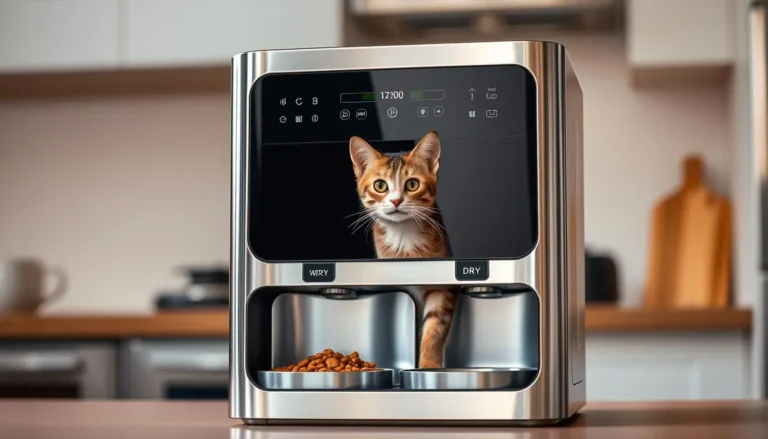
Keep Your Cat Happy: Automatic Cat Feeder Wet Food
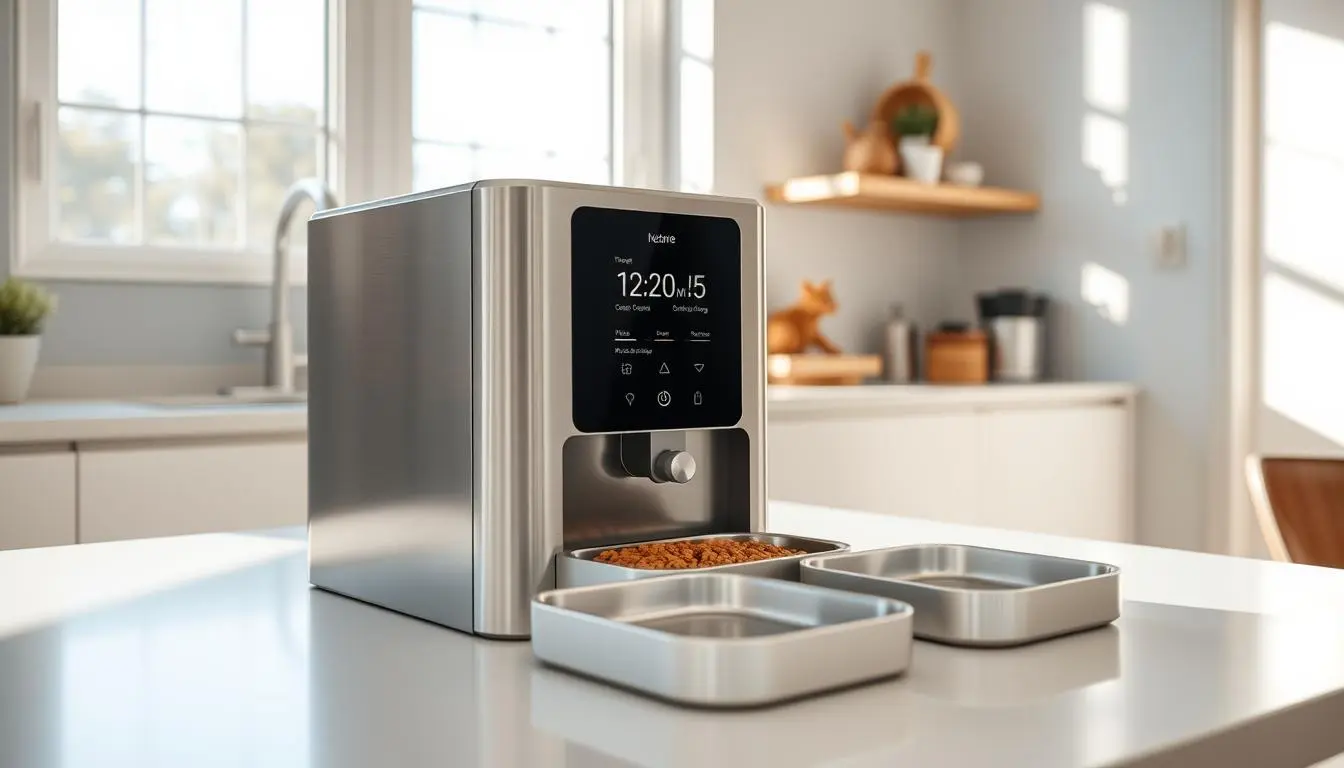
Feeding your cat is more than just a routine. It’s a special way to show you care. When work or travel gets in the way, an automatic feeder can help. It keeps your cat’s routine steady, making life easier for both of you.
An automatic wet food cat feeder dispenses food at set times or when needed. It uses rotating trays, pumps, or motorized bowls. These features ensure your cat eats the right amount at the right time.
These feeders offer many benefits. They keep meal times consistent, help control portions, and reduce food waste. They’re perfect for busy owners or those who travel a lot. They work well for homes with one or more cats, and for pets on special diets.
Want to know how to pick, set up, and care for the best automatic wet cat food feeder? Keep reading.
Table of Contents
Table of Contents
Why Choose an automatic cat feeder wet food for your cat
An automatic feeder for wet cat food can make meal times steady and stress-free. It helps when your schedule changes and keeps your cat’s routine intact. This is especially good for cats that need regular meals and pets on special diets.
Choose a timed feeder to mimic a cat’s natural eating habits. Short, regular meals help with digestion and can stop begging. It also makes giving medication in food easier without extra work for you.
Benefits of scheduled wet food feeding
Scheduled feeding makes meal times predictable. Your cat learns when to eat, reducing anxiety and unwanted behaviors.
Regular feeding supports your cat’s digestive health and can prevent overeating at night. This is especially helpful in homes with multiple cats, where one might dominate the food bowl.
How automatic feeders improve portion control and weight management
Most automatic feeders let you set exact portion sizes. You can program small servings that fit your vet’s weight-loss plans.
Accurate portions help avoid obesity-related health issues like diabetes and joint problems. You can adjust portions as needed, following your vet’s advice without uncertainty.
Convenience for busy pet owners and frequent travelers
An automatic feeder saves time and worry for busy owners or travelers. You can leave home without worrying about feeding on time.
Many feeders come with remote controls or alerts. This lets you know meals were delivered, reducing stress and ensuring your cat eats on time.
| Need | What to look for | How it helps |
|---|---|---|
| Consistent meal times | Timed wet cat food feeder with programmable schedule | Reduces begging, stabilizes appetite, supports digestion |
| Portion control | Automatic cat wet food dispenser with adjustable servings | Prevents overeating, aids weight-loss plans, allows vet-guided adjustments |
| Travel and long days | Wet food dispenser for cats with remote alerts or app control | Maintains feeding routine, offers peace of mind, cuts sitter needs |
| Food safety | Feeder with airtight seals or timed cooling features | Keeps wet food fresh, lowers spoilage risk, protects health |
Types of automatic feeder for wet cat food and how they work
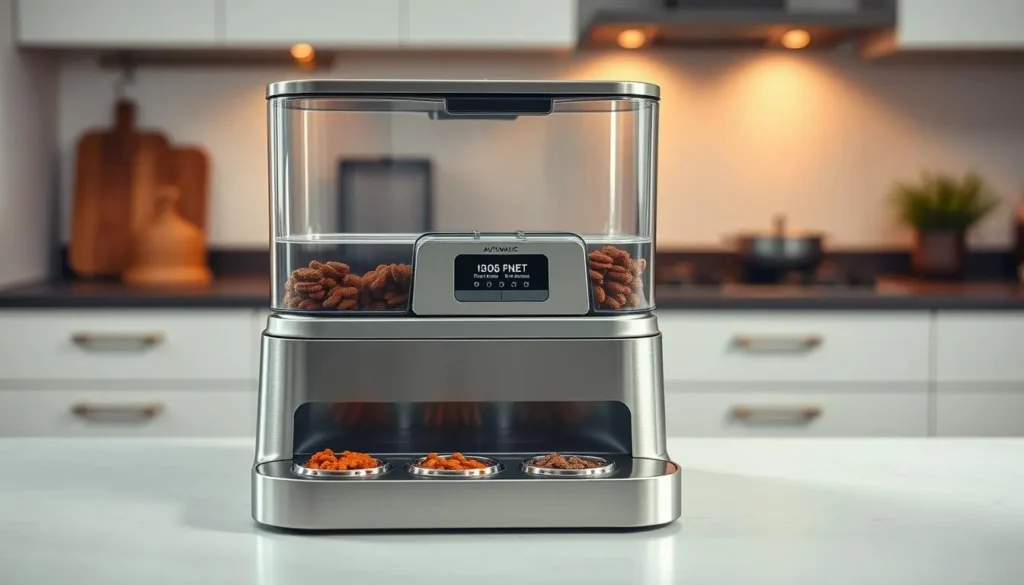
When picking a wet food feeder for cats, you have many options. Each type manages portions, keeps food fresh, and makes cleaning up easier. Think about what’s most important to you: simple, reliable feeding, precise timing, or a big capacity with fridge.
Timed wet cat food feeder mechanisms
Timed feeders release food at set times to match your cat’s schedule. They use a rotating tray with sealed cups. When it’s time to eat, the tray turns, showing one cup and keeping the others sealed.
Pump-based feeders store fresh food in a tank. A small pump delivers measured portions to the bowl. This is great for pâté and keeps air out.
Some feeders use motor-driven scoops or augers. These are common for both wet and soft-dry foods. A rotating scoop pushes portions into the dish.
Gravity vs. automated dispensing systems
Gravity feeders use simple physics. They let food flow into a bowl as your cat eats. This works for dry kibble but needs special designs for wet food to keep it fresh.
Automated systems actively dispense wet food. They handle single-serve trays, cans, or a fresh-food tank. These systems reduce bacterial growth and waste.
Battery-operated vs. electric models
Battery-operated feeders are portable and work during power outages. They run on AA or rechargeable batteries. This makes them perfect for travel or remote areas.
Electric models offer constant power for refrigeration, more capacity, and smart features like Wi-Fi. They support functions that need steady current for pumps or app control.
Hybrid models have a plug-in power source and battery backup. This keeps the feeder running and schedule intact during short outages.
| Feature | Rotating Tray | Pump Reservoir | Scoop/Auger Hybrid | Gravity-Wet (Sealed) |
|---|---|---|---|---|
| Ideal food types | Single-serve cups, pâté | Pâté, minced | Wet-dry blends, soft chunks | Sealed wet cups |
| Portion accuracy | High | High | Medium | Low for wet, high for sealed cups |
| Freshness control | Sealed until served | Reservoir may need refrigeration | Exposed between servings | Excellent if cups stay sealed |
| Power options | Battery or plug-in | Battery, plug-in, or hybrid | Often plug-in; some battery | Usually battery or manual |
| Best use case | Scheduled single-serve feeding | Custom portion control for wet food | Households mixing wet and dry | Simple sealed-portion wet feeding |
Key features to look for in a cat feeder wet food dispenser
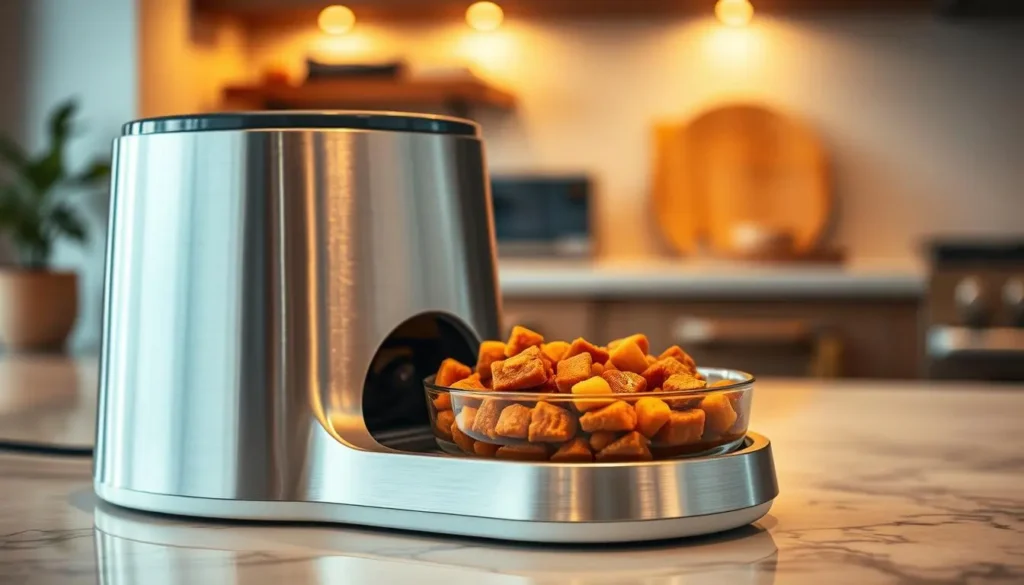
Choosing the right unit is key for your cat’s health and your peace of mind. Look for features like precise portion control, reliable preservation, and sturdy materials. Also, smart features that fit your routine are important. Here are the main things to compare when shopping for an automatic wet cat food feeder.
Portion size control and programmability
Choose a model that measures servings in grams or milliliters. This way, you can follow vet-recommended portions. Multiple daily slots let you split meals across the day. A manual-feed button helps with training or unexpected needs.
Locking portions prevent accidental overfeeds when curious paws test the device.
Preservation features: refrigeration and airtight seals
Options with refrigerated compartments keep opened wet food safe for longer. This is helpful when you schedule several small meals. Airtight lids, vacuum seals, or single-serve trays reduce spoilage and slow bacterial growth.
Always follow manufacturer guidance on how long wet food can sit at room temperature to avoid risks.
Material, durability, and ease of cleaning
Choose food-grade stainless steel or BPA-free plastics to resist odors and stains. Removable bowls and trays that are dishwasher-safe cut cleaning time and lower contamination risk. Solid construction and anti-skid bases stop adventurous cats from toppling the unit during feeding.
Smart features: app integration, alerts, and logging
Wi‑Fi or Bluetooth connectivity lets you schedule meals remotely and check feeding logs. Live cameras, two-way audio, and push notifications help you confirm meals were delivered and see how your cat responds. Battery status alerts and clog warnings reduce missed meals when power or jams occur.
| Feature | What to look for | Why it matters |
|---|---|---|
| Portion control | Gram/mL increments, multiple daily slots, manual feed | Supports weight management and vet diets |
| Preservation | Refrigerated compartment, airtight lids, sealed trays | Keeps wet food fresh and reduces spoilage |
| Materials & cleaning | Stainless steel or BPA-free plastic, dishwasher-safe parts | Improves hygiene, lasts longer, resists odors |
| Durability | Sturdy build, anti-skid base, secure closures | Prevents tipping and food loss from active cats |
| Smart features | App control, logs, notifications, camera/audio | Remote monitoring and timely alerts for missed feeds |
| Power | Battery backup, AC power option | Keeps automatic cat feeder wet food working during outages |
| Capacity | Single-serve vs multi-meal capacity | Matches feeding plan for kittens, adults, or multi-cat homes |
| Anti-clog design | Wide dispensers, agitators, clog alerts | Prevents jams with thicker wet food |
| Brand support | Clear instructions, warranty, customer service | Helps with setup and long-term reliability |
When you balance these features, you can choose an automatic wet food cat feeder that fits your cat’s needs and your lifestyle. The right cat feeder wet food dispenser keeps meals timely, portions accurate, and food safe. Whether you want a simple automatic wet cat food feeder or a smart automatic cat feeder wet food system, focus on the features that protect your pet and simplify your day.
Choosing the right automatic wet food cat feeder for your cat
Choosing an automatic cat wet food dispenser starts with your cat’s habits and health. It’s important to match the feeder to your cat’s eating style, the size of cans you use, and if you need features for freshness. The right feeder saves time and keeps meals consistent.
Matching feeder type to your cat’s eating habits and diet
If your cat eats quickly, pick a feeder that dispenses small portions often. This helps prevent vomiting and aids digestion. Cats that are picky might prefer a feeder that keeps food fresh or offers single-serve portions. Make sure the feeder fits standard can sizes or accepts pre-filled trays for canned food.
Considerations for multiple-cat households
In homes with many cats, look for a feeder with microchip or RFID access. This stops food theft and ensures each cat gets its portion. If you don’t have ID-fed units, use multiple feeders or supervise feeding to ensure fair portions.
Special needs: kittens, seniors, and medically restricted diets
Kittens need small meals often. Choose a feeder that programs for frequent, tiny portions. Senior cats might need low-entry bowls and soft textures. For cats with diabetes or kidney disease, pick a feeder that controls portions and consult your vet about dosing.
When comparing models, consider capacity, programmability, and preservation. Durable materials and easy cleaning are key for hygiene. Smart features like alerts and logs help monitor intake without disrupting your cat’s routine.
Installation, maintenance, and best practices for wet food dispenser for cats
Setting up your new unit is quick when you plan first. Place the timed wet cat food feeder on a flat, stable surface away from direct sunlight and drafts. Check the power source and batteries, then run a manual dispense to confirm the bowl aligns and portions release as programmed.
Work from a veterinarian-recommended daily calorie target. Divide that target into the number of meals you want and program each portion into the automatic wet food cat feeder. Start with slightly smaller portions during a transition if you change meal timing or serving size to avoid digestive upset.
Test dispenses over several days and adjust milliliter or gram settings until the portion size is consistent. Keep a simple log of portions and your cat’s weight for two weeks to verify portion control is supporting healthy weight.
Cleaning routines to prevent spoilage and bacterial growth
Daily cleaning of bowls and any removable feeding trays prevents residue buildup. Use hot, soapy water or the dishwasher if the manufacturer lists parts as dishwasher-safe.
Sanitize reservoirs, seals, and gaskets at least weekly. Replace worn seals promptly to keep airtight features effective in your cat feeder wet food dispenser. If you notice persistent odors or mold, deep-clean the unit or replace the affected parts immediately.
Tips for introducing your cat to an automatic feeder
Start with familiar food placed in the unit while it remains turned off so your cat can explore without stress. Pair the device with positive reinforcement like praise or a small treat when your cat investigates the feeder.
If your cat resists, move meals gradually closer to the feeder, then offer food near the unit by hand. Over several days begin dispensing from the automatic cat feeder wet food to build trust and a predictable routine.
For multi-cat homes, stagger feeding times or use multiple feeders to prevent resource guarding. Regular checks of battery life, seals, and dispensing accuracy will keep your system reliable and your cat healthy.
Comparing top models of automatic cat wet food dispensers
Choosing the right automatic wet cat food dispenser is important. You need to look at brand strengths, features, and costs over time. Here’s a quick guide to help you compare popular options and find the best fit for your cat’s needs and your budget.
Overview of popular brands
PetSafe is known for being reliable and easy to use. WOpet offers smart features at a good price. Cat Mate specializes in single-serve trays that keep food fresh. SureFeed is great for multi-cat homes with its microchip access. Petlibro combines app control with durable build quality.
Feature comparison: capacity, power, and preservation
Cat Mate’s single-serve trays are perfect for owners who use individual portions. Reservoir-style dispensers hold more food and need less refilling.
Battery-operated models are portable and good for areas with power outages. Plug-in units offer refrigeration and advanced features in an automatic cat wet food dispenser.
For keeping food fresh, look for refrigerated or vacuum-sealed tray systems. Non-refrigerated designs use airtight seals and short exposure times. Make sure the device works with common can sizes and can handle wet or both wet-and-dry food.
Price ranges and value considerations
Prices vary: budget models are $40–$80, mid-range are $80–$200, and high-end smart or refrigerated systems are $200–$500 or more. Remember, value goes beyond the price tag.
Warranty length, customer support, and build materials affect satisfaction. Features like microchip access, refrigeration, and app control might be worth the extra cost. Consider replacement trays, batteries, and repairs when calculating total costs for a wet food feeder for cats.
Quick comparison grid
| Brand / Model Type | Typical Capacity | Power Options | Preservation | Strength | Approx. Price |
|---|---|---|---|---|---|
| PetSafe (reservoir style) | Multiple meals | Battery or plug-in | Airtight seals, limited time | Reliability, ease of use | $70–$180 |
| WOpet (smart mid-range) | 2–6 portions | Battery and plug-in | Sealed compartments | Smart features, value | $80–$160 |
| Cat Mate (single-serve refrigerated) | Single-serve trays | Plug-in (refrigerated) | Refrigeration, long freshness | Best for portioned trays | $120–$300 |
| SureFeed (microchip feeder) | Single meals per tray | Battery | Airtight lids | Microchip access control | $150–$350 |
| Petlibro (app-enabled) | 2–8 portions | Plug-in, battery backup | Sealed trays, some models refrigerate | App control, build quality | $90–$250 |
Conclusion
Choosing an automatic cat feeder for wet food has many benefits. It ensures your cat eats on time and gets the right amount of food. This helps manage their weight and keeps them healthy and calm.
Find a feeder that matches your cat’s habits and needs. Look for features like portion control, preservation, and power options. Also, consider multi-cat functionality if you have more than one pet.
Before changing your cat’s diet, talk to your vet. They can help with portion sizes and schedules. A good automatic feeder ensures your cat gets the right food at the right time, giving you peace of mind.