Is Sheba Cat Food Good for Your Feline?

Could the wet food in a single-serve tray really make a measurable difference in your cat’s health and happiness?
You want a diet that matches your cat’s needs. This includes high-quality animal protein, enough fat, and essential amino acids like taurine. Also, moisture is key for urinary and kidney health. Sheba, a Mars Petcare brand, offers premium wet food in pates, cuts in gravy, and mousse-style recipes. These come in convenient trays and pouches.
This article answers the central question— is sheba cat food good—by examining ingredient lists and guaranteed analysis on packaging. We compare Sheba to top cat food brands like Purina Pro Plan, Hill’s Science Diet, Royal Canin, and Wellness. We also summarize real-owner feedback from retail sites and forums.
Expect a clear, evidence-based look at how Sheba performs nutritionally. We’ll see where it stands in the premium market, common owner experiences, and how to choose the right food for your cat’s life stage and health.
This article includes affiliate links. You buy through these links and support this site at no extra cost to you.
Table of Contents
Table of Contents
Key Takeaways
- Sheba is positioned as a premium wet-food option with popular formats like pates and cuts in gravy.
- Assessing whether is sheba good cat food depends on ingredient quality, protein sources, and guaranteed analysis.
- Comparisons with best cat food brands help reveal strengths and limitations in nutrition and formulation.
- Real-owner reports and ingredient reviews both matter when judging everyday suitability.
- You’ll learn practical steps to evaluate labels and transition your cat safely if you switch foods.
Understanding Sheba’s Product Range and Position Among Top Rated Cat Food Brands
Sheba focuses on variety and convenience. They offer single-serve trays, pouches, and small cans. These are great for owners who want to control portions and change their cat’s menu often.
Overview of product lines
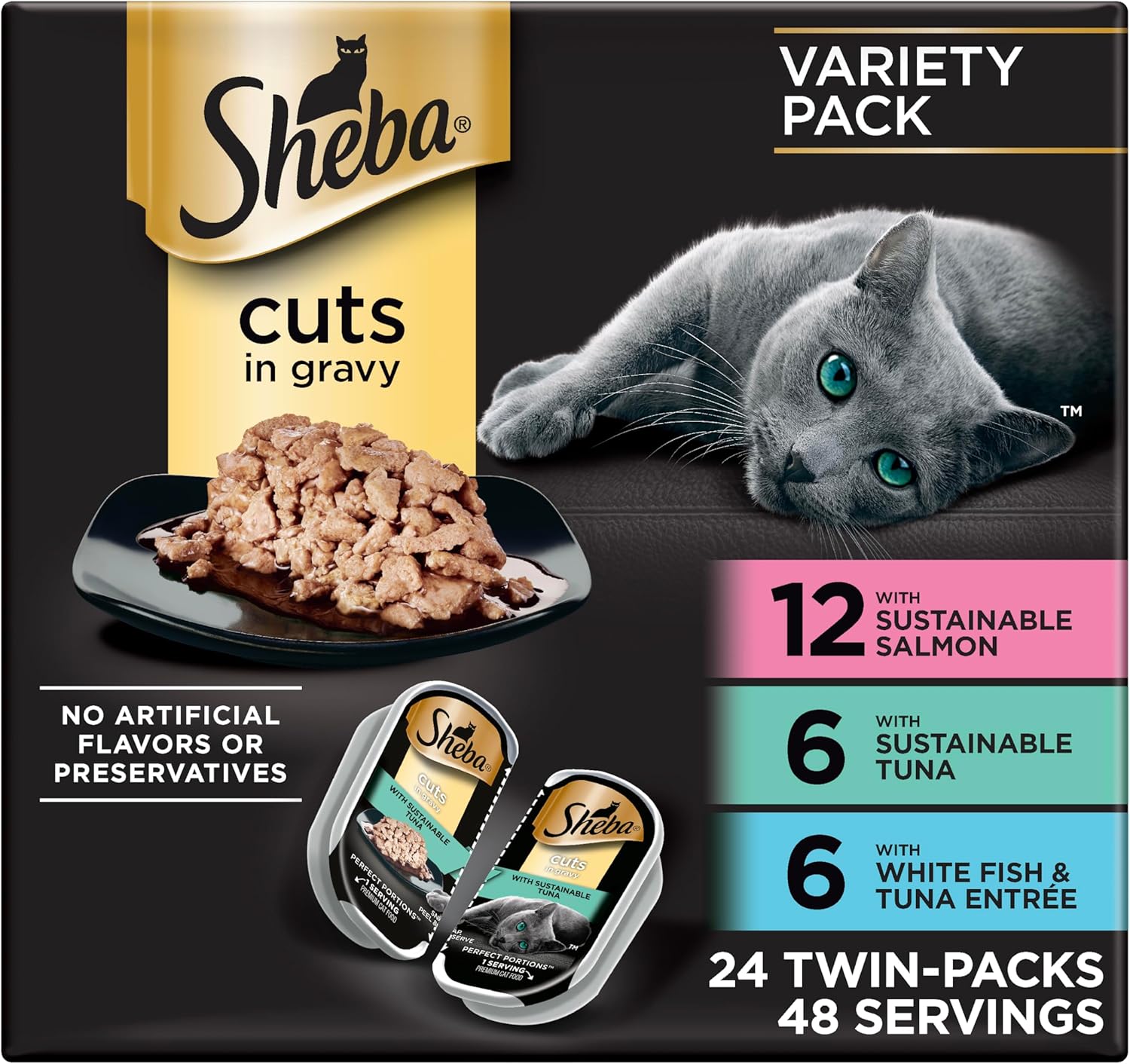
Sheba’s wet food includes Perfect Portions trays, Classics pates, Cuts in Gravy, and Meats with flakes or chunks. They use proteins like chicken, salmon, turkey, and beef. The textures vary from smooth pate to shredded cuts and mousse-style blends.
Packaging and use
Sheba’s portions are small and ready to serve. You can open a tray and offer one plate without storing leftovers. This is good if your cat doesn’t like to eat from bowls or if you want to avoid refrigeration after opening.
How Sheba compares with popular cat food brands
Sheba focuses on taste and texture variety, not clinical formulas. Compared to Wellness and Blue Buffalo, Sheba has simpler ingredients and more gravy. It’s not for special dietary needs, so don’t use it as a substitute.
Price and availability
You can find Sheba in grocery stores, big-box retailers, and online. It’s priced between mainstream and specialty wet foods. This makes it competitive with many popular brands but costs more per ounce than economy options.
Where Sheba sits in the premium cat food market
Sheba is in the premium, convenience-focused segment. It’s great for those who want variety-rich, palatable wet food in single-serve portions. If you’re looking for grain-free, limited-ingredient, or clinically tailored formulas, consider other brands.
Buyer profile and reputation
Buyers choose Sheba for its taste, texture variety, and ease of feeding. Reviews often highlight its palatability and packaging. Nutrition-conscious buyers might prefer brands with more whole-food ingredients or specialized formulations.
is sheba good cat food
Is Sheba cat food good for your cat? Look at the guaranteed analysis and ingredient order. Sheba wet trays have about 8–12% crude protein and 4–6% crude fat. They also have a lot of moisture, which helps with hydration.


Nutritional profile and ingredient highlights
Sheba labels start with named meats like chicken or salmon. They also have water for processing and broth or gravy. Most adult formulas are complete and balanced, meeting AAFCO adult maintenance profiles.
Protein sources and their quality in Sheba formulas
Sheba uses whole meats and sometimes meat meals as primary proteins. Some recipes include animal by-products. Whole meats and poultry meals are seen as higher quality, while by-products might be viewed as lower.
Use of fillers, additives, and preservatives
Wet foods like Sheba have fewer fillers than dry kibbles. Some recipes use rice or carrageenan as thickeners. Texture stabilizers and flavor enhancers like glycerin are found in a few formulas. Preservatives are mild, thanks to sealed packaging and refrigeration.
How these aspects affect different life stages and conditions
Kittens and pregnant cats need more protein and fat than Sheba adult trays provide. Seniors might find pate textures easier to chew. However, Sheba doesn’t offer specific nutrients for renal or metabolic diseases.
For cats with medical conditions, choose therapeutic diets from brands like Hill’s or Royal Canin. Cats with food sensitivities might do better with limited-ingredient or novel-protein formulas.
| Category | Typical Sheba Profile | Notes for Owners |
|---|---|---|
| Protein (as-fed) | ~8–12% | Good for maintenance; may seem low due to high moisture |
| Fat (as-fed) | ~4–6% | Sufficient for adult cats; kittens need higher fat |
| Moisture | ~75–82% | Helps hydration and urinary health when fed regularly |
| Primary ingredients | Named meats, water, broth/gravy | Look for whole meat first; some varieties include by-products |
| Fillers & thickeners | Rice, tapioca starch, carrageenan in some recipes | Less filler than many kibbles; check labels if grain-free is desired |
| Vitamins & taurine | Added to meet AAFCO adult profiles | Ensures baseline nutrient coverage for adult maintenance |
| Best use cases | Adult maintenance, hydration support | Not a replacement for kitten, gestation, or prescription diets |
When deciding if Sheba cat food is good for your pet, consider the ingredients and your cat’s life stage. If you want nutritious and quality cat food, compare recipes and seek veterinary advice for special needs.
Assessing Nutritional Value and Healthy Cat Food Options
Choosing the right food for your cat is important. Look for high-quality animal protein, healthy fats, and essential amino acids like taurine. These are key for your cat’s heart, eyes, and muscles.
Key nutrients to look for in nutritious cat food
Make sure the first ingredient is a named meat, like chicken or salmon. Healthy fats are also important for your cat’s skin and coat.
Check the food’s vitamin and mineral mix. Look for vitamins A, D, E, and B-complex, along with calcium, phosphorus, and potassium. Make sure the calcium-to-phosphorus ratio is right, especially for kittens.
Ensure taurine is included and that the food is labeled as AAFCO-complete. Cats don’t need as many carbs as dogs, so keep them low to moderate.
How Sheba measures up for essential vitamins, minerals, and taurine
Many Sheba wet recipes are labeled “complete and balanced” for adult cats. They include added vitamins, minerals, and taurine to meet AAFCO standards. This makes them a good choice among premium cat food options.
Ingredient lists can vary, so check the guaranteed analysis for micronutrient levels. Sheba is not for kittens or special diets, so talk to your vet if your cat has specific needs.
Comparing wet versus dry nutrition benefits for hydration and weight
Wet food adds moisture, which is good for your cat’s urinary health. It’s especially helpful for cats that don’t drink much water.
Wet food has fewer calories per volume than dry kibble, making it easier to control portions for weight management. Single-serve packs from brands like Sheba reduce waste but are pricier than dry food.
Dry kibble is often marketed for dental health, but the evidence is mixed. If your cat has dental issues, wet food is easier to chew. Consider cost, convenience, and your cat’s health needs when deciding between wet and dry food.
Real-World Cat Food Reviews and What Pet Owners Report
When you read cat food reviews, what stands out first is how pets react at mealtime. Many owners praise Sheba for its strong aroma and texture variety. Picky cats often accept it quickly, making feeding easier for busy households.
Positive feedback centers on palatability and convenience. Single-serve trays cut waste and help with portion control. Owners who worry about hydration note that wet Sheba formulas boost moisture intake. This can improve litter-box odor and urine concentration in some cats.
Variety matters to people who rotate diets to prevent boredom. You will find multiple flavors and textures that appeal to different tastes. These aspects often appear in positive cat food reviews alongside mentions of easy storage and ready-to-serve portions.
Common concerns tend to focus on digestion and long-term suitability. Some cats show vomiting or soft stool after a switch, especially when change is abrupt or a cat is sensitive to a specific protein. If your cat has chronic issues, you may find Sheba less ideal than a limited-ingredient or veterinary diet.
Nutrition-focused owners sometimes note ingredients such as by-products or carrageenan in select recipes. Cost is another factor. Wet feeding raises per-serving expense compared with many dry brands, which matters in multi-cat homes on a budget.
How to parse anecdotes
Anecdotal reports tell you about palatability and short-term tolerance. They do not replace label analysis or vet advice for long-term health. Look for patterns in reviews. Repeated reports of vomiting after a specific flavor suggest an ingredient link. Isolated reactions may reflect one cat’s sensitivity.
Use guaranteed analysis and ingredient lists to check claims. A product labeled complete and balanced under AAFCO standards is generally safe for adult maintenance. Still, your cat’s age, health, and allergies determine whether a brand meets your need for quality cat food.
When asking is sheba good cat food for your pet, combine owner feedback with nutrition facts and professional guidance. That balanced approach helps you make a choice that fits your cat’s life stage and health profile.
Choosing the Best Cat Food Brand for Your Cat: Practical Buying Tips
Finding the right cat food can be tough with so many brands like Purina, Hill’s, Royal Canin, and others. Start by setting clear goals. Look for balanced nutrition, match the food to your cat’s life stage, and consider any health issues. Learning to read labels helps you find the best cat food brands from the marketing noise.
How to evaluate ingredient lists and guaranteed analysis
Ingredients are listed by weight. For wet foods, water or broth is usually at the top. Look for named animal proteins like chicken, salmon, or turkey early in the list. Avoid by-products, carrageenan, artificial colors, and too many grains if you prefer cleaner recipes.
Check the guaranteed analysis for protein, fat, fiber, and moisture. Convert wet food numbers to dry-matter basis to compare protein and fat. Make sure the AAFCO statement says the recipe is “complete and balanced” for your cat’s life stage.
Transitioning your cat to a new food safely
Change foods slowly over 7–10 days. Start with 25% new food and 75% current food for two to three days. Then, move to 50/50, then 75/25, and finally, the new food alone. Watch for vomiting, diarrhea, reduced appetite, or lethargy and slow the transition if you see these signs.
For picky eaters, try warming the food slightly, offering different textures from the same brand, or a small splash of tuna water sparingly. Adjust portion sizes based on your cat’s age, weight, and activity to avoid excess weight gain while exploring healthy cat food options.
When to consult your veterinarian about diet changes
Before changing diets for cats with chronic conditions like kidney disease, diabetes, urinary issues, pancreatitis, or food allergies, consult your veterinarian. Persistent gastrointestinal symptoms that last beyond 48–72 hours after a diet change need veterinary attention.
If your cat shows significant weight loss or gain, poor coat condition, or recurring illness, schedule a dietary review. For elimination trials, prescription diets, or therapeutic nutrition, follow your veterinarian’s recommendations rather than guessing among the best cat food brands on the market.
| Decision Point | What to Check | Practical Tip |
|---|---|---|
| Protein source | Named meat or fish listed early on ingredient list | Prefer formulas with chicken, turkey, salmon, or tuna instead of vague “meat” or “by-products” |
| Guaranteed analysis | Crude protein, fat, fiber, moisture; convert wet food to dry-matter basis | Use a calculator or online tool to compare apples to apples across brands |
| Additives and fillers | Presence of carrageenan, artificial colors, excessive grains, or by-products | Choose formulas aligned with your preferences for natural ingredients and limited fillers |
| Life-stage suitability | AAFCO statement for kitten, adult, senior, or all life stages | Match food to your cat’s current life stage and revisit as they age |
| Switching process | Length of transition and monitoring for tolerance | Follow a 7–10 day ramp-up and slow down if gastrointestinal signs appear |
| Medical concerns | Chronic conditions, persistent GI issues, sudden weight or coat changes | Consult your veterinarian before making any significant diet change or choosing specialized diets |
| Brand research | Reputation, recalls, ingredient transparency | Compare reviews and labels to decide whether is sheba cat food good for your cat alongside other top picks |
Conclusion
Is Sheba good cat food? The answer is yes, it can be. Sheba provides tasty, single-serve wet trays that meet AAFCO adult maintenance standards. They also help with keeping your cat hydrated. For an adult cat without chronic conditions, Sheba is a good choice. It’s great for those who value taste and convenience.
However, there are some limits to consider. Sheba’s regular adult formulas aren’t for kittens or cats with special needs. Some ingredients, like thickeners or by-products, might not be what you’re looking for. If your cat has food sensitivities, kidney disease, or needs a diet for growth, you should look into specialized or prescription foods.
When trying Sheba, read the labels carefully. Watch your cat’s weight, coat, digestion, and appetite. Start with small amounts and balance it with their overall calorie and nutrient needs. This helps keep them at a healthy weight. If you’re looking for a food that meets specific health needs, talk to your vet before making any changes.
Use the tips and comparisons in this article to see if Sheba is right for your cat. If you prioritize taste, hydration, and easy-to-use wet food, Sheba could be a good choice. Just make sure it fits your cat’s life stage and health needs. And don’t hesitate to ask your vet for advice when needed.