5 Shocking Facts: Can Cats Eat Dog Food?
Ever thought about letting your Can Cats Eat Dog Food? It might seem like a good idea, but it’s not always safe. Feeding dog food to cats can lead to serious health issues.
Feeding cats dog food is not as simple as sharing meals. Cats need different nutrients than dogs. This makes dog food risky for their health in the long run.
To know if cats can eat dog food, we need to understand their nutritional needs. Each pet species has its own way of processing food and needs specific nutrients. Swapping these can harm their health.
Table of Contents
Table of Contents
Understanding the Key Differences Between Cat and Dog Nutritional Needs
Pet owners need to know the big differences in Can Cats Eat Dog Food. Cats and dogs have different ways of using food, which affects their health.
It’s important to understand the dietary needs of cats and dogs to keep them healthy. Cats need special food because they are meat-eaters. Dog food is not enough for them.
Essential Nutrients Unique to Cats
Cats need certain nutrients that dogs don’t:
- Taurine: An amino acid critical for heart and eye health
- Arachidonic acid: A fatty acid essential for feline metabolism
- Preformed Vitamin A: Cats cannot convert plant-based vitamin A like dogs can
Protein Requirements in Feline Diet
Protein is very important for cats. They need a lot of protein to stay strong and have energy. Their bodies use protein as their main energy source.
Metabolic Differences
Cats and dogs have big differences in how they use food. Dogs can eat different foods, but cats need specific nutrients. Their digestive system is made for eating meat, not like dogs.
Feeding a cat dog food can lead to serious nutritional deficiencies and long-term health problems.
Can Cats Have Dog Food: Safety and Health Concerns
Feeding your pets right is key. Is dog food toxic to cats? It’s not poisonous right away, but it can cause big health problems.
Cats need certain nutrients that dogs don’t. Their bodies are made to handle these nutrients in special ways. Eating dog food can lead to serious health issues for cats.
- Protein quality matters for cats
- Cats require specific amino acids not found in dog food
- Nutritional imbalances can cause long-term health problems
Vets say dog food can harm cats in many ways. This includes:
| Health Risk | Potential Consequences |
|---|---|
| Taurine Deficiency | Heart and vision problems |
| Protein Malnutrition | Muscle weakness and organ damage |
| Vitamin Imbalance | Compromised immune system |
“Cats are obligate carnivores with very specific nutritional needs that cannot be met by dog food.” – Dr. Sarah Thompson, Veterinary Nutritionist
If your cat eats dog food by mistake, watch them closely. Even if it doesn’t hurt right away, eating it often can cause big health problems.
Always choose food made just for cats to keep them healthy and happy.
The Critical Role of Taurine in Feline Nutrition
Taurine is a key amino acid for your cat’s health. Cats can’t make enough taurine themselves. So, it’s a must-have in their diet.
Cats need taurine for many important functions. Without enough, they face serious health issues. Knowing about taurine deficiency helps keep your cat healthy.
Recognizing Signs of Taurine Deficiency
Watch for these signs of taurine deficiency in cats:
- Weakened heart muscle (dilated cardiomyopathy)
- Vision problems and potential blindness
- Reproductive complications
- Compromised immune system
- Digestive issues
Why Dog Food Falls Short of Feline Taurine Needs
Dog food doesn’t have enough taurine for cats. Cats need more taurine because of their unique metabolism. Dog food’s protein sources don’t provide enough taurine for cats.
Long-term taurine deficiency can cause serious health problems. Vets say cats need special food for their nutritional needs.
Short-term vs. Long-term Effects of Feeding Dogs Food to Cats
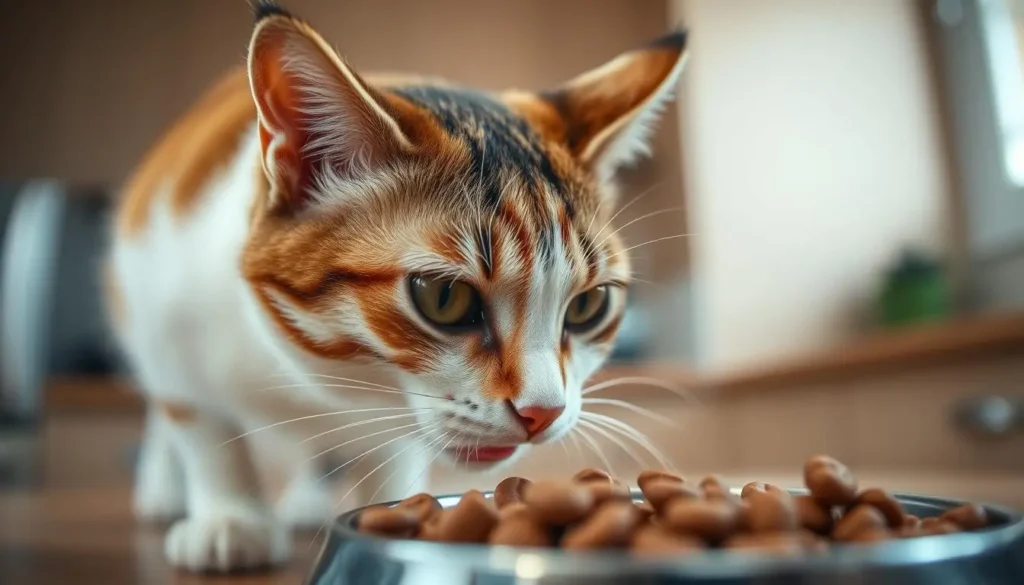
Feeding cats dog food can be risky. It might seem okay to give them dog food sometimes. But, the dangers are more serious than you might think.
Short-term effects of cats eating dog food include:
- Digestive discomfort
- Reduced energy levels
- Mild nutritional imbalances
- Temporary appetite changes
But, the long-term risks are much worse. Persistent consumption of dog food can lead to severe health complications for cats. Dog food lacks the nutrients cats need, which can harm their health.
Potential long-term health risks include:
- Protein malnutrition
- Vitamin deficiencies
- Weakened immune system
- Potential organ damage
- Chronic metabolic disorders
Vets say cats should only eat cat food. Cats need special nutrients that dog food doesn’t have. Even if your cat looks okay, eating dog food can still hurt their health over time.
“Prevention is always better than cure when it comes to your cat’s nutrition.” – Veterinary Nutrition Expert
Understanding Dog Food Ingredients and Their Impact on Cats
Pet owners need to know the big differences between dog and cat food. Cats have special needs that dogs don’t, so it’s key to watch out for nutritional risks.
Cats need a special diet because dog food is not enough for them. Dog food can cause health problems if it’s all a cat eats.
Key Ingredients to Avoid in Dog Food
- Low-quality protein sources
- Excessive grain content
- Insufficient taurine levels
- Vegetable-based proteins
Protein Quality Matters
Cats need high-quality animal proteins that are easy to digest. Dog food often has lower-quality proteins that cats can’t use well. The protein and amino acids in dog food are not what cats need.
Nutrient Ratio Challenges
The nutrient ratios in dog food can harm cats. Cats need more protein, specific amino acids like taurine, and different fats than dogs. Feeding cats dog food can lead to:
- Nutritional deficiencies
- Muscle loss
- Compromised immune function
- Potential organ damage
Always pick cat-specific food to keep your cat healthy and long-lived.
What to Do If Your Cat Accidentally Eats Dog Food
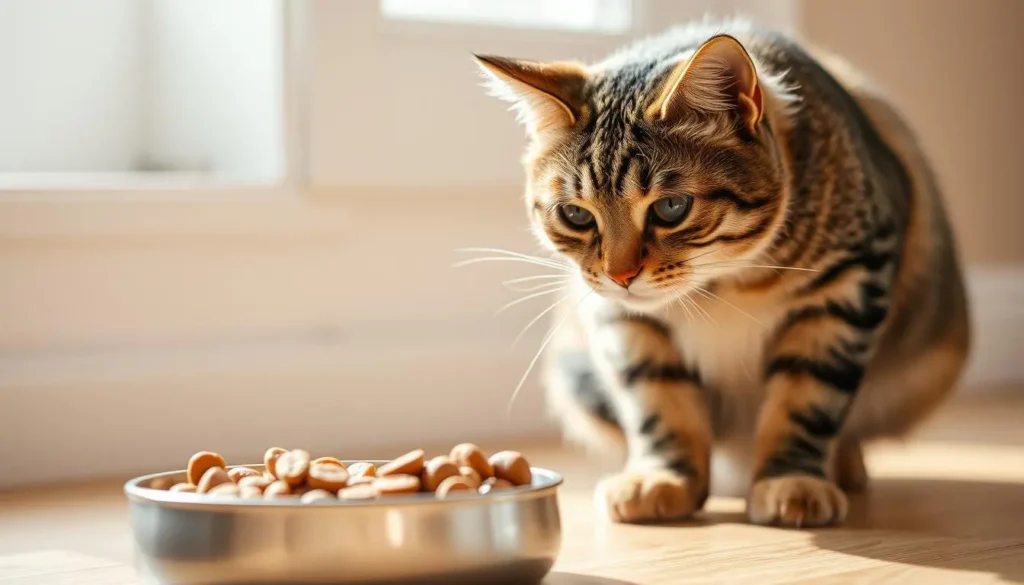
Discovering your cat has eaten dog food can be concerning. A small amount of dog food isn’t usually an emergency. But, you should still take steps to keep your cat safe and healthy.
First, carefully assess the situation. The amount of dog food eaten and your cat’s health matter. Look out for signs of digestive issues:
- Vomiting
- Diarrhea
- Lethargy
- Loss of appetite
If your cat ate only a little dog food, watch them for 24-48 hours. Cats can’t get all the nutrients they need from dog food. Dog food lacks taurine, which is key for cats.
When can cats eat dog food without risk? Never. Dog food doesn’t have what cats need. If your cat eats more than a few bites, call your vet.
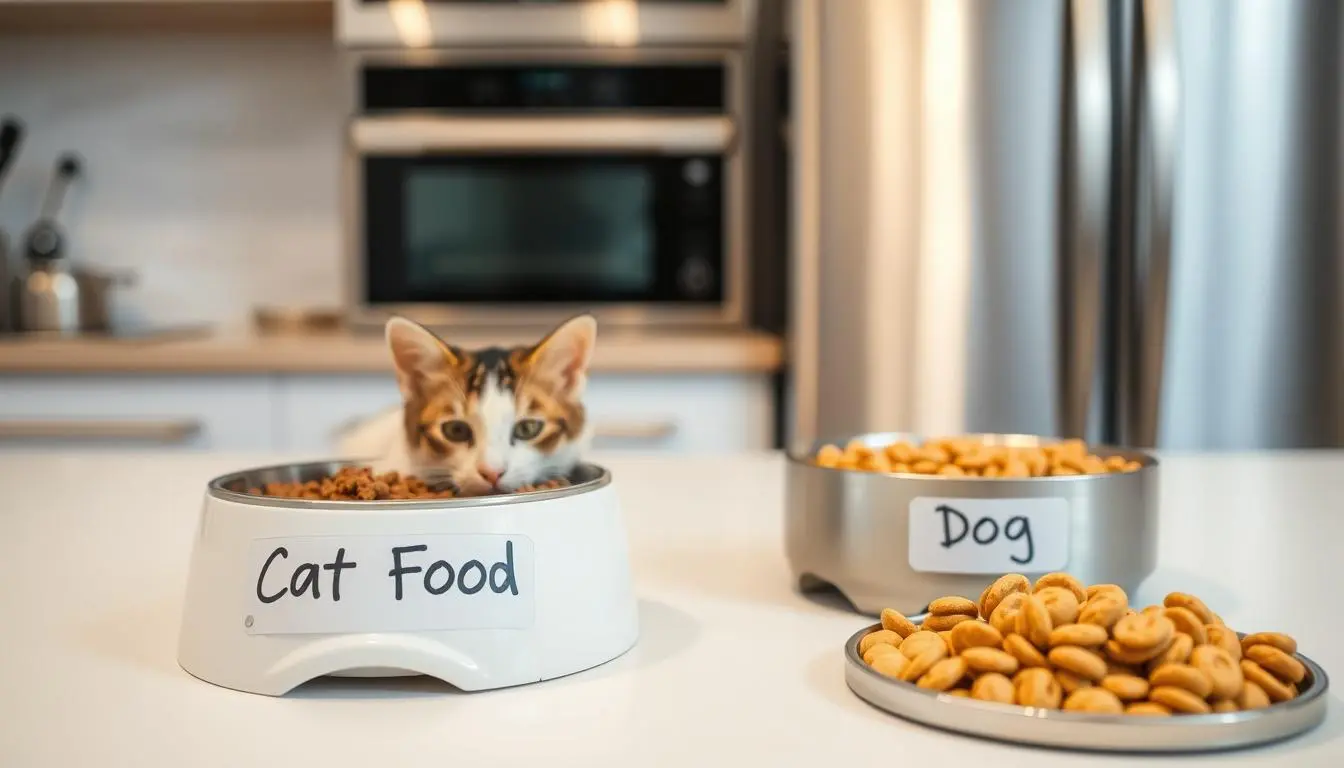
Pro tip: Prevent future incidents by keeping dog and cat food in separate, clearly marked containers.
Here’s what to do if your cat eats dog food:
- Remove any remaining dog food
- Provide fresh water
- Return to your cat’s regular diet
- Observe for any unusual symptoms
Remember, keeping your cat safe from dog food is key. Your vet can give the best advice for your cat’s needs.
Why Cats Might Be Attracted to Dog Food and Prevention Tips
It can be hard for pet owners with many animals to understand food differences. Cats often get curious about dog food, which can be risky. Dog food’s smell and texture might attract your cat, so it’s important to feed them right.
- Aromatic protein sources that smell enticing
- Different texture compared to cat food
- Curiosity about alternative food options
- Potential nutrient variations that seem appealing
Managing Multi-Pet Household Feeding
To avoid diet conflicts, you need a good plan. Successful strategies include making sure pets eat in their own spaces. This helps keep their food separate.
| Feeding Strategy | Effectiveness | Implementation Difficulty |
|---|---|---|
| Separate Feeding Areas | High | Easy |
| Timed Feeding Sessions | Medium | Moderate |
| Elevated Feeding Stations | High | Moderate |
Effective Food Separation Strategies
To keep your cat healthy, try these tips:
- Feed pets in different rooms
- Use pet gates to create feeding zones
- Supervise meal times
- Store pet foods in separate, secured containers
Remember, keeping pets apart is crucial for their health and to avoid diet problems.
Conclusion
It’s important to know the difference between cat and dog food for your cat’s health. Can cats safely eat dog food? The answer is no. Dog food can’t meet a cat’s special needs, leading to serious health issues.
Cats need food made just for them. This food has the right nutrients, like taurine and proteins, that dogs don’t need. Vets say it’s key to keep your cat healthy and avoid future problems.
Managing a home with many pets requires careful planning. Keep their food separate and use the right amounts. Always talk to your vet to make sure your cat gets the right food for a happy life.
Choosing the right food for your cat is crucial for their health. High-quality cat food is the best way to keep your cat happy and healthy for a long time.