Can Cats Drink Milk? The Safe Truth About Feline Dairy
Affiliate Disclosure: This article includes affiliate links. You buy through these links and support this site at no extra cost to you.
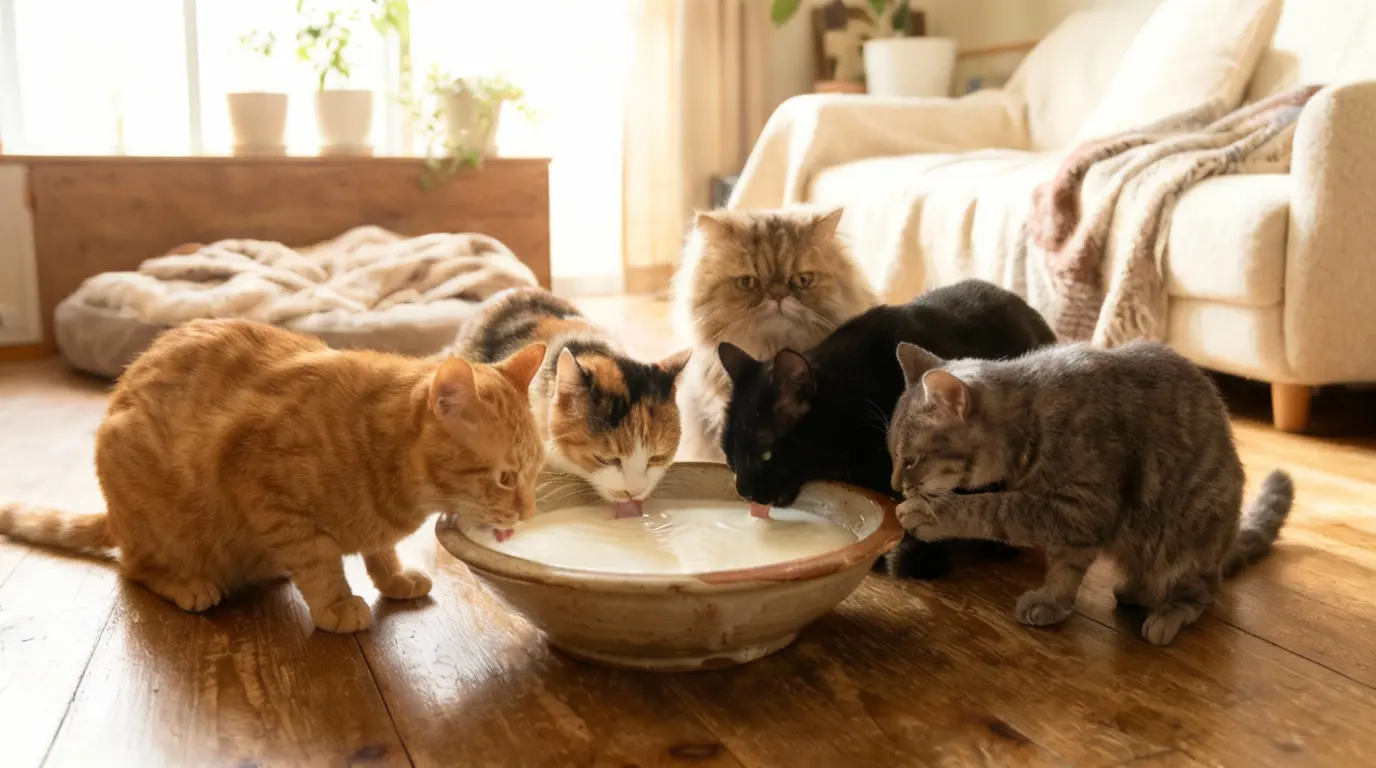
Picture this: You’re watching an old cartoon where a happy cat laps up a saucer of milk. It’s adorable, right? Fast forward to last Tuesday when I gave my rescue cat, Whiskers, a small bowl of milk as a “treat.” Within hours, she had diarrhea all over my new rug. Sound familiar?
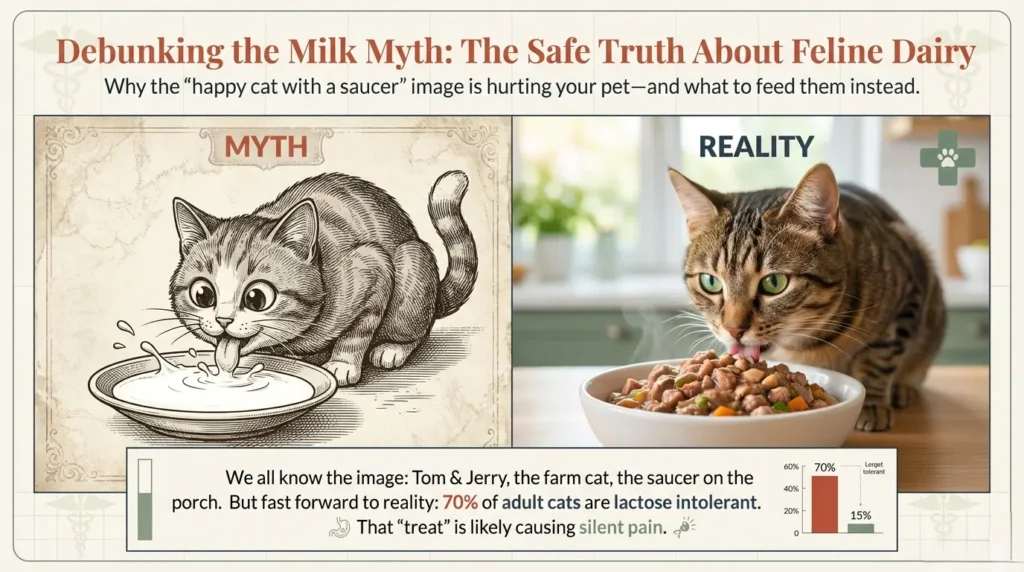
Here’s the reality check most cat owners need: approximately 70% of adult cats are lactose intolerant, yet the milk myth persists thanks to decades of media portrayal. That creamy white liquid you think is a harmless indulgence? It’s actually causing gas, vomiting, and digestive distress in most felines.
Whether your cat already Can Cats Drink Milk and you’re frantically Googling symptoms, or you’re a new kitten parent wondering what’s safe to feed, this guide cuts through the confusion. I’ll explain the science behind feline lactose intolerance, walk you through safe alternatives for every life stage, and give you a concrete action plan if your cat’s already showing symptoms.
What you’ll learn:
- Why cats crave milk but can’t digest it
- Life-stage feeding guidelines (kittens vs. adults)
- Safe milk alternatives comparison
- Emergency symptom checker
- Long-term hydration strategies
Let’s separate fact from fiction and keep your furry friend healthy.
Why the Cat Milk Myth Won’t Die
The Cartoon Culture Problem
Tom and Jerry. Sylvester the Cat. Garfield eyeing lasagna (which contains dairy). For over a century, pop culture has drilled one image into our brains: cats + milk = happiness. Even social media perpetuates this with viral videos of kittens lapping milk, racking up millions of views.
But here’s what those cartoons don’t show you: the aftermath. The upset stomach. The litter box disaster. The vet bills.
This stereotype originated in the 1800s when cats lived on farms and drank leftover cow’s milk. Back then, cats also had shorter lifespans and chronic digestive issues nobody connected to their diet. We’ve learned a lot since then, but the cultural image stuck.
Why Cats Actually Beg for Milk
If milk is bad for them, why does my cat go crazy for it? Simple: fat content and texture, not nutritional need.
Cats are obligate carnivores evolved to crave high-fat foods (think: prey animals). Milk’s creamy richness triggers the same satisfaction response as eating a fatty bird. It’s like how we crave potato chips even though they’re nutritionally empty—pure sensory appeal.
Your cat doesn’t know milk will make her sick any more than a toddler knows too much candy causes a stomachache. That’s where you come in.
Top 5 Milk Myths Exposed
- “Just a tiny bit won’t hurt” – Even small amounts can trigger symptoms in sensitive cats, and you’re teaching them to beg for more.
- “My cat drinks milk all the time and seems fine” – Cats hide discomfort instinctively. Chronic low-grade digestive issues often go unnoticed until they’re serious.
- “Lactose-free milk solves everything” – It removes one problem but milk still lacks feline nutrition and contains unnecessary sugars.
- “Cats need milk for calcium” – They get all necessary calcium from quality cat food. Milk is nutritionally redundant.
- “Kittens need cow milk if orphaned” – Cow milk protein/fat ratios are dangerously wrong for kittens. Kitten Milk Replacer (KMR) exists for this exact reason.
Now let’s look at what’s actually happening in your cat’s digestive system.
The Science: Why Most Cats Can’t Handle Dairy
How Lactose Intolerance Works in Cats
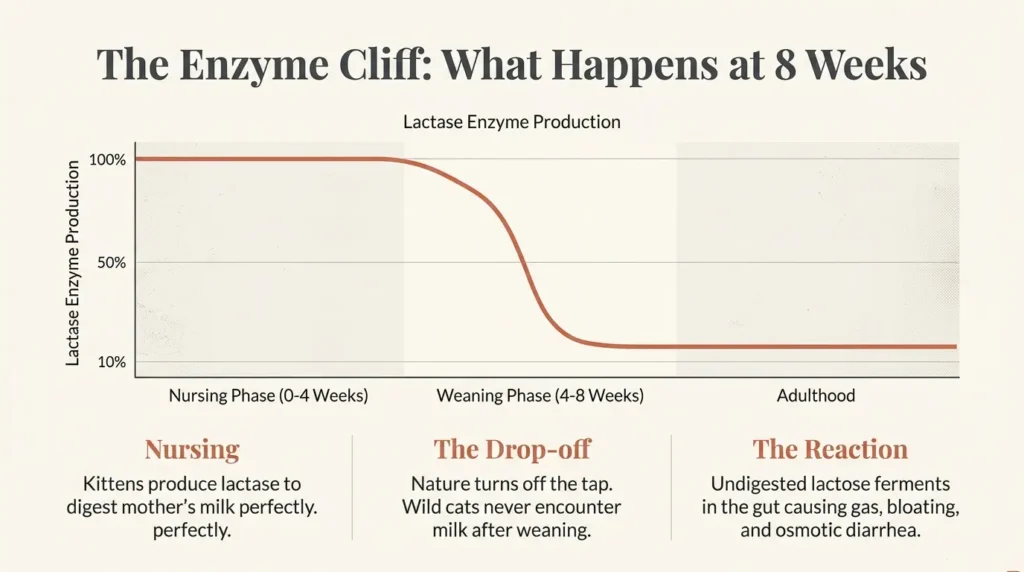
When kittens nurse, they produce an enzyme called lactase that breaks down lactose (milk sugar) in their mother’s milk. This is normal and healthy—for about 8 weeks.
Here’s where things change: around weaning time (4-8 weeks), cats naturally start producing less lactase. By adulthood, most cats retain only 10% of their kitten-level lactase production. This isn’t a deficiency or disease—it’s evolution. Wild cats never encounter milk after weaning, so their bodies stop making an enzyme they don’t need.
When lactose-intolerant cats drink milk, undigested lactose travels to their intestines where gut bacteria ferment it. This creates:
- Gas and bloating
- Osmotic diarrhea (water pulled into intestines)
- Cramping and discomfort
- In severe cases, vomiting and dehydration
Symptom Timeline: What to Expect
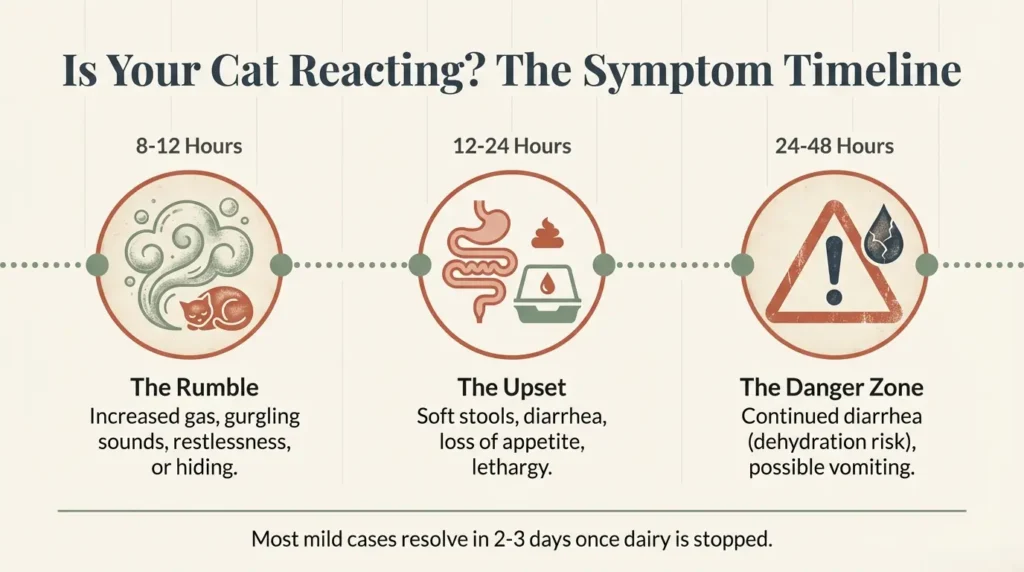
Within 8-12 hours:
- Increased gas (you might hear gurgling)
- Mild discomfort (restlessness, hiding)
12-24 hours:
- Soft stools or diarrhea
- Decreased appetite
- Lethargy
24-48 hours:
- Continued diarrhea (dehydration risk)
- Possible vomiting
- Weight loss if severe
Most mild cases resolve within 2-3 days once milk is stopped. However, repeated exposure can lead to chronic intestinal inflammation.
The Tolerance Spectrum: Why Some Cats Seem Fine
You’ve probably heard someone say, “My grandma’s barn cat lived to 20 drinking milk daily!” Here’s the truth: individual variation exists.
A small percentage of adult cats (estimated 10-30%) retain higher lactase production into adulthood. Additionally, gut microbiome composition affects how cats process dairy. Some cats harbor bacteria better equipped to handle lactose.
But even if your cat tolerates milk without obvious diarrhea, that doesn’t make it nutritionally beneficial. It’s empty calories that can contribute to obesity and may cause subtle digestive issues you’re not noticing. Plus, tolerance can change over time as cats age.
Risk Factors That Make It Worse
Certain cats are at higher risk for severe reactions:
- Kittens under 8 weeks given cow milk instead of KMR
- Senior cats with declining digestive function
- Cats with IBD or other GI conditions
- Breeds like Siamese or Oriental Shorthairs (higher reported intolerance rates, though research is limited)
Bottom line: the risk rarely justifies the “reward.”
Milk Safety by Life Stage: A Complete Guide
Adult Cats: Treat or Total No-Go?
My recommendation: Skip it entirely. Here’s why:
Even if your adult cat tolerates small amounts, you’re creating a behavioral expectation. Cats are creatures of habit—once they learn milk = reward, they’ll pester you constantly. And “small amounts” easily creep up over time.
If you absolutely must offer dairy occasionally (say, for medication hiding), limit it to:
- 1 teaspoon maximum per week
- Commercial cat milk products only (more on these below)
- Never on an empty stomach
- Monitor for 48 hours afterward
But honestly? There are better treats that actually support feline health. Save yourself the stress.
Kittens Under 8 Weeks: The Critical Window
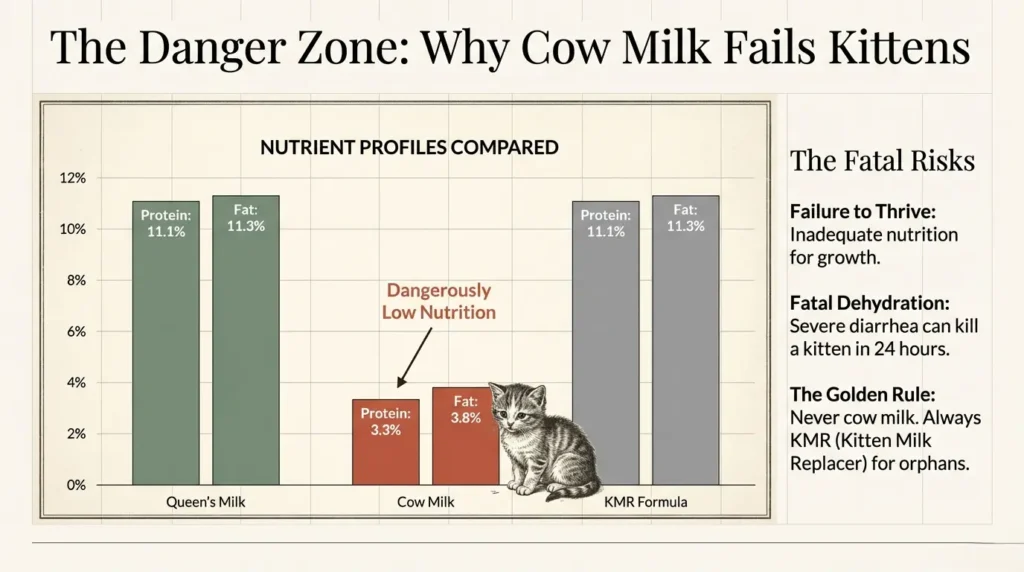
This is where things get serious. Never give cow milk to kittens.
Orphaned or rejected kittens require Kitten Milk Replacer (KMR)—specialized formula designed to match mother cat’s milk composition:
| Nutrient | Queen’s Milk | Cow Milk | KMR |
|---|---|---|---|
| Protein | 11.1% | 3.3% | 10.5% |
| Fat | 11.3% | 3.8% | 8.5% |
| Lactose | 3.4% | 4.7% | 3.5% |
Notice cow milk’s dangerously low protein/fat and high lactose? Feeding it to kittens can cause:
- Failure to thrive (inadequate nutrition for growth)
- Aspiration pneumonia (if they inhale during improper bottle feeding)
- Severe diarrhea leading to fatal dehydration in 24-48 hours
- Developmental delays
Emergency kitten feeding: If you find abandoned kittens and can’t get KMR immediately:
- Keep them warm (90-95°F for newborns)
- Call a vet or rescue for emergency formula recipe
- Get KMR within 24 hours maximum
- Feed every 2-3 hours around the clock (yes, through the night)
Recommended KMR brands: PetAg KMR, Hartz, or Royal Canin Baby Cat Milk. Always follow mixing instructions precisely.
Weaning Phase (4-8 Weeks): The Transition
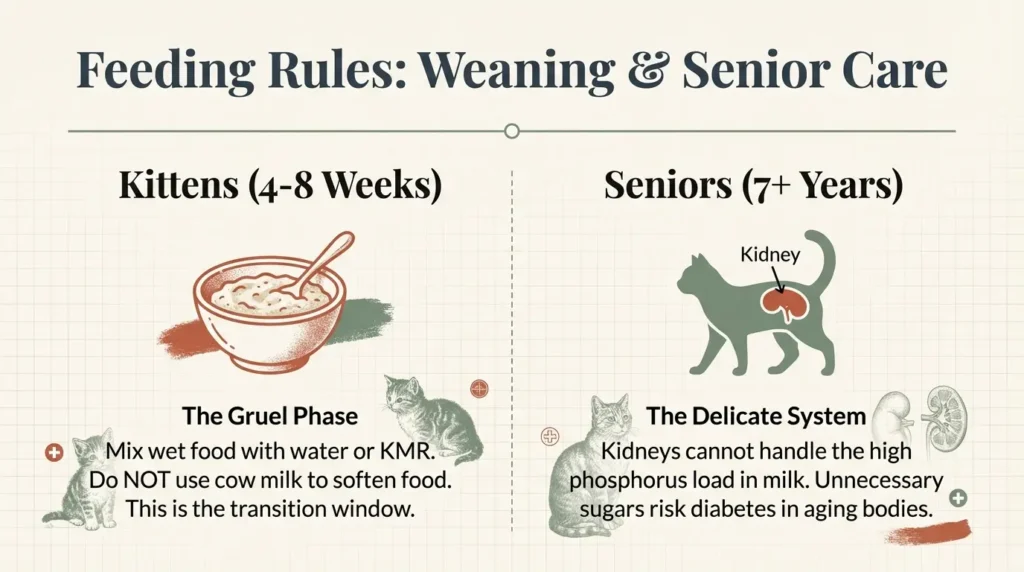
This gradual shift from milk to solid food is crucial. Here’s the timeline:
Week 4: Introduce wet kitten food mixed with KMR into a gruel Week 5-6: Reduce KMR ratio; offer water in shallow bowls Week 7-8: Primarily solid food; KMR only as supplement if needed Week 8+: Fully weaned to kitten food and water
Common mistakes:
- Rushing the process (causes digestive upset)
- Using cow milk to soften food (unnecessary—use water or KMR)
- Not providing fresh water alongside solid food
Senior and Special-Needs Cats: Extra Caution
Aging cats develop:
- Reduced digestive enzyme production (including lactase)
- Kidney disease (milk’s phosphorus content is problematic)
- Diabetes risk (milk’s sugars are dangerous)
If your senior cat has been drinking milk for years without issue, gradually phase it out to avoid upsetting their routine. Replace it with low-sodium bone broth or just ensure excellent hydration through other means.
For cats with diagnosed conditions (IBD, pancreatitis, kidney disease, diabetes), milk is absolutely off the table. Discuss any treats with your vet first.
Safe Alternatives: Complete Comparison Guide
Let’s talk about what you can give your cat when they’re giving you those pleading eyes.
Commercial Cat Milk Products
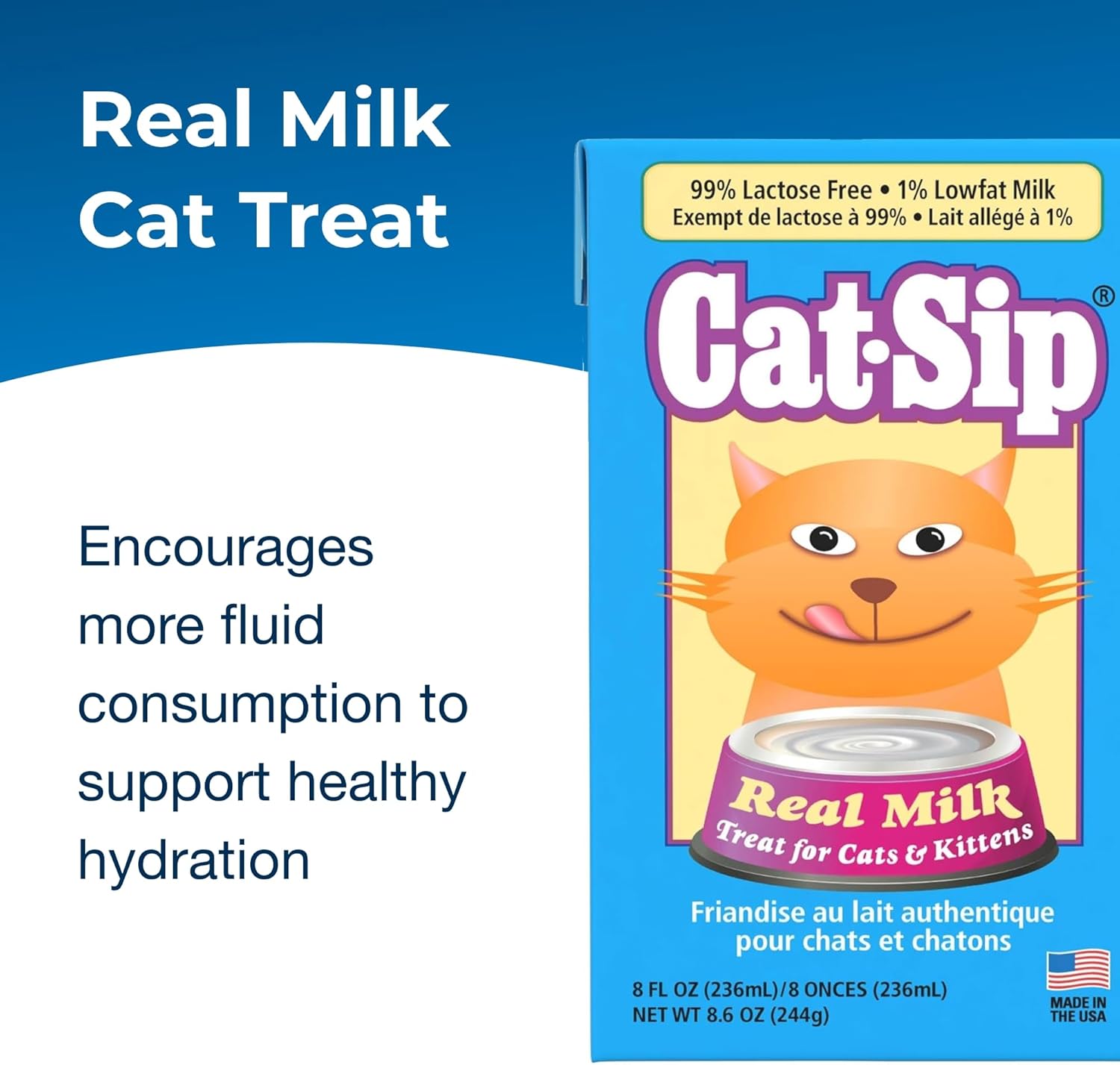
Examples: Whiskas Cat Milk, CatSip, Catsure

Pros:
- Lactose-reduced (typically 0.2% vs. cow milk’s 4.7%)
- Formulated for feline digestion
- Convenient single-serve portions
Cons:
- Still contains dairy proteins some cats react to
- Added sugars/taurine (unnecessary if eating quality food)
- Expensive ($1-2 per serving)
- Creates begging behavior
My take: Better than cow milk, but still an unnecessary indulgence. If you use these, limit to once weekly and watch for any digestive changes.
Kitten Milk Replacers (KMR)

When to use: Orphaned kittens, rejected kittens, supplementing underweight nursing kittens
Top brands and features:
- PetAg KMR: Industry standard, powder or liquid
- Royal Canin Baby Cat Milk: Closest to queen’s milk composition
- Hartz Powdered Milk Replacer: Budget option
Feeding guidelines:
- Follow package directions exactly (ratio matters!)
- Feed warmed to 95-100°F
- Newborns: every 2-3 hours (8-10 feedings daily)
- 2-4 weeks: every 4-6 hours
- Gradual weaning at 4 weeks
Critical safety:
- Never microwave (creates hot spots)
- Discard unused formula after 1 hour at room temp
- Sterilize bottles between feedings
- Burp kittens mid-feeding to prevent aspiration
Broth-Based Hydration Boosters
This is my favorite alternative because it’s actually beneficial.
DIY Low-Sodium Broth:
- Boil chicken/turkey bones (remove all cooked bones before serving!)
- No onions, garlic, or salt
- Skim fat from surface
- Freeze in ice cube trays
- Offer 1-2 tablespoons daily
Commercial options:
- Tuna water from unsalted tuna
- Bonito flakes steeped in water
- Cat-specific broths (check sodium content)
Benefits:
- Increases water intake (critical for kidney health)
- Adds natural flavor to dry food
- Provides some amino acids
- Zero lactose concerns
Plant-Based Milks: The Verdict
Almond milk: NO—contains additives and potential toxins Oat milk: NO—high in carbs, no nutritional value for cats Soy milk: NO—phytoestrogens may affect hormones Coconut milk: MAYBE in tiny amounts, but why bother?
The problem with all plant milks: they’re designed for humans, not obligate carnivores. Even “safe” versions offer zero feline nutrition and risk GI upset from thickeners, sweeteners, and oils.
The Ultimate Alternatives Comparison
| Alternative | Adult Cats | Kittens | Lactose | Nutritional Value | Cost | Recommendation |
|---|---|---|---|---|---|---|
| Cow Milk | ❌ | ❌ | High | None | $ | Never |
| Commercial Cat Milk | ⚠️ Occasional | ⚠️ Limited | Low | Minimal | $$$ | Rare treat only |
| KMR | Unnecessary | ✅ Essential | Low | Complete (babies) | $$ | Orphans/nursing |
| Low-Sodium Broth | ✅ | ✅ 6wks+ | None | Amino acids | $ | Best choice |
| Plant Milks | ❌ | ❌ | None | None | $$ | Skip it |
| Fresh Water | ✅ | ✅ | None | Essential | Free | Always available |
Emergency Guide: Your Cat Drank Milk—Now What?
Hour-by-Hour Monitoring Checklist
First 2 Hours:
- Remove all remaining milk
- Provide fresh water
- Monitor behavior (hiding, lethargy, pacing)
- Note exact amount consumed if known
Hours 2-8:
- Check litter box for changes
- Watch for vomiting or drooling
- Offer small amount of regular food (wet preferred)
Hours 8-24:
- Mild diarrhea = Continue monitoring, ensure hydration
- Vomiting once = Withhold food 4-6 hours, water only
- Multiple vomits or bloody diarrhea = Call vet immediately
24-48 Hours:
- Diarrhea should be improving
- Appetite returning
- Energy level normalizing
Home Remedies for Mild Upset
Do’s:
- Offer plain boiled chicken (no skin/bones) in small amounts
- Provide fresh water constantly—refresh every few hours
- Add tablespoon of plain pumpkin (NOT pie filling) to food for fiber
- Keep litter box extra clean to monitor output
- Give probiotics designed for cats (FortiFlora, Proviable)
Don’ts:
- Give human anti-diarrheal medication (dangerous!)
- Withhold water (dehydration is the real danger)
- Overfeed to “make up” for skipped meals
- Give more dairy “to get it out of their system”
Red Flags: When to Call the Vet
Call within 12 hours if:
- Vomiting more than twice
- Bloody or black stools
- Severe abdominal pain (yowling, hunched posture)
- Kitten under 6 months with any diarrhea
- Senior cat or cat with existing health issues
Emergency (go to ER vet) if:
- Not urinating for 12+ hours
- Lethargic and unresponsive
- Pale gums
- Seizures
- Bloated, hard abdomen
Prevention for Repeat Offenders
Had this happen before? Here’s how to break the cycle:
- Secure all dairy products—cats can open fridges!
- Educate household members, especially kids and visiting relatives
- Redirect begging with approved treats or play
- Check ingredient lists on human foods (many contain milk powder)
- Create a “safe treat” list posted on your fridge
One client told me her dad kept sneaking milk to their cat. Solution? I sent him photos of cat diarrhea with the caption “This is what love looks like when you give cats milk.” He stopped immediately.
Beyond Milk: The Full Dairy Danger Zone
Goat Milk and Yogurt: Are They Better?
Goat Milk: Slightly lower lactose than cow milk (4.1% vs. 4.7%), but still problematic. Marketing claims about “easier digestion” target humans, not cats. Verdict: Skip it.
Yogurt and Kefir: Fermentation reduces lactose somewhat, and probiotics theoretically help digestion. However:
- Still contains dairy proteins that can trigger reactions
- Added sugars/flavors in commercial versions are toxic (xylitol, chocolate)
- Portion control is difficult—cats love the taste
If you must experiment:
- Plain, unsweetened yogurt only
- 1/4 teaspoon maximum
- Watch for 48 hours
- Not worth the risk for most cats
Cheese, Cream, and Ice Cream Ranked by Risk
Lowest Risk (still not recommended):
- Hard aged cheeses (cheddar, parmesan) = lower lactose
- Tiny amounts (pea-sized) as pill pocket only
Moderate Risk:
- Soft cheeses (mozzarella, cream cheese)
- Butter (high fat can cause pancreatitis)
High Risk:
- Ice cream (sugar, lactose, chocolate varieties are toxic)
- Whipped cream (lactose + too much fat)
- Cheese sauces (additives, salt, garlic/onion powder)
Complete Dairy Do’s and Don’ts
| Food | Safe? | Why/Why Not |
|---|---|---|
| Cow Milk | ❌ | High lactose, no nutrition |
| Goat Milk | ❌ | Still high lactose |
| Lactose-Free Milk | ⚠️ | Solves lactose but not ideal |
| Plain Yogurt | ⚠️ | Tiny amounts only, watch closely |
| Hard Cheese | ⚠️ | Lower lactose, use as medicine pocket |
| Soft Cheese | ❌ | Higher lactose and fat |
| Butter | ❌ | Pancreatitis risk |
| Ice Cream | ❌ | Sugar, potential toxins |
| Whipped Cream | ❌ | High fat, lactose |
| Sour Cream | ❌ | High fat, lactose |
Bottom line: The only dairy-related product worth considering is small amounts of hard cheese to hide medication. Everything else? Just say no.
Long-Term Hydration and Nutrition Mastery
Since we’ve established milk isn’t the answer, let’s talk about what actually keeps cats healthy long-term.
Boosting Water Intake the Right Way
Cats evolved as desert animals and have a naturally low thirst drive. This makes them prone to dehydration and kidney disease. Here’s how to fix it:
Cat Water Fountains:
- Running water is more appealing (mimics fresh streams)
- Studies show 20-30% increase in water consumption
- Change filters weekly; clean thoroughly monthly
- Recommended: Catit Flower Fountain, PetSafe Drinkwell
Strategic Bowl Placement:
- Multiple locations (cats won’t walk far)
- Away from litter boxes (cats won’t drink near “bathroom”)
- Wide, shallow bowls (whisker stress is real)
- Ceramic or stainless steel > plastic (no bacteria harboring)
Flavor Hacks:
- Add ice cube of low-sodium broth to water bowl
- Tuna water (1 tsp per cup water)
- Freeze broth into ice cubes—cats lick them
- Cat grass watered with broth creates flavored dew on leaves
Wet Food as the Ultimate Milk Replacement
This is the secret weapon most cat owners underutilize.
Why wet food matters:
- 70-80% moisture vs. dry food’s 10%
- Meets hydration needs + delivers complete nutrition
- Mimics natural prey moisture content
- Reduces kidney disease risk by up to 30%
Transitioning tips:
- Mix 25% wet with dry for week one
- Increase to 50/50 week two
- 75% wet week three
- 100% wet (or maintain preferred ratio)
Picky cat solutions:
- Warm food to body temperature (releases aroma)
- Try different proteins (chicken, fish, rabbit)
- Texture matters—pate vs. shreds vs. gravy
- Hand-feed first few bites to create positive association
Gut Health Pro Tips
Since we’ve potentially disrupted your cat’s digestive system by even discussing milk, let’s optimize it:
Probiotic Support:
- Daily probiotics after milk incidents
- FortiFlora or Proviable DC recommended
- Look for Enterococcus faecium and Bifidobacterium strains
- Mix into wet food
Digestive Enzyme Supplements:
- For cats with chronic GI issues
- Helps break down proteins and fats
- VetriScience Vetri Mega Probiotic
High-Protein, Low-Carb Diet:
- Cats need 26% minimum protein (aim for 40%+)
- Limit carbs to <10% (many dry foods are 40-50%!)
- Check guaranteed analysis on labels
- Grain-free isn’t necessary; quality protein is
Regular Feeding Schedule:
- 2-3 meals daily (mimics natural hunting)
- Consistent times (cats love routine)
- Portion control to prevent obesity
- Avoid free-feeding (causes overeating)
Interactive Tool: Milk Incident Calculator
🐱 Cat Milk Incident Risk Calculator
Frequently Asked Questions
Can cats drink a little milk as a treat?
While a teaspoon of commercial cat milk (lactose-reduced) once a week is unlikely to cause severe problems in most adult cats, it’s still not nutritionally beneficial and creates begging behavior. Most vets recommend skipping dairy treats entirely in favor of protein-based options like freeze-dried chicken or salmon. The risk of digestive upset, even with small amounts, outweighs any perceived benefit.
What milk is safe for kittens?
Only Kitten Milk Replacer (KMR) is safe for kittens under 8 weeks old. Brands like PetAg KMR, Royal Canin Baby Cat Milk, and Hartz are formulated to match mother cat’s milk composition with correct protein, fat, and lactose levels. Cow milk, goat milk, and plant-based milks are all dangerous for kittens and can cause failure to thrive, severe diarrhea, and even death. Once kittens are weaned (8+ weeks), they should only drink fresh water.
My cat drank milk and now has diarrhea—what should I do?
Remove all milk access immediately and provide fresh water constantly. For mild diarrhea (1-2 soft stools), monitor closely for 24-48 hours while offering small amounts of plain boiled chicken and adding a tablespoon of pure pumpkin (not pie filling) to meals. Call your vet if: diarrhea lasts more than 48 hours, you see blood in stool, your cat vomits more than once, stops eating, or becomes lethargic. Kittens and senior cats require immediate veterinary attention as they dehydrate much faster.
Is lactose-free milk okay for cats?
Lactose-free milk removes the primary problem (lactose) but still isn’t ideal for cats. It contains dairy proteins that some cats react to, unnecessary sugars, and provides no feline nutritional value. Additionally, it still teaches begging behavior. If you want to offer a liquid treat, stick with low-sodium bone broth or commercial cat milk products specifically formulated for felines. Fresh water should always be their primary drink.
Can cats have almond milk or other plant-based milks?
No. Almond milk, oat milk, soy milk, and coconut milk all contain ingredients that range from unnecessary to potentially harmful for cats. Almond milk may contain additives and compounds problematic for feline digestion. Oat milk is high in carbs cats can’t process. Soy contains phytoestrogens that may affect hormones. These products are designed for human consumption and offer zero nutritional value to obligate carnivores. Stick with water or cat-specific broths.
How much cat milk can I give per day?
If using commercial cat milk products (Whiskas, CatSip), limit to once or twice per week maximum, with serving sizes of 1-2 tablespoons per occasion. These should never replace water or constitute more than 10% of daily caloric intake. Daily feeding creates dependency and can lead to obesity since these products often contain added sugars. Remember: cat milk is a treat, not a nutritional requirement. Most cats thrive perfectly on quality cat food and fresh water alone.
What are the best kitten milk replacer brands?
Top veterinarian-recommended brands include: PetAg KMR (industry standard, available in powder and liquid), Royal Canin Baby Cat Milk (closest to natural queen’s milk composition), and Hartz Powdered Milk Replacer (budget-friendly option). Always choose products specifically labeled for kittens, follow mixing instructions precisely, and warm to 95-100°F before feeding. Never use human baby formula or cow milk as substitutes—the protein and fat ratios are dangerously incorrect for feline development.
Key Takeaways: Your Milk-Free Action Plan
Let’s wrap this up with the essential facts you need to remember:
The Bottom Line:
- 70% of cats are lactose intolerant—that cartoon image is a lie
- Cow milk causes gas, diarrhea, vomiting, and dehydration in most felines
- Kittens require KMR only; cow milk can be fatal
- No dairy is nutritionally necessary for cats at any age
- Better alternatives exist: water, wet food, low-sodium broth
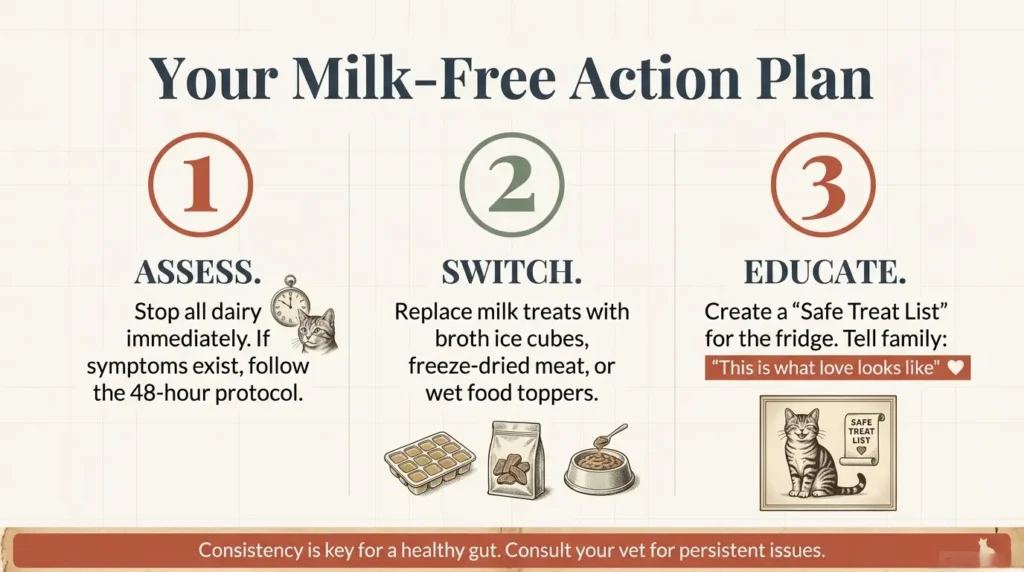
Your 3-Step Action Plan:
- Assess your situation today:
- Already gave milk? Use the calculator above and monitor for 48 hours
- Have a kitten? Verify you’re using proper KMR if needed
- Senior cat? Ensure water intake is adequate through fountains/wet food
- Implement one change this week:
- Replace any dairy treats with freeze-dried meat treats
- Add a cat water fountain or broth ice cubes
- Transition to higher wet food ratio (even adding 25% helps)
- Educate your household:
- Print this article for family members who “just want to spoil the cat”
- Create a “safe treat list” posted on your fridge
- Set up automatic feeder if kids are sneaking dairy
Share Your Story: Have you dealt with the milk myth in your household? I’d love to hear your experience in the comments below—your story might save another cat owner from a stressful situation.
Next Steps: Build a Lifetime of Cat Health
You’ve now got the knowledge to make informed decisions about dairy and your cat. But nutrition doesn’t stop here.
Continue your learning:
- Best Wet Cat Foods 2026: Our comprehensive review of top brands for every life stage
- petmd.com : Can Cats Drink Milk?
- Can Cats Drink Lactose-Free Milk? Finally, Some Good News!
- Can Cats Drink Regular Milk? 8 Safety Tips for Your Cat
- Can Cats Drink Milk? The Safe Truth About Feline Dairy
- Can Cats Drink Almond Milk? 11 Safety Facts Owners Need
- 3 Best Emergency Kitten Milk Recipes Guaranteed to Work
Get expert guidance delivered: Join our free weekly newsletter for evidence-based cat care tips, myth-busting articles like this one, and exclusive discounts on vet-approved products. No spam, just practical advice from people who actually understand feline health.
Take action now: Your cat depends on you to filter out dangerous myths from legitimate care. By rejecting the outdated milk stereotype and choosing science-backed alternatives, you’re adding years of healthy, comfortable life to your feline companion.
Remember: love your cat enough to say no to that saucer of milk, even when those big eyes are begging. Real love means keeping them healthy, not indulging every craving.