5 Critical Signs Your Cat Not Eating or Drinking
Have you noticed your cat avoiding the bowl and wondered if a skipped meal is harmless or a sign of something serious?
When your cat not eating or drinking, it can feel confusing and frightening. Appetite and hydration are vital. Cats that stop eating risk hepatic lipidosis (fatty liver). Dehydration can worsen illness quickly — sometimes within 24–72 hours.
The reasons for cat not eating range from mild causes like a food change or temporary stomach upset to urgent problems such as kidney disease, diabetes, infection, dental pain, or toxin exposure. Feline appetite issues affect cats of all ages and breeds, so timely assessment matters.
This article answers what to watch for, how to check your cat at home, practical steps to encourage eating and drinking, and when to seek veterinary care. If you’re in the United States, remember you can contact your regular veterinarian, an emergency clinic, or a pet advice line for immediate guidance.
The format is a clear Q&A and written in the second person so you can apply the advice to your cat right now.
Key Takeaways
- Loss of appetite or thirst can be a medical emergency for cats and needs fast attention.
- Causes vary from simple food preferences to serious illnesses like kidney disease or toxin exposure.
- Early action helps prevent complications such as hepatic lipidosis and severe dehydration.
- Use the article to learn home assessment steps and practical ways to encourage eating and drinking.
- When in doubt, contact your veterinarian or an emergency clinic in the U.S. for prompt advice.
Understanding why your cat is not eating or drinking: common causes
When your cat suddenly stops eating or drinking, you need to know why. Feline appetite issues can come from health problems, mouth pain, or changes at home. Look for physical signs, recent events, and how long they’ve lasted.
Illnesses that commonly reduce appetite and thirst
Kidney disease can make your cat feel sick and not want to eat. Look for changes in urination, weight loss, and low energy. Upper respiratory infections like feline herpesvirus and calicivirus can dull taste and smell.
Sneezing, nasal discharge, and eye discharge make food less appealing. Gastrointestinal problems like inflammatory bowel disease and pancreatitis can cause vomiting and belly pain. Systemic infections, cancer, and metabolic disorders like diabetes can also affect appetite and thirst.
Toxic exposures, such as antifreeze or certain human medications, can cause sudden refusal to eat or drink. These need urgent attention.
Dental and mouth problems affecting eating and drinking
Dental disease can be painful. It can cause chewing problems, drooling, or bad breath. Cats may only eat soft food or paw at their mouth.
Some cats will still drink but avoid solids. Others may not eat or drink at all if the pain is severe.
Stress, environment changes, and behavioral causes
Stress can lead to a loss of appetite. New pets, moving, visitors, or changes in feeding routines can cause this. Multi-cat households may see food guarding or hiding to eat.
Recent surgery, vaccinations, or medications can also reduce appetite for a short time.
| Cause | Common Signs | Typical Action |
|---|---|---|
| Kidney disease | Weight loss, lethargy, changes in urination, nausea | Vet bloodwork, urine test, fluid therapy if needed |
| Upper respiratory infection | Sneezing, runny eyes/nose, reduced smell and taste | Warm, strong-smelling wet food; vet exam, supportive care |
| Gastrointestinal disease | Vomiting, abdominal pain, anorexia | Diagnostic imaging, bloodwork, targeted treatment |
| Dental disease | Drooling, halitosis, pawing at mouth, soft-food preference | Oral exam, dental cleaning, extractions or pain relief |
| Stress/behavioral | Avoids food, hides, changes in grooming or litter use | Environmental enrichment, routine restoration, pheromones |
| Toxin exposure | Sudden refusal, vomiting, tremors, collapse | Immediate vet or emergency clinic, decontamination |
Many cases involve more than one factor. A cat with dental pain may also feel stressed and stop eating. Consider all possible causes when trying to understand why your cat is not eating or drinking. Keep notes on appetite, behavior, and any new signs to share with your vet.
cat not eating or drinking
If your cat is not eating or drinking, act fast but stay calm. Loss of appetite or thirst can be mild or very serious. Learn to read the signs and know when to get help. You can also do simple checks at home to see how urgent it is.
When to be immediately concerned about refusal to eat or drink
Get emergency care if your cat collapses, has seizures, or shows hard breathing. Also, if they are in severe pain, act fast. Signs like repeated vomiting, diarrhea, pale gums, or extreme tiredness are urgent.
If an adult cat won’t eat for 24–48 hours or drink for 24 hours, call your vet. Kittens, seniors, and pets with certain diseases need help sooner.
Recognizing cat dehydration signs and severity
Check for dehydration at home. Lift the skin on their shoulder blades; it should snap back fast in a hydrated cat. Sticky or dry gums, less urine, and less litter box use mean mild dehydration.
Moderate dehydration shows as dry gums, a slow skin return, sunken eyes, and slow behavior. Severe dehydration has cold limbs, a weak pulse, collapse, and shock. Your vet needs to give IV fluids for severe cases.
How long can a cat safely go without food or water
Cats can show dangerous dehydration in 24–72 hours. Sick or young cats can get very sick fast. Don’t wait for dehydration to get help.
Healthy adult cats might survive days without food. But, going 48–72 hours without food can harm their liver, especially in overweight cats. Kittens and sick cats are at greater risk.
Knowing these times helps you know when to call your vet. They can guide you on how to help your cat eat and drink safely. They can suggest appetite stimulants, fluid therapy, or short-term feeding.
How to assess your cat at home: symptoms to track and record
Begin by calmly checking your cat every day. Small, regular checks give the best view of changes. Use a simple routine to spot early changes in eating, drinking, and behavior.
Daily monitoring: appetite, water intake, litter box, activity
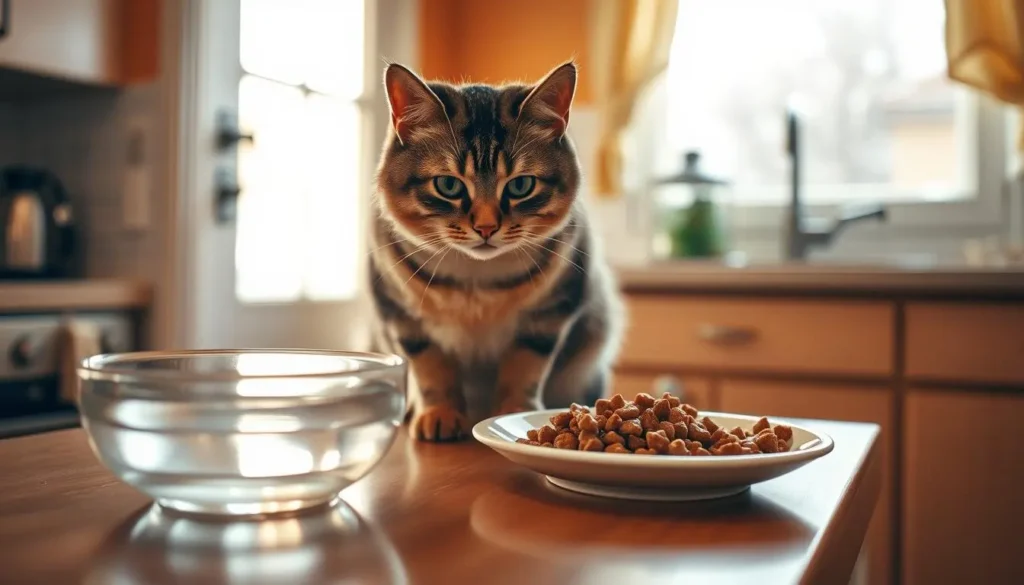
Keep track of what your cat eats, like brand and type. Also, note how much they eat in grams or cans. This helps you figure out how to help your cat eat and drink, and it’s good for vet advice.
Check the litter box daily for urine and stool. Note the color, consistency, and any straining or blood. Also, log any vomiting, including what comes out and when.
Record your cat’s activity and mood. Look for changes like hiding, less play, or sleeping more. This info is helpful when talking to your vet about feeding tips.
Recording subtle signs: drooling, pawing at mouth, weight loss
Watch for drooling, bad breath, or pawing at the mouth. These signs might mean oral pain or blockage. Also, notice if your cat avoids certain foods or eats on one side.
Weekly weigh-ins are important. Even small weight loss can be significant. Check your cat’s coat and grooming habits. A dull or matted coat could mean illness.
Using a journal or app to collect information for your vet
Make a detailed log with dates, times, and food details. Include how much they eat and any water intake. Also, note any vomiting or diarrhea, and any meds given.
Take photos of any unusual signs like wounds or drool. Save timestamps for these photos. If you can, bring a sample of vomit or stool to your vet visit. A clear history can help your vet diagnose faster and choose the right treatment.
Practical solutions for cat refusing food and water
When your cat stops eating or drinking, small changes at home can help. Use a calm voice and slow movements. Make incremental adjustments so your cat does not feel pressured.
Feeding tips for picky cats and increasing appeal
Offer strong-smelling wet food like tuna or chicken broth-based varieties. Warm the food slightly to release aroma, never serve it hot. Try different textures like pate, shreds, and gravy to discover what your cat prefers.
Hand-feed small amounts or place bowls near your cat’s favorite resting spot. Serve multiple small meals across the day instead of one large serving. When switching diets, blend the new food with the old over several days unless the current food is refused.
Hydration strategies: wet food, water fountains, flavored water
Convert part of the diet to canned wet food and add a splash of water or low-sodium chicken broth to increase moisture. Use stainless steel or ceramic bowls to avoid off-flavors from plastic.
Try a cat-specific water fountain, such as models from Catit or PetSafe, since many cats prefer running water. Place several water dishes around the house and refresh them frequently. Offer unsalted chicken broth or veterinarian-approved electrolyte solutions to encourage sipping.
When and how to try syringe feeding or assisted hydration safely
Syringe feeding should only be attempted after instruction from a veterinarian or veterinary technician. Use a prescribed recovery diet like Hill’s a/d or an appropriate kitten milk replacer for liquid feeding. Never force solid food down the throat.
Hold your cat securely and use a small syringe. Place small amounts into the cheek pouch and allow swallowing between doses to reduce aspiration risk. For fluids, subcutaneous injections can be taught and prescribed by your vet using isotonic saline or lactated Ringer’s solution.
| Strategy | When to use | Benefits | Risks / Notes |
|---|---|---|---|
| Warm strong-smelling wet food | Decreased appetite, picky eating | Increases aroma and appeal; easier to eat | Do not overheat; monitor for vomiting |
| Texture trials (pate, shreds, gravy) | Refusal of current diet | Find preferred texture; may restore intake | Change gradually to avoid GI upset |
| Hand-feeding & small frequent meals | Timid or stressed eaters | Comforting; increases voluntary intake | Requires time and patience |
| Wet food + added broth | Low water intake | Boosts hydration and calories | Use low-sodium broth only |
| Water fountains (Catit, PetSafe) | Solutions for cat not drinking | Encourages drinking with running water | Clean regularly to avoid bacteria |
| Flavored water or electrolytes | Brief dehydration risk | Tempting flavors to increase sipping | Check product safety with your vet |
| Syringe feeding with recovery diet | Refusal lasting >24–48 hours | Maintains calorie intake short-term | Risk of aspiration; vet training required |
| Subcutaneous fluids | Moderate dehydration, under vet guidance | Restores hydration at home | Training and prescription required |
These approaches include feeding tips for picky cats, solutions for cat not eating or drinking, and practical tips for increasing cat’s appetite. Use them as short-term measures. If your cat’s refusal persists, shows vomiting, or worsens, see your veterinarian for a full assessment.
When to seek veterinary advice for cat not eating
If your cat stops eating or drinking, act fast. Short-term pickiness might pass, but long-term refusal can lead to serious health issues. Look for severe signs or no improvement in 24–48 hours. Then, it’s time to get veterinary advice for your cat.
Red flags that require emergency veterinary care
Seek emergency care if your cat has persistent vomiting or diarrhea. Also, if there’s blood in vomit or stool, collapse, seizures, or trouble breathing. Sudden loss of appetite, severe lethargy, or pain are urgent signs.
What your veterinarian will check: diagnostics and tests
Your vet will start with a detailed physical exam. They’ll check hydration, mucous membrane color, and more. Bloodwork, like a CBC and chemistry panel, will evaluate your cat’s health.
Urinalysis and fecal testing can spot infections or parasites. Imaging, like X-rays or ultrasound, might be needed to find obstructions or organ issues. Your vet might also do FeLV/FIV screening or thyroid testing.
Treatment options your vet may recommend: medication, fluids, appetite stimulants
Treatment depends on the cause. For dehydration, IV fluids are used in the hospital. Subcutaneous fluids are for mild cases or at home. Anti-nausea drugs can help your cat feel better.
Pain control and appetite stimulants are also options. If there’s an infection, antibiotics will be prescribed. Nutritional support, like feeding tubes, may be needed for cats that won’t eat.
Your vet will guide you on follow-up care and monitoring. Follow their advice closely to help your cat recover.
Conclusion
cat not eating or drinking can have many reasons. These range from mild stress to serious illness. It’s important to watch closely and act fast.
Keep an eye on your cat’s appetite, water intake, and litter box use. Also, notice any new behaviors. This helps you tell your vet all you know.
At home, you can help your cat in safe ways. Try warming wet food slightly to make it more appealing. Offer several water sources or a pet fountain. And, only use syringe feeding with your vet’s advice.
These steps can help your cat eat and drink better while you watch them closely. They might make a big difference.
If your cat won’t eat for more than 24–48 hours or shows signs of dehydration, act fast. Call your vet or the nearest emergency clinic. Keep their number handy and log your cat’s intake and symptoms.
Quick action and the right steps can help your cat recover. With careful at-home care and vet support, many problems can be fixed. Being ready and informed is key to your cat’s recovery.