Can Cats Drink Almond Milk? 11 Safety Facts Owners Need
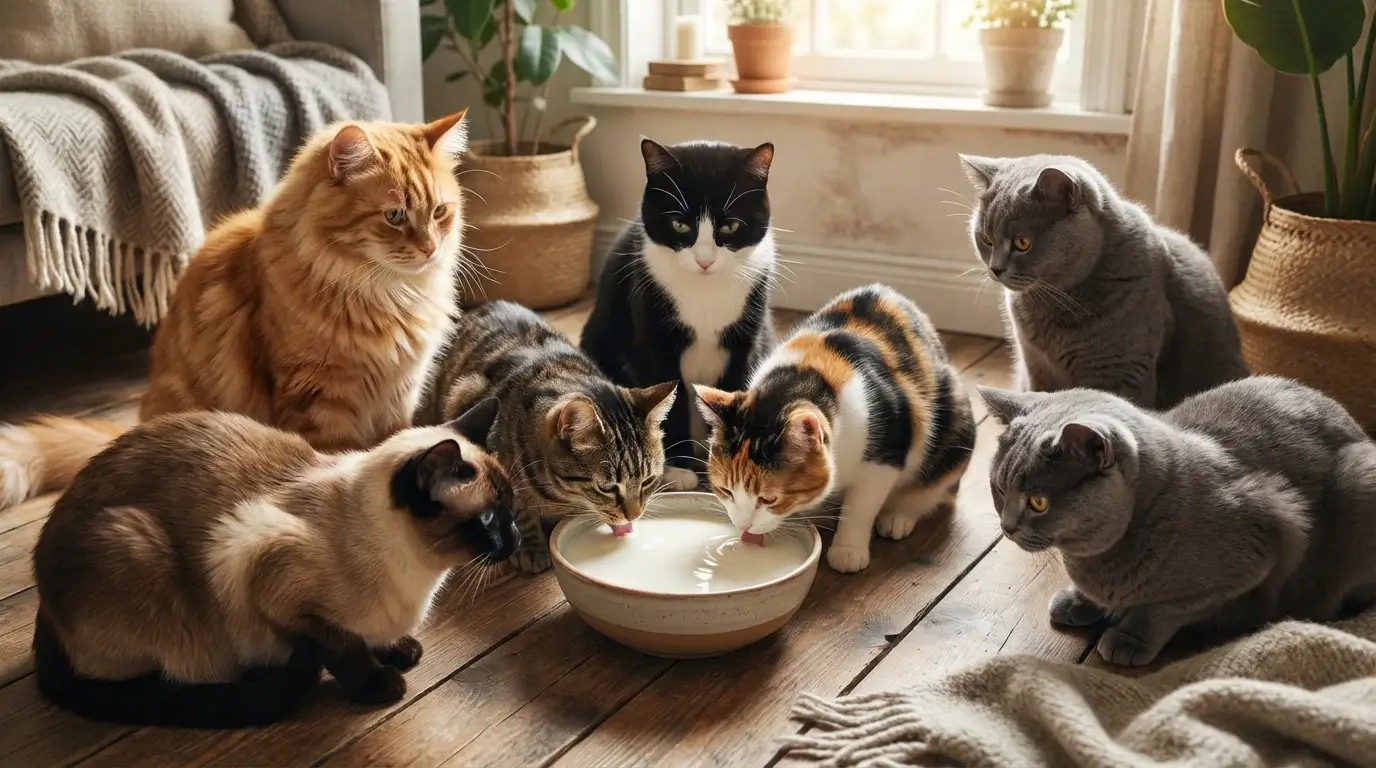
Last week, my friend Jessica called me in a panic. “I’m making my morning smoothie with almond milk and Mr. Whiskers is going crazy for it. Since he can’t have regular milk, almond milk should be fine, right? It’s healthier!”
I had to break some bad news to her.
Here’s the thing about the plant-based milk trend: just because something is lactose-free doesn’t automatically make it cat-safe. In fact, almond milk might be worse for your cat than regular dairy in some ways.
If you’ve switched to almond milk yourself and wondered whether you could share it with your cat, or if you’re looking for a “healthier” alternative to cow’s milk for your feline, I’m going to give you the real answer – and it’s probably not what you want to hear.
The Question: Can Cats Drink Almond Milk?
The Direct Answer: No, Cats Should Not Drink Almond Milk
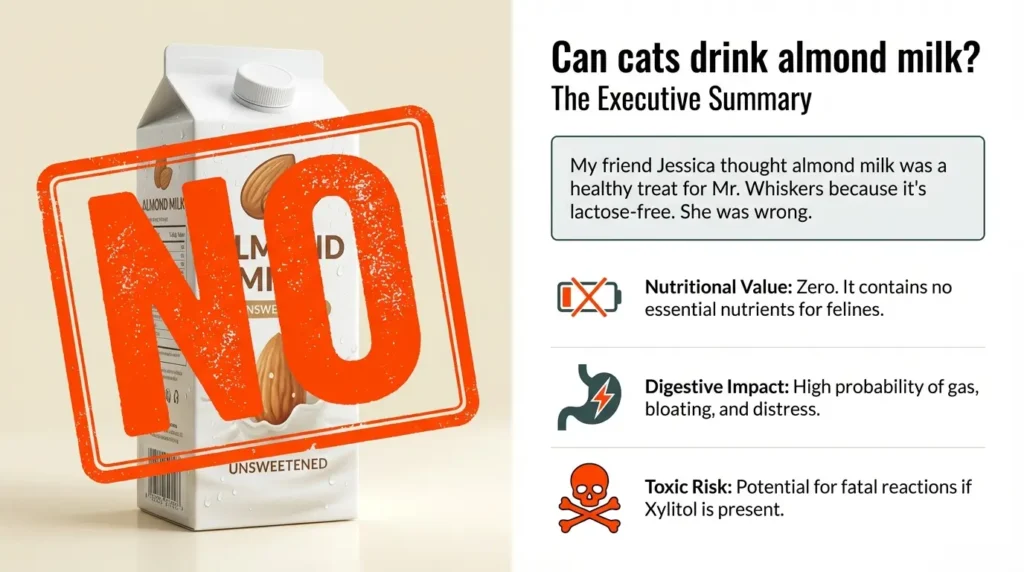
I’m not going to bury the lead here. Almond milk is not safe or appropriate for cats, even though it doesn’t contain lactose.
Before you close this tab in disappointment, let me explain exactly why, because the reasoning is actually pretty important for understanding cat nutrition in general.
When my cat Luna knocked over my almond milk latte last year, I initially thought “well, at least it’s not dairy.” Then I started researching what’s actually in commercial almond milk, and honestly? I was shocked.
Why Almond Milk Seems Like a Good Idea (But Isn’t)
I totally understand the logic. You’ve probably heard that cats are lactose intolerant (about 70% of them are). So you figure: almond milk = no lactose = problem solved!
If only cat nutrition were that simple.
Here’s what most people don’t realize: the lactose isn’t the only problem with giving cats milk. In fact, for plant-based alternatives, the lactose is the least of our worries.
The Hidden Dangers in Your Almond Milk Carton
Let me walk you through what’s actually in that innocent-looking container of almond milk in your fridge. I’m looking at a popular brand right now, and here’s what I see on the label:
Filtered water – Okay, that’s fine.
Almonds – Here’s where it gets problematic. Cats are obligate carnivores. Their digestive systems are designed for meat, not plant proteins. They can’t efficiently process or extract nutrients from plant-based foods.
Cane sugar – Cats don’t need added sugars. In fact, they can’t even taste sweetness the way we do. Sugar provides zero nutritional value and can contribute to obesity and diabetes.
Calcium carbonate – A synthetic additive cats don’t need from this source.
Sea salt – Unnecessary sodium that can stress their kidneys.
Sunflower lecithin – An emulsifier that serves no purpose for cats.
Gellan gum – A thickening agent that can cause digestive upset.
Natural flavors – This vague term could mean anything, and “natural” doesn’t equal “cat-safe.”
And that’s one of the “simpler” brands. Some almond milks contain even more concerning ingredients.
The Xylitol Danger (This One’s Actually Scary)
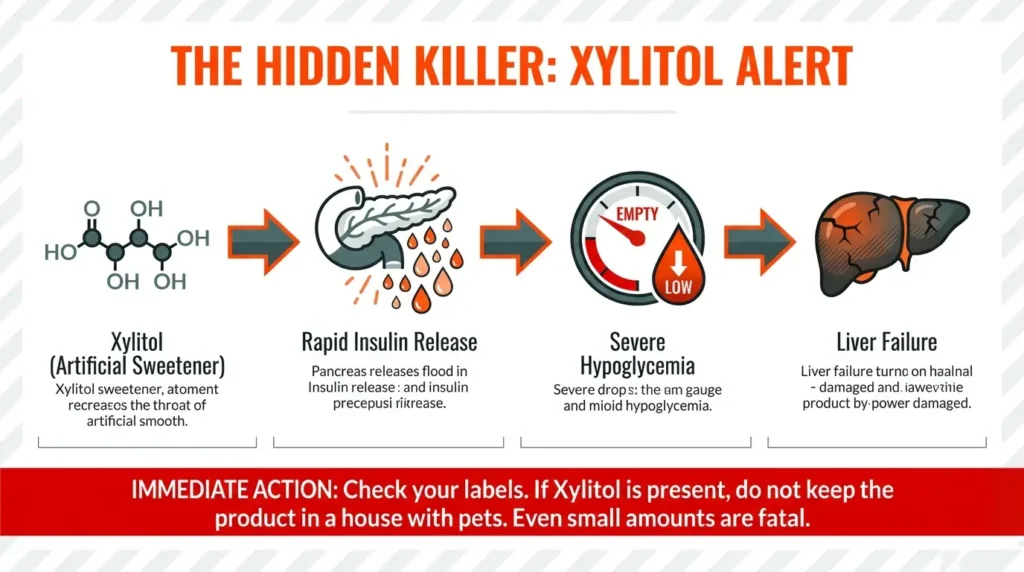
Here’s where things get genuinely dangerous: some brands of almond milk contain xylitol, an artificial sweetener that’s toxic to pets.
Xylitol causes rapid insulin release in cats and dogs, leading to potentially fatal hypoglycemia (low blood sugar). Even small amounts can cause liver failure.
I nearly had a heart attack when I discovered that the “sugar-free” almond milk my roommate bought last month contained xylitol. Luna hadn’t gotten into it, thank god, but it could have been a disaster.
Always check the ingredient list if you’re buying any sugar-free or “diet” plant-based milk. If it contains xylitol and you have pets, I’d honestly recommend not even keeping it in your house.
What Actually Happens If Your Cat Drinks Almond Milk
Let’s say your cat gets into your almond milk latte (like Luna did with mine). What should you expect?
The Most Likely Scenario: Digestive Upset
Even if your almond milk doesn’t contain xylitol, your cat will probably experience some level of stomach trouble:
Mild cases:
- Soft stool or mild diarrhea
- Gas and bloating
- Decreased appetite for the next meal
- General discomfort (hiding, restlessness)
More severe reactions:
- Vomiting (especially if they drank a significant amount)
- Multiple bouts of diarrhea
- Lethargy
- Dehydration signs (dry gums, sunken eyes)
Luna had soft stool for about 24 hours after her almond milk incident. Nothing dramatic, but definitely not normal for her. She also seemed uncomfortable and didn’t want to play that evening.
The Worst-Case Scenario: Toxic Reaction
If the almond milk contains xylitol or if your cat has an unexpected allergic reaction, symptoms can be much more serious:
- Sudden weakness or collapse
- Tremors or seizures
- Rapid or difficulty breathing
- Pale gums
- Irregular heartbeat
This is a veterinary emergency. If you see these symptoms after your cat consumed any plant-based milk, get to a vet or emergency animal hospital immediately.
“But Isn’t Almond Milk Healthier Than Regular Milk?”
I hear this question constantly, and I get the confusion. For humans watching their calories or avoiding dairy, almond milk can be a reasonable choice. But cats aren’t little humans.
Let me break down why “healthier for people” doesn’t translate to “healthier for cats”:
Nutritional value for cats: basically zero. Almond milk provides no essential nutrients that cats need. They’re obligate carnivores requiring animal-based proteins, taurine, arachidonic acid, and vitamin A from animal sources. Almond milk offers none of this.
Digestive incompatibility: Cats lack the digestive enzymes to properly break down and utilize plant proteins. It’s like putting diesel fuel in a gasoline engine – it might go in, but it’s not going to work right.
Unnecessary additives: All those stabilizers, thickeners, and fortifications that make almond milk palatable for humans? Completely unnecessary for cats and potentially irritating to their digestive systems.
Caloric waste: If you give your cat almond milk, you’re filling them up with empty calories that could have come from nutritious cat food instead.
My vet put it perfectly: “Cats don’t need milk alternatives. They need meat, water, and proper cat food. Everything else is just us projecting our own food culture onto them.”
What About Other Plant-Based Milks?
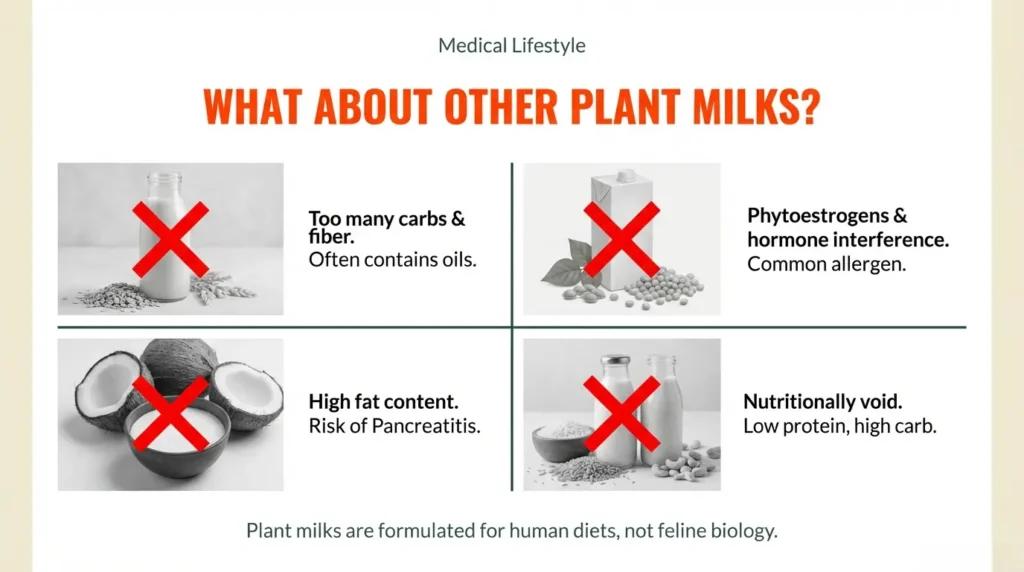
Since we’re on the topic, let me save you some future Google searches about other trendy milk alternatives:
Oat milk: No. High in carbohydrates and fiber that cats don’t need and can’t properly digest. Often contains added oils and sweeteners.
Soy milk: Definitely no. Contains phytoestrogens that may interfere with hormone balance. Some cats are allergic to soy. Provides no appropriate nutrition.
Coconut milk: Hard no. Extremely high in fat, which can trigger pancreatitis in cats. Some cats have allergic reactions. The lauric acid can cause digestive upset.
Rice milk: Still no. High in carbohydrates, very low in protein, offers nothing cats need nutritionally.
Cashew milk: You guessed it – no. Same issues as almond milk, plus cashews can cause stomach upset in cats.
Seeing a pattern here? Plant-based milks are designed for humans following specific diets, not for obligate carnivores.
What You Should Give Your Cat Instead
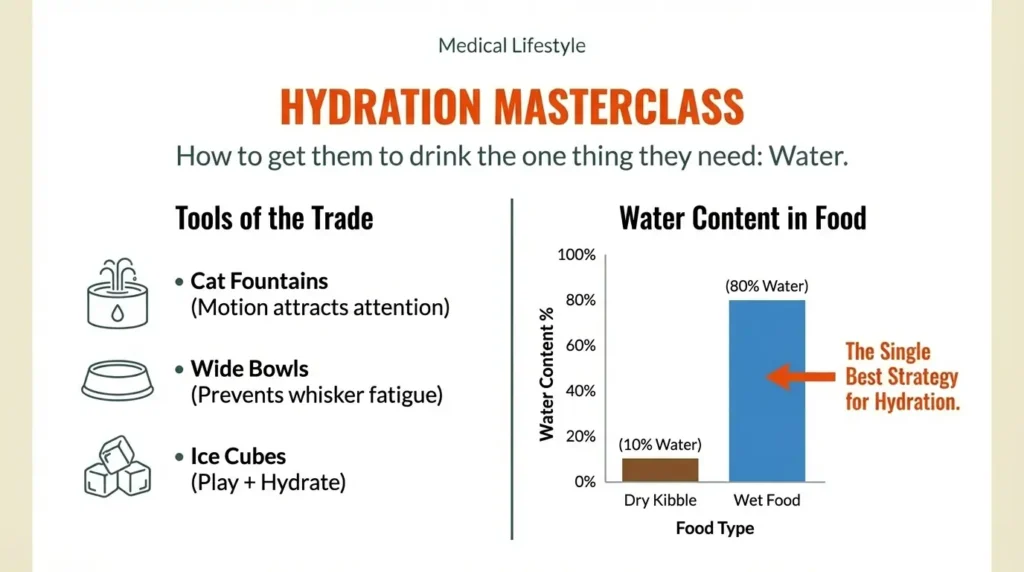
Okay, I’ve told you what NOT to give your cat. Now let’s talk about what you SHOULD offer if you want to treat your cat or boost their hydration.
Plain Water: The Unsexy But Correct Answer
I know, I know. Water is boring. But it’s literally all your cat needs to drink.
When Luna seemed uninterested in her water bowl, I tried these tricks:
Cat water fountain: This was a total game-changer. The moving water attracted her, and she started drinking way more. Best $25 I’ve spent on cat supplies.
Multiple locations: I put water bowls in three different spots around my apartment. Cats like options.
Clean bowls daily: Cats are weirdly picky about water freshness. I rinse Luna’s bowl every single day.
Wide, shallow bowls: Some cats hate their whiskers touching the sides of bowls. Switching to a wider dish helped.
Ice cubes: Luna loves playing with ice cubes and licking them as they melt. It’s hydration disguised as entertainment.
Lactose-Free Cat Milk (The Actual Treat Option)
If you genuinely want to give your cat something milk-like as an occasional treat, buy products specifically formulated for cats:
Whiskas Cat Milk is probably the most common brand. It’s real dairy with the lactose removed and vitamins added. Luna gets about a tablespoon twice a week, and she absolutely loves it.
CatSip is another good brand I’ve tried.
Important notes:
- These should still be occasional treats, not daily drinks
- They provide minimal nutritional value
- Some cats may still have reactions
- They’re basically cat junk food – fine in moderation
The Broth Hack (My Personal Favorite)
Want to know what Luna likes even more than cat milk? Low-sodium chicken broth.
I make it myself by simmering plain chicken in water with no seasonings whatsoever. No onions, no garlic, no salt – just chicken and water.
I keep it in the fridge and give her about a tablespoon a few times a week. She goes absolutely bonkers for it, and unlike almond milk, it’s actually providing some nutritional value.
Other safe broth options:
- Plain bone broth (homemade, unseasoned)
- Tuna water from cans (in water, not oil, and only occasionally due to mercury concerns)
- Plain beef broth (low-sodium, no seasonings)
Wet Food: The Hydration Powerhouse
Honestly, the best thing I ever did for Luna’s hydration was switching her to a wet-food-heavy diet.
Wet food is about 70-80% water, compared to dry food which is only 10% water. When I made the switch, Luna’s water intake concerns basically disappeared.
She’s getting hydration from her food while also getting proper feline nutrition. It’s a win-win.
What to Do If Your Cat Already Drank Almond Milk
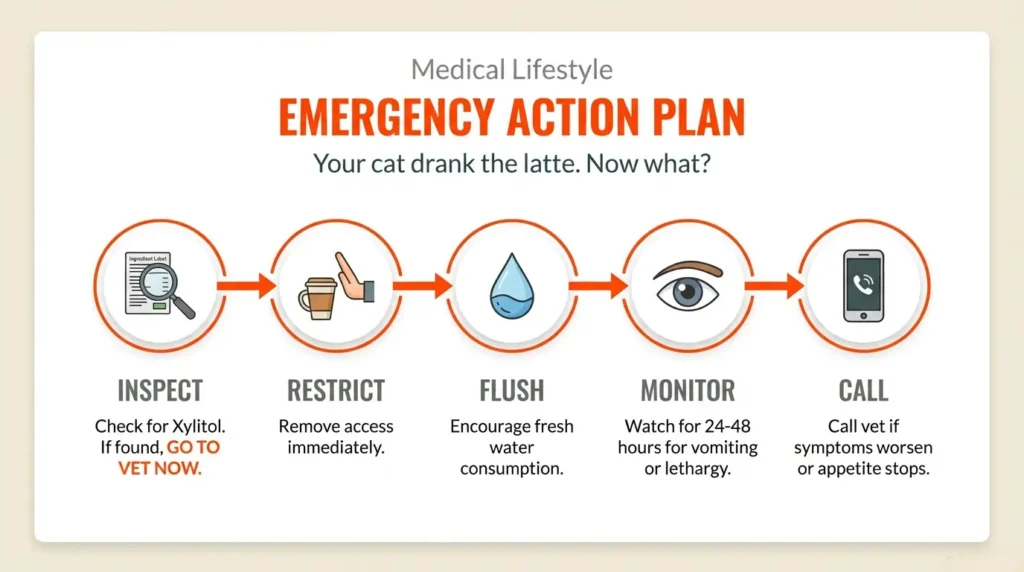
Deep breath. It’s going to be okay. Here’s what you need to do:
Step 1: Check the ingredients immediately. If it contains xylitol, call your vet or emergency animal hospital right now. Don’t wait to see if symptoms develop.
Step 2: Remove access. Make sure your cat can’t get any more almond milk.
Step 3: Offer fresh water. Encourage them to drink to help flush their system.
Step 4: Monitor for 24-48 hours. Watch for vomiting, diarrhea, lethargy, or any unusual behavior.
Step 5: Call your vet if: symptoms develop or worsen, your cat won’t eat or drink, or you’re concerned about anything at all.
When Luna got into my almond milk, I called my vet just to be safe. They told me to monitor her and bring her in if anything seemed off. She ended up being fine aside from soft stool, but the peace of mind was worth the phone call.
The Bottom Line on Almond Milk and Cats
Here’s what I wish someone had told me before I assumed plant-based milk was a safe alternative for cats:
Cats are obligate carnivores. Their entire digestive system is designed for meat. Plant-based anything is nutritionally inappropriate, whether it’s almond milk, oat milk, or any other trendy alternative.
Lactose-free doesn’t mean cat-safe. The problem with giving cats milk isn’t just the lactose – it’s that milk (of any kind) provides no nutritional value and comes with potential risks.
Your cat doesn’t want almond milk because it’s good for them. They’re attracted to the fat content and creamy texture, just like they are with dairy. But want ≠ need.
Better options exist. If you want to give your cat something special, stick with cat-specific products or simple broths made from ingredients you can actually pronounce.
When in doubt, stick with water and quality cat food. These two things provide everything your cat needs to thrive. Everything else is just us projecting our own food preferences onto animals with completely different nutritional requirements.
Luna is three years old now and has never had almond milk again (after I learned to keep my latte out of paw’s reach). She’s perfectly happy with her water fountain, her wet food, and occasional chicken broth treats.
Your cat will be too.
Have questions about other foods and whether they’re safe for cats? Check out our complete guide to toxic and safe foods for felines.
Sources & Further Reading:
- cats.com : Can Cats Drink Almond Milk?
- Can Cats Drink Lactose-Free Milk? Finally, Some Good News!
- Can Cats Drink Regular Milk? 8 Safety Tips for Your Cat
- Can Cats Drink Milk? The Safe Truth About Feline Dairy
And if your cat has gotten into something they shouldn’t have, drop a comment below – sometimes we all need reassurance that we’re not the only ones whose cats are tiny, furry troublemakers!