
Do Cats Drink Milk? 8 Shocking Truths Every Owner Must Know
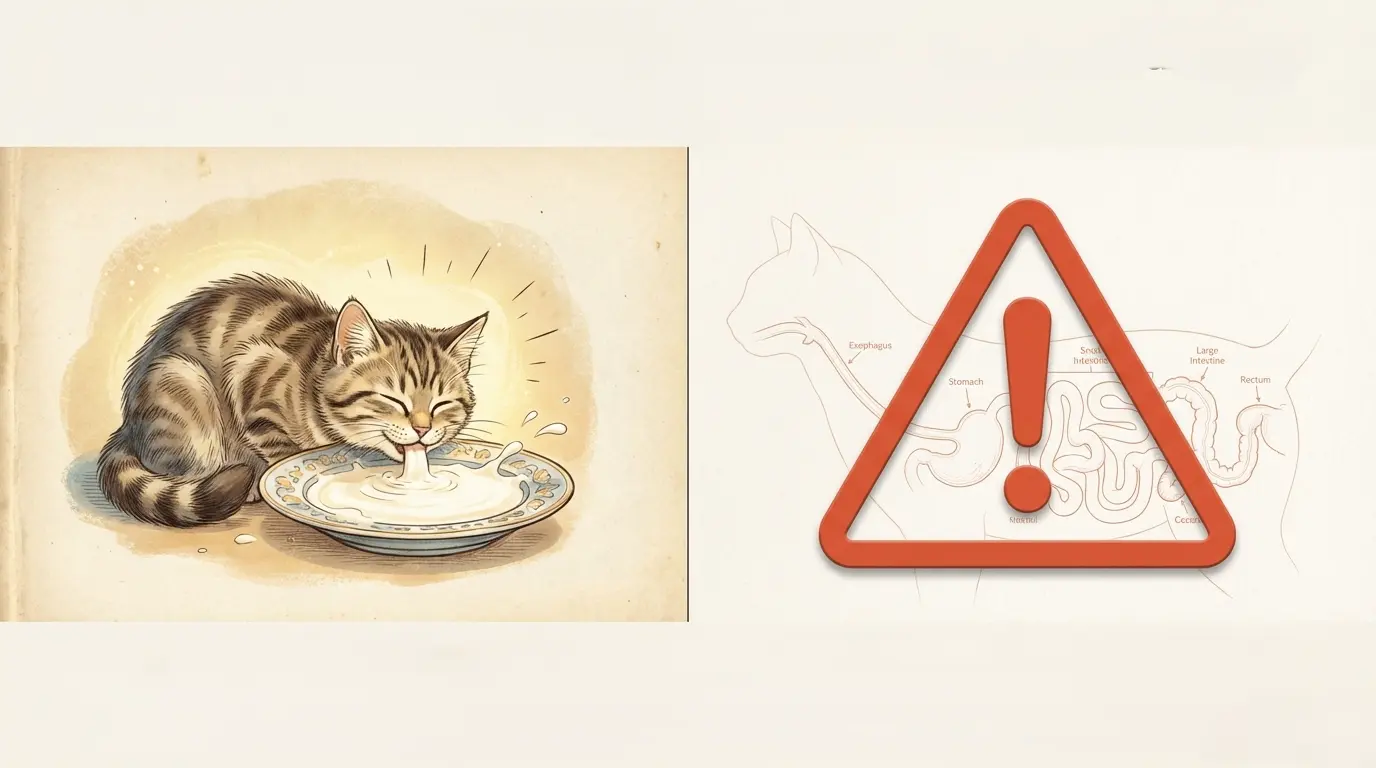
I’ll never forget the look on my neighbor’s face when I told her to stop giving her cat milk. “But… cats LOVE milk!” she protested, gesturing at her Persian who was enthusiastically lapping up a saucer of whole milk. “I’ve been doing this for years!”
Three hours later, she texted me photos of diarrhea all over her bathroom floor.
Here’s the thing nobody wants to admit: yes, cats will drink milk. But no, they absolutely shouldn’t. It’s like asking “do kids eat candy?” – of course they do, but that doesn’t mean it’s good for them.
If you’ve ever wondered why your cat goes crazy for dairy or whether it’s actually safe to give them milk, you’re about to get some answers that might surprise you. Let’s break down the science, the myths, and what you should actually be offering your cat instead.
The Question: Do Cats Drink Milk?
The Short Answer: Yes, Cats WILL Drink Milk (But They Really Shouldn’t)
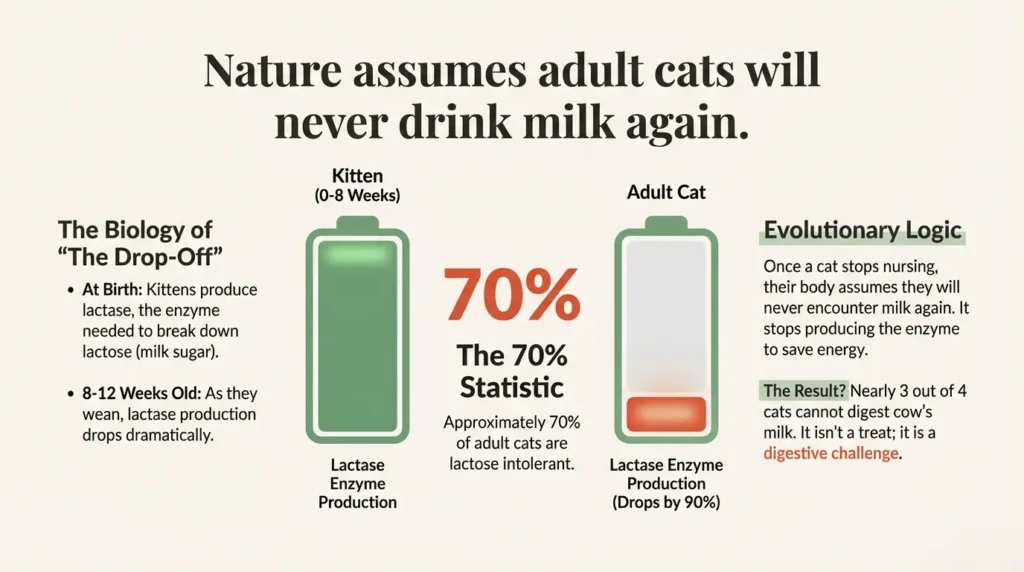
Let me be crystal clear about this: cats are physically capable of drinking milk and most of them absolutely love it. The taste, the creamy texture, the fat content – it hits all their buttons. But here’s what those Tom and Jerry cartoons didn’t tell you: approximately 70% of adult cats are lactose intolerant.
That’s right. Nearly three out of four cats can’t properly digest the lactose in cow’s milk.
When I first adopted Luna, I assumed milk was a natural treat for cats. I mean, every movie, every cartoon, every children’s book shows cats drinking milk happily. So I poured a little into her bowl one morning while making coffee.
By that afternoon, I was scrubbing explosive diarrhea out of my carpet and making an embarrassing call to my vet.
“You’re not the first person to learn this the hard way,” my vet laughed. “Probably won’t be the last either.”
Why Do Cats Love Milk If It Makes Them Sick?
This is the question that baffles most cat parents. If milk causes digestive chaos, why do cats act like it’s the best thing ever?
The answer is actually pretty simple: cats are attracted to the high fat content in milk, not because they need it nutritionally. Their taste buds light up for fatty, creamy textures. It’s pure sensory pleasure – think of it like humans craving french fries or ice cream even though we know they’re not health food.
Here’s what’s happening in your cat’s brain when they smell milk:
Their wild ancestor instincts kick in. Fat = calories = survival. In nature, cats would seek out high-fat prey. Dairy mimics that fatty richness their biology craves.
But here’s the cruel twist: wanting something and being able to digest it are two completely different things.
My cat Luna will also try to eat rubber bands, hair ties, and the leaves of my houseplants. Just because she wants to doesn’t mean I should let her. The same logic applies to milk.
The Science: What Actually Happens When Cats Drink Milk
Let me walk you through the biology that your cat can’t explain to you (and that makes a mess of your floors).
Kittens vs. Adult Cats: The Lactase Drop-Off
When cats are born, they produce an enzyme called lactase. This enzyme breaks down lactose – the sugar found in milk. Kittens nursing from their mother have plenty of lactase because they need it to digest her milk.
But something happens around 8-12 weeks of age: lactase production drops dramatically. Some cats retain a bit more enzyme than others, but most lose about 90% of their lactase by the time they’re weaned.
This is completely normal and natural. Once a cat stops nursing, their body assumes they’ll never need to digest milk again, so it stops making the enzyme. It’s actually efficient biology – why waste energy producing something you don’t need?
The Digestive Disaster Timeline
Here’s what happens when a lactose-intolerant cat drinks milk:
0-30 minutes: The milk reaches their stomach. Your cat is happy, licking their whiskers, totally unaware of what’s coming.
1-2 hours: The undigested lactose moves into the small intestine. The body can’t break it down without lactase, so it just… sits there.
2-8 hours: Bacteria in the gut start fermenting the lactose. This creates gas, bloating, and stomach cramping. Your cat might seem restless or uncomfortable.
8-12 hours: The lactose draws water into the intestines (it’s called osmotic diarrhea). Hello, litter box nightmare. Or worse – not making it to the litter box in time.
12-48 hours: The symptoms gradually resolve, assuming your cat doesn’t get any more milk.
I tracked this exact timeline with Luna. She got into milk at 9 AM, seemed fine until about 11 AM when she got weirdly clingy, and by 6 PM she had her first bout of diarrhea. It continued on and off for two days.
“But My Cat Drinks Milk and Seems Fine!”
I hear this all the time in online cat groups, and it drives me absolutely bonkers.
Yes, some cats have a higher tolerance for lactose than others. Just like some adult humans can drink milk without issues while others (about 65% of the global population) are lactose intolerant. It’s genetic variation.
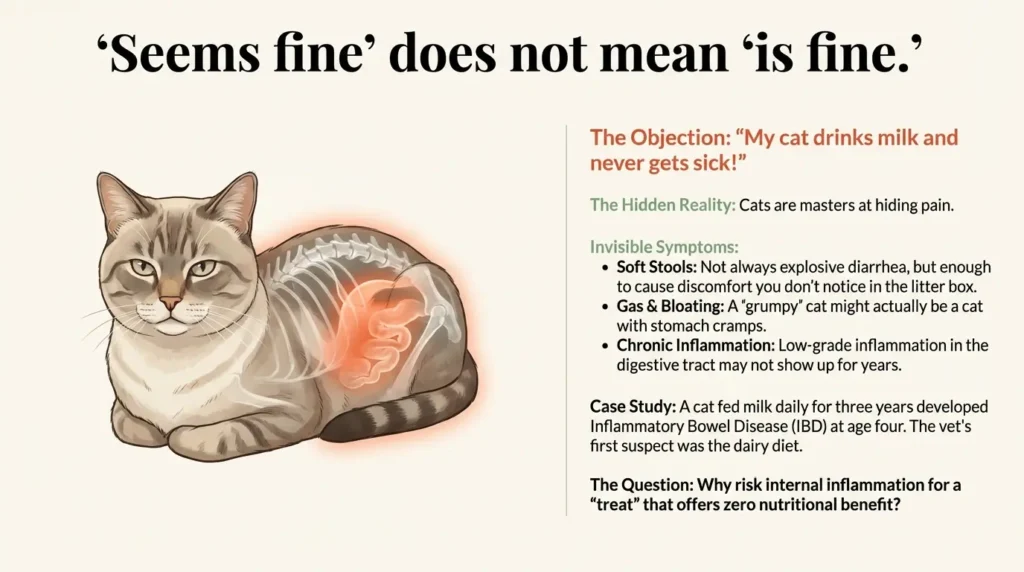
But – and this is crucial – “seems fine” doesn’t mean “is fine.”
Your cat might not have explosive diarrhea. They might just have softer stools that you don’t notice. Or mild gas and bloating that they hide (because cats are masters at hiding discomfort). Or chronic low-grade inflammation in their digestive tract that won’t show up until years down the road.
My friend Sarah gave her cat milk every single day for three years. “He loves it and never gets sick!” she’d tell me proudly. Then he developed inflammatory bowel disease at age four. The vet’s first question? “What’s his diet like? Any dairy?”
Is there a direct connection? Maybe, maybe not. But why risk it when there are zero nutritional benefits and plenty of safer alternatives?
What About Kittens? Don’t They Need Milk?
This is where things get a bit more complicated, and honestly, where a lot of people make dangerous mistakes.
Yes, kittens need milk. But NOT cow’s milk.
Kittens need their mother’s milk or specially formulated kitten milk replacer (KMR). Cow’s milk has a completely different nutritional profile:
- Too low in protein (kittens need about 30% more than cow’s milk provides)
- Wrong fat composition (affects brain development)
- Missing taurine (essential for heart and eye health)
- Still contains lactose (even kittens can get diarrhea from cow’s milk)
I volunteer at a cat rescue, and we’ve had heartbreaking cases of people finding orphaned kittens and feeding them cow’s milk with the best intentions. The kittens develop severe diarrhea, become dehydrated, and sometimes don’t survive.
If you have an orphaned kitten, please use actual kitten milk replacer. Brands like PetAg KMR are formulated to match mother cat’s milk. It’s available at any pet store and could literally save a kitten’s life.
So What SHOULD Cats Drink?
The answer is going to disappoint you because it’s boring: water.
Plain, fresh, clean water is the absolute best thing for your cat to drink. That’s it. That’s the whole answer.
“But my cat won’t drink enough water!” I hear you. Cats have a naturally low thirst drive because they evolved from desert animals. Here’s how I got Luna to drink more:
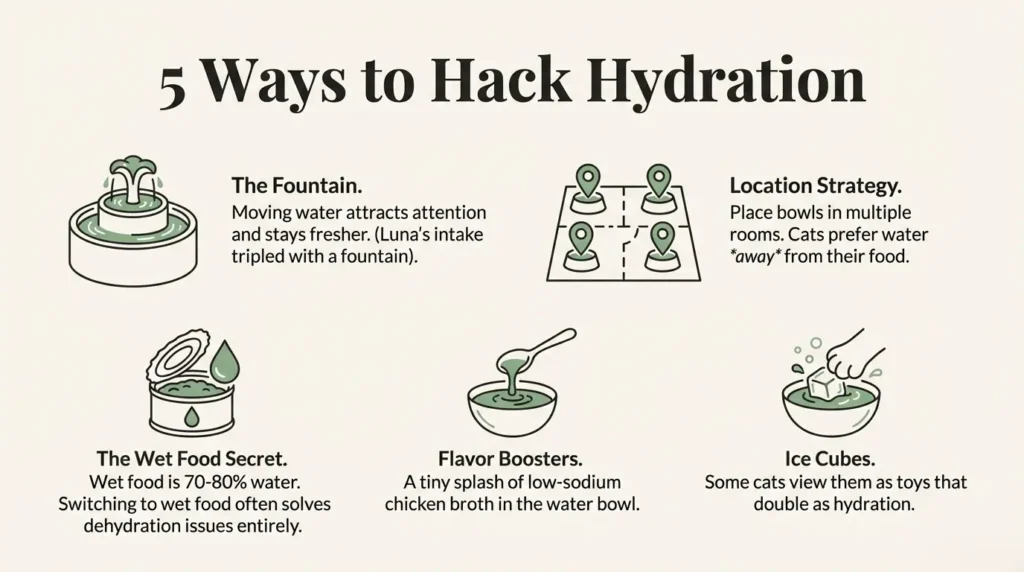
1. Cat water fountain: Game changer. The moving water attracts cats and stays fresher. Luna’s intake tripled when I switched from a bowl to a fountain.
2. Multiple water stations: I have bowls in three rooms. Cats like options, and they prefer water away from their food (mimics natural behavior).
3. Wet food: This is the secret weapon. Wet food is 70-80% water. When I switched Luna to primarily wet food, her “dehydration” issues vanished.
4. Flavor boosters: Sometimes I add a tiny splash of low-sodium chicken broth to her water. She goes nuts for it.
5. Ice cubes: Some cats love batting ice cubes around and licking them. Luna thinks they’re toys.
The Safe Alternatives (If You Really Want to Give Your Cat Something Special)
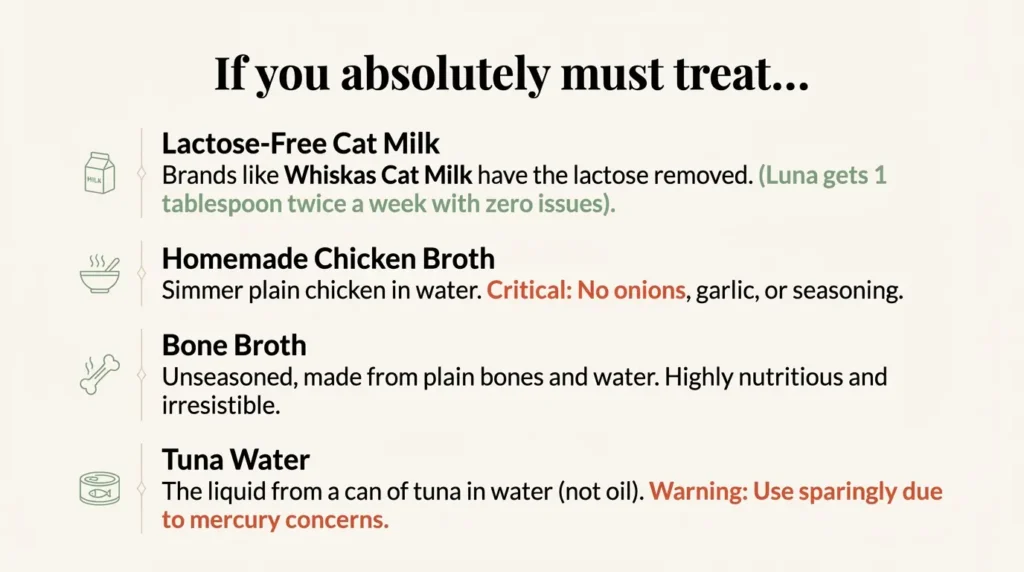
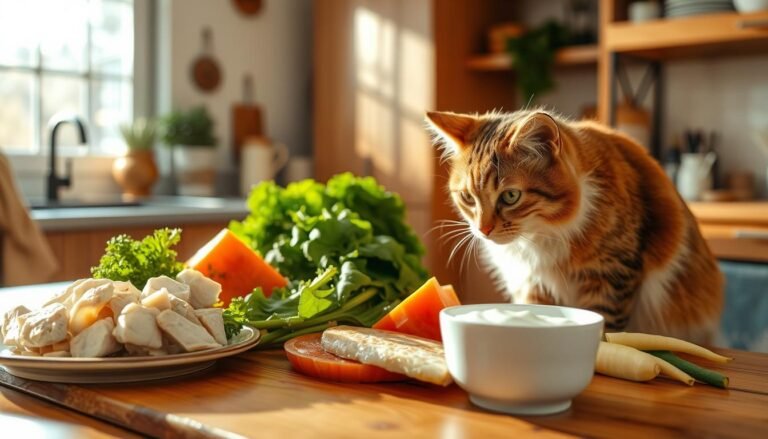
Look, I get it. You want to give your cat treats. You want to see that happy face when you offer them something special. Here are options that won’t wreck their digestive system:
Lactose-free cat milk: Brands like Whiskas Cat Milk are specifically formulated for cats with the lactose removed. I give Luna about a tablespoon twice a week as a treat. She loves it, zero digestive issues.
Homemade chicken broth: Simmer plain chicken in water (no onions, garlic, or seasonings). Store in the fridge and offer small amounts. Luna acts like this is liquid gold.
Tuna water: The liquid from a can of tuna in water (not oil). Use sparingly because too much tuna can cause mercury issues, but as an occasional treat it’s fine.
Bone broth: Make it yourself with plain bones and water, no seasoning. It’s nutritious and cats find it irresistible.
What If Your Cat Already Drank Milk?
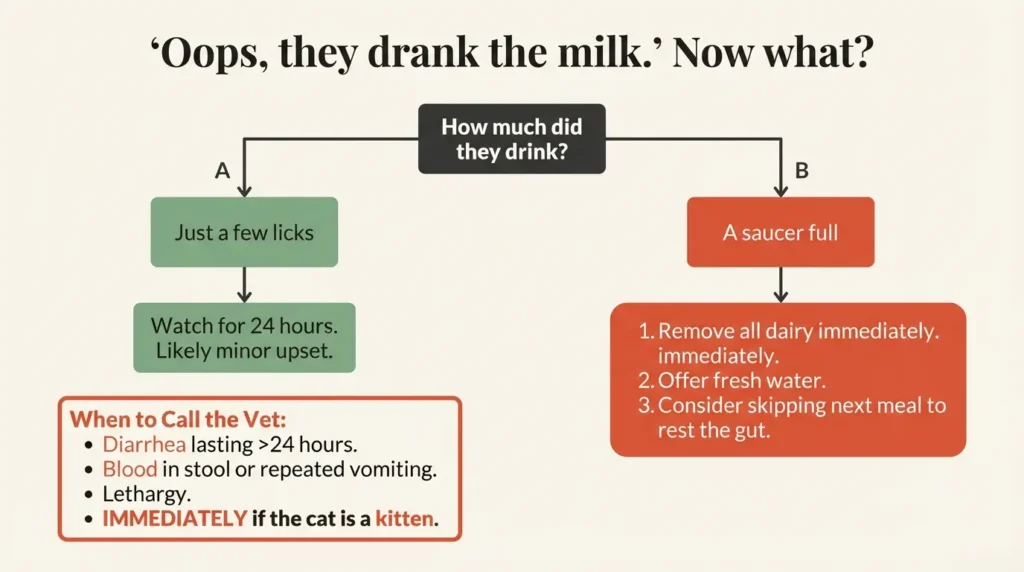
Don’t panic. I’ve been there, remember?
If it was a small amount (like a few licks), just watch them for the next 24 hours. They’ll probably be fine or have minor digestive upset.
If it was more substantial, here’s what to do:
- Remove all dairy immediately – no more access
- Offer plenty of fresh water – dehydration is the real danger
- Monitor the litter box – note any diarrhea or unusual behavior
- Consider skipping the next meal if they have mild diarrhea – gives the gut time to rest
- Call your vet if: diarrhea lasts more than 24 hours, there’s blood in the stool, they’re vomiting repeatedly, or they seem lethargic
For kittens, any digestive upset is more serious. They dehydrate much faster than adults. If a kitten drinks cow’s milk and has any symptoms at all, call your vet right away.
The Bottom Line: Break the Milk Myth
Here’s what I wish someone had told me before I gave Luna that fateful bowl of milk:
Cats drinking milk is a cultural myth, not biological reality. Those cartoons lied to us. The “cats love milk” stereotype has caused decades of upset stomachs and unnecessary vet visits.
Your cat doesn’t need milk. They need water, high-quality protein, and proper nutrition. Milk provides none of these things in a cat-appropriate form.
Wanting milk doesn’t equal needing milk. Luna also wants to eat my houseplants and chew on electrical cords. I don’t let her do those things either.
Better alternatives exist. If you want to give your cat something special, there are safer options that they’ll enjoy just as much without the digestive consequences.
Three years after Luna’s milk incident, she’s perfectly healthy and hydrated. She has her water fountain, her wet food, and occasional chicken broth treats. She’s never asked for milk again – probably because somewhere in her little cat brain, she remembers how awful she felt.
Do cats drink milk? Yes, they absolutely will if you give it to them. Should you give it to them? Absolutely not.
Now go refill your cat’s water bowl, maybe add a splash of broth if you’re feeling generous, and let’s put this milk myth to rest once and for all.
Got questions about what your cat should or shouldn’t eat? Check out our guide to safe and toxic foods for cats, or drop a comment below with your specific situation.
Sources & Further Reading:
- petmd.com : Can Cats Drink Milk?
- Can Cats Drink Lactose-Free Milk? Finally, Some Good News!
- Can Cats Drink Regular Milk? 8 Safety Tips for Your Cat
- Can Cats Drink Milk? The Safe Truth About Feline Dairy
- Can Cats Drink Almond Milk? 11 Safety Facts Owners Need
And if you’ve got a “my cat drank milk” horror story, share it – sometimes we all need to know we’re not alone in our pet parenting mistakes!
2 Comments