Safe Answers to Can Cats Eat Bread
Have you ever watched your cat sniff a sandwich and wondered: can cats eat bread without harm?
This short guide answers common concerns about is bread safe for cats. It offers practical tips for you and your pet. Bread is not a required food for cats. You should focus on balanced, species-appropriate meals like AAFCO-complete commercial cat food or diets recommended by your vet.
You and your cat will get clear, friendly advice on what bread is. You’ll learn how it fits (or doesn’t) into feline nutrition. You’ll also find out about health risks to watch for and safe ways to offer small tastes.
There are special considerations for kittens or cats with conditions like diabetes or obesity. Across seven focused sections, you’ll find straightforward answers about cats and bread. You’ll learn when a bite is likely harmless and when to skip it. Read on to learn practical, safe steps so you can decide confidently next time your cat eyes your toast.
Table of Contents
can cats eat bread
Bread is a common food made from flour, water, and yeast. Many people share it with their pets. They might do this out of curiosity or to give a treat when a cat begs.
What bread is and why you might consider sharing it
Bread is simple. White bread has refined wheat flour and not much nutrition. Whole-wheat and multigrain loaves have more fiber and B vitamins. Sourdough gets minor changes from fermentation.
People give bread because cats like its texture or smell. It also feels natural to share during meals.
Basic nutritional profile of common breads
White bread has mainly refined carbs and sugar. It has low protein, almost no fiber, and few vitamins. Whole-wheat bread has more fiber, iron, and B vitamins.
But, it still lacks protein and has no taurine, a key amino acid for cats. Special breads like rye or sourdough have slight variations. Yet, none offer the nutrients cats need from meat.
How to recognize when bread is a treat versus a risk
A small, plain piece of bread can be a rare treat. But, watch for any signs of upset stomach. Bread becomes risky if given often, buttered, or with spreads.
Seasonings like garlic or onion, or sweeteners like xylitol, can be toxic. Treat bread as a risk if given too much. Keep servings small and rare.
Understanding cat nutrition and whether bread fits
You feed your cat with care, so it’s good to know what they need. Cats are obligate carnivores. They need animal proteins and nutrients that bread can’t provide.
Essential nutrients cats need that bread lacks
Cats need high-quality animal protein and amino acids like taurine and arginine. These are important for their heart, eyes, and immune system. They also need vitamin A, arachidonic acid, and B vitamins in forms they can use.
AAFCO standards show what makes a cat diet complete. Bread has little taurine, not much vitamin A, and no arachidonic acid. Using bread as a meat substitute is not good for cats.
Carbohydrates in a cat’s diet: limited role and digestion
Cats can digest some carbs because their body has enzymes for it. But they don’t need a lot of carbs. Too many carbs can make them gain weight and have high blood sugar.
Even though a little bread is unlikely to harm a healthy adult cat, it’s not needed. It adds extra calories without any nutritional benefits.
Comparing homemade and store-bought cat-safe foods to bread
Commercial cat foods from brands like Hill’s Science Diet and Royal Canin meet all a cat’s nutritional needs. Homemade diets can also be good if made right and checked by a vet. But bread doesn’t add anything to either.
If you’re wondering if bread is safe for cats or if kittens can have it, remember it’s not harmful. But it doesn’t offer any benefits. For kittens, who need lots of nutrients for growth, bread is not needed and should be avoided.
Health risks of cats eating bread
Sharing a bite of toast might seem harmless, but it can cause short-term problems. A single slice can upset a sensitive stomach, especially if your cat isn’t used to carbs, yeast, or rich spreads.
Potential digestive issues: bloating, diarrhea, vomiting
When a cat eats bread, indigestion and gas can follow within hours. Your cat may vomit or pass loose stools after eating unfamiliar carbs or yeast. Fats from butter or spreads make it worse by slowing down digestion and increasing nausea.
Call your vet if vomiting lasts, diarrhea has blood, your cat is very tired, or shows signs of dehydration. These symptoms might need rehydration and tests to find the cause.
Allergic reactions and food sensitivities
True wheat allergy is rare in cats, but food sensitivities can happen. Signs include chronic stomach problems, itchy skin, hair loss, or ear infections. Additives and preservatives in commercial loaves can cause problems that look like a grain allergy.
If your cat shows ongoing signs after eating bread, talk to your vet. They might suggest an elimination diet or allergy testing to protect your cat’s health.
Risks of toxic bread ingredients (onion, garlic, raisins, xylitol)
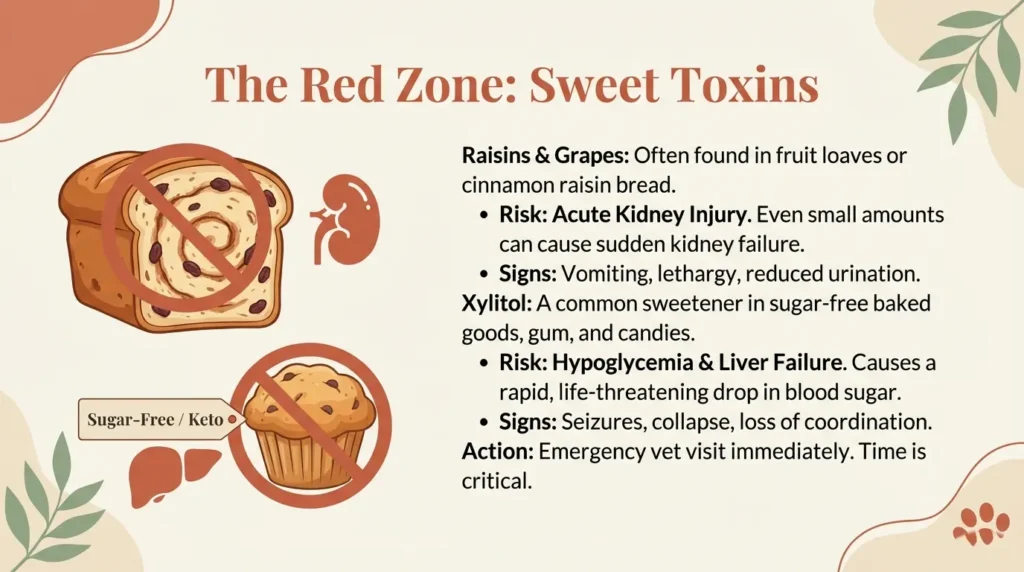
Some breads have dangerous ingredients your cat can’t handle. Onions and garlic, found in garlic bread, can damage red blood cells and cause hemolytic anemia.
Raisin or grape breads can lead to acute kidney injury in pets. Xylitol, found in sugar-free gum or candies, causes rapid low blood sugar and can lead to liver failure even in small amounts.
Be careful with garlic bread, raisin-studded sweet breads, and baked items with sugar-free gum or candy. Seek immediate vet care if your cat eats any of these ingredients.
| Risk | Common Sources | Signs to Watch For | Action |
|---|---|---|---|
| Digestive upset | Plain bread, buttery toast, sweet spreads | Vomiting, diarrhea, bloating | Withhold food, offer water, call vet if persistent |
| Allergic reaction / sensitivity | Wheat, preservatives, dough conditioners | Chronic GI upset, itchy skin, ear infections | Discuss elimination diet or testing with your veterinarian |
| Allium toxicity | Garlic bread, onion rolls, savory loaves | Weakness, pale gums, rapid breathing | Immediate veterinary assessment and blood work |
| Grape/raisin toxicity | Raisin bread, fruit loaves | Vomiting, lethargy, reduced urination | Emergency vet visit for fluids and monitoring |
| Xylitol poisoning | Sugar-free baked goods, gum, candies | Hypoglycemia, seizures, liver failure | Seek emergency care immediately |
Bread for cats as an occasional treat: safe ways to offer it
Wondering if cats can eat bread and how to do it safely? Treats should be rare, small, and never replace their regular food. Always keep an eye on your cat after they try something new.
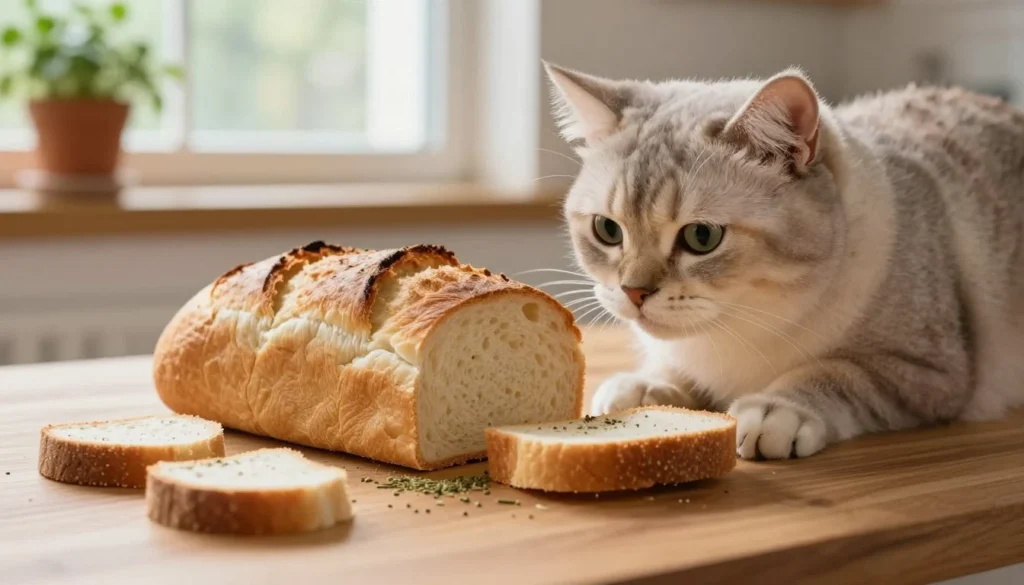
Portion control and frequency guidelines
When giving bread to cats, aim for just a crumb or a small bite, about 1/4 teaspoon. Bread has lots of calories, so even small amounts can add up. This can lead to weight gain if done too often.
Only give bread as an occasional treat, at most once in a while. Never use it as a meal. Remember to count it as part of their daily calories to avoid overfeeding.
Suggested plain, safe bread types and preparation tips
Stick to plain, unbuttered, unsalted white or whole-wheat bread. Remove the crust if your cat has trouble chewing. Soften the bread to reduce choking risks.
Don’t give warm yeast dough. It can expand in the stomach and cause gas. Also, avoid breads with butter, jam, garlic, onion, raisins, or artificial sweeteners like xylitol.
Signs to watch for after your cat tries bread
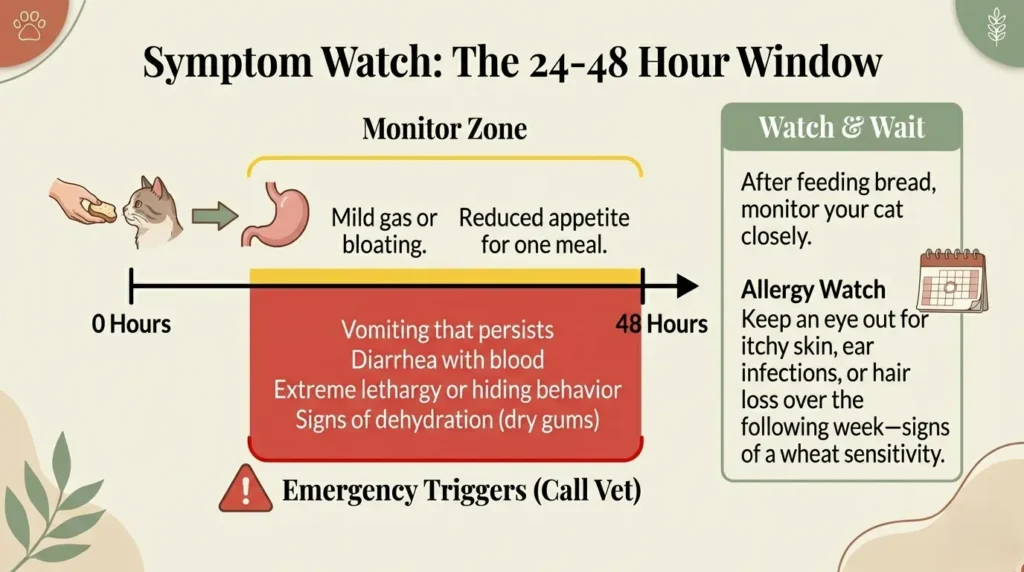
Keep an eye on your cat for 24–48 hours after they eat bread. Look for vomiting, diarrhea, lethargy, reduced appetite, excessive drooling, or stomach pain.
If you notice any bad signs or think they might have eaten something toxic, call your vet or the ASPCA Animal Poison Control right away.
Special considerations: kittens, health conditions, and picky eaters
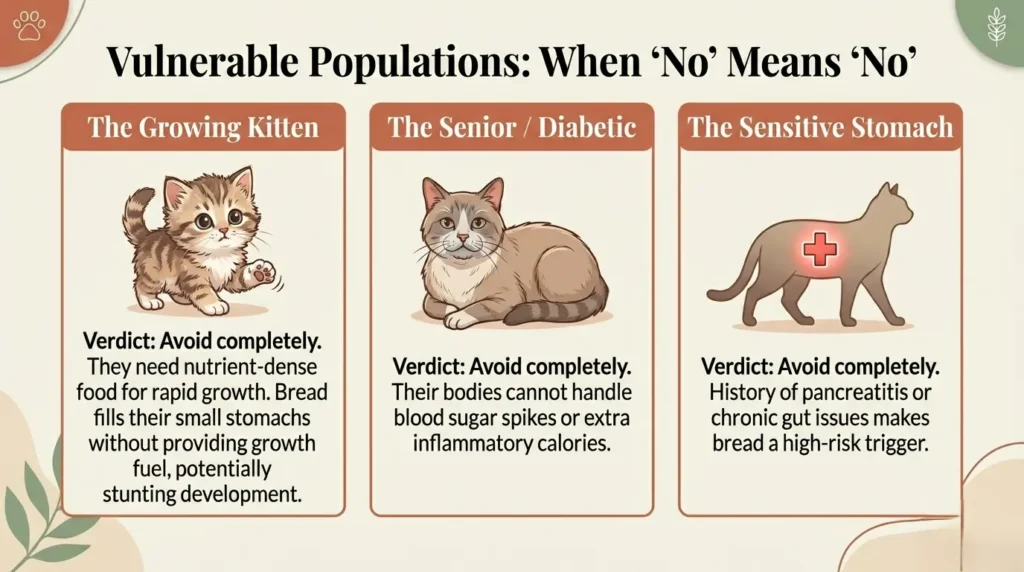
Your cat’s age and health affect what snacks are safe. Kittens need lots of protein, fats, and nutrients for growth. Bread doesn’t offer much of these and can upset their developing gut.
Can kittens have bread and when to avoid it
When you ask if kittens can have bread, the answer is no. Kittens need special food for growth. Even a small piece of bread can make them sick.
Only give a tiny taste to an older kitten with your vet’s okay. Stop right away if they show signs of upset stomach.
Cats with diabetes, obesity, or digestive disorders
If your cat has diabetes or is overweight, be careful with bread. It has simple carbs that can raise blood sugar and add extra calories.
Pancreatitis or chronic gut issues can make bread or human treats worse. Work with your vet to find safe, vet-approved treats that help manage their condition.
Alternatives to bread that satisfy texture-seeking cats
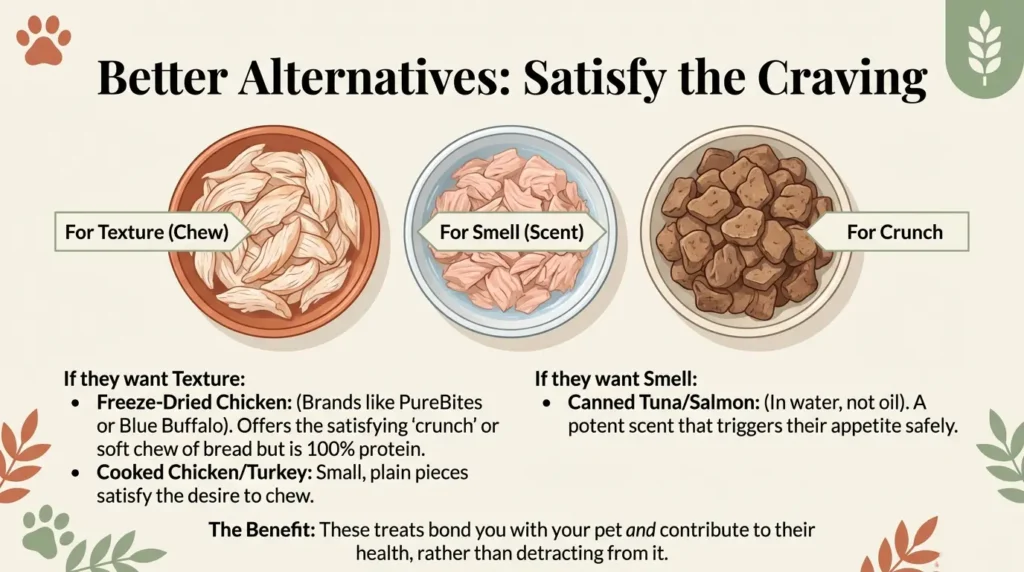
Some cats like the soft chew of bread. But there are safer options. Small pieces of cooked chicken or turkey are good for protein without carbs.
Plain canned tuna or salmon in water can also be used sparingly. Freeze-dried chicken treats from brands like PureBites, Blue Buffalo, or Wellness offer texture and smell without carbs.
Choose commercial cat treats that are tasty and nutritious. Always read labels to avoid harmful ingredients.
Conclusion
Wondering if cats can eat bread? The short answer is yes, but only in tiny amounts. Plain bread is usually safe for most healthy adult cats. However, it’s not a good substitute for their balanced diet.
Bread lacks the proteins, taurine, and vitamins cats need. So, it should never be a main part of their diet. Keep the portions small and only give it occasionally.
But remember, bread is safe for cats only if it doesn’t have harmful ingredients. Avoid any bread with onion, garlic, raisins, xylitol, or rich fillings. Cats with diabetes, weight issues, or digestive problems should not eat bread at all.
Always follow your vet’s advice. For treats and daily nutrition, choose commercial diets and snacks your vet recommends.
If your cat eats a crumb now and then, it’s unlikely to harm them. But watch for vomiting, diarrhea, or signs of an allergic reaction. If you see any worrying symptoms or your pet eats a lot of bread or something dangerous, call your vet or the ASPCA Animal Poison Control Center right away.
When in doubt, always ask your vet for advice. This will help keep your cat safe and healthy.
FAQ
Can cats eat bread?
Most healthy adult cats can eat plain bread without harm. But, it’s not a good food for them. It lacks important nutrients like taurine. Always give bread in tiny amounts, not as a meal.
Is any type of bread safer than others for cats?
Plain white or whole-wheat bread is safest for cats. Avoid bread with garlic, onion, raisins, nuts, or xylitol. Never give warm yeast dough to cats.
How often and how much bread can I give my cat?
Give only a tiny bit of bread, like a crumb. Do this very rarely. Bread has a lot of calories and can make cats gain weight.
Can kittens have bread?
No, kittens should not have bread. They need protein, fats, and nutrients from animal sources. Bread is not good for them and can upset their stomachs. Only give a tiny taste if a vet says it’s okay.
What health problems can bread cause in cats?
Bread can cause vomiting, diarrhea, and stomach upset in cats. It can also lead to obesity or blood sugar problems. Toxic ingredients like onion, garlic, raisins, and xylitol are especially dangerous.
My cat ate garlic bread/raisin bread/xylitol-sweetened pastry—what should I do?
Call your vet or the ASPCA Animal Poison Control Center right away. Onion and garlic can harm red blood cells. Raisins and grapes can hurt kidneys. Xylitol can cause blood sugar drops and liver damage.
How can I safely offer bread-like textures to a cat who begs or likes chewing?
Give them safe alternatives like cooked chicken or turkey. You can also try plain canned fish or commercial cat treats. Brands like PureBites and Blue Buffalo make good options.
Are there cats who should never have even a tiny piece of bread?
Yes. Cats with diabetes, obesity, or certain health issues should not have bread. It can be harmful to them. Always talk to your vet before giving human food to your cat.
What signs should I watch for after my cat eats bread?
Watch for vomiting, diarrhea, lethargy, and loss of appetite. Also, look for excessive drooling or stomach pain. If your cat shows signs of poisoning, get help from a vet right away.
Can bread help with picky eating?
No, bread is not a good solution for picky eating. It can hide health problems. Try high-quality cat food or vet-recommended treats. If your cat still won’t eat, see your vet.
Got questions about what your cat should or shouldn’t eat? Check out our guide to Safe Answers to Can Cats Eat Bread, or drop a comment below with your specific situation.
Sources & Further Reading:
- petmd.com : Can Cats Eat Bread?
- hillspet.com : Should You Give Your Cat Bread?