7 Shocking Facts. Can Cats Eat Watermelon Safely
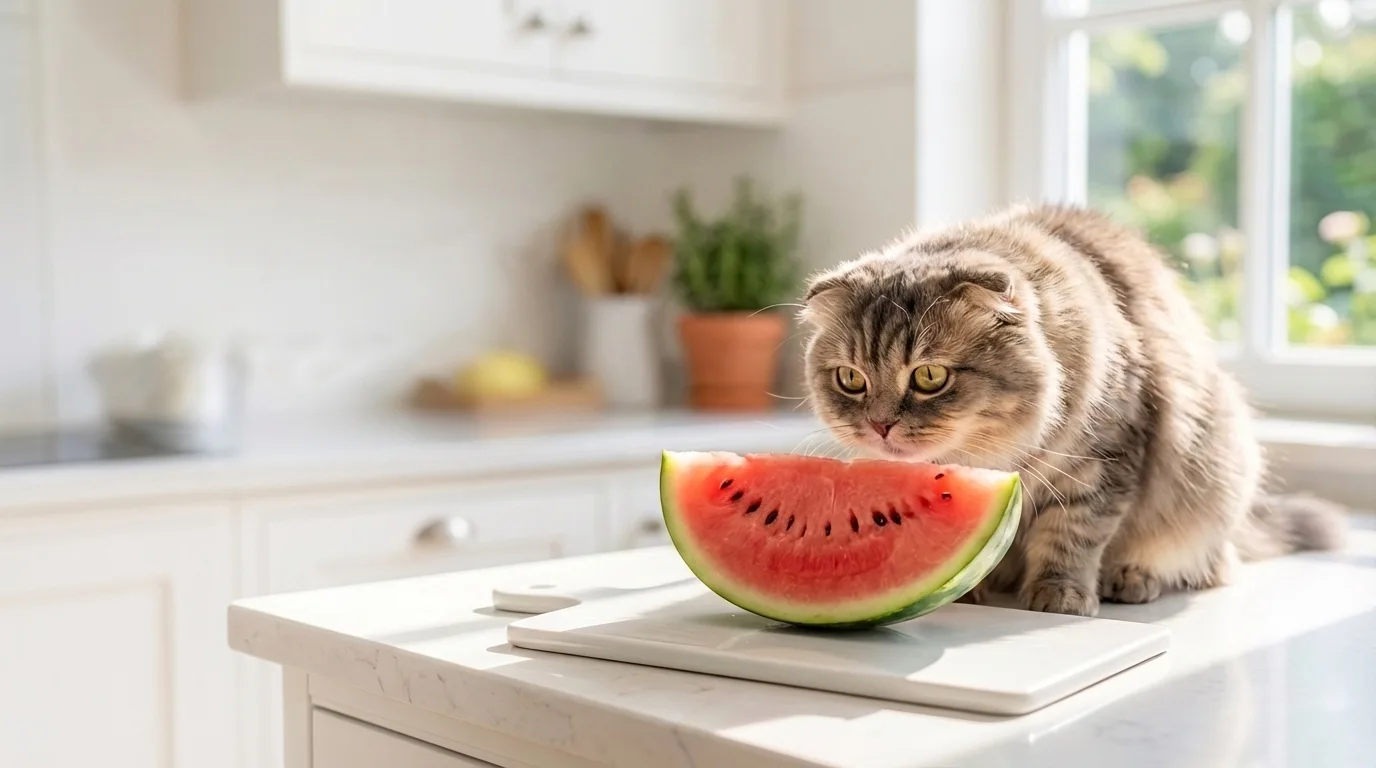
It happens every summer. You’re slicing up a cold watermelon, you drop a piece, and before you can grab a paper towel, your cat is gnawing on it. As a cat parent, your first thought is usually panic. Your second is a frantic Google search.
I’ve been there. My cat Luna once batted a watermelon cube off the counter and went to town on it while I was elbow-deep in dishes. The immediate question racing through my mind was: Is she going to be okay?
Here’s what you actually need to know—fast.
Table of Contents
Can Cats Eat Watermelon?
The Short Answer
Yes, cats can eat small amounts of seedless watermelon flesh, but only as an occasional treat. The pink flesh is non-toxic and can even provide a little hydration boost on a hot day. But—and this is critical—only the seedless flesh is safe. Seeds can be a choking hazard and may release compounds that cause digestive trouble. The tough green rind is a fast track to an expensive vet bill.
The One-Minute Safety Summary
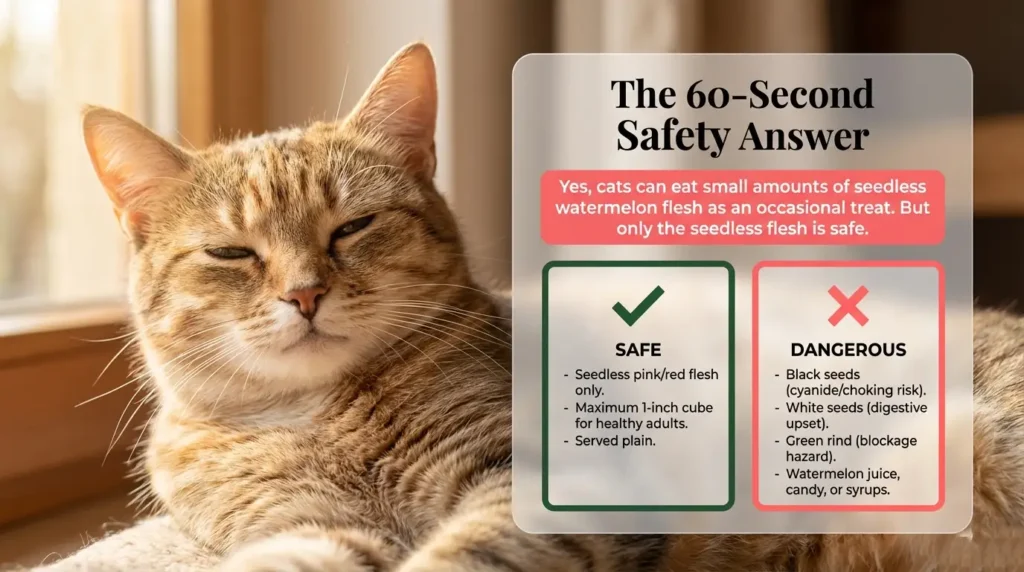
✅ SAFE:
- Seedless pink or red flesh only
- Maximum 1-inch cube for most healthy adult cats
- Served plain, no additives
❌ DANGEROUS:
- Black seeds (choking + cyanide risk)
- White seeds (digestive upset)
- Green rind (blockage hazard)
- Watermelon juice, candy, or flavored products
Who Should Skip It Entirely
Not all cats are good candidates for watermelon, even if you prepare it perfectly. Skip it if your cat is:
- A kitten (under 1 year old): Their digestive systems are still developing and can’t handle the sugar load or potential upset.
- Diabetic: Even natural fructose can disrupt insulin stability.
- Overweight or obese: The extra sugar calories aren’t worth it.
- On a prescription diet: Don’t introduce anything that might interfere with their medical nutrition plan.
- Known to have a sensitive stomach: If your cat gets diarrhea from switching food too fast, watermelon will likely cause the same problem.
Quick Takeaway
If your cat is a healthy adult and you want to share a summer treat, stick to one simple rule: Tiny piece. Seedless flesh. Once in a while.
Why Do Cats Even Want Watermelon?
Cats Don’t Crave Sugar the Way Humans Do
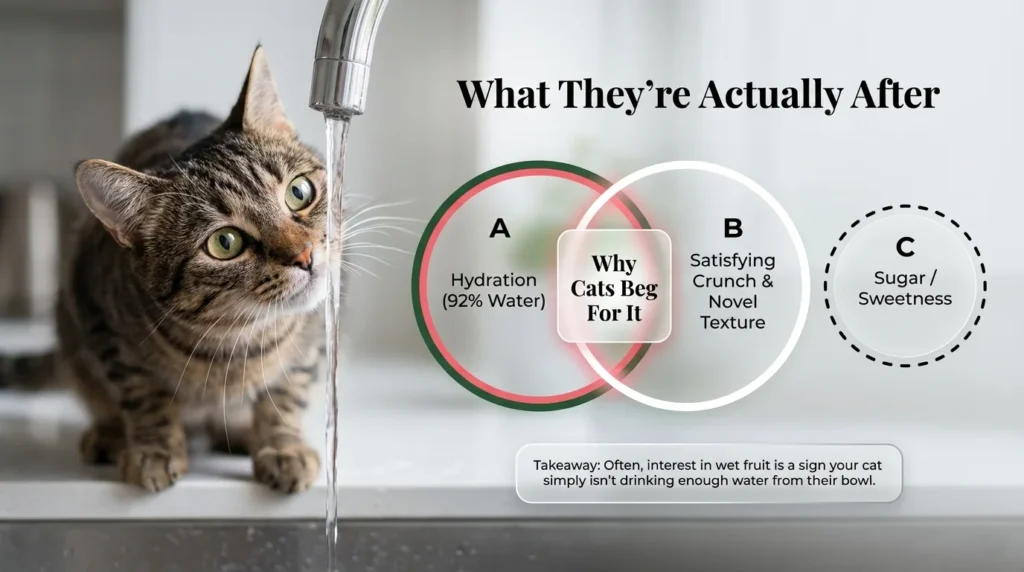
Here’s something most pet owners don’t realize: cats are obligate carnivores who literally lack the taste receptors for sweetness. They don’t experience that “ooh, this is sugary and delicious” sensation that we do. So why is your cat begging for a bite of your watermelon?
Because they’re not after the sugar. They’re after the moisture and texture.
Why Chilled Fruit Can Seem Appealing
On a hot July afternoon, that ice-cold, crisp watermelon chunk offers two things cats do find appealing: hydration and a satisfying crunch. Cats are naturally drawn to novel textures, and the juicy, fibrous bite of watermelon can be intriguing—especially if they see you eating it.
Some cats are also just nosy. If you’re eating something, they want to investigate. It’s not because they have a sophisticated palate for fruit. It’s because you have it, and that makes it automatically interesting.
When Interest Doesn’t Mean Suitability
Just because your cat shows curiosity doesn’t mean the food is healthy or necessary for them. Cats will also show interest in plastic bags, houseplants, and your laptop keyboard—and none of those are good for them either.
The takeaway: Your cat’s interest in watermelon is driven by texture and moisture, not nutritional need. That means it can be a harmless novelty treat if done right, but it’s never something they require in their diet.
What This Tells Owners
If your cat seems obsessed with watermelon, it might actually be a sign they’re not drinking enough water. Before you start offering fruit, try adding a cat water fountain to encourage hydration or switching to wet food if they’re on a dry-only diet. Watermelon should never be your primary hydration strategy for a cat who doesn’t drink enough.
Is Watermelon Good for Cats?
Potential Hydration Benefit
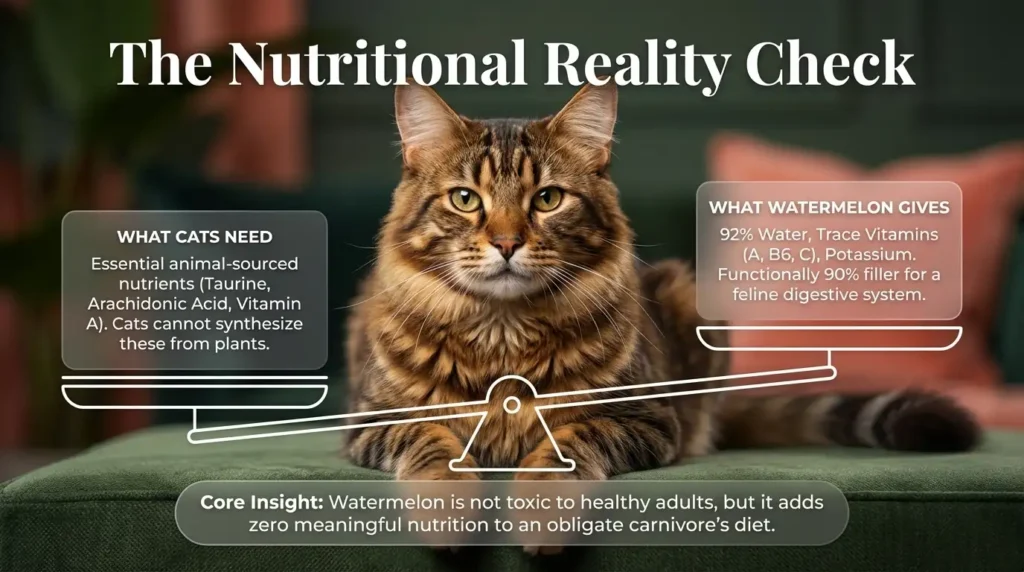
Watermelon is about 92% water, which makes it one of the most hydrating fruits available. For a cat who’s a picky drinker—especially during summer—offering a tiny piece of watermelon might help with hydration. But let’s be honest: if your cat isn’t drinking enough, the solution isn’t fruit. It’s better water bowl placement, a fountain, or switching to wet food.
That said, if your cat already drinks well and you want to offer a cooling treat on a hot day, the moisture content is a nice bonus.
Small Nutritional Upside
Watermelon contains small amounts of vitamins A, B6, and C, plus a little potassium. In theory, those sound great. In practice, your cat’s body doesn’t process plant nutrients the same way ours do. Cats are designed to extract nutrients from meat, not fruit. So while those vitamins aren’t harmful, they’re also not doing much heavy lifting for your cat’s health.
Think of it this way: watermelon is like giving your cat a multivitamin that’s 90% filler. Sure, there’s something in there, but it’s not the most efficient delivery system.
Why Benefits Are Limited
This is where obligate carnivore biology matters. Cats need taurine, arachidonic acid, and vitamin A from animal sources. They can’t synthesize these nutrients from plants the way herbivores or omnivores can. Watermelon doesn’t provide any of the essential nutrients cats need to thrive.
It’s not toxic. It’s not harmful in small amounts. But it’s also not adding anything meaningful to their diet.
Treat vs Nutrition
Here’s my rule: Watermelon is a treat, not nutrition. Treats—including safe fruits—should never make up more than 10% of your cat’s daily caloric intake, according to veterinary nutritionists. For most cats, that means treats are bonus flavor, not core food.
If you’re looking for a way to boost your cat’s health, invest in high-quality cat food with real meat as the first ingredient. Save watermelon for the occasional “I dropped a piece and you can have it” moment.
Watermelon Risks for Cats
Seeds: The Choking and Cyanide Problem
Let’s talk about seeds, because this is where things get serious.
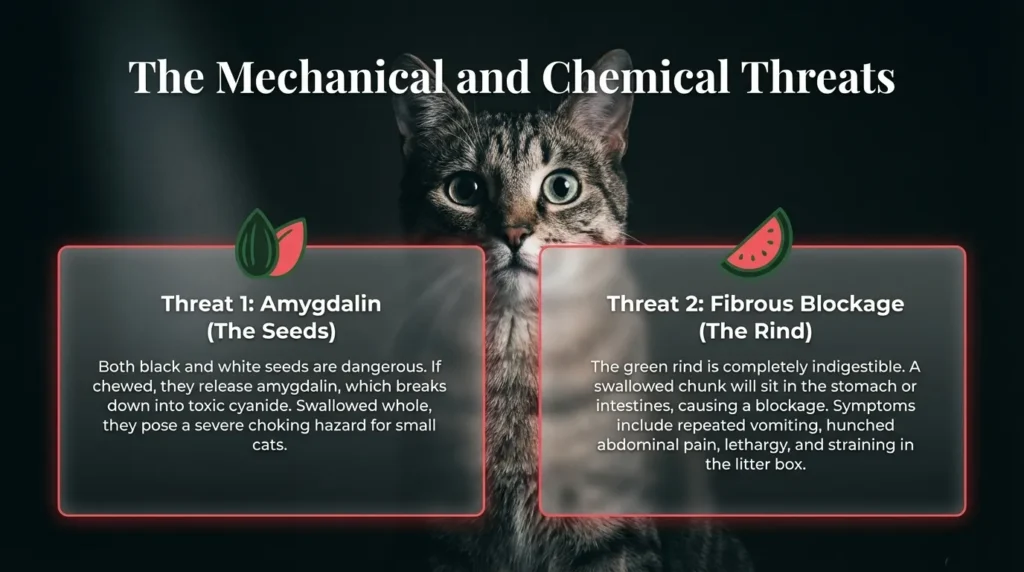
Watermelon seeds—both the big black ones and the smaller white ones—are not safe for cats. The black seeds contain a compound called amygdalin, which breaks down into cyanide when chewed. Now, a cat would need to chew a large quantity to experience toxicity, but why take the risk? Even one or two seeds can cause digestive upset, and if your cat is small, a seed can become a choking hazard.
You might read forums where owners say their cat swallowed a seed once and was fine. That’s because swallowed seeds often pass through whole without being digested. But if a cat chews the seed, it releases the amygdalin. It’s never worth the gamble.
Sarah’s Safety Rule: If the watermelon isn’t seedless, it’s not worth giving to your cat. Period.
Rind: The Blockage Nightmare
The green rind is the second major hazard. While the flesh is soft and digestible, the rind is tough, fibrous, and extremely hard for a cat’s digestive system to break down. If your cat eats a chunk of rind, it can sit in their stomach or intestines and cause a partial or full blockage.
Symptoms of a blockage include:
- Repeated vomiting
- Refusal to eat or drink
- Lethargy
- Abdominal pain (your cat may hunch, hide, or react aggressively when you touch their belly)
- Straining in the litter box with no results
If your cat ate watermelon rind and shows any of these symptoms within 12 hours, stop reading this and call your vet.
Sugar and Stomach Upset
Even the safe pink flesh contains natural sugars—mostly fructose. While a tiny amount won’t harm a healthy adult cat, too much can lead to:
- Diarrhea
- Vomiting
- Gas and bloating
- Reduced appetite for their regular food
Cats don’t have the digestive enzymes to efficiently process plant sugars. That means even “natural” sugar from fruit can overwhelm their system if you give too much.
High-Risk Cats
Some cats should avoid watermelon entirely, even in tiny amounts:
| Cat Type | Why It’s Risky |
|---|---|
| Diabetic cats | Fructose spikes blood sugar and can destabilize insulin management |
| Overweight/obese cats | Extra calories from treats make weight loss harder |
| Kittens (under 1 year) | Developing digestive systems are too sensitive for non-meat foods |
| Cats with IBD or sensitive stomachs | High risk of diarrhea and vomiting |
| Cats on prescription diets | May interfere with carefully balanced medical nutrition |
| Elderly cats with kidney disease | Unnecessary sugar load on already stressed organs |
If your cat falls into any of these categories, skip the watermelon and stick to vet-approved treats.
How Much Watermelon Can a Cat Eat?
This is where most advice gets frustratingly vague. “A small amount” or “a little bit” doesn’t help when you’re standing in your kitchen with a piece of fruit and a begging cat.
So let’s get specific.
Safe Portion Sizes by Cat Size
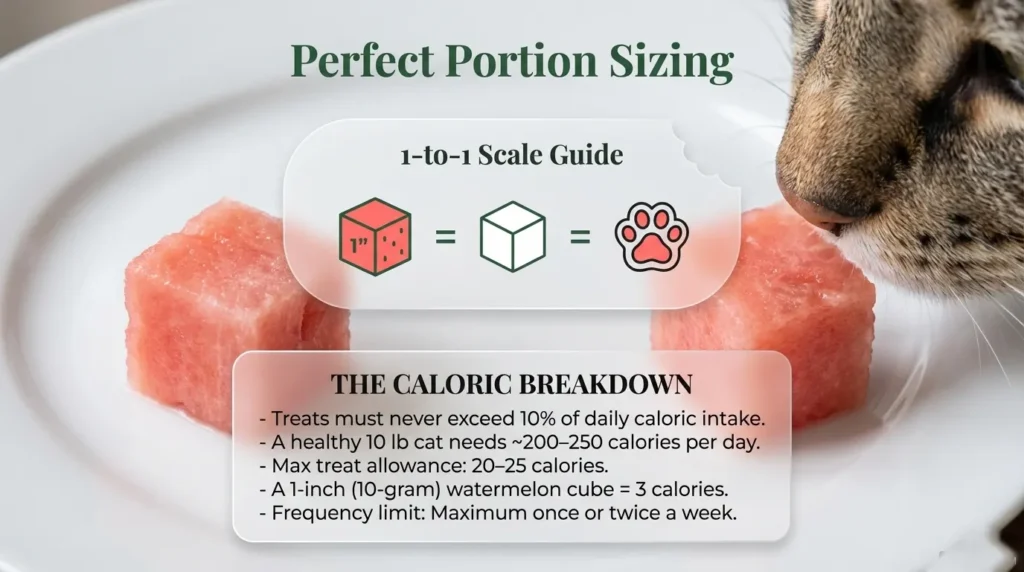
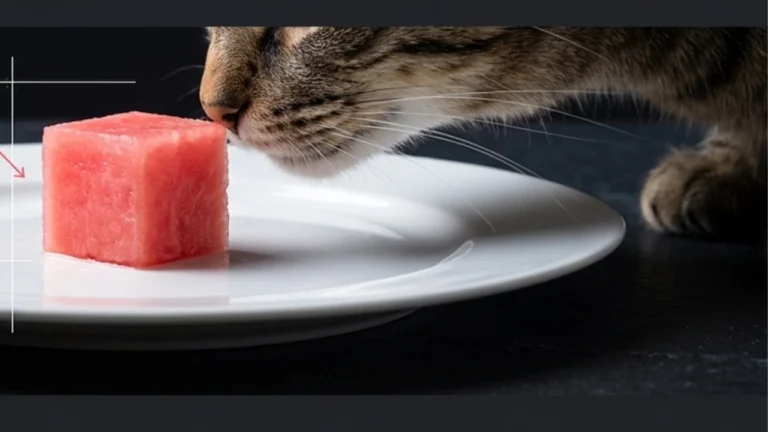
For a healthy adult cat weighing 8–12 lbs, a safe watermelon portion is roughly one 1-inch cube of seedless flesh. That’s about the size of a sugar cube or a large blueberry.
For smaller cats (under 8 lbs), cut that in half. For larger cats (over 12 lbs), you can offer up to two small cubes, but honestly, one is usually enough.
Why so small? Because treats should make up no more than 10% of your cat’s daily caloric intake. A healthy 10 lb cat needs about 200–250 calories per day. Ten percent of that is 20–25 calories. Watermelon has roughly 30 calories per 100 grams, so a 10-gram cube (about 1 inch) is roughly 3 calories. That’s a safe treat zone.
How Often Is Okay
Watermelon should be an occasional treat, not a daily ritual. I’d recommend no more than once or twice a week during summer, and even less frequently if your cat shows any signs of digestive upset.
If you’re giving watermelon regularly, you’re probably giving too much. Cats thrive on consistency and routine. Their digestive systems do best when their diet stays the same day to day.
First-Time Serving Rules
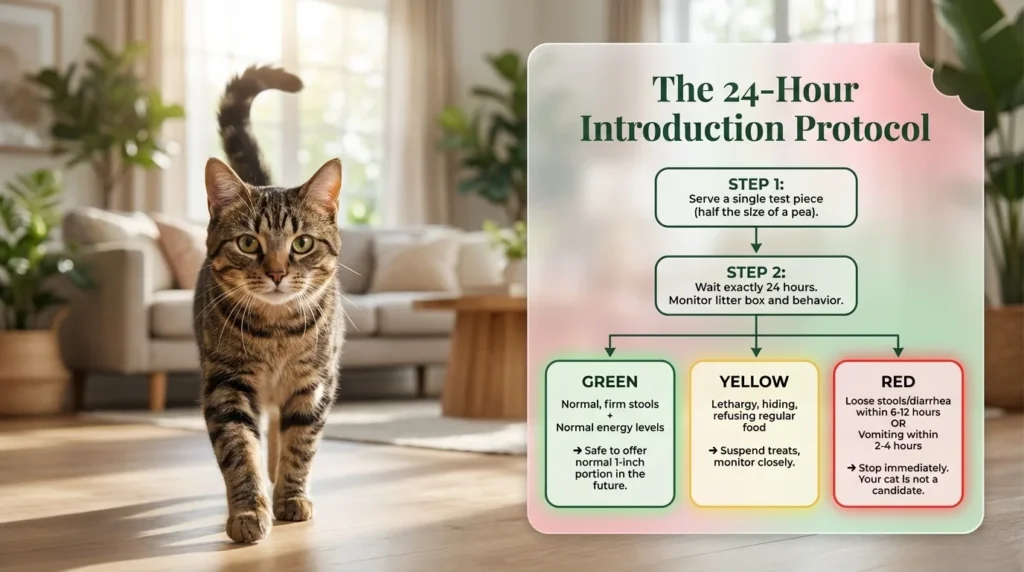
If your cat has never had watermelon before, start with an even smaller test piece—about half the size of a pea. Serve it plain, no salt or seasoning. Then wait 24 hours and watch their litter box.
What you’re looking for:
- Normal, firm stools (good sign)
- Diarrhea or soft stools (stop, don’t give again)
- Vomiting (stop immediately)
- Normal energy levels (good sign)
- Lethargy or hiding (concerning, monitor closely)
This is the same approach I use with any new treat for my cats. It’s called the 24-Hour Rule, and it’s saved me from a lot of midnight emergency vet visits.
Signs the Portion Was Too Much
Even if you stick to the recommended portion, some cats just don’t tolerate watermelon well. Watch for these red flags:
- Loose stools or diarrhea within 6–12 hours
- Vomiting within 2–4 hours
- Bloating or visible discomfort
- Refusing their regular food at the next meal
- Excessive grooming or licking around the mouth (sign of nausea)
If any of these happen, skip watermelon in the future. Not every cat is a good candidate, and that’s okay.
How to Serve Watermelon Safely
Okay, you’ve decided your cat is a good candidate and you want to try offering a tiny piece. Here’s exactly how to do it right.
Choose the Right Piece
Start with fresh, ripe, seedless watermelon. Don’t use:
- Watermelon that’s been sitting out for hours
- Watermelon with visible mold or fermentation
- Leftover watermelon that’s been in the fridge for more than 3–4 days
- Pre-cut watermelon from a grocery store salad bar (too much risk of cross-contamination)
Prep It the Right Way
- Wash your hands and the knife you’re using.
- Cut off all green rind and white pith. Only the pink or red flesh should remain.
- Check for seeds—even “seedless” watermelon can have small white seeds. Remove every single one.
- Cut into tiny cubes, no bigger than 1 inch on each side.
- Serve plain—no salt, sugar, or seasoning of any kind.
Ways NOT to Serve It
Never give your cat:
- Watermelon juice (too much sugar, no fiber to slow absorption)
- Watermelon candy or gummies (artificial ingredients, xylitol risk)
- Flavored watermelon snacks (additives, salt, sugar)
- Frozen watermelon popsicles (unless you made them yourself with pure watermelon and nothing else)
- Watermelon smoothies (dairy or other fruits may cause upset)
- Watermelon with syrup or sweeteners (obvious no)
Safe Treat Checklist
Before you hand that piece to your cat, run through this quick mental checklist:
✅ Seedless flesh only
✅ Rind completely removed
✅ No additives or flavoring
✅ Tiny portion (1-inch cube max)
✅ Cat is a healthy adult, not a kitten or high-risk cat
✅ You have time to monitor for the next few hours
If you can check all those boxes, you’re good to go.
My Cat Already Ate Watermelon—Now What?
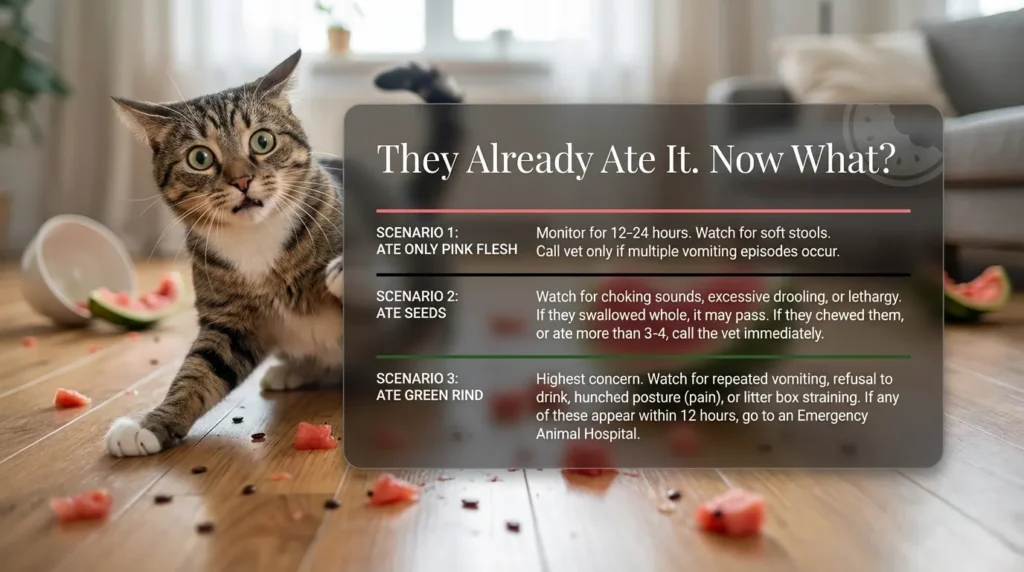
This section is for the readers who are here because their cat already got into the watermelon. If that’s you, take a breath. Most of the time, it’s going to be fine. But here’s what to do based on what your cat ate.
If Your Cat Ate Only the Flesh
What to do: Monitor your cat for the next 12–24 hours. Watch their litter box for diarrhea or unusually soft stools. Check their energy level—are they acting normal, or are they lethargic and hiding?
When to worry: If your cat vomits more than once, has multiple episodes of diarrhea, refuses food or water, or seems uncomfortable, call your vet. Otherwise, most cats will process a small amount of flesh without issue.
If Your Cat Ate Seeds
What to do: Don’t panic yet, but pay close attention. If your cat swallowed the seeds whole, they’ll likely pass through undigested. But if they chewed the seeds, there’s a small risk of cyanide exposure or choking.
Watch for:
- Difficulty breathing or choking sounds
- Drooling excessively
- Vomiting
- Diarrhea
- Lethargy or weakness
When to call the vet: If your cat shows any of the above symptoms, or if they ate more than 3–4 seeds, contact your vet for guidance. You can also call the ASPCA Animal Poison Control Center at (888) 426-4435 for immediate advice (note: there’s a consultation fee).
If Your Cat Ate Rind
What to do: This is the highest-concern scenario. The rind is tough, fibrous, and difficult to digest. It can cause choking or an intestinal blockage, which is a veterinary emergency.
Watch for:
- Repeated vomiting (more than twice in a few hours)
- Refusal to eat or drink
- Straining to defecate with no results
- Abdominal pain (hunched posture, hiding, growling when touched)
- Extreme lethargy
When to contact a veterinarian immediately: If your cat shows any of the above symptoms, don’t wait. Call your vet or an emergency animal hospital right away. Blockages can be life-threatening if not treated quickly.
When to Contact a Veterinarian Immediately
Call your vet or an emergency clinic if your cat experiences:
- Trouble breathing or choking sounds
- Repeated vomiting (more than twice in a few hours)
- Bloody stool or vomit
- Inability to keep water down
- Severe lethargy (won’t move, won’t respond to their name)
- Abdominal swelling or visible pain
- Seizures or disorientation
When in doubt, call. I’ve never regretted a midnight call to my vet, even when it turned out to be nothing serious. Better safe than sorry.
Better Alternatives to Watermelon
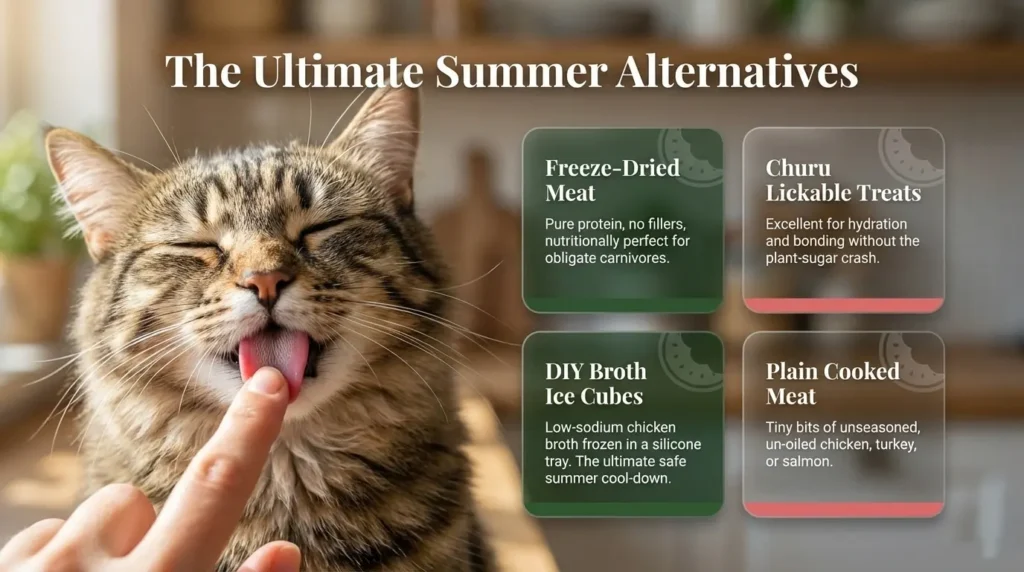
If watermelon feels like too much hassle or your cat didn’t tolerate it well, here are some safer, lower-risk options.
Cat Treats That Are Lower Risk
Honestly, the safest treats for cats are actual cat treats. They’re formulated to be nutritionally appropriate, portion-controlled, and designed not to upset sensitive stomachs.
My personal favorites:
- Freeze-dried chicken or salmon treats (pure protein, no fillers)
- Churu lickable treats (great for hydration and bonding)
- Dental treats (serve double duty for teeth and breath)
If you want to give human food, tiny bits of plain cooked chicken, turkey, or salmon are your best bet. No seasoning, no oil, just pure cooked meat.
Cat-Safe Fruits to Compare
If you really want to experiment with fruit, here are a few options that are generally safer and better tolerated than watermelon:
- Blueberries: Lower sugar, small size, easy to portion. Some cats like them frozen as a crunchy treat.
- Cantaloupe: Similar to watermelon but often better tolerated. Still remove seeds and rind.
- Strawberries: High in fiber, but also high in sugar. Tiny amounts only, and remove the green top.
- Bananas: Very high in sugar and calories. Only offer a pea-sized piece, if at all.
For deeper dives on each of these, check out my guides on can cats eat blueberries and can cats eat cantaloupe.
Fruits and Foods to Avoid
Not all fruits are safe. Never give your cat:
- Grapes or raisins (toxic, can cause kidney failure)
- Citrus fruits (upset stomach, too acidic)
- Cherries (cyanide in pits)
- Avocado (persin toxicity)
- Onions, garlic, or chives (destroys red blood cells)
For a full list, see my guide on can a cat eat watermelon.
Best Summer Treats for Cats
Looking for ways to keep your cat cool and happy this summer? Try these instead:
- Ice cubes made from low-sodium chicken broth (freeze in a silicone tray)
- Frozen Churu treats (pop them in the freezer for a cooling snack)
- Wet food served slightly chilled (not ice cold, just cool)
- Interactive puzzle feeders with treats inside (mental stimulation + reward)
These options give you the bonding and fun of treat time without the risks that come with human food.
Watermelon Portion Calculator
🍉 Watermelon Portion Calculator
Frequently Asked Questions
Key Takeaways
Let’s wrap this up with the essentials:
✅ Yes, but with strict rules: Healthy adult cats can have tiny amounts of seedless watermelon flesh as an occasional treat.
❌ No seeds, no rind, ever: Seeds are a choking hazard and contain compounds that break down into cyanide. Rind can cause intestinal blockages.
⚠️ High-risk cats should skip it: Kittens, diabetic cats, overweight cats, and cats with sensitive stomachs should not have watermelon at all.
📏 Portion matters: One 1-inch cube is the maximum safe serving for most healthy adult cats, and even that should only be offered once or twice a week at most.
👀 Monitor closely: After the first serving, watch your cat’s litter box and energy levels for 24 hours. Diarrhea or vomiting means watermelon is off the menu permanently for that cat.
🚨 When in doubt, call the vet: If your cat ate seeds or rind, or if they’re showing any concerning symptoms, don’t wait and see. Contact your veterinarian or an emergency animal hospital immediately.
Final Thoughts
Watermelon can be a fun, hydrating summer treat for the right cat in the right circumstances. But it’s not a nutritional necessity, and it’s definitely not worth the risk if your cat falls into any of the high-risk categories.
The most important thing? You know your cat best. If something feels off, trust your gut and err on the side of caution. I’ve learned over the years that the best cat parents aren’t the ones who know every obscure fact about feline nutrition—they’re the ones who pay attention, stay informed, and make decisions with their cat’s specific needs in mind.
If you found this guide helpful, check out my related articles on can cats have watermelon, can cats eat strawberries, and Can Cats Eat Mango?.
Stay safe, stay informed, and give your cat a scratch behind the ears from me.