Can Cats Have Almond Milk? 3 Perfect Alternatives Be Safe!
The Direct Answer
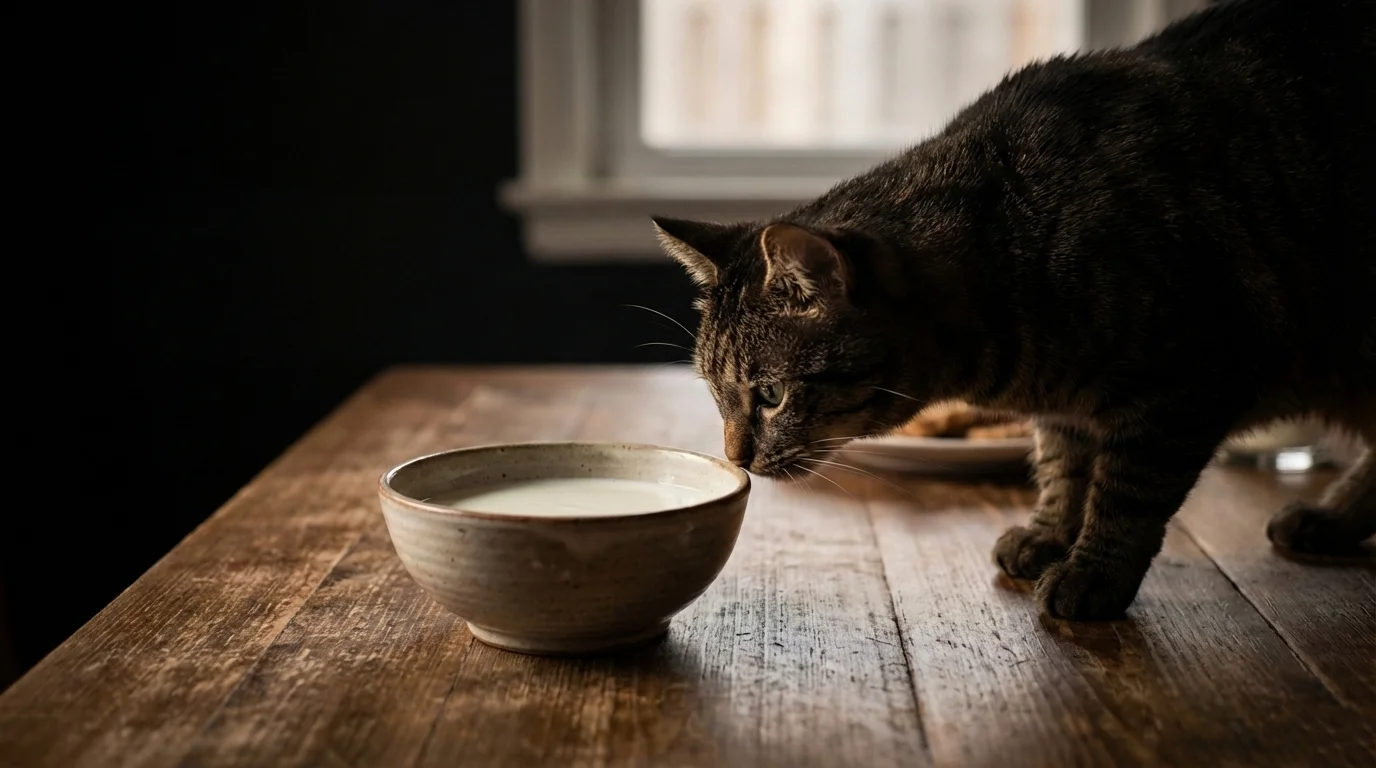
Can Cats Have Almond Milk? No, cats should not have almond milk. Despite being lactose-free, almond milk contains additives, sweeteners, and thickeners inappropriate for obligate carnivores. Some brands contain xylitol, which is toxic to pets. Almonds themselves offer no nutritional value to cats and can cause digestive upset. Even “plain” almond milk provides zero essential nutrients cats need while potentially causing vomiting, diarrhea, or allergic reactions. Water remains the only beverage cats truly need.
Last week, my friend texted me a photo of her cat enthusiastically lapping up almond milk from her cereal bowl. “Since she can’t have regular milk, almond milk should be fine, right? It’s healthier!”
I had to break some bad news.
Just because something is lactose-free doesn’t automatically make it cat-safe. In fact, almond milk might be worse for cats than regular dairy in some ways – and the reasons have nothing to do with lactose.
If you’ve switched to plant-based milk yourself and wondered whether you can share it with your cat, or if you’re looking for a “healthier” alternative to cow’s milk, the answer is clear: no, cats should not have almond milk, and I’m going to explain exactly why.
Table of Contents
Why Almond Milk Isn’t Safe for Cats
The problem with almond milk for cats isn’t just one thing – it’s multiple issues stacked together.
Cats Are Obligate Carnivores
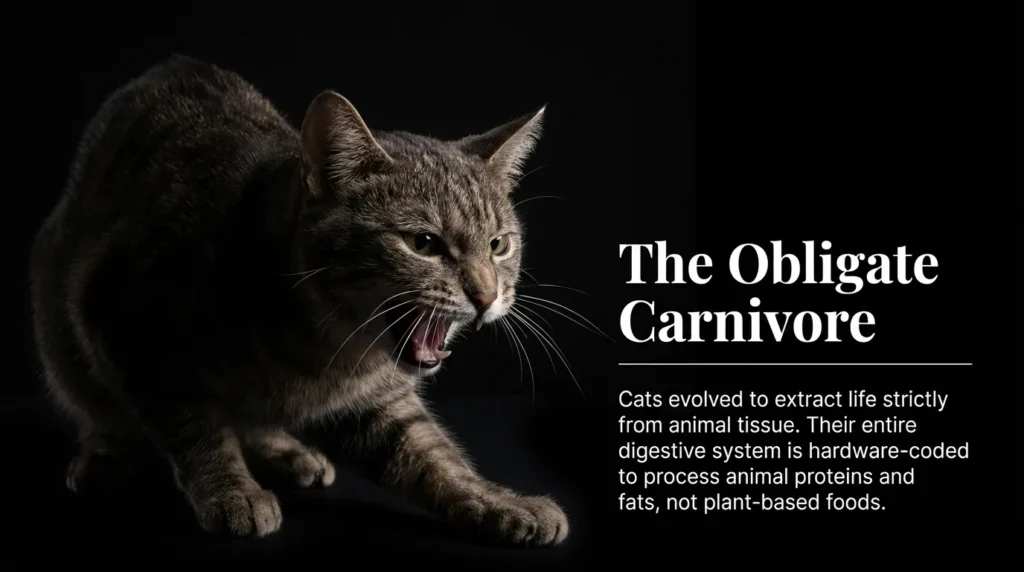
This is the foundation of why almond milk fails for cats. Cats evolved to eat meat exclusively. Their entire digestive system is designed to process animal proteins and fats, not plant-based foods.
What cats actually need:
- Animal-based protein (chicken, fish, beef)
- Taurine from animal sources (essential for heart and eyes)
- Arachidonic acid from animal fats
- Vitamin A from animal tissue
- High protein, moderate fat, minimal carbohydrates
What almond milk provides:
- Plant protein cats can’t efficiently use
- No taurine
- Wrong type of fats
- Zero vitamin A in usable form
- Mostly water with additives
My cat Luna can’t extract nutrition from almonds any more than I could survive eating grass. Her biology simply doesn’t work that way.
The Additive Problem
Here’s what shocked me when I actually read an almond milk label:
Typical almond milk ingredients:
- Filtered water
- Almonds (2-3% of total content)
- Cane sugar or other sweeteners
- Calcium carbonate
- Sea salt
- Sunflower lecithin
- Gellan gum (thickener)
- Natural flavors (vague term)
- Carrageenan (in some brands)
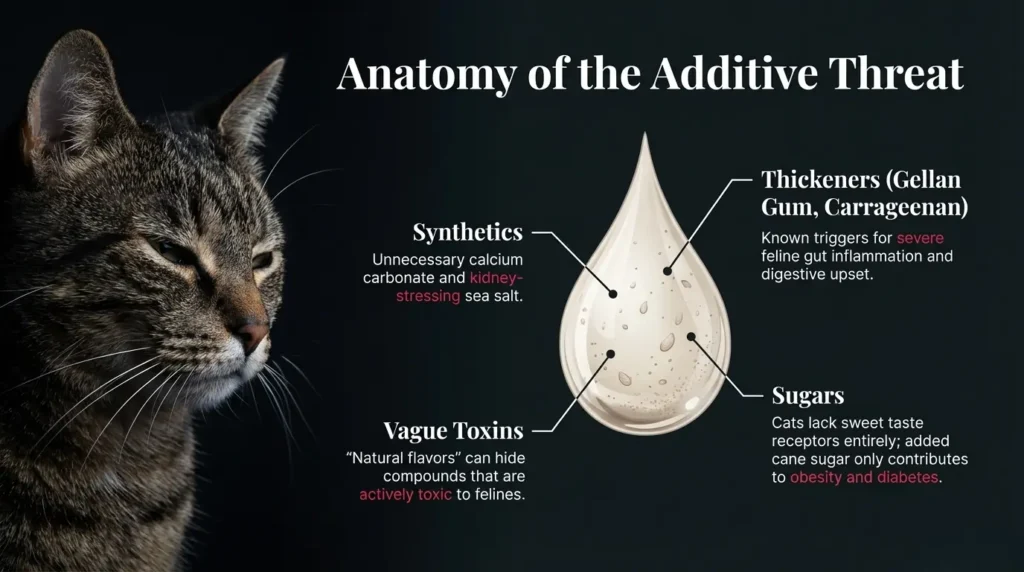
Cats don’t need ANY of these additives. Many are actively problematic:
Sugar: Cats can’t even taste sweetness. Added sugars provide zero benefit and can contribute to obesity and diabetes.
Thickeners (gellan gum, carrageenan): Can cause digestive upset and inflammation in sensitive cats.
“Natural flavors”: This vague term could mean anything. Some flavor compounds are toxic to cats.
Salt: Unnecessary sodium that stresses kidneys.
Calcium carbonate: Synthetic mineral cats don’t need from this source.
The Xylitol Danger
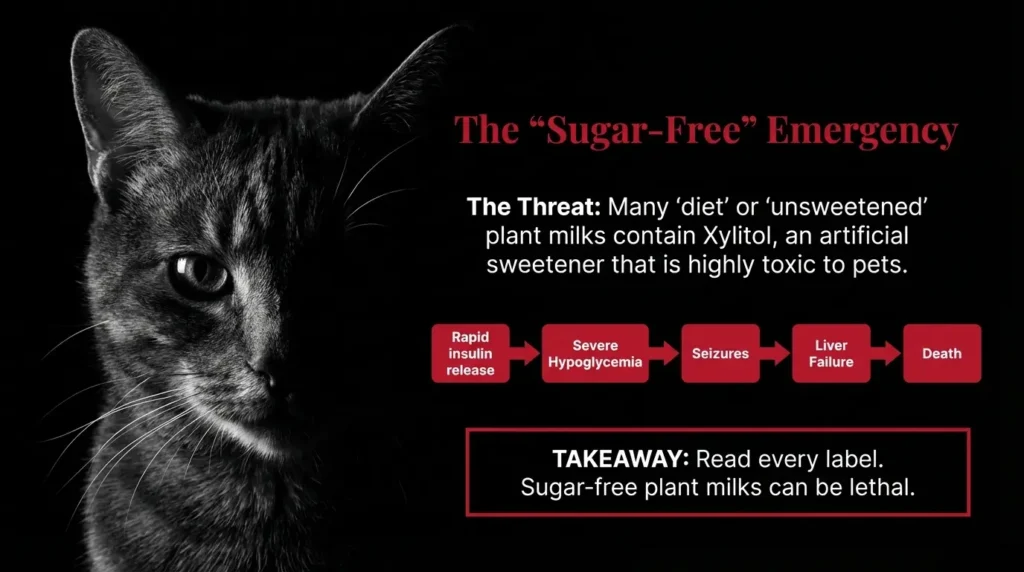
This is the scary one. Some brands of almond milk – particularly “unsweetened” or “diet” varieties – contain xylitol, an artificial sweetener that’s toxic to pets.
Xylitol causes rapid insulin release in cats and dogs, leading to:
- Dangerously low blood sugar (hypoglycemia)
- Seizures
- Liver failure
- Death in severe cases
I nearly had a heart attack when I discovered the “sugar-free” almond milk my roommate bought contained xylitol. Luna hadn’t gotten into it, thank god, but it was a close call.
Always check ingredient lists. If you have any sugar-free plant milk in your house and you have pets, read the label carefully.
What Happens If Cats Drink Almond Milk
Even if your almond milk doesn’t contain xylitol, your cat will likely experience problems.
Mild to Moderate Reactions
Most cats who drink almond milk will have:
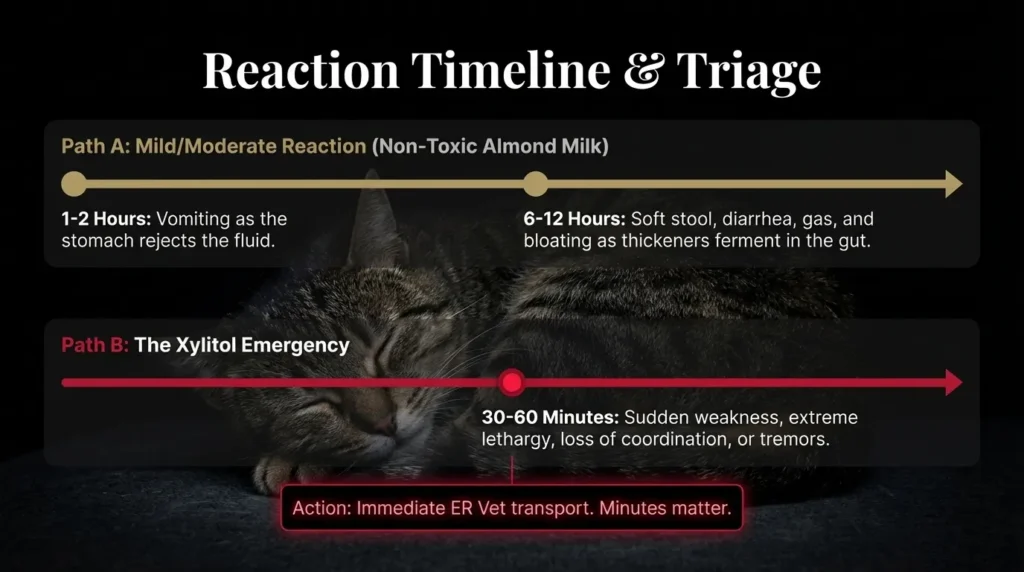
Digestive upset: Soft stool or diarrhea within 6-12 hours. The plant proteins and additives irritate their carnivore digestive systems.
Gas and bloating: The thickeners and fibers cause fermentation in the gut.
Vomiting: Some cats reject almond milk quickly, vomiting within 1-2 hours.
Decreased appetite: Stomach discomfort makes them less interested in their actual food.
My friend’s cat had soft stool for 24 hours after the almond milk incident. Nothing dramatic, but definitely not normal for her.
Potential Allergic Reactions
Some cats are allergic to almonds or additives in almond milk:
Symptoms of allergic reaction:
- Skin irritation or excessive scratching
- Ear infections
- Facial swelling
- Difficulty breathing (rare but serious)
- Hives or rashes
If you see these symptoms after your cat consumed almond milk, contact your vet immediately.
The Xylitol Emergency
If your cat consumed almond milk containing xylitol, this is a veterinary emergency:
Symptoms appear within 30-60 minutes:
- Sudden weakness or collapse
- Vomiting
- Tremors or seizures
- Lethargy
- Loss of coordination
Call your vet or emergency animal hospital immediately. Minutes matter with xylitol poisoning.
“But It’s Just a Little Bit…”
I hear this argument constantly. “A few licks can’t hurt, right?”
Here’s the problem: we don’t know what “safe” amounts are because almond milk shouldn’t be given to cats at all. There’s no research on safe dosing because it’s not appropriate feline nutrition.
Even small amounts provide:
- Zero nutritional benefit
- Potential for digestive upset
- Risk of exposing them to harmful additives
- Reinforcement of begging behavior
Why risk it when better alternatives exist?
What About Other Plant-Based Milks?
Since we’re on the topic, let me address the other trendy milk alternatives.
Oat Milk
Verdict: No.
High in carbohydrates and fiber that cats don’t need and can’t properly digest. Often contains added oils, sweeteners, and thickeners. Provides zero appropriate nutrition for obligate carnivores.
Soy Milk
Verdict: Definitely no.
Contains phytoestrogens that may interfere with hormone balance in cats. Some cats are allergic to soy. Provides no appropriate nutrition and can cause digestive issues.
Coconut Milk
Verdict: Hard no.
Extremely high in fat – can trigger pancreatitis in cats. The lauric acid in coconut can cause digestive upset. Some cats have allergic reactions. Way too rich for feline digestive systems.
Rice Milk
Verdict: Still no.
High in carbohydrates, very low in protein. Offers nothing cats need nutritionally. May cause blood sugar spikes.
Cashew Milk
Verdict: You guessed it – no.
Same issues as almond milk: additives, wrong nutritional profile, potential allergens, provides no feline-appropriate nutrition.
The pattern: Plant-based milks are designed for humans following specific diets, not for obligate carnivores with completely different nutritional requirements.
What to Give Your Cat Instead
If you want to give your cat something special without the risks, here are actually safe options.
Plain, Fresh Water
This is what cats genuinely need. Luna drinks from her cat fountain, and her hydration is perfect.
Ways to make water more appealing:
- Cat water fountain (moving water is more interesting)
- Multiple water stations around your home
- Ice cubes as toys (some cats love this)
- Wide, shallow bowls (whisker-friendly)
- Clean bowls daily (cats are picky about freshness)
Lactose-Free Cat Milk
If you really want to give your cat something milk-like, buy products specifically formulated for cats:
Whiskas Cat Milk or CatSip are lactose-free dairy with vitamins added. Luna gets 1-2 tablespoons twice weekly as a treat.
Important limits:
- Treats only, not daily beverages
- Maximum 2 tablespoons per serving
- 2-3 times weekly at most
- Monitor for any reactions
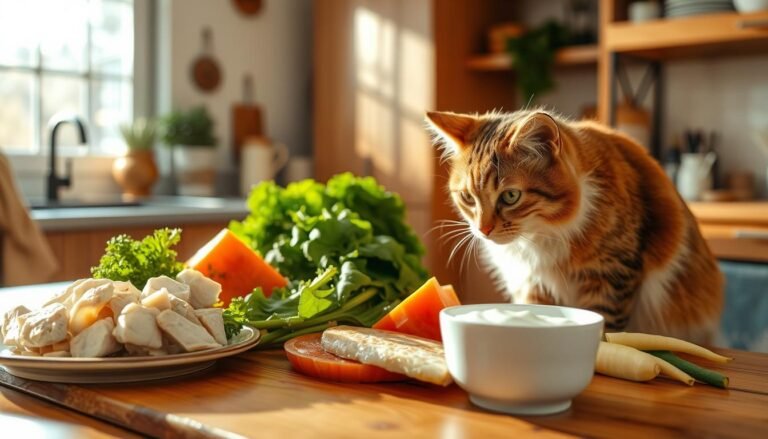
Homemade Chicken or Beef Broth
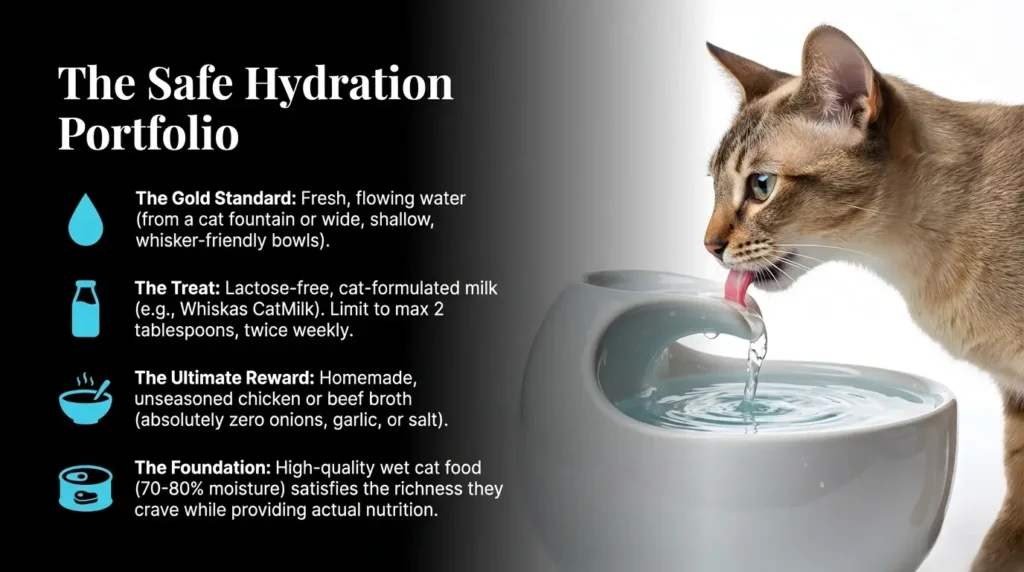
This became Luna’s favorite special drink. I simmer plain chicken in water (absolutely no onions, garlic, seasonings, or salt) and refrigerate it.
Why cats love it:
- Smells amazing to their carnivore noses
- Provides actual animal-based nutrition
- Hydration bonus
- Can be frozen in ice cube trays for portion control
A tablespoon of this broth makes Luna happier than any plant milk ever could.
Tuna Water (Occasionally)
The liquid from canned tuna (in water, not oil) is a treat most cats enjoy. Use sparingly – maybe once weekly – because too much tuna can cause mercury issues.
High-Quality Wet Cat Food
Wet food is 70-80% moisture and provides complete, appropriate nutrition. It satisfies the “richness” cats seek from milk while actually feeding them properly.
When I switched Luna to primarily wet food, she stopped begging for any kind of milk. She was getting what her body actually needed.
How to Cat-Proof Your Plant Milk
If you drink almond milk yourself, here’s how to keep your cat safe:
Storage Strategies
Never leave containers on counters. Luna is a skilled counter-surfer. Almond milk goes straight into the back of the fridge after use.
Rinse bowls immediately. Don’t leave cereal bowls with almond milk residue where curious cats can investigate.
Use covered cups. Travel mugs or cups with lids prevent cats from sticking their faces in.
Close doors while consuming. If your cat is particularly persistent, keep them out of the room while you’re drinking plant milk.
Teaching “Leave It”
I trained Luna to understand “leave it” for foods and drinks that aren’t hers. It took consistency, but now when she approaches my almond milk, one “leave it” command stops her.
Training steps:
- Show treat in closed hand
- Say “leave it”
- Wait until they stop trying to get it
- Reward with different treat
- Gradually increase difficulty
This works for all inappropriate foods, not just almond milk.
When to Call Your Vet
Contact your vet immediately if your cat consumed almond milk and shows:
Emergency symptoms (xylitol poisoning):
- Sudden weakness or collapse
- Seizures or tremors
- Vomiting
- Extreme lethargy
- Loss of coordination
Concerning symptoms (allergic reaction):
- Facial swelling
- Difficulty breathing
- Hives or severe itching
- Persistent vomiting
Monitor-and-call symptoms:
- Diarrhea lasting more than 24 hours
- Refusal to eat or drink
- Lethargy or hiding
- Multiple vomiting episodes
When in doubt, call. A quick vet consultation is better than waiting and hoping.
The Bottom Line on Cats and Almond Milk
Can cats have almond milk? No, they absolutely should not.
Despite being lactose-free, almond milk is inappropriate for cats because:
- They’re obligate carnivores who can’t use plant nutrition
- It contains additives and sweeteners cats don’t need
- Some brands contain toxic xylitol
- It provides zero essential feline nutrients
- It can cause digestive upset and allergic reactions
The “healthier alternative” logic doesn’t apply to cats. What’s healthy for plant-based human diets is completely wrong for carnivore biology.
Luna is four years old, perfectly healthy, and has never had almond milk or any other plant-based milk. She drinks water from her fountain, eats quality wet food, and gets occasional chicken broth treats.
She’s never looked at my almond milk latte with longing. And even if she did, I know better than to share.
Your cat’s biology deserves respect. Skip all milk – dairy and plant-based. Stick with water and appropriate feline nutrition.
Can Cats Have Almond Milk FAQs
Is almond milk toxic to cats? ▼
Almond milk itself isn’t acutely toxic to cats in most cases, but it’s inappropriate and potentially harmful. The main danger is that some brands – particularly “sugar-free” or “diet” varieties – contain xylitol, an artificial sweetener that IS highly toxic to cats, causing rapid insulin release, hypoglycemia, seizures, liver failure, and potentially death.
Even almond milk without xylitol can cause digestive upset (vomiting, diarrhea, gas), provides zero nutritional value for obligate carnivores, and contains additives like thickeners, sweeteners, and “natural flavors” that cats don’t need and may react poorly to. Some cats also have allergic reactions to almonds or additives. Always check ingredient lists carefully, and keep all plant-based milks away from cats regardless of xylitol content.
What should I do if my cat drank almond milk? ▼
First, check the almond milk ingredient list immediately for xylitol. If it contains xylitol, call your vet or emergency animal hospital right away – this is a medical emergency requiring immediate treatment. Symptoms of xylitol poisoning (weakness, vomiting, tremors, seizures) appear within 30-60 minutes.
If the almond milk doesn’t contain xylitol, remove all access to prevent more consumption, offer fresh water, and monitor your cat for 24-48 hours for digestive upset (vomiting, diarrhea, lethargy, loss of appetite). Most cats will have mild symptoms that resolve on their own. Call your vet if symptoms are severe, persist beyond 24 hours, you see signs of allergic reaction (facial swelling, difficulty breathing, hives), or if you’re concerned about your cat’s condition. Prevention is best – keep all plant-based milks away from cats.
Got questions about what your cat should or shouldn’t eat? Check out our guide to safe and toxic foods or cats, or drop a comment below with your specific situation.
Sources & Further Reading:
- petmd.com : Can Cats Drink Milk?
- Can Cats Drink Lactose-Free Milk? Finally, Some Good News!
- Can Cats Drink Regular Milk? 8 Safety Tips for Your Cat
- Can Cats Drink Milk? The Safe Truth About Feline Dairy
- Can Cats Drink Almond Milk? 11 Safety Facts Owners Need
- 3 Best Emergency Kitten Milk Recipes Guaranteed to Work
- Best Kitten Formula Brands for Essential Newborn Growth
And if you’ve got a “my cat drank milk” horror story, share it – sometimes we all need to know we’re not alone in our pet parenting mistakes!