
Can Cats Have Blueberries? The Complete Safety Guide
The Direct Answer
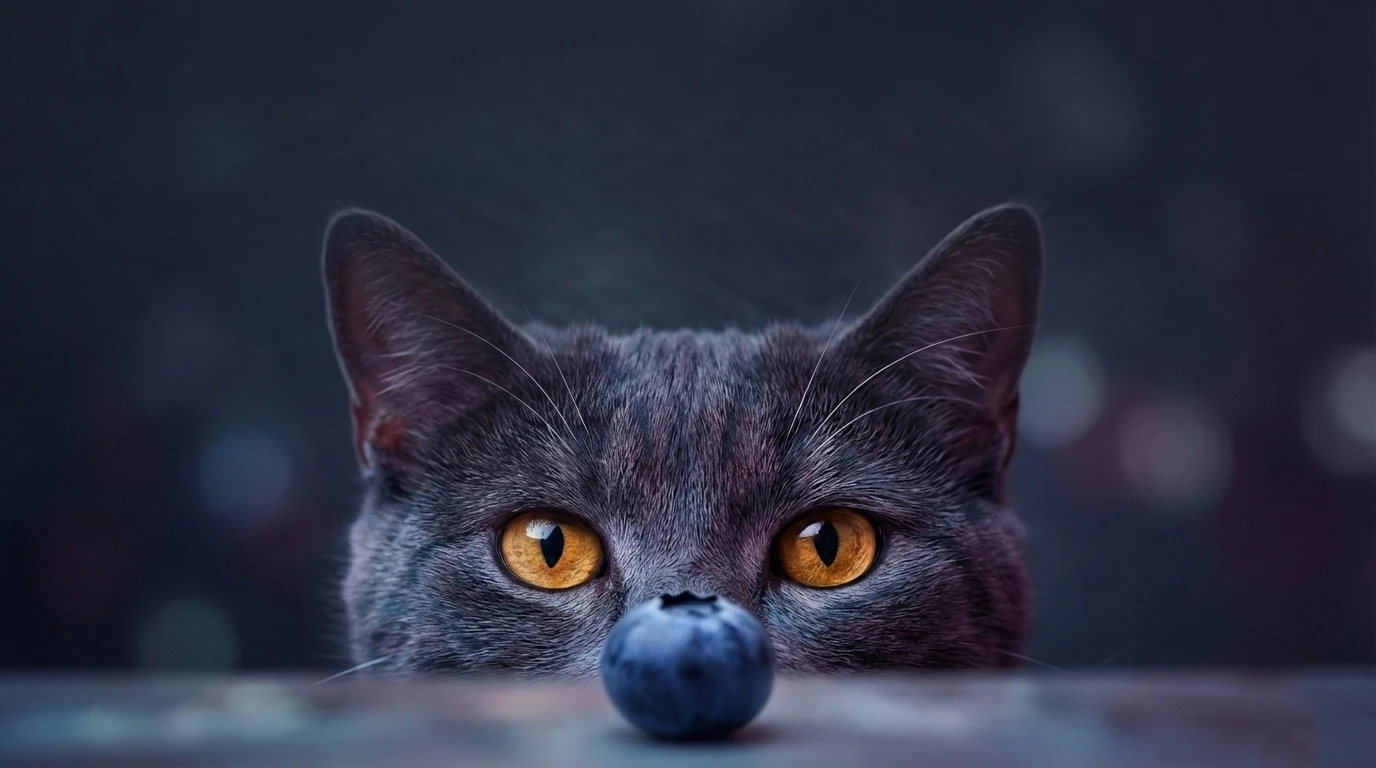
Can Cats Have Blueberries? Yes, cats can have small amounts of fresh blueberries as an occasional treat. Blueberries are non-toxic, low in sugar compared to other fruits, and rich in antioxidants. However, they offer minimal nutritional benefit to obligate carnivores and pose choking risks if not served properly. Limit to 2-3 berries for healthy adult cats only. Avoid for kittens, diabetic cats, and cats with digestive sensitivities.
Last week, I was snacking on blueberries while working at my desk when I felt a soft paw tap my leg. I looked down to find Luna staring at my bowl with intense focus—the same look she gives a laser pointer.
I rolled one blueberry across the floor, half expecting her to ignore it. Instead, she batted it around like a tiny soccer ball, then picked it up in her mouth and walked away triumphantly. She didn’t eat it immediately. She carried it to her favorite spot, inspected it thoroughly, and then finally took a cautious bite.
That moment made me wonder: are blueberries actually safe for cats? Should I be encouraging this behavior or stopping it?
After digging into veterinary research and feline nutrition guidelines, I discovered that blueberries are one of the safer fruit options for cats—but “safer” doesn’t mean “necessary” or even “ideal.”
Table of Contents
Quick Comparison Table: Blueberry Safety Guide
| Blueberry Type | Safe for Cats? | Risk Level | Primary Concern | Recommendation |
|---|---|---|---|---|
| Fresh Blueberries | ✅ Yes | Very Low | Choking if swallowed whole | 2-3 berries max, occasionally |
| Frozen Blueberries | ✅ Yes | Low | Tooth sensitivity, choking | Thaw slightly first, cut for small cats |
| Dried Blueberries | ⚠️ Avoid | Medium-High | Extremely concentrated sugar | Not recommended |
| Blueberry Juice | ⚠️ Avoid | Medium | Concentrated sugar, no fiber | Skip—use whole berries only |
| Canned Blueberries | ❌ No | High | Added sugars, preservatives | Never give canned fruit |
| Blueberry Yogurt/Products | ❌ Never | Very High | Dairy, added sugar, artificial ingredients | Toxic additives possible |
| Wild Blueberries | ✅ Yes | Very Low | Same as fresh—wash thoroughly | Same portion rules apply |
Why Cats Show Interest in Blueberries
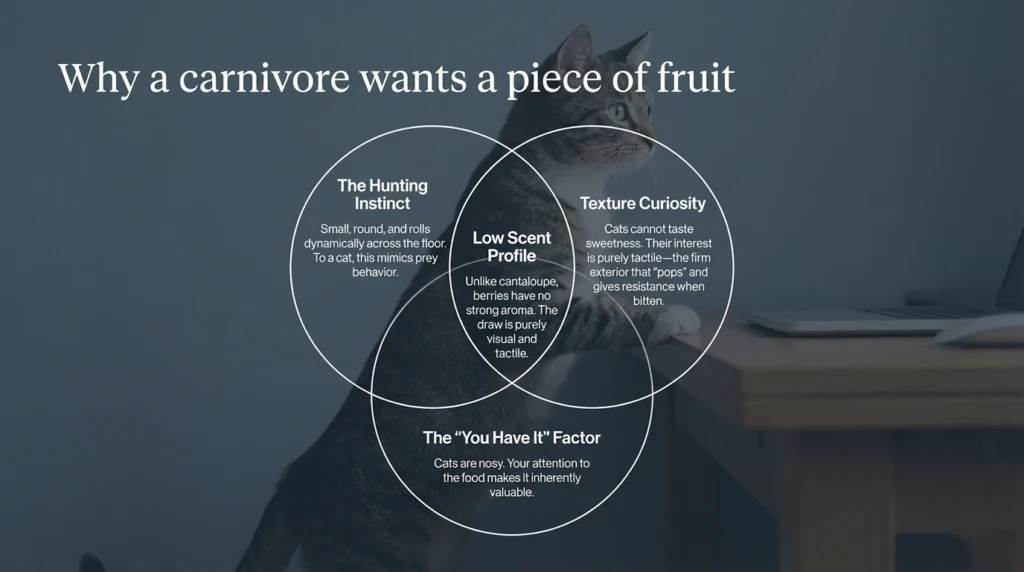
The Hunting Instinct
Blueberries are small, round, and they roll. To a cat, that’s prey behavior. The chase is often more exciting than the actual eating. Luna will bat blueberries around the kitchen for ten minutes before she even considers taking a bite.
This is why some cats are fascinated by blueberries but won’t actually eat them—they’re treating them as toys, not food.
Texture Curiosity
The firm exterior that “pops” when bitten creates an interesting sensory experience. Cats can’t taste sweetness, so their interest isn’t about flavor—it’s about the physical sensation of biting into something that gives resistance then bursts.
The “You Have It” Factor
Let’s be real: cats are nosy. If you’re eating something, they want to investigate. It doesn’t matter if it’s blueberries, broccoli, or cardboard. Your attention makes it automatically interesting.
Low Scent Profile
Unlike cantaloupe or strawberries, blueberries have minimal aroma. This means cats aren’t drawn to them by smell—their interest is purely visual and tactile. If your cat ignores blueberries, that’s completely normal. Most cats do.
What This Behavior Means
If your cat shows interest in blueberries, it’s likely about play and curiosity rather than nutritional need. Cats are obligate carnivores who don’t instinctively seek out fruit in the wild. Any interest in berries is novelty, not dietary wisdom.
Nutritional Reality: What Blueberries Offer Cats
The Antioxidant Profile
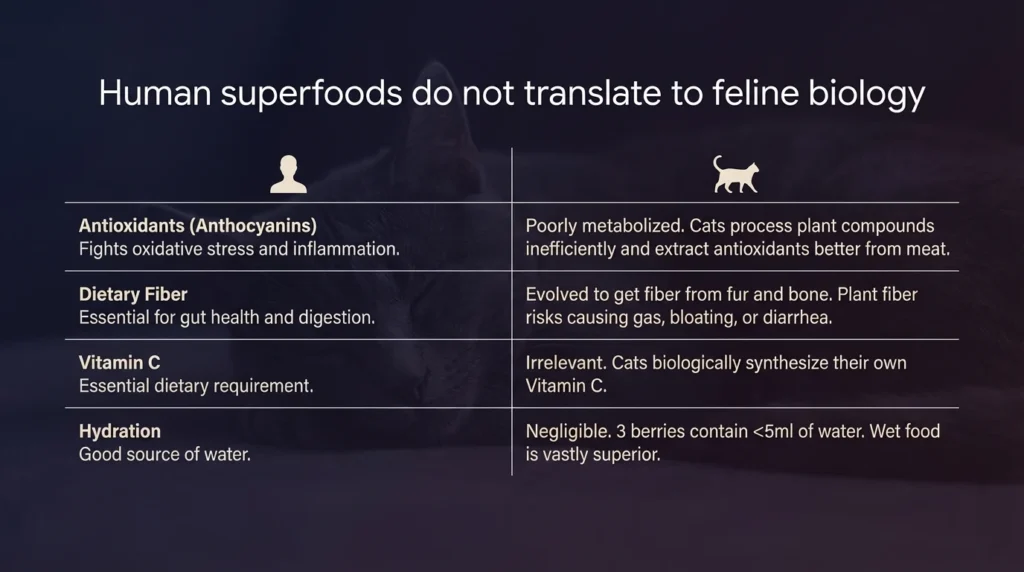
Blueberries are famous for their antioxidants—particularly anthocyanins, which give them their blue color. For humans, these compounds fight oxidative stress and inflammation. For cats? The science is unclear.
Cats metabolize plant compounds differently than humans. While antioxidants from blueberries aren’t harmful, there’s limited research proving they offer significant health benefits to feline systems. Cats get their antioxidants more efficiently from the meat they eat.
Low Sugar Content (Relatively Speaking)
Here’s where blueberries actually shine compared to other fruits. They contain about 10 grams of sugar per 100 grams—lower than strawberries (7g per 100g sounds better, but the serving size matters), and significantly lower than grapes, which are toxic anyway.
For perspective: 3 blueberries weigh roughly 5 grams and contain about 0.5 grams of sugar. That’s minimal enough that a healthy adult cat can handle it without blood sugar spikes.
Fiber Content
Blueberries contain dietary fiber, which helps with digestion in omnivores. But cats are designed to get fiber from the fur, feathers, and bones of prey—not from plants.
Small amounts of plant fiber won’t harm cats, but too much can cause diarrhea or gas. What’s beneficial for human gut health can be problematic for feline digestive systems.
Vitamins and Minerals
Blueberries contain vitamins C and K, plus manganese. However:
- Cats synthesize their own vitamin C—they don’t need it from food
- Vitamin K from plants is poorly absorbed by cats compared to vitamin K from animal sources
- Manganese needs are minimal and easily met through quality cat food
The vitamins in blueberries aren’t harmful, but they’re also not filling nutritional gaps for your cat.
Hydration Factor
At about 85% water content, blueberries provide some hydration. But the amount is negligible—three blueberries contain less than 5ml of water. A single tablespoon of wet cat food provides far more hydration.
Bottom Line on Nutrition
Blueberries are one of the better fruit options for cats because they’re low in sugar and non-toxic. But “better” doesn’t mean “beneficial.” They’re empty calories that don’t contribute meaningful nutrition to an obligate carnivore’s diet.
Why Blueberries Are Safer Than Other Fruits
No Toxic Components
Unlike grapes (kidney failure), citrus (too acidic), or cherries (cyanide in pits), blueberries contain no known toxic compounds for cats. This makes them one of the few fruits veterinarians generally classify as “safe in moderation.”
Easy Portion Control
Blueberries come pre-portioned by nature. You can count exactly how many you’re giving—2-3 berries is a clear, measurable amount. Compare this to watermelon, where “a small piece” is subjective and easily overdone.
Lower Choking Risk (With Preparation)
While whole blueberries can be a choking hazard for smaller cats, they’re easier to cut or mash than harder fruits. For cats under 8 pounds, simply cut each berry in half before serving.
Minimal Preparation Needed
Unlike melons (remove seeds and rind) or strawberries (remove stems and wash for pesticides), blueberries just need a quick rinse. This reduces the chance of preparation mistakes that could harm your cat.
The Risks You Still Need to Know
Choking Hazard
Whole blueberries are approximately pea-sized, which is the exact size most likely to cause choking in small animals. Enthusiastic eaters or smaller cats can accidentally inhale a berry rather than chew it properly.
For cats under 8 pounds, always cut blueberries in half. For larger cats, monitor to ensure they’re chewing, not gulping.
Digestive Upset
Even though blueberries are low in sugar compared to other fruits, some cats have sensitive stomachs. Too many berries can trigger:
- Diarrhea within 6-12 hours
- Vomiting
- Gas and bloating
- Loss of appetite for regular food
Start with one berry and monitor for 24 hours before offering more.
Allergic Reactions (Extremely Rare)
While uncommon, cats can develop allergic reactions to any food. Symptoms include:
- Itching or skin irritation
- Excessive grooming
- Swelling around face or paws
- Difficulty breathing (severe—call vet immediately)
If your cat shows any of these symptoms, stop giving blueberries permanently.
Pesticide Exposure
Conventional blueberries can contain pesticide residue. Always wash thoroughly under running water, and consider buying organic when possible, especially if you plan to offer berries regularly.
How to Serve Blueberries Safely
Portion Guidelines
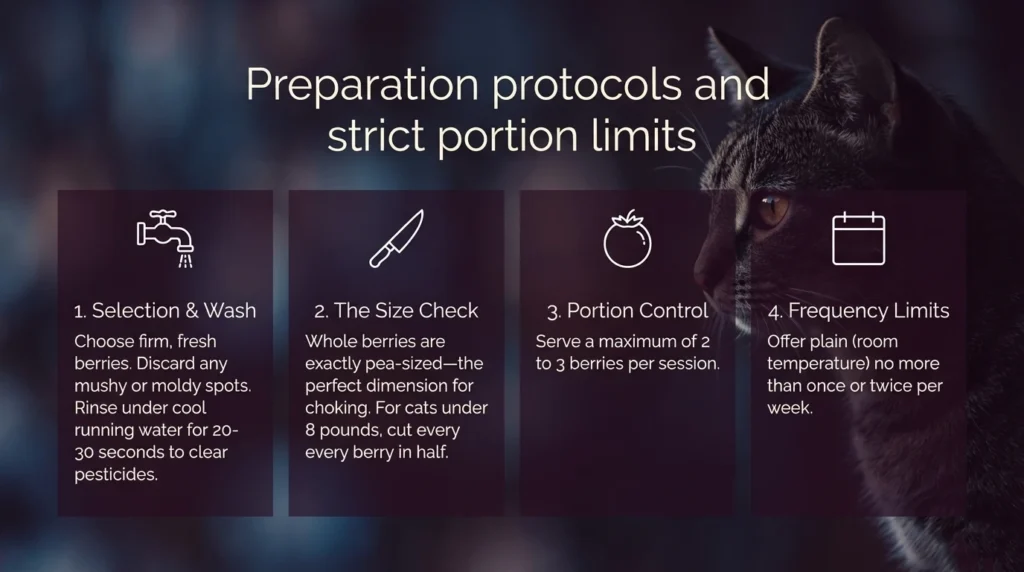
2-3 fresh blueberries maximum for healthy adult cats, offered no more than once or twice per week. For cats under 8 pounds, cut each berry in half.
Frequency Rules
Once per week at most. This should be a rare novelty, not a regular treat rotation.
Step-by-Step Preparation
- Choose fresh, firm blueberries—avoid moldy, mushy, or damaged berries
- Rinse thoroughly under cool running water for 20-30 seconds
- Inspect each berry—discard any with white spots (mold) or soft areas
- For smaller cats (under 8 lbs), cut in half to reduce choking risk
- Serve at room temperature—not frozen or refrigerator-cold initially
- Offer plain—no sugar, honey, cream, or yogurt
The 24-Hour First-Time Test
If your cat has never had blueberries, start with one single berry. Then wait 24 hours and monitor.
Green flags:
- Normal, firm stools
- Regular energy and behavior
- Normal appetite at next meal
- No vomiting or discomfort
Red flags:
- Diarrhea or soft stools
- Vomiting
- Lethargy or hiding
- Reduced interest in regular food
- Excessive grooming (sign of nausea)
Special Note on Frozen Blueberries
Frozen blueberries can be a fun summer treat, but let them thaw for 5-10 minutes first. Rock-hard frozen berries can cause:
- Tooth sensitivity or pain
- Increased choking risk
- Brain freeze (yes, cats can get this)
Some cats actually prefer the firmer texture of slightly frozen berries—but always supervise and ensure they’re chewing properly.
What If Your Cat Already Ate Blueberries?
If They Ate 1-3 Berries
Action: Monitor for 12-24 hours. Most healthy cats will be completely fine.
Watch for: Soft stools or mild diarrhea. If this occurs, it means blueberries aren’t a good fit for your cat.
When to call: Only if vomiting occurs multiple times or if your cat shows signs of distress.
If They Ate More Than 5 Berries
Action: Watch more closely. The sugar content may cause digestive upset.
Watch for: Diarrhea, vomiting, bloating, lethargy, or excessive thirst.
When to call: If symptoms are severe, if your cat is diabetic (call immediately), or if distress continues beyond 12 hours.
If They Ate Moldy Berries
Action: This is more concerning due to potential mycotoxins.
Watch for: Vomiting, diarrhea, tremors, weakness, or neurological symptoms.
When to call: Contact your vet immediately if you suspect mold ingestion, especially if your cat shows any neurological symptoms like tremors or disorientation.
Better Alternatives to Blueberries
Cat-Specific Treats (Always Best)
Cat treats are formulated for feline nutrition and won’t upset sensitive systems.
Top recommendations:
- Freeze-dried chicken or salmon
- Churu lickable treats
- Dental treats
- Plain cooked chicken, turkey, or fish
Other Low-Risk Fruits (Still Minimal Benefit)
- Small watermelon pieces: Higher water content
- Tiny cantaloupe cubes: Some cats prefer melon texture
- Small strawberry pieces: Remove green tops first
Never Give These
- Grapes or raisins (kidney failure)
- Citrus fruits (too acidic)
- Cherries (cyanide in pits)
- Avocado (persin toxicity)
Frequently Asked Questions
Are blueberries good for cats with UTIs?
No, this is a common misconception. While cranberries contain compounds that may help prevent urinary tract infections in humans, blueberries do not have the same properties and are not proven to treat or prevent UTIs in cats. If your cat has a urinary tract infection, they need veterinary care—not fruit. UTIs in cats require antibiotics prescribed by a veterinarian and often dietary changes to prescription urinary health food. Never attempt to treat a cat’s UTI with home remedies or food changes alone. The acidity and sugar in blueberries could potentially irritate an already inflamed urinary tract. Stick to vet-prescribed treatment plans.
Can cats eat blueberry muffins or baked goods?
No, absolutely not. While plain blueberries are safe in tiny amounts, blueberry muffins and baked goods contain multiple ingredients that are harmful or toxic to cats. These include: excessive sugar, butter or oils that can cause pancreatitis, wheat flour that offers no nutritional value to obligate carnivores, baking powder or baking soda that can cause electrolyte imbalances, and potentially toxic ingredients like xylitol (artificial sweetener), chocolate chips, or nutmeg. Additionally, the high calorie density of baked goods can quickly lead to weight gain and nutritional imbalance. If your cat accidentally ate a small piece of blueberry muffin, monitor for vomiting or diarrhea, but don’t intentionally offer baked goods as treats.
Key Takeaways
✅ Blueberries are among the safest fruits: Low sugar, non-toxic, easy to portion.
📏 Strict portion control matters: 2-3 berries maximum, once per week.
⚠️ Still not necessary: Cats don’t need fruit—they’re obligate carnivores.
🔪 Cut for smaller cats: Whole berries pose choking risks for cats under 8 pounds.
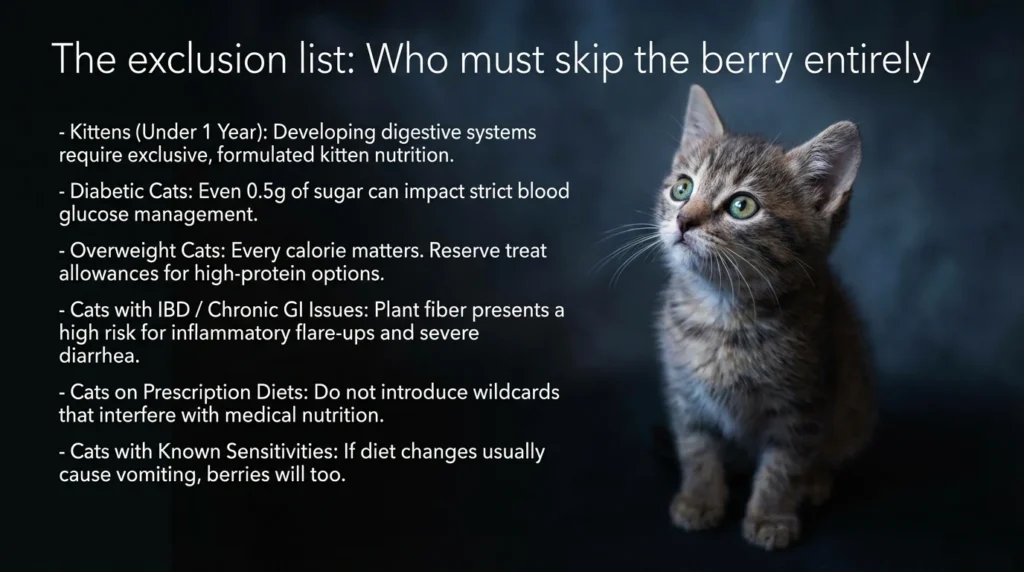
❌ High-risk cats should avoid: Kittens, diabetic cats, overweight cats, cats with digestive issues.
👁️ Always test first: One berry, then monitor for 24 hours.
Final Thoughts
Can cats have blueberries? Yes—they’re one of the safer fruit options available. But “safer” doesn’t mean “beneficial” or “necessary.”
Your cat doesn’t need blueberries to be healthy or happy. They’re perfectly content with quality cat food and appropriate cat treats. But if you want to share a couple of berries as an occasional novelty, and your cat is a healthy adult, it’s generally safe.
The real question isn’t “can cats have blueberries?”—it’s “should they?” And the honest answer is: probably not worth the effort when proper cat treats exist.
Trust your instincts, know your cat’s individual needs, and make informed decisions based on their specific health profile.
For more feline nutrition guidance, explore my related articles on can cats have watermelon, can cats eat strawberries, and Can Cats Eat Mango?.
Stay safe, stay informed, and give your cat an extra head bonk from me.


One Comment