Can Cats Eat Cantaloupe? Safety Guide for Melon-Curious Cat Parents
The Direct Answer
Can Cats Eat Cantaloupe?
Yes, cats can eat small amounts of cantaloupe flesh as an occasional treat. The orange flesh is non-toxic and provides hydration and vitamins. However, the rind is indigestible and poses blockage risks, while seeds can cause choking. Limit to one or two small cubes for healthy adult cats only. Avoid for kittens, diabetic cats, and overweight cats due to high sugar content.
Last month, I was cutting up a cantaloupe for breakfast when my cat Oliver appeared out of nowhere, pawing at the cutting board with intense focus. He’s normally indifferent to human food, so his sudden interest caught me off guard.
I gave him a tiny piece to investigate. He sniffed it, licked it, then walked away—classic cat behavior. But the experience made me wonder: was that safe? Should I have stopped him?
After diving into veterinary resources and feline nutrition research, I learned that cantaloupe sits in an interesting safety zone. It’s not toxic like grapes, but it’s also not ideal for cats. If you’re wondering whether to share your melon with your feline friend, here’s everything you need to know.
Table of Contents
Quick Comparison Table: Cantaloupe Safety Guide
| Cantaloupe Part | Safe for Cats? | Risk Level | Primary Concern | Recommendation |
|---|---|---|---|---|
| Orange Flesh | ✅ Yes | Low | Sugar content if excessive | 1–2 small cubes max, rarely |
| Seeds | ❌ No | High | Choking hazard | Remove all seeds before serving |
| Rind (skin) | ❌ No | Very High | Intestinal blockage, bacteria | Never allow access |
| Cantaloupe Juice | ⚠️ Avoid | Medium | Concentrated sugar, no fiber | Skip—use plain flesh only |
| Dried Cantaloupe | ⚠️ Avoid | Medium-High | Extremely concentrated sugar | Not recommended for cats |
| Sweetened Products | ❌ Never | Extreme | Added sugars, artificial ingredients | Toxic additives possible |
Why Cats Show Interest in Cantaloupe
The Scent Factor
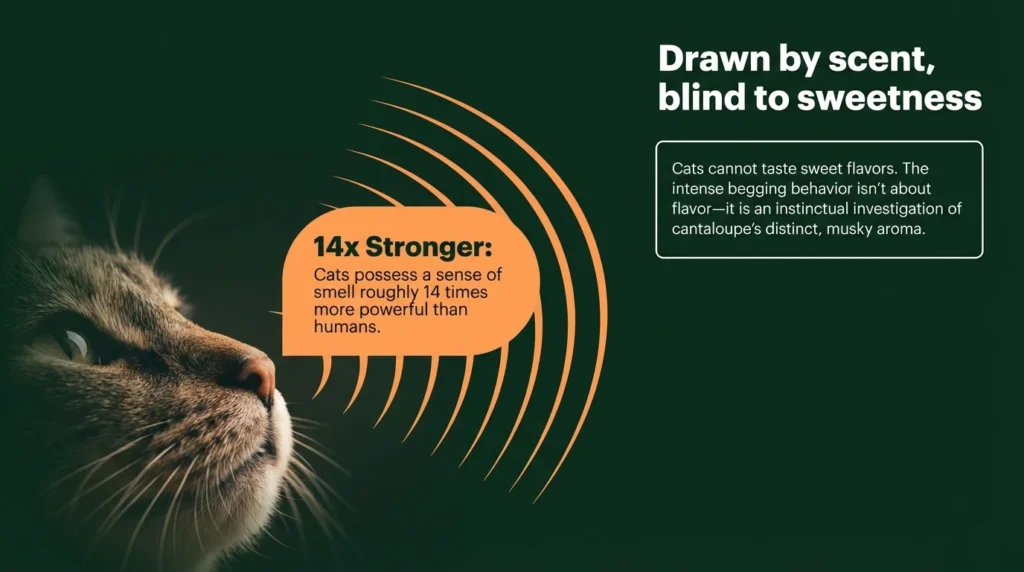
Unlike watermelon, cantaloupe has a strong, distinct aroma. Cats have an incredibly sophisticated sense of smell—about 14 times stronger than humans. That musky, sweet scent can be intriguing to curious cats, even though they can’t actually taste the sweetness.
When Oliver stuck his nose in my cantaloupe, he wasn’t responding to flavor. He was investigating an unfamiliar smell that triggered his natural curiosity.
Texture Appeal
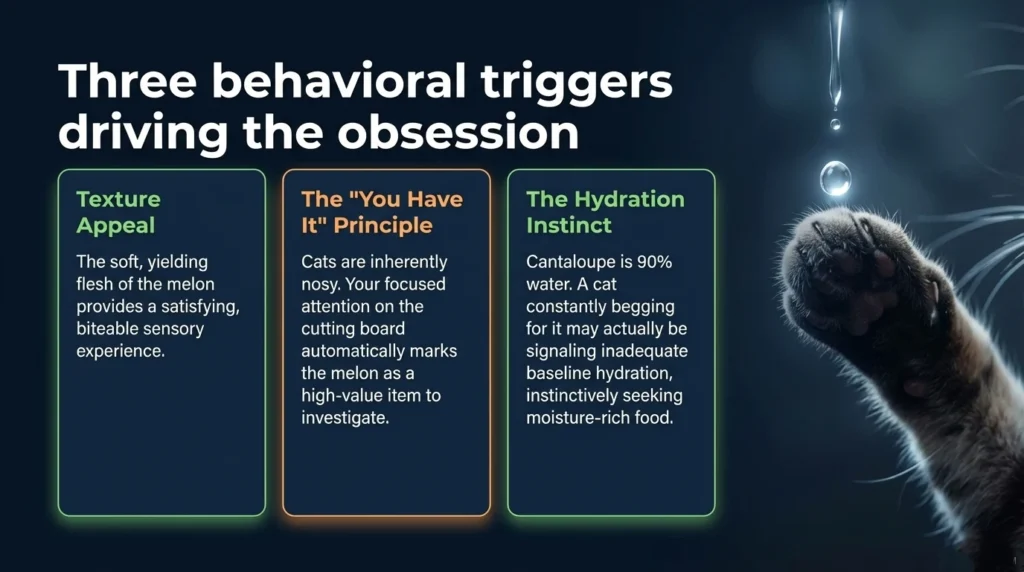
Cantaloupe has a softer, more yielding texture than watermelon. Some cats enjoy the sensation of biting into something that gives way easily. It’s not about nutrition—it’s about the sensory experience.
The “You Have It, I Want It” Principle
Let’s be honest: cats are nosy. If you’re paying attention to something, they automatically want to investigate. It doesn’t matter if it’s fruit, a cardboard box, or your laptop keyboard. Your interest makes it interesting to them.
What This Behavior Really Means
If your cat seems obsessed with cantaloupe or constantly begs for it, it might signal inadequate hydration. Cantaloupe is about 90% water, and cats who don’t drink enough may instinctively seek moisture-rich foods.
Before you start serving fruit, try these better hydration strategies:
- Add a cat water fountain
- Switch from dry to wet food
- Place multiple water bowls around your home
- Ensure water bowls are far from litter boxes
Cantaloupe should never be your primary solution to a dehydration problem.
Nutritional Reality: What Cantaloupe Offers Cats
The Vitamin Profile
Cantaloupe contains vitamins A, C, and B6, plus potassium and beta-carotene. For humans, that’s a nutritional win. For cats? It’s mostly irrelevant.
Cats are obligate carnivores. Their bodies evolved to extract nutrients from meat, not plants. They need:
- Taurine (only from animal sources)
- Arachidonic acid (only from animal fats)
- Preformed vitamin A (only from meat)
They can’t efficiently convert plant-based nutrients the way omnivores do. So while cantaloupe’s vitamins aren’t harmful, they’re also not doing much for your cat’s health.
The Sugar Problem
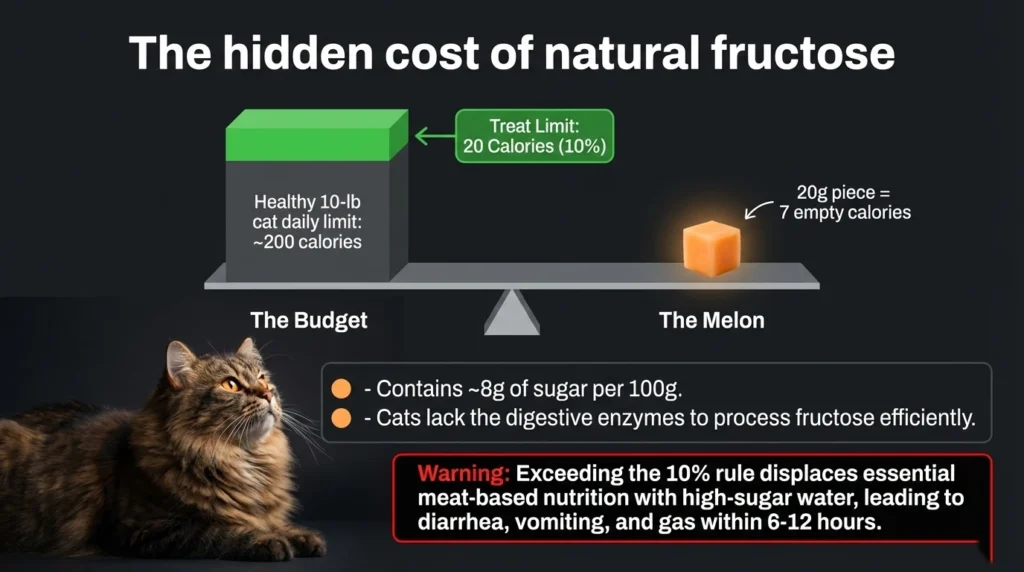
Cantaloupe contains about 8 grams of sugar per 100 grams of fruit. That’s natural fructose, not added sugar, but cats lack the digestive enzymes to process it efficiently.
For a healthy 10-pound cat eating roughly 200 calories per day, treats should stay under 20 calories (the 10% rule). A 20-gram piece of cantaloupe contains about 7 calories—which fits the budget. But anything more, and you’re displacing real nutrition with sugar water.
Hydration Benefits (With Caveats)
Cantaloupe’s 90% water content is its only genuine benefit for cats. On a hot summer day, a tiny piece can provide a hydration boost. But so can:
- A bowl of wet food
- Ice cubes in their water
- A cat water fountain
Fruit should be your last resort for hydration, not your first strategy.
Bottom Line on Nutrition
Cantaloupe won’t harm a healthy cat in tiny amounts, but it’s not contributing anything meaningful. Think of it as empty calories with a hydration side effect. Your cat needs protein, not melon.
The Risks You Can’t Ignore
Seeds: The Choking Hazard
Cantaloupe seeds are small and slippery, which makes them a choking risk—especially for smaller cats or enthusiastic eaters who don’t chew thoroughly. While they don’t contain the cyanide compounds found in some fruit seeds, they can still:
- Lodge in the throat
- Cause gagging or coughing
- Pass through undigested and cause mild GI upset
My rule: Remove every single seed before offering cantaloupe to your cat. It takes 30 seconds and eliminates unnecessary risk.
Rind: The Blockage Nightmare
The tough outer rind is the most dangerous part. It’s covered in bacteria from handling and growing conditions, and it’s nearly impossible for cats to digest. If your cat eats a chunk of rind, it can cause:
- Intestinal blockage (partial or complete)
- Bacterial contamination (E. coli, Salmonella risk from rind surface)
- Severe digestive upset
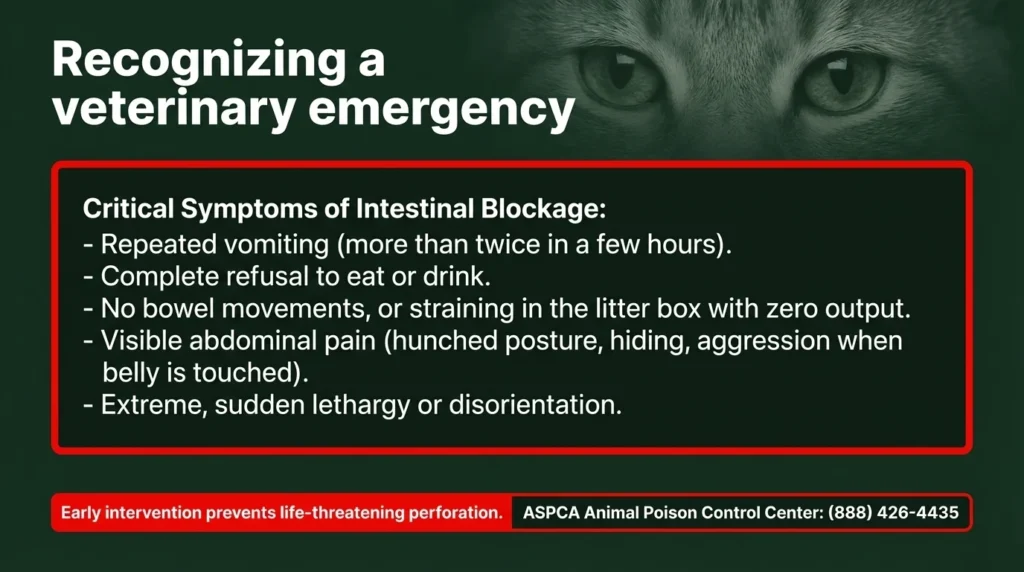
Warning signs of intestinal blockage:
- Repeated vomiting (more than twice in a few hours)
- Refusal to eat or drink
- No bowel movements or straining with no output
- Visible abdominal pain (hunched posture, hiding, aggression when touched)
- Extreme lethargy
If your cat ate cantaloupe rind and shows any of these symptoms, call your vet immediately. This is a veterinary emergency, not a “wait and see” situation.
Sugar Overload and Digestive Upset
Even the safe flesh contains enough natural sugar to trigger problems if you give too much:
- Diarrhea within 6–12 hours
- Vomiting
- Gas and bloating
- Loss of appetite for regular food
- Blood sugar spikes (especially dangerous for diabetic cats)
Most healthy adult cats can handle one or two tiny cubes without issue. But any more than that, and you’re gambling with their digestive comfort.
Cats Who Should Never Eat Cantaloupe
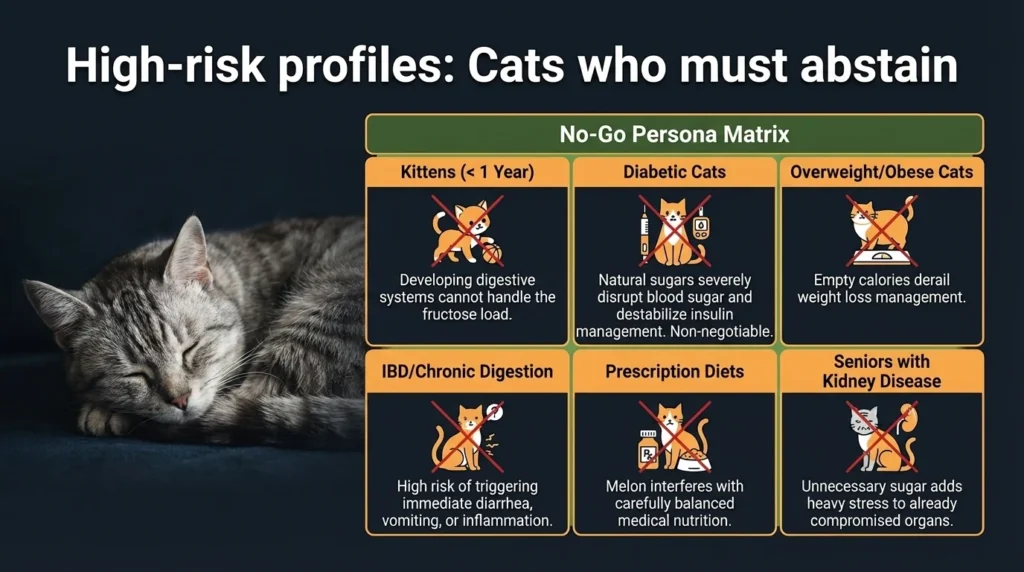
If your cat checks any of these boxes, skip the cantaloupe entirely and ask your vet about appropriate treat alternatives.
How to Serve Cantaloupe Safely
If your cat is a healthy adult with no risk factors, here’s the exact protocol:
Portion Guidelines
One to two small cubes maximum—each about the size of a blueberry or roughly half an inch cubed. For cats under 8 pounds, stick to one small cube. For cats over 12 pounds, two small cubes is the upper limit.
Frequency Rules
Once per week at most during melon season. This should be a rare novelty, not a regular rotation in your treat lineup.
Step-by-Step Preparation
- Wash the cantaloupe thoroughly under running water to remove surface bacteria
- Cut the melon open and remove all seeds from the center cavity
- Scoop out the flesh and cut away all rind and any remaining seeds
- Inspect carefully—even a single missed seed is a choking risk
- Cut into tiny cubes—no larger than half an inch on each side
- Serve plain—no salt, sugar, honey, or seasoning of any kind
- Room temperature or slightly chilled (not frozen)
Emergency Guide: What If They Already Ate It?
If They Ate Only the Flesh
Action: Monitor for 12–24 hours. Watch their litter box for diarrhea and observe their energy levels.
When to worry: Vomiting more than once, multiple diarrhea episodes, refusal to eat/drink, or visible discomfort.
What to do: If symptoms appear, stop giving cantaloupe permanently. If symptoms are severe (repeated vomiting, extreme lethargy), call your vet.
If They Ate Seeds
Action: Stay calm but vigilant. Most cats will pass seeds without issue, but choking is a risk.
Watch for: Gagging, coughing, difficulty breathing, excessive drooling, or signs of throat discomfort.
When to call the vet: Any breathing difficulty, persistent gagging, or if they ate a large quantity of seeds (more than 5–6). You can also contact the ASPCA Animal Poison Control Center at (888) 426-4435.
If They Ate Rind
This is high-concern territory. The rind poses serious choking, blockage, and bacterial contamination risks.
Emergency symptoms:
- Repeated vomiting
- Complete refusal of food or water
- No bowel movements or straining with no results
- Abdominal pain (hunched posture, hiding, aggression when belly is touched)
- Severe lethargy or disorientation
Action: Call your vet immediately. Don’t wait for symptoms to worsen. With rind ingestion, early intervention can prevent life-threatening complications like intestinal blockage or perforation.
Better Alternatives to Cantaloupe
Cat-Specific Treats (The Safest Choice)
Honestly, cat treats are the safest option. They’re formulated for feline nutrition, portion-controlled, and designed not to upset sensitive stomachs.
My top recommendations:
- Freeze-dried chicken or salmon (pure protein, no fillers)
- Churu or similar lickable treats (great for bonding and hydration)
- Small pieces of plain cooked chicken, turkey, or fish
Other Cat-Safe Fruits (Use Sparingly)
If you want to experiment with fruit, these tend to be better tolerated than cantaloupe:
- Watermelon: Similar to cantaloupe but slightly lower in sugar
- Blueberries: Lower sugar content, easy to portion, antioxidants
- Small strawberry pieces: Remove green top, tiny amounts only
For detailed guides, check out my articles on can cats eat watermelon and can cats eat blueberries.
Never Give These
- Grapes or raisins (kidney failure—even one can be toxic)
- Citrus fruits (too acidic, causes stomach upset)
- Cherries (cyanide in pits)
- Avocado (persin toxicity)
- Onions, garlic, chives (destroys red blood cells)
For a comprehensive list, see my guide on FULL GUIDE CAT FOOD REVIEWS.
Frequently Asked Questions
Is cantaloupe better for cats than watermelon?
Not necessarily—both are safe in tiny amounts for healthy adult cats, but they come with different considerations. Cantaloupe has slightly more vitamins (especially vitamin A and beta-carotene) but also more sugar per serving than watermelon. Watermelon is higher in water content (92% vs 90%), making it slightly better for hydration. However, some cats tolerate cantaloupe’s softer texture better than watermelon’s crispness. The truth is, neither offers significant nutritional benefits for cats, and both should be treated as occasional novelties rather than regular treats. Choose based on what your individual cat seems to tolerate better, and always follow strict portion control regardless of which melon you offer.
Why does my cat go crazy for cantaloupe smell?
Cantaloupe has a strong, musky aroma that can be fascinating to cats due to their incredibly sensitive sense of smell—about 14 times more powerful than humans. Some cats are particularly drawn to the volatile compounds cantaloupe releases as it ripens, which may remind them of certain pheromones or simply register as an intriguing novel scent. Interestingly, some cats show a reaction to cantaloupe similar to their response to catnip, though the mechanism isn’t fully understood. However, attraction to the smell doesn’t mean cantaloupe is good for them or that they should eat it regularly. Think of it like a human being drawn to the smell of fresh bread—appealing to the senses, but not necessarily something you should eat in unlimited quantities.
Key Takeaways
✅ Small amounts of flesh are safe: One to two tiny cubes for healthy adult cats, once per week maximum.
❌ Seeds and rind are dangerous: Seeds pose choking risks; rind causes blockages and bacterial contamination.
⚠️ High-risk cats should skip it: Kittens, diabetic cats, overweight cats, and those with digestive issues need to avoid cantaloupe entirely.
📋 Preparation is critical: Wash thoroughly, remove all seeds and rind, cut into tiny cubes, serve plain.
👁️ Always test first: Start with a pea-sized piece and monitor for 24 hours before offering more.
🚨 Emergency situations need immediate care: Rind ingestion or concerning symptoms require an immediate vet call.