Can Cats Eat Roses? Safety Facts You Should Know
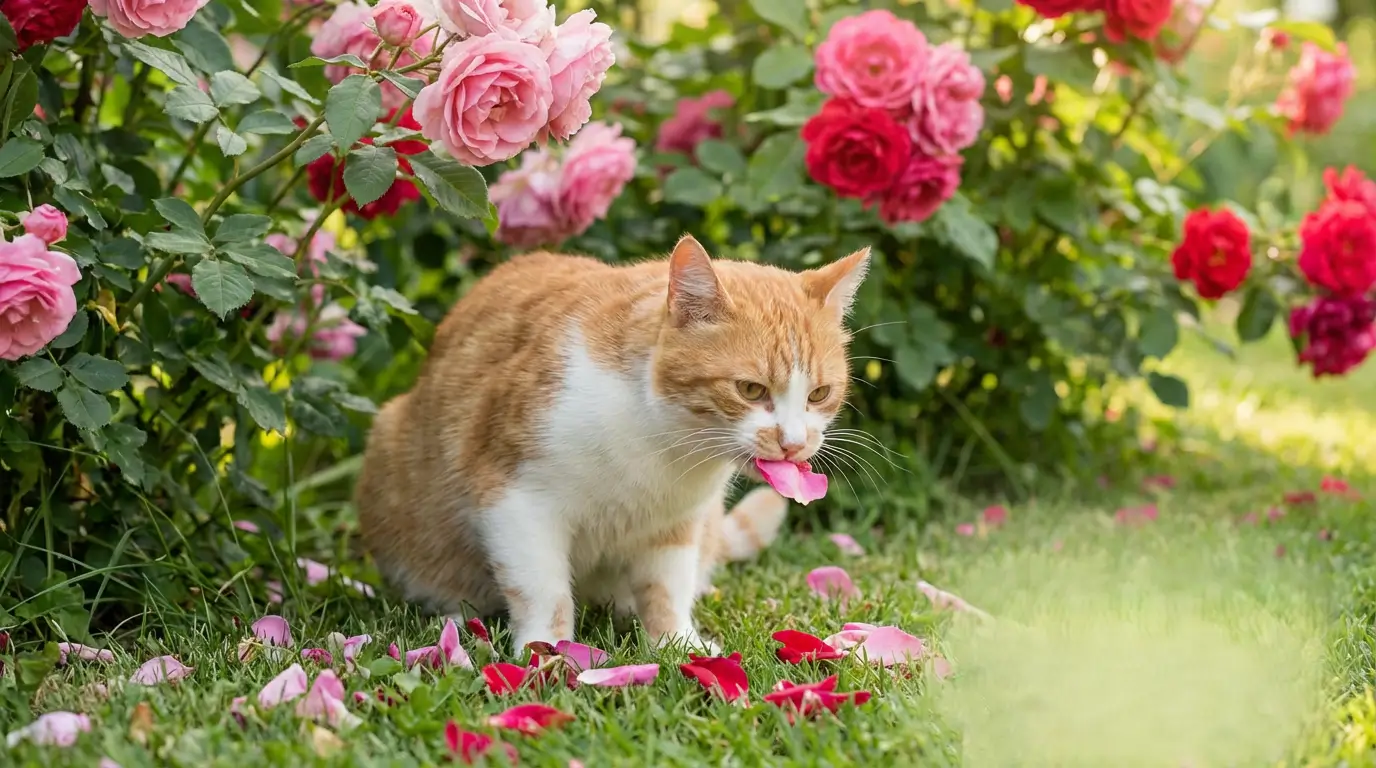
Last Valentine’s Day, I walked into my living room to find my cat Miso sitting in a pile of rose petals looking absolutely pleased with herself. She’d knocked over the bouquet my partner gave me, chewed through several stems, and apparently decided rose petals make an excellent midnight snack. My immediate thought as a vet? “Well, at least it wasn’t lilies.”
But my second thought? “Why do cats even eat roses in the first place when they’re obligate carnivores who have zero nutritional need for plant matter?”
I’m Sarah Mitchell, and I’ve been a small animal vet for fifteen years. I field the “can cats eat roses” question constantly—usually from panicked cat parents who just caught their feline friend red-pawed with petals in their mouth. The short answer is yes, cats can technically eat roses without getting poisoned. But that simple answer doesn’t tell you the whole story.
Whether your cat just demolished your anniversary bouquet or you’re trying to understand why they keep going after your rose garden, this guide explains everything you need to know about cats, roses, and what actually happens when they decide to snack on flowers.
Can Cats Eat Roses Without Getting Sick?
The Toxicity Answer: Roses Are Safe
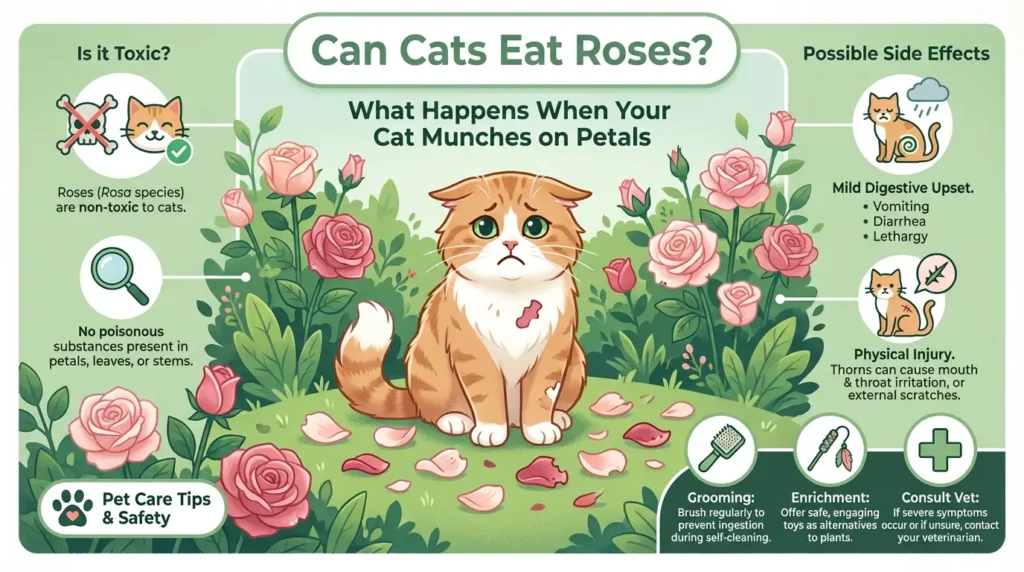
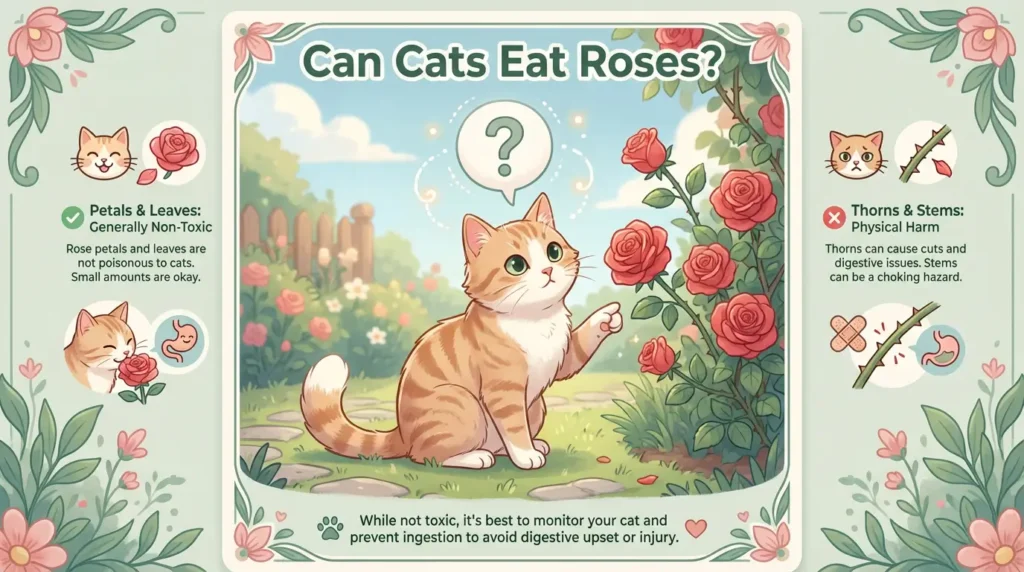
Let’s start with the relief you’re looking for: True roses (Rosa species) are non-toxic to cats according to the ASPCA. This means rose petals, leaves, stems, and even rose hips won’t poison your cat if eaten.
I’ve treated hundreds of cases over the years where cats ate roses, and the rose plant itself has never been the medical problem. No kidney failure, no liver damage, no neurological symptoms from the roses themselves.
When clients call me freaking out because their cat ate rose petals, my first question is always “Were there any other flowers mixed with the roses?” Because that’s where the real danger usually lies—not the roses, but what came with them in the bouquet.
What Actually Happens When Cats Eat Roses
Just because roses are non-toxic doesn’t mean eating them is consequence-free. Here’s what I typically see in cats who’ve eaten roses:
Mild digestive upset: Cats are obligate carnivores. Their digestive systems evolved to handle meat, not plant matter. When they eat several rose petals or chew on leaves, you might see some vomiting or loose stool within a few hours.
Think of it like eating something that doesn’t agree with you—uncomfortable but not dangerous. Most cats recover completely within 12-24 hours without any treatment.
Volume matters: A cat who nibbles one petal is unlikely to have any reaction. A cat who demolishes half a bouquet might vomit a few times. The more they eat, the more likely you’ll see symptoms.
Individual sensitivity varies: Some cats can eat several petals with zero reaction. Others get an upset stomach from just a few bites. Just like people, cats have individual tolerances.
The Real Risks Aren’t the Roses Themselves
When I treat cats for “rose ingestion,” the roses usually aren’t what I’m worried about. Here’s what actually causes problems:
Thorns are the biggest danger. I’ve treated paw punctures, mouth injuries, and even internal punctures from swallowed stems with thorns still attached. These injuries can get infected quickly and require antibiotics or more serious intervention.
Pesticides on commercial roses can cause genuine toxicity. Imported roses are often treated with chemicals that cause drooling, tremors, vomiting, and neurological symptoms if ingested.
Vase water with flower food contains biocides and preservatives that can make cats sick if they drink from the vase—and many cats see vase water as an irresistible drinking fountain.
Bouquet fillers like lilies are catastrophically toxic to cats. Even if the roses are safe, one lily mixed into that arrangement can cause fatal kidney failure.
Why Do Cats Eat Roses Anyway?
This is the question that fascinates me most. Cats don’t need roses. They get zero nutritional value from them. So why do they persistently go after our bouquets?
Boredom and Entertainment
An under-stimulated cat will find entertainment wherever they can. That gently swaying rose stem moving in the breeze from your air conditioning? Basically the most interesting toy your cat has seen all day.
I’ve noticed that cats with plenty of environmental enrichment—cat trees, puzzle feeders, regular play sessions—are far less likely to destroy flower arrangements. The cats who go after roses tend to be the ones who are bored out of their minds.
Texture Curiosity
Some cats are fascinated by the texture of rose petals. They’re soft, velvety, and make interesting sounds when chewed. My cat Miso falls into this category—she completely ignores smooth-petaled flowers but will investigate anything with an interesting texture.
Mild Nausea or Hairballs
Cats sometimes eat plants when their stomach is upset or they’re trying to help with hairballs. They’re seeking fiber to trigger vomiting or help things move through their digestive system.
If your cat is persistently eating roses or other plants, it’s worth mentioning to your vet. Sometimes increased plant-eating signals an underlying digestive issue.
The Movement Triggers Prey Drive
Movement equals prey to cats. Flowers swaying in a breeze or from air conditioning movement trigger that hunting instinct. Before you know it, your cat has pounced on the bouquet like it’s a particularly slow bird.
What to Do If Your Cat Ate Roses
Immediate Steps (First 30 Minutes)
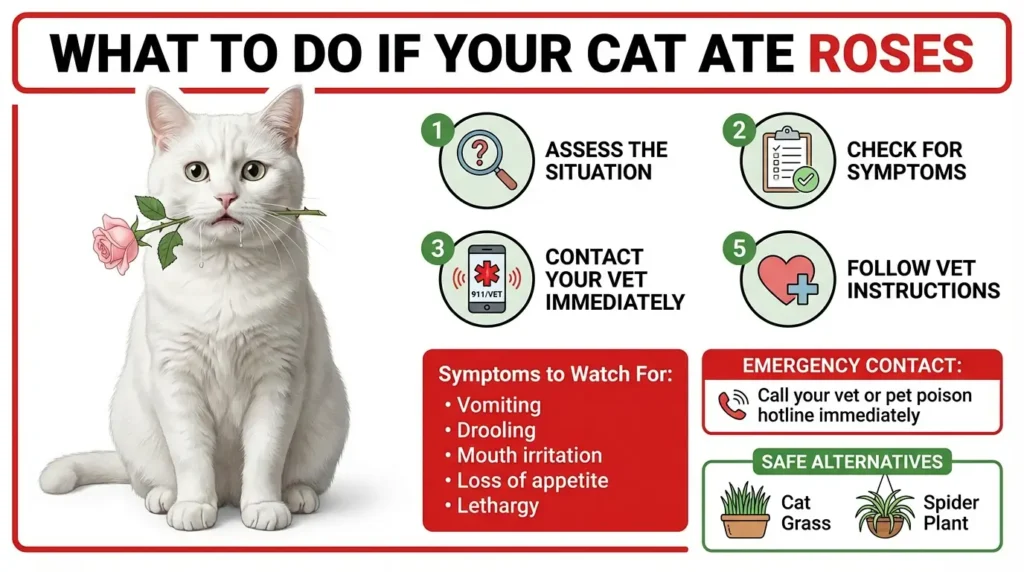
- Remove access to all flowers immediately. Take the bouquet to a room your cat cannot enter.
- Check what they actually ate. Was it just roses, or were there other flowers mixed in? This matters enormously—lilies require immediate emergency vet care, roses don’t.
- Examine their mouth gently. Look for any plant material stuck in teeth or gums, and check for visible injuries from thorns.
- Don’t induce vomiting unless specifically instructed by a vet. Thorns can cause more damage coming back up.
Monitoring Protocol (4-6 Hours)
Watch for these mild symptoms that typically resolve on their own:
- One or two episodes of vomiting
- Mild diarrhea
- Decreased appetite
- Slight lethargy
When to call your vet:
- Vomiting more than twice in 6 hours
- Refusing all food and water
- Visible blood in vomit or stool
- Extreme lethargy or hiding
- Signs of pain (crying out, aggression when touched)
What Vets Actually Do
For mild rose ingestion, I usually don’t need to see the cat in my office. I walk clients through monitoring at home and give them specific thresholds for when to bring the cat in.
For cats who need treatment, we typically provide:
- Anti-nausea medication if vomiting is persistent
- Subcutaneous fluids if they’re dehydrated
- Stomach protectants
- Pain medication if thorn injuries are present
Most cats are back to normal within 24 hours with minimal intervention.
Making Your Home Cat-Safe for Rose Lovers
Smart Rose Selection
Choose wisely:
- Buy organic roses when possible to avoid pesticide exposure
- Look for thornless varieties if you’re growing roses at home
- Always rinse commercial roses thoroughly before arranging
Strategic Placement
Height is your best friend: Place vases 5+ feet high on stable surfaces. Most cats won’t bother with flowers they can’t easily reach.
Use heavy, stable vases that won’t tip if a cat brushes against them or takes a swipe.
Deterrents that work:
- Double-sided tape around the vase base
- Motion-activated air sprayers (harmless puff of air)
- Citrus-scented sachets near flowers
Give Your Cat Better Options
The best prevention is offering appropriate alternatives:
Cat grass is magic. Grow wheatgrass or oat grass specifically for your cat. Most flower-chomping cats will happily switch to their designated grass patch. I refresh mine weekly to keep it appealing.
Catnip or silvervine plants provide sensory enrichment without the risks. My cat Miso goes nuts for her silvervine stick and hasn’t looked at a houseplant since.
Increase enrichment overall: Puzzle feeders, interactive toys, cat trees, and regular play sessions keep cats busy and less interested in your bouquets.
When Roses Aren’t Really Roses
One critical warning: Not everything called a “rose” is actually a safe rose. This confusion has led to serious poisoning cases in my practice.
Desert Rose (Adenium obesum): Deadly toxic. Contains cardiac glycosides that can kill cats.
Christmas Rose (Helleborus niger): Toxic. Causes cardiac and GI symptoms.
Moss Rose (Portulaca grandiflora): Toxic. GI upset and lethargy.
Rose of Sharon (Hibiscus syriacus): Problematic for cats.
Always verify the scientific name. Only plants in the Rosa genus are the safe roses we’re discussing here.
Frequently Asked Questions
How many rose petals are dangerous for a cat? Rose petals themselves aren’t toxic, so there’s no specific dangerous amount. However, eating too many (10+ petals) can cause stomach upset. Most cats who eat a few petals experience no symptoms at all.
Can kittens eat roses? Kittens have the same non-toxic status with roses as adult cats, but their smaller size means they’re more likely to show symptoms from eating the same amount. Monitor kittens more closely and contact your vet if any symptoms appear.
Are rose thorns poisonous to cats? Thorns aren’t poisonous, but they cause physical injuries—puncture wounds in paws, mouths, or internally if swallowed. These injuries can become infected and require veterinary treatment. Always remove thorns before bringing roses inside.
What about rose water or rose oil? Small amounts of rose water accidentally ingested usually cause no harm, but it’s not something cats should drink. Rose essential oil should never be used around cats—their livers can’t metabolize essential oils properly, leading to toxicity with repeated exposure.
Can cats eat rose hips? Rose hips (the fruit of rose plants) are non-toxic to cats like other rose parts. However, they’re quite hard and could present a choking hazard. Most cats ignore rose hips entirely.
The Bottom Line on Cats Eating Roses
After fifteen years of treating cats who’ve encountered roses, here’s my takeaway: Cats can eat roses without getting poisoned, but that doesn’t mean it’s a good idea or something to encourage.
The roses themselves won’t hurt your cat. But the thorns can injure them, the pesticides can poison them, and the toxic flowers mixed into that bouquet with the roses can kill them. Context matters enormously.
If your cat ate some rose petals, take a breath. Monitor for mild digestive upset over the next few hours, but don’t panic. The chances are excellent that your cat will be perfectly fine.
But use this as a wake-up call to cat-proof your flower situation. Remove thorns, verify no lilies are present, place arrangements high, and give your cat better entertainment options than destroying your roses.
Your cat can survive eating roses. Your roses probably can’t survive your cat. Protect both by being smart about placement and alternatives.
Sources:
- ASPCA Animal Poison Control: Non-Toxic Plant Database
- Journal of Feline Medicine and Surgery: Plant Ingestion Behaviors (2020-2026)
- PetMD: Rose Safety for Cats
- What Flowers Are Safe for Cats? Guide to Pet-Friendly Blooms
- Are Carnations Toxic to Cats? Dangerous Facts to Know
- Are Roses Safe for Cats? The Complete Truth About Roses and Cat Safety
- What Flowers Are Poisonous to Cats? Full Safety Guide
- Are Roses Toxic to Cats? Vet Guide 2026
This article is for informational purposes only. If your cat shows concerning symptoms after eating any plant, contact your veterinarian immediately.