Are Roses Safe for Cats? The Complete Truth About Roses and Cat Safety
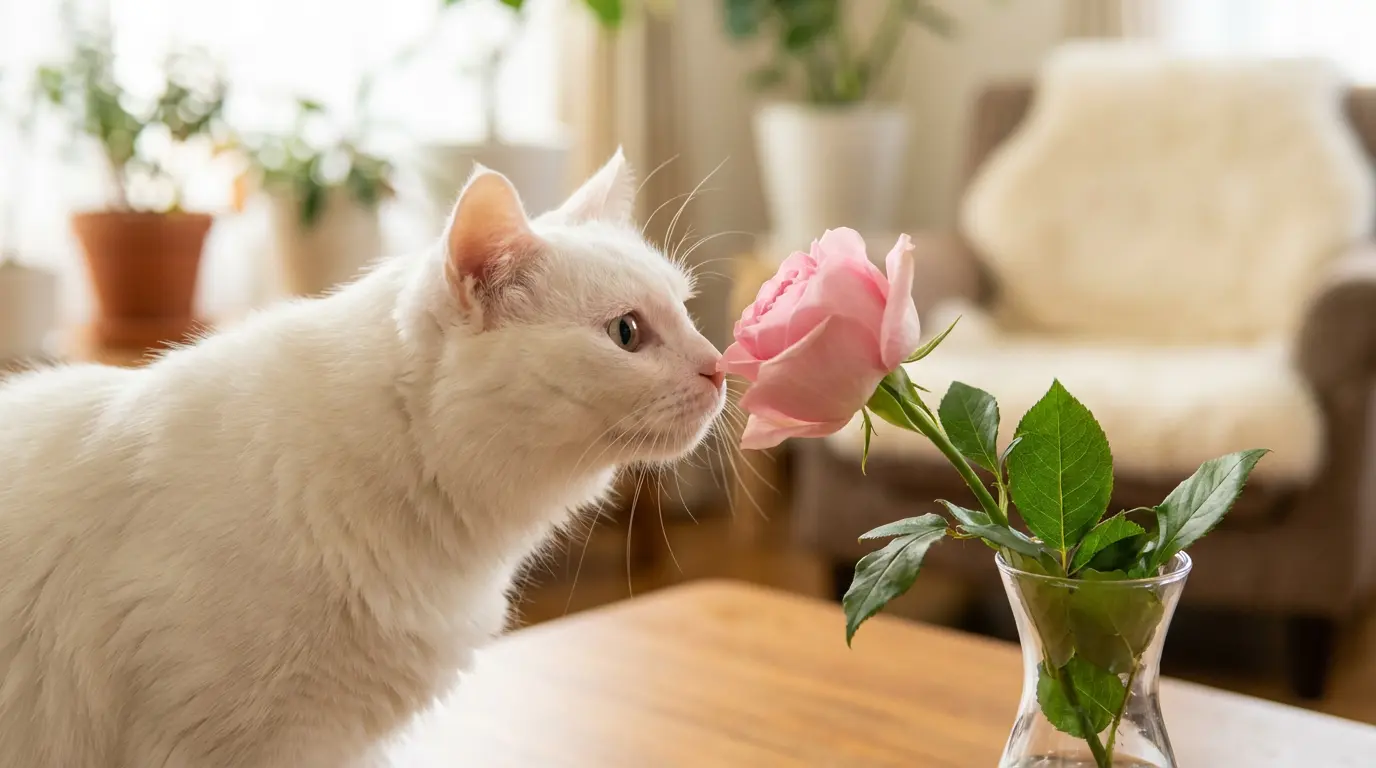
My phone rang at 11 PM on Valentine’s Day. A panicked client was convinced her cat was dying after demolishing half of the rose bouquet her husband had just given her. Petals everywhere, stems chewed, water spilled across the hardwood floor. “Should I drive to the emergency vet RIGHT NOW?” she asked, voice shaking.
I took a breath and asked the question that mattered most: “Were there any other flowers mixed with the roses? Any lilies?”
“No, just roses. Red roses only.”
Relief. “Your cat is going to be fine. The roses themselves won’t poison her. But let me walk you through what to watch for and why this isn’t actually the emergency you think it is.”
I’m Sarah Mitchell, and I’ve been a small animal vet for fifteen years. I field this exact question constantly—especially around major flower-giving holidays. Are roses safe for cats? The short answer is yes, true roses are non-toxic to cats. But that simple answer doesn’t tell you the whole story about thorns, chemicals, and the dangerous imposters that masquerade as “roses.”
Whether you just received a bouquet, you’re planning a garden, or you simply love having fresh flowers around your cat, this guide covers everything you need to know about roses and cat safety.
Scientifically Are Roses Safe for Cats
True Roses Are Non-Toxic to Cats
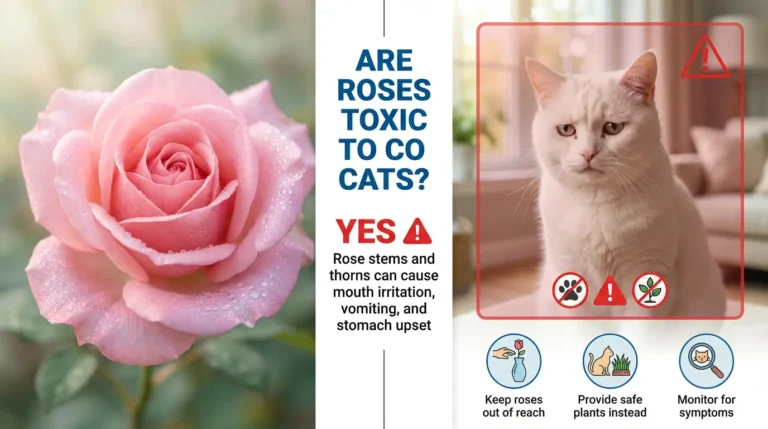
Let’s start with the good news that’ll let you breathe easier: According to the ASPCA’s comprehensive toxic plant database, all true roses (Rosa species) are officially non-toxic to cats, dogs, and horses. Every part of a genuine rose is safe—petals, leaves, stems, and even rose hips.
This means if your cat nibbles on rose petals or chews a leaf, they’re not going to develop organ failure or serious poisoning. I’ve treated countless cases of cats who’ve eaten roses over the years, and the actual rose plant itself has never been the problem.
The designation “non-toxic” is based on decades of veterinary toxicology research and real-world poisoning cases reported to organizations like the ASPCA Animal Poison Control Center. They handle over 180,000 cases annually, and roses simply don’t show up as a toxicity concern.
Why “Safe” Doesn’t Mean “Risk-Free”
Here’s where I need you to pay close attention: Non-toxic doesn’t mean consequence-free. Roses are safe in the sense that they won’t poison your cat’s liver or kidneys the way lilies will. But they can still cause problems.
Think of it like eating a whole jar of pickles. Technically not poisonous, but your stomach is going to have strong opinions about it. Cats are obligate carnivores—their digestive systems evolved to handle meat, not plant matter. When they eat several rose petals or leaves, you might see mild vomiting or loose stool simply because their system can’t process plant material efficiently.
Most of the time, this resolves within 12-24 hours without any treatment. It’s uncomfortable for your cat but not medically dangerous.
All Rose Parts Get the Safety Green Light
One question I hear constantly: “Are rose petals safe but leaves toxic?” or “What about the stems?”
The answer is consistent across all parts: petals, leaves, stems, and rose hips are all equally non-toxic to cats. There’s no “safe part” versus “dangerous part” with true roses. The toxicity status applies to the entire plant.
That said, stems present a different kind of hazard—not from toxicity, but from those sharp thorns. More on that in a minute.
The Real Dangers Hiding in Rose Bouquets
Thorns: The Biggest Actual Risk
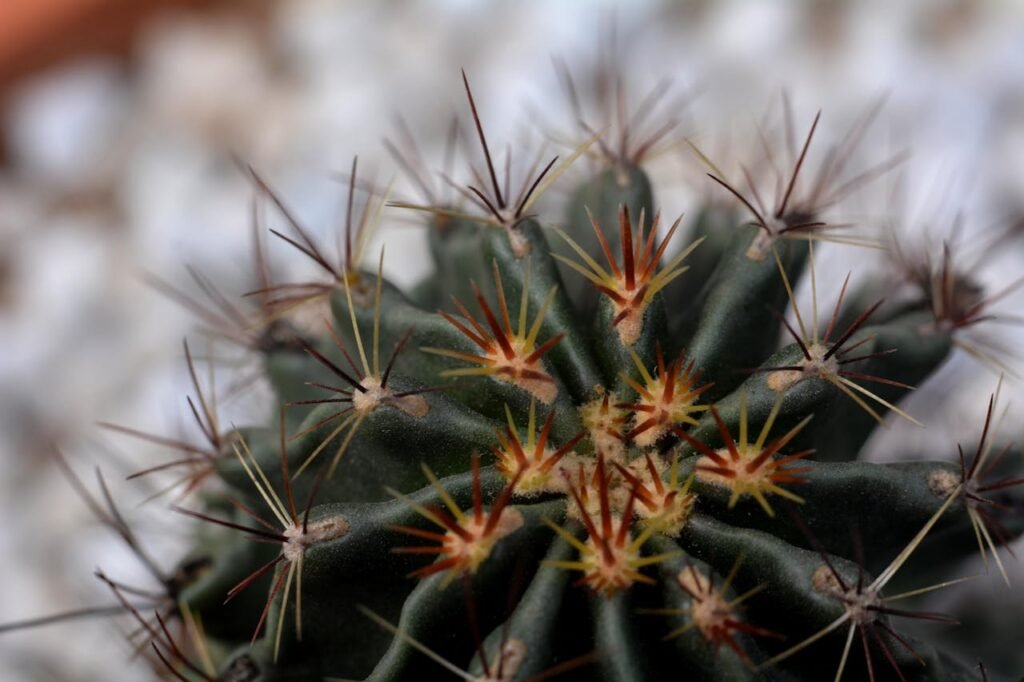
Photo by AMOL NAKVE
If roses themselves are safe, what am I actually worried about when clients call about rose ingestion? Thorns. Hands down, thorns cause more problems than the roses themselves.
I treated a cat last spring who’d batted at a rose bouquet and ended up with a thorn embedded deep in her paw pad. By the time the owner noticed the limping, the wound had already started to abscess. We needed antibiotics and daily soaking to clear the infection.
Thorn injuries I’ve treated:
- Paw pad punctures (most common)
- Mouth and gum injuries from chewing stems
- Internal punctures if stems are swallowed (rare but serious)
- Infected wounds from thorns left in place
Warning signs of thorn injury:
- Sudden limping or favoring one paw
- Excessive drooling or pawing at the face
- Visible swelling or redness
- Reluctance to eat (could indicate mouth injury)
If you bring roses home, remove those thorns before arranging them. It takes five minutes and prevents the majority of rose-related cat injuries I see.
Pesticides and Chemicals: The Hidden Toxicity

Photo by Gustavo Fring
Here’s what most people miss: The rose itself is safe, but what’s on the rose can be genuinely dangerous.
Commercial roses—especially imported ones—are often treated with pesticides like neonicotinoids and various fungicides. These chemicals can cause anything from mild oral irritation to serious neurological symptoms if ingested. I’ve seen cats develop tremors, excessive drooling, and repeated vomiting from licking pesticide residue off their paws after walking near treated roses.
Then there’s flower food—those little packets that come with bouquets. Most contain biocides to prevent bacterial growth in vase water. If your cat drinks from the vase (and many cats see vase water as an irresistible drinking fountain), they’re getting a dose of chemicals that can cause stomach upset or worse.
My prevention protocol:
- Rinse all rose stems thoroughly under running water before arranging
- Dump flower food packets or use them in vases cats cannot access
- Buy organic roses when possible
- Change vase water daily to minimize chemical concentration
Bouquet Fillers: The Deadly Surprise

Photo by PNW Production
This is where “safe roses” become dangerous fast. Roses are almost never alone in a bouquet. They come with filler flowers, greenery, and decorative elements—and some of those additions are genuinely deadly to cats.
The big killer: Lilies. If there’s a single Easter lily, Asiatic lily, or tiger lily anywhere near those roses, you have a catastrophic emergency on your hands. Even tiny amounts of lily—pollen on fur that gets groomed off—can cause complete kidney failure in cats.
I’ve watched cats die from lily poisoning despite aggressive treatment. The mortality rate is high even with immediate veterinary care. There is no safe amount of lily exposure for cats.
Other common toxic bouquet additions:
- Baby’s breath (mild irritant)
- Carnations (GI upset)
- Chrysanthemums (toxic, causes vomiting)
- Eucalyptus greenery (often used, very toxic)
This is why I tell every cat owner: Never assume a bouquet is safe just because the roses are. You need to identify and verify safety for every single plant in that arrangement.
Plants Called “Rose” That Aren’t Safe
One of the most dangerous misconceptions is assuming anything with “rose” in the name is safe for cats. Not even close.
Desert Rose (Adenium obesum): Deadly Toxic
Despite the name, Desert Rose is a completely different plant that’s incredibly toxic to cats. It contains cardiac glycosides that can cause vomiting, diarrhea, abnormal heart rhythms, and potentially death.
I’ve seen cases where cats chewed just a few leaves and developed life-threatening symptoms. These aren’t related to true roses at all—they’re succulent plants that happen to share a name.
Christmas Rose (Helleborus niger): Cardiac Danger
Christmas Rose contains compounds that affect the heart and digestive system. Ingestion causes drooling, vomiting, diarrhea, abdominal pain, and potentially cardiac arrhythmias.
Moss Rose and Rose of Sharon: Also Problematic
Both cause gastrointestinal upset and other symptoms in cats. They’re in completely different plant families than true roses and should be avoided in cat households.
Quick identification guide:
| Plant Name | Scientific Name | Safe for Cats? | Key Difference |
|---|---|---|---|
| Garden Rose | Rosa spp. | ✅ Safe | Classic rose shape, thorny stems |
| Desert Rose | Adenium obesum | ❌ Toxic | Thick succulent stem, no thorns |
| Christmas Rose | Helleborus niger | ❌ Toxic | Cup-shaped flowers, winter blooming |
| Moss Rose | Portulaca grandiflora | ❌ Toxic | Low-growing, succulent-like |
When in doubt, check the scientific name. Only plants in the Rosa genus are the safe roses we’re discussing.
Making Your Home Truly Rose-Safe for Cats
Smart Rose Selection and Placement
Choose wisely:
- Buy organic roses or rinse commercial roses thoroughly
- Look for thornless varieties if growing roses at home
- Verify no toxic flowers are mixed in bouquets
Place strategically:
- Height wins: 5+ feet up on stable surfaces
- Use heavy, wide-based vases that won’t tip easily
- Keep cats out of rooms with roses if they’re persistent chewers
What to Do If Your Cat Eats Roses
For true roses (safe plant):
- Remove access to prevent overconsumption
- Monitor for 4-6 hours for mild GI upset
- Ensure fresh water is available
- Call vet if vomiting persists beyond a few hours
For toxic “rose” imposters or mixed bouquets:
- Identify exactly what they ate—photograph the plant
- Call ASPCA Poison Control (888-426-4435) immediately
- Follow veterinary guidance precisely
- Watch for serious symptoms: lethargy, repeated vomiting, difficulty breathing
Safe Flower Alternatives to Pair with Roses
Want a gorgeous bouquet that’s completely cat-safe? Combine roses with:
- Sunflowers (bold and non-toxic)
- Orchids (elegant and safe)
- Snapdragons (colorful and cat-friendly)
- Gerbera daisies (cheerful and safe)
Skip these common additions:
- Lilies (any type—deadly)
- Carnations (GI irritant)
- Tulips (toxic)
- Chrysanthemums (toxic)
Frequently Asked Questions
Everything you need to know about roses and cats
Rose petals, leaves, and stems are non-toxic, so small amounts won’t poison your cat. However, eating too many can cause mild stomach upset (vomiting or diarrhea) because cats can’t digest plant material well. Remove thorns first to prevent injuries.
Roses are infinitely safer than lilies. True roses are non-toxic and cause only mild GI upset if overeaten.
Lilies are catastrophically toxic — even tiny exposures cause kidney failure and are often fatal despite treatment. Never have lilies near cats.
Remove vase access immediately. Monitor for vomiting or diarrhea for 4–6 hours. Flower food in vase water can cause stomach upset.
If vomiting persists (3+ times) or your cat seems lethargic, contact your veterinarian right away. One mild episode is usually not cause for alarm.
No. True roses (Rosa species) are safe, but Desert Rose, Christmas Rose, Moss Rose, and Rose of Sharon are toxic plants in completely different families. Always verify the scientific name before assuming safety.
Yes, with precautions. Follow these steps to keep your roses and your cat both safe:
- Remove thorns before displaying
- Rinse stems to remove pesticide residue
- Verify the arrangement — confirm no lilies or toxic flowers are mixed in
- Place vases high — 5+ feet on a stable surface
- Block vase water access to prevent drinking
- Clean up dropped petals promptly
Ask your florist to confirm every flower and greenery in the arrangement is non-toxic to cats before bringing it home.
The Bottom Line on Rose Safety
After fifteen years of treating cats who’ve encountered roses, here’s what I want you to remember: True roses won’t poison your cat. The ASPCA confirms it, toxicology research backs it up, and my clinical experience supports it. Roses themselves are safe.
But “safe” requires context. Remove those thorns before arranging. Rinse away pesticides. Triple-check that no lilies or toxic plants are hiding in the bouquet. Place arrangements strategically high. These simple steps turn roses from “probably fine” into “genuinely safe.”
The real danger isn’t the roses—it’s everything we assume about them. Assumptions that all “roses” are safe (they’re not—Desert Rose will kill your cat). Assumptions that commercial bouquets are fine (not if lilies are mixed in). Assumptions that thorns are no big deal (tell that to the cat with an infected paw abscess).
Pay attention to the details, and roses can absolutely coexist safely with your cats. Your home can be both beautiful and safe. You don’t have to choose.
Just maybe reach for those thorn-free organic roses next time.
Sources:
- ASPCA Animal Poison Control: Toxic and Non-Toxic Plant Database
- PetMD: Rose Safety for Cats
- Journal of Veterinary Toxicology: Plant Ingestion Case Studies (2020-2026)
- What Flowers Are Safe for Cats? Guide to Pet-Friendly Blooms
- Are Carnations Toxic to Cats? Dangerous Facts to Know
- Can Cats Eat Roses? Safety Facts You Should Know
- What Flowers Are Poisonous to Cats? Full Safety Guide
- Are Roses Toxic to Cats? Vet Guide 2026
This article is for informational purposes only. If your cat shows signs of illness after eating any plant, contact your veterinarian immediately.