
7 Shocking Facts. Can Cats Eat Cheese Safely
Veterinary Disclaimer: This article is written for educational purposes only. It is not a substitute for professional veterinary advice. If your cat shows signs of distress after eating cheese — vomiting, diarrhea, lethargy, or facial swelling — contact your vet right away.
The Short Answer
Cheese is not toxic to cats, but that does not make it a good treat. Most adult cats are lactose intolerant, and cheese is also high in fat and sodium — two things that can quietly cause real problems even in small amounts. If your cat stole a crumb off your cutting board, you probably do not need to panic. But if you are thinking of making cheese a regular part of their routine, you will want to read this first.petmd+1
You are putting together a sandwich. You look away for one second. When you look back, your cat is sitting exactly where the cheese was — wearing an expression that says “I regret nothing.”
Sound familiar?
It happens in houses everywhere, and every time it does, the same question hits: is cheese actually safe for my cat?
I’m Sarah, and I started Purreats.com because I got tired of pet food articles that gave vague advice without real answers. So let me give you the clear, honest breakdown on cats and cheese — what the risks actually are, which cheeses are better or worse, how much is too much, and what to do if your cat already ate some.
Table of Contents
Why Cats and Cheese Are a Complicated Combination
Cats Are Built for Meat, Not Dairy
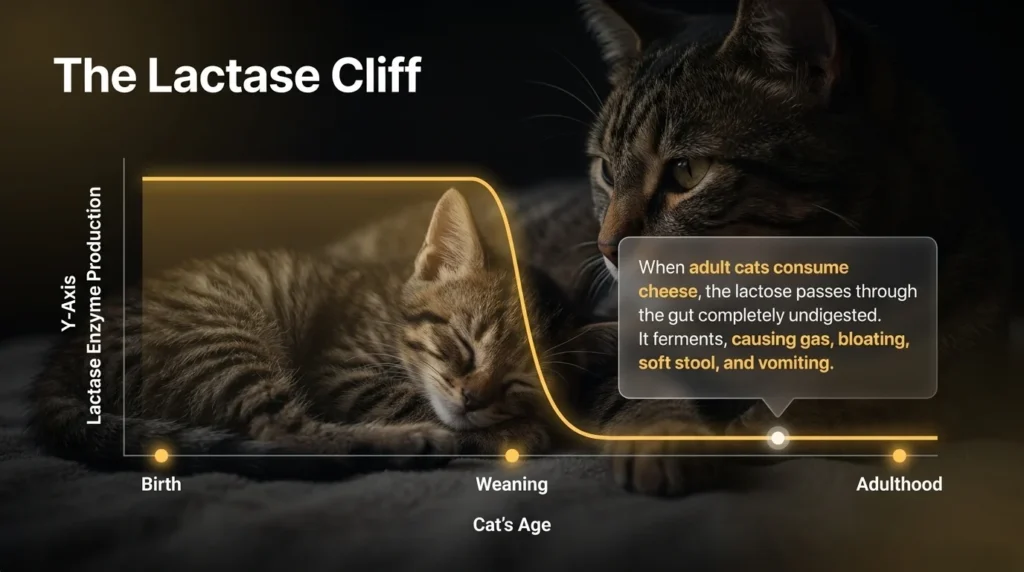
Cats are obligate carnivores. Their digestive systems evolved to process animal protein, not plant matter and not dairy. When kittens are born, they produce an enzyme called lactase, which breaks down lactose — the natural sugar in milk.
Here is the problem: once a cat is weaned, lactase production drops significantly. By the time most cats are adults, they produce very little of it. That means when your cat eats cheese, the lactose passes through the gut undigested, ferments, and causes the classic signs of lactose intolerance — gas, bloating, soft stool, and vomiting.animalbiome+1
Lactose Intolerance Is Not the Only Issue
This is the part that most articles skim over, and it matters.
Even if your cat could digest lactose without trouble, cheese still brings two other problems to the table:
High fat content. Cheese is dense in saturated fat. In cats, repeated high-fat feeding is one of the known triggers for pancreatitis — a painful and sometimes serious inflammation of the pancreas. Even a few regular cheese treats can add up to a meaningful fat load for a small animal.geniuslitter+1
High sodium content. Cats need very little sodium. Many cheeses — especially processed slices, parmesan, feta, and blue cheese — contain salt levels that are genuinely excessive for feline kidneys. In cats with kidney disease or heart conditions, even moderate sodium intake from cheese can cause real harm.mrpetlover+1
Dairy Allergy vs. Lactose Intolerance
These are two different things and it is worth knowing the difference.
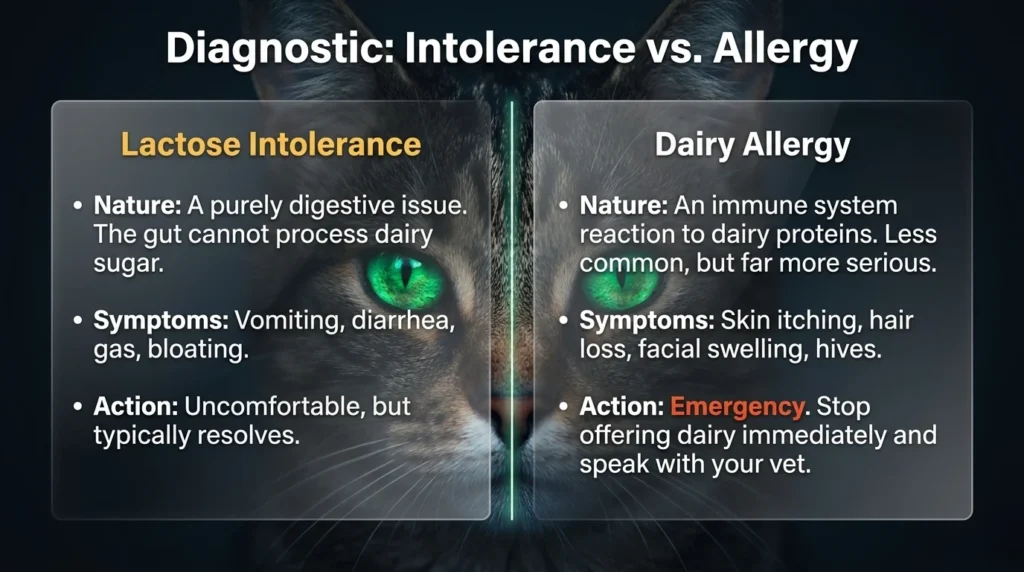
- Lactose intolerance is a digestive issue. The gut cannot process the sugar in dairy. Symptoms are usually stomach-related: vomiting, diarrhea, gas, bloating.
- A dairy allergy is an immune reaction to dairy proteins. Symptoms can include skin itching, hair loss, facial swelling, or hives. This is less common but more serious.purina+1
If you notice skin reactions or swelling after your cat eats any dairy product, stop offering it immediately and speak with your vet.
The Cheese Safety Table
Not all cheese carries equal risk. Here is a straightforward comparison of the cheeses cats are most likely to encounter:
| Cheese Type | Lactose Level | Fat Level | Sodium Level | Overall Risk for Cats |
|---|---|---|---|---|
| Cheddar (aged) | Low | High | Medium | Low–Medium |
| Parmesan | Very Low | High | Very High | Medium |
| Swiss / Emmental | Low | Medium | Low | Low–Medium |
| Mozzarella | Medium | Medium | Medium | Medium |
| Cottage Cheese | Low–Medium | Low | Medium | Low–Medium |
| Goat Cheese | Medium | High | Medium | Medium |
| Cream Cheese | Medium–High | Very High | Medium | Medium–High |
| Brie / Camembert | High | High | Medium | High |
| Feta | Medium | High | Very High | High |
| Processed Slices | Medium | High | Very High | High |
| Blue Cheese | High | High | High | Very High — Avoid |
| Flavored Cheese (garlic/onion/herb) | Varies | Varies | Varies | Dangerous — Never offer |
The key lesson from this table: Hard, aged cheeses like cheddar, Swiss, and parmesan have the least lactose — but none of them are low in fat or sodium. No cheese is nutritionally necessary for your cat, and the “safer” ones are still only safe in very small, infrequent amounts.pumpkin+2
How Much Cheese Is Actually Too Much?
Think Pea-Sized, Not Cube-Sized
If you are offering cheese at all — for example, wrapped around a pill — keep the piece no larger than a pea. That is roughly the size of your pinky fingernail.
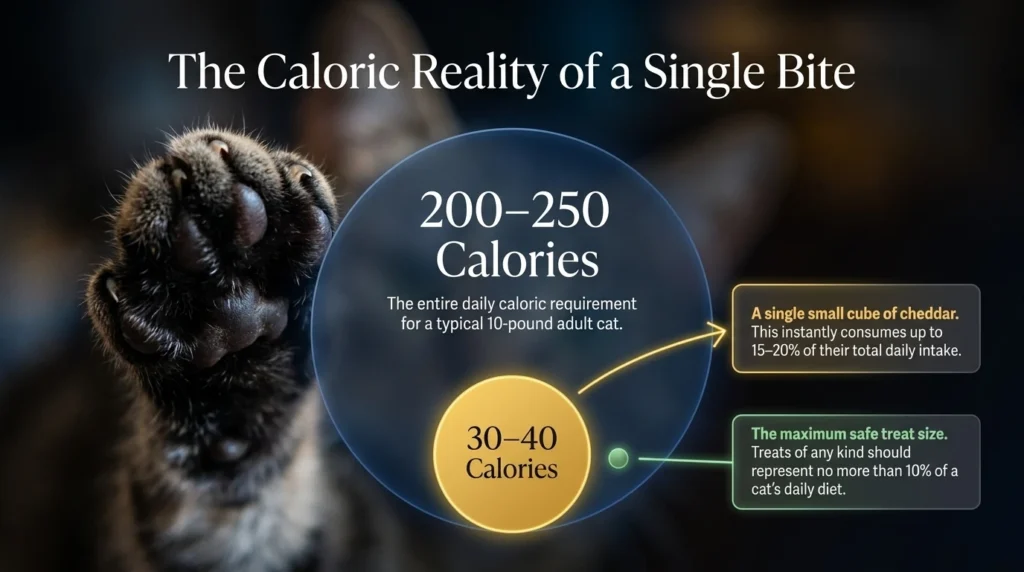
Here is why that matters: a typical 10-pound cat needs only around 200–250 calories per day. A single small cube of cheddar contains roughly 30–40 calories. That is already up to 15–20% of their daily intake in one small bite — before they have eaten any actual cat food.petnation
Treats of any kind should represent no more than 10% of your cat’s daily calories. Cheese burns through that budget very quickly.
Factors That Make Cheese Riskier for Your Cat
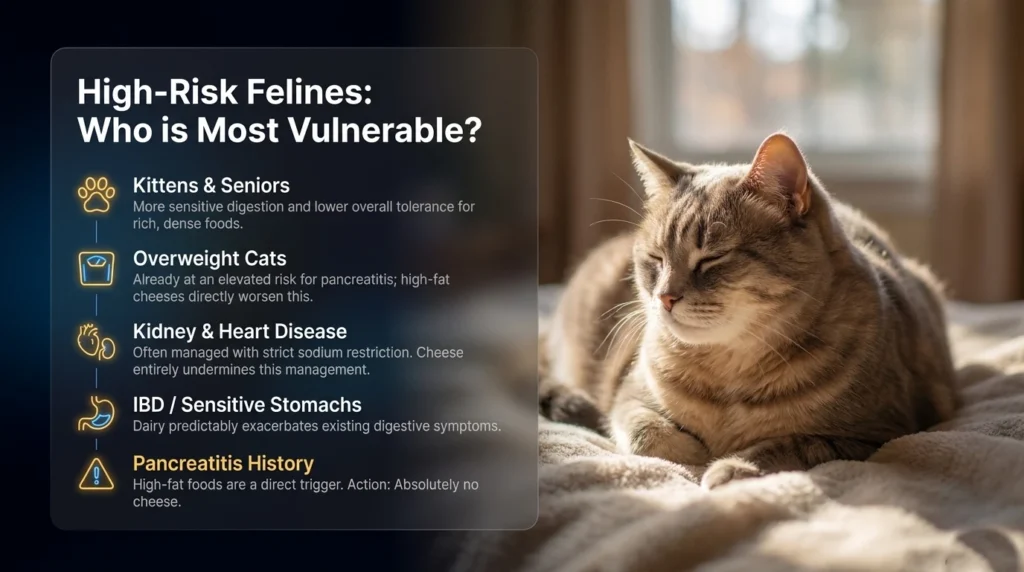
Individual cats respond differently. Some healthy adult cats can handle a tiny taste without visible trouble. Others react to even a crumb. The following factors increase the risk:
- Kittens and senior cats — more sensitive digestion and lower tolerance for rich foods
- Overweight cats — already at elevated risk for pancreatitis; high-fat foods worsen this
- Cats with kidney disease — the sodium in cheese adds stress to already-compromised kidneys
- Cats with pancreatitis history — high-fat foods are a direct trigger; no cheese at all
- Cats with IBD or sensitive stomach — dairy typically worsens existing digestive symptoms
- Cats with heart disease — often managed with sodium restriction; cheese undermines this
Symptoms to Watch After Your Cat Eats Cheese
Most reactions to cheese show up within a few hours. Here is how to read what you see.
Mild Symptoms — Monitor at Home
- Soft stool or mild diarrheapurina
- Increased gas or bloatingtheanimalgazette
- Slightly reduced appetite for one meal
- Mild increase in water consumption
These usually resolve within 12–24 hours in otherwise healthy cats. Keep water available and resume normal feeding.
More Serious Symptoms — Call Your Vet
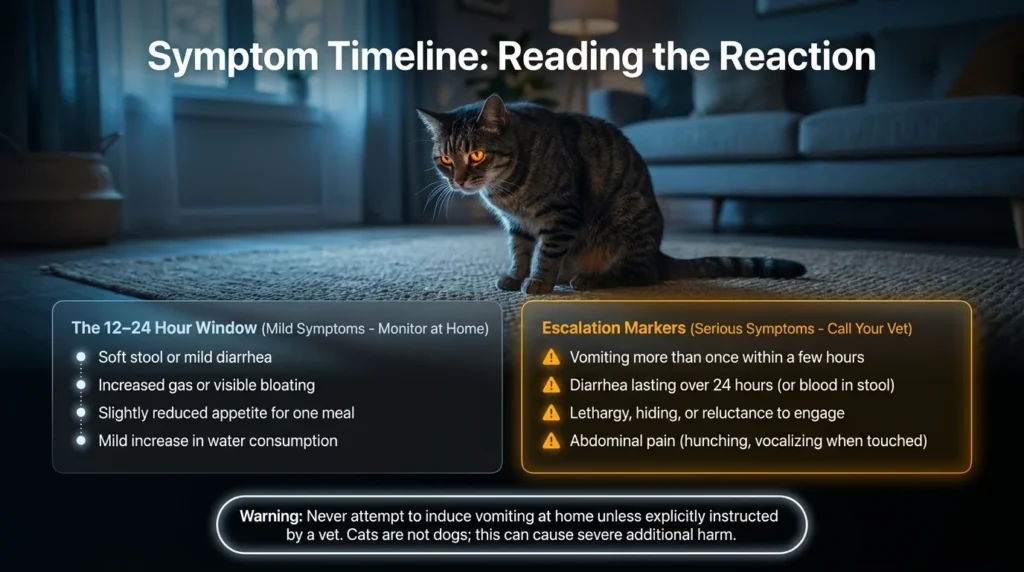
- Vomiting more than once within a few hourspetmd+1
- Diarrhea lasting more than 24 hours
- Blood in the stool
- Lethargy, hiding, or reluctance to engage
- Abdominal pain — hunching, avoiding touch, or vocalizing when the belly is pressed
- Loss of appetite for more than 24 hours
- Facial swelling, hives, or difficulty breathing — go to an emergency vet immediately
Do not try to induce vomiting at home unless your vet explicitly instructs you to. Cats are not dogs — this can cause more harm than the cheese did.
My Cat Already Ate Cheese — What Do I Do Right Now?
Take a breath. Here is your step-by-step guide.
Step 1 — Identify What Was Eaten
- What type of cheese was it? Hard, soft, blue, processed, or flavored?
- How much did your cat eat? A lick? A pea-sized piece? A full slice?
- Does the cheese contain any added ingredients? Garlic, onion, chives, herbs, or visible mold?
Step 2 — Check for Immediate Red Flags
If the cheese contained garlic, onion, chives, leeks, or mold of any kind — call your vet now, do not wait for symptoms. These ingredients are toxic to cats at any amount.chewy+1
Blue cheese specifically contains Penicillium mold cultures that produce roquefortine C — a mycotoxin that can cause tremors, seizures, and dangerous spikes in body temperature. This is not a “watch and see” situation.
Step 3 — Monitor for 24–48 Hours
If the cheese was plain, hard or semi-hard, and the amount was small, monitor your cat calmly at home. Watch for the mild symptoms listed above. Offer fresh water and their normal food at the next scheduled mealtime.
Step 4 — Call Your Vet if Symptoms Escalate
Keep the packaging if you can. Your vet will want to know the exact ingredients. Note when your cat ate it and when symptoms started — this helps your vet assess the situation quickly.
Better Treat Alternatives to Cheese
Your cat does not need cheese, and there are much better options that satisfy the treat instinct without the digestive risks.
For Everyday Treats
- Plain cooked chicken — small shredded pieces, no seasoning, no bones
- Plain cooked salmon or white fish — a small flake, not canned in salt water
- Freeze-dried single-ingredient cat treats — look for meat-only ingredients with low sodium
- Commercial cat treats — choose limited-ingredient options made specifically for cats
For Hiding Pills
Cheese is sometimes used as a pill pocket, but there are cleaner alternatives:
- Pill pockets for cats — soft, purpose-made treat pockets that wrap around a pill easily
- Tiny piece of plain cooked chicken — most cats accept this readily
- A teaspoon of wet cat food — mix the pill in and serve separately from the main meal
- A pill gun / pill popper tool — inexpensive, fast, and stress-free for both of you
What Makes a Good Cat Treat?
Look for treats that are:
- High in protein
- Low in sodium (under 50mg per serving is a good benchmark)
- Low in fat, particularly saturated fat
- Free from onion, garlic, xylitol, and artificial sweeteners
- Appropriate for your cat’s life stage (kitten, adult, or senior)
Key Takeaways
- ✅ Cheese is not toxic to cats but is not a good regular treatpetnation
- ✅ Most adult cats are lactose intolerant and will react with gas, soft stool, or vomitingchewy
- ✅ Fat and sodium in cheese are additional risks beyond lactosegeniuslitter
- ✅ Hard aged cheeses like cheddar and Swiss are lower in lactose but still high in fatchewy
- ✅ Blue cheese, flavored cheese, and processed slices are the highest risk typescats.org
- ✅ Pea-sized and occasional is the maximum if you offer any at allpumpkin
- ✅ Any cheese with garlic, onion, or visible mold means call your vet immediately
- ✅ Safer alternatives exist for both treats and pill hiding
🧀 Did Your Cat Eat Cheese?
Answer 4 quick questions for a personalized action guide.
For educational purposes only. Always contact your vet if you are concerned.
Frequently Asked Questions
The questions cat parents ask most — answered clearly.
Want more guidance on safe foods for your cat? Check out our guides on Can Cats Drink Milk? What Actually Happens, What Fruits Are Safe for Cats?, and Is Yogurt Bad for Cats?, and Can Cats Eat Yogurt?
3 Comments