Are Carnations Toxic to Cats? Dangerous Facts to Know
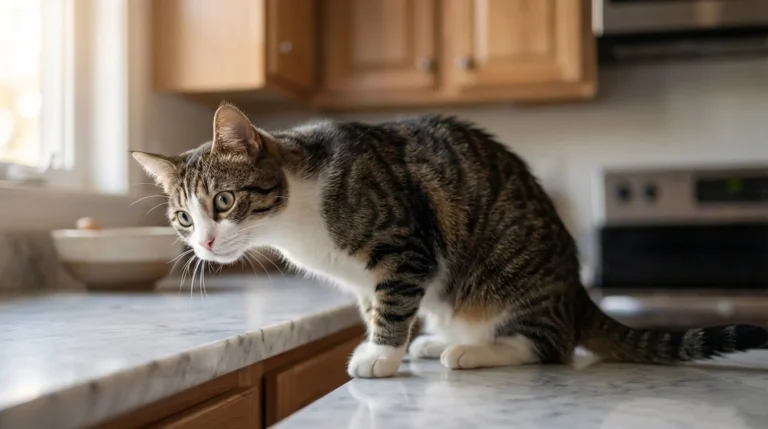
Last Mother’s Day, my neighbor texted me a photo of her kitchen counter: a gorgeous bouquet of pink and white carnations, and her tabby Oliver with petals literally hanging out of his mouth. “EMERGENCY?” the text read, followed by about fifteen panicked emojis.
I get it. That stomach-drop moment when you catch your cat red-pawed with something they shouldn’t have eaten is universal among cat parents. And carnations show up everywhere—grocery store bouquets, funeral arrangements, wedding centerpieces, that “just because” bunch from the corner florist. They’re affordable, long-lasting, and come in every color imaginable.
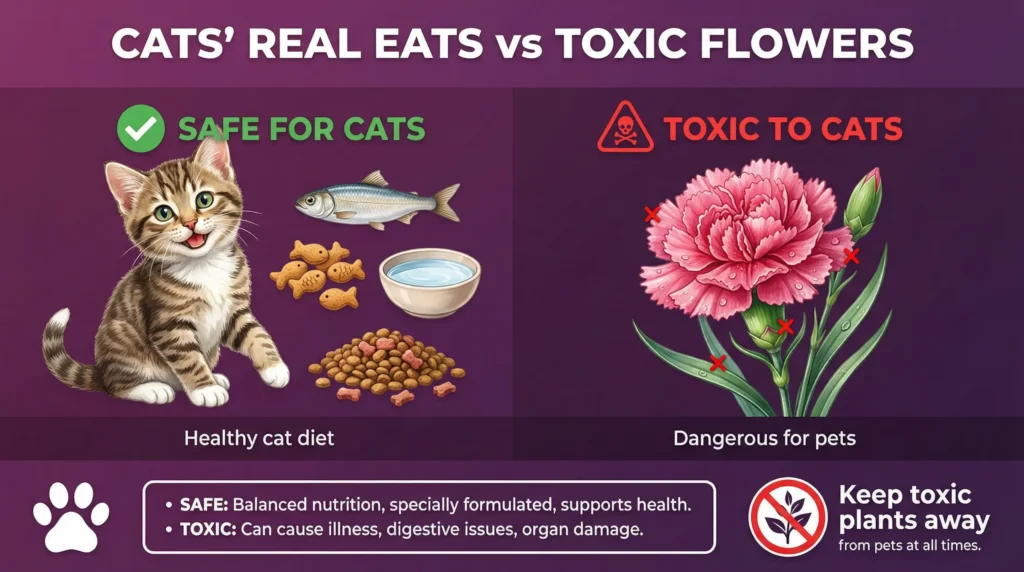
They’re also on the ASPCA’s toxic plant list.
But here’s what most articles won’t tell you: There’s a massive difference between “toxic” and “deadly.” Carnations fall into the mild toxicity category, which means they’ll likely make your cat feel crummy but probably won’t kill them. After fifteen years of veterinary practice, I’ve treated dozens of carnation-eating cats, and I can count on one hand the number that needed more than basic supportive care.
Let me walk you through exactly what carnation toxicity looks like, what to do if your cat just munched on some, and how to keep your home both beautiful and safe.
Yes, Carnations Are Carnations Toxic to Cats—But It’s Complicated
What Makes Carnations Problematic
Carnations (Dianthus caryophyllus) contain several compounds that irritate a cat’s gastrointestinal system. The primary culprits are triterpenoid saponins—naturally occurring chemicals that cause mild to moderate stomach upset when ingested.
Think of it like eating something that disagrees with you. Not poisonous in the “this will damage my organs” sense, but definitely in the “I’m going to feel terrible for the next twelve hours” sense.
The ASPCA officially lists carnations as toxic to cats, dogs, and horses. But—and this is important—they rank far below genuinely dangerous plants like lilies, sago palms, or azaleas on the toxicity scale.
All Parts Are Mildly Toxic
Your cat can get sick from eating any part of the carnation: petals, leaves, stems, even the water in the vase if petals have been sitting in it. The petals contain the highest concentration of irritating compounds because that’s where the plant puts most of its chemical defenses.
In my practice, I’ve seen cats react to:
- Chewing on carnation petals (most common)
- Eating leaves or stems
- Drinking vase water with carnation debris
- Grooming carnation pollen or sap off their fur
The severity usually depends on how much they ate and your individual cat’s sensitivity. Some cats nibble a petal and barely react. Others eat a few petals and spend the evening vomiting.
Why Cats Eat Carnations Anyway
Here’s something that frustrated me early in my career: Cats don’t actually need plant matter in their diet. They’re obligate carnivores. So why do they persistently go after our bouquets?
After watching hundreds of cats over the years, I’ve identified the usual suspects:
Boredom: An under-stimulated cat will find entertainment wherever they can. That gently swaying carnation stem? Basically a cat toy with petals.
Texture curiosity: Some cats are fascinated by the ruffled texture of carnation petals. My own cat Miso ignores roses completely but will investigate any flower with an interesting texture.
Nausea relief: Cats sometimes eat plants when their stomach is upset, seeking fiber to help with hairballs or mild digestive issues.
Hunting instinct: Movement triggers prey drive. Flowers moving in a breeze or from air conditioning become targets.
What Happens If Your Cat Eats Carnations?
Typical Symptoms to Watch For
Most cats who eat carnations develop symptoms within 1-3 hours. Here’s what I typically see in my clinic:
Gastrointestinal signs (most common):
- Vomiting (usually 1-4 episodes)
- Drooling or excessive salivation
- Loss of appetite
- Mild diarrhea
- Lip licking or gulping (signs of nausea)
Behavioral changes:
- Lethargy or seeming “off”
- Hiding more than usual
- Restlessness or discomfort
- Decreased interest in play
One client described her cat’s reaction perfectly: “He looked like he had the worst hangover of his life.” That’s pretty accurate—uncomfortable and unhappy, but not in immediate danger.
Mild vs. Emergency Situations
Here’s where knowing the difference can save you an unnecessary emergency vet bill—or catch a serious problem early.
MILD (Monitor at home):
- 1-2 episodes of vomiting within 6 hours
- Slight decrease in appetite
- Some drooling
- Otherwise acting relatively normal
- Drinking water and staying hydrated
MODERATE (Call your vet for guidance):
- 3-5 episodes of vomiting
- Refusing all food and water
- Persistent diarrhea
- Hiding and won’t come out
- Noticeable discomfort or restlessness
EMERGENCY (Go to vet immediately):
- Non-stop vomiting (6+ times in a few hours)
- Blood in vomit or stool
- Extreme lethargy or unresponsiveness
- Difficulty breathing
- Seizures or tremors
- Visible pain or crying out
I’ve never seen a carnation-only ingestion cause emergency symptoms, but every cat is different. If you’re unsure, err on the side of caution and call your vet.
What I Tell Clients: The 24-Hour Rule
Most carnation-related illness resolves within 12-24 hours without treatment. The cat feels lousy, maybe vomits a couple times, refuses dinner, and then gradually bounces back.
If symptoms persist beyond 24 hours or worsen at any point, that’s when we need to investigate further. Prolonged vomiting can lead to dehydration, and persistent nausea means your cat isn’t eating—both problems that require veterinary intervention.
Immediate Steps If Your Cat Ate Carnations
First 30 Minutes: Damage Control
Okay, you just caught your cat with carnation petals. Here’s your action plan:
- Remove access immediately. Take the bouquet to a room your cat cannot enter—bathroom with closed door, outside, garage, wherever works.
- Check your cat’s mouth gently. Open wide and look for any plant material stuck in teeth or gums. Remove visible pieces carefully.
- Don’t induce vomiting. I know every instinct screams “get it out!” but inducing vomiting at home with hydrogen peroxide or other methods can cause more harm than good. Let the vet make that call.
- Offer fresh water. Make sure clean water is available. If your cat drinks, great. If they refuse, note that for your vet.
- Photograph the flowers. Take pictures of the bouquet so you can identify everything in it. Carnations might not be the only plant your cat ate.
Monitoring Protocol: What to Watch
Set a timer and check on your cat every 2 hours for the first 6-8 hours. Track:
- Number of vomiting episodes
- Consistency of any diarrhea
- Water intake (is the water bowl level dropping?)
- Food interest (even if they don’t eat, do they sniff the bowl?)
- Behavior changes (hiding, lethargy, restlessness)
- Bathroom habits (still using the litter box?)
I tell clients to text me updates. “Hour 2: Vomited once, drank water, hiding under bed” is perfect. That tracking helps us decide together if a vet visit is needed.
When to Call the Vet
Don’t wait until you’re panicked at midnight. Call during the day if:
- Your cat vomits more than twice in 6 hours
- They refuse water for more than 4 hours
- Behavior seems significantly different
- You’re just worried and need reassurance
The ASPCA Animal Poison Control Center (888-426-4435) is available 24/7 for a consultation fee around $75. They can walk you through whether you need emergency care.
Your regular vet probably has an after-hours line, too. Use it. That’s what it’s for.
What Treatment Looks Like
Most cats who come into my clinic for carnation ingestion get:
Basic supportive care:
- Anti-nausea medication (maropitant is my go-to)
- Subcutaneous fluids if dehydrated
- Stomach protectants like famotidine
- Sometimes anti-diarrheal medication
We rarely need anything more aggressive. I’ve never hospitalized a cat solely for eating carnations, though I have hospitalized cats who ate carnations plus something else (like toxic lilies hiding in the bouquet).
Treatment costs typically run $150-$400 depending on your location and what’s needed. Prevention is definitely cheaper.
Safe Flower Alternatives for Cat Homes
Beautiful AND Cat-Safe Options
You don’t have to give up fresh flowers. You just need to be strategic about which ones you bring home.
My favorite cat-safe bouquet flowers:
- Roses (Rosa spp.)—classic, gorgeous, totally safe
- Sunflowers—big, bold, cheerful, non-toxic
- Orchids—elegant and safe (plus they last for weeks)
- Snapdragons—whimsical and cat-friendly
- Gerbera daisies—colorful and non-toxic
- Asters—pretty fillers, safe for cats
- Lisianthus—rose-like ruffles, zero toxicity
I keep orchids in my house specifically because they’re cat-safe and nearly indestructible. Even Miso can’t kill them, and she’s tried.
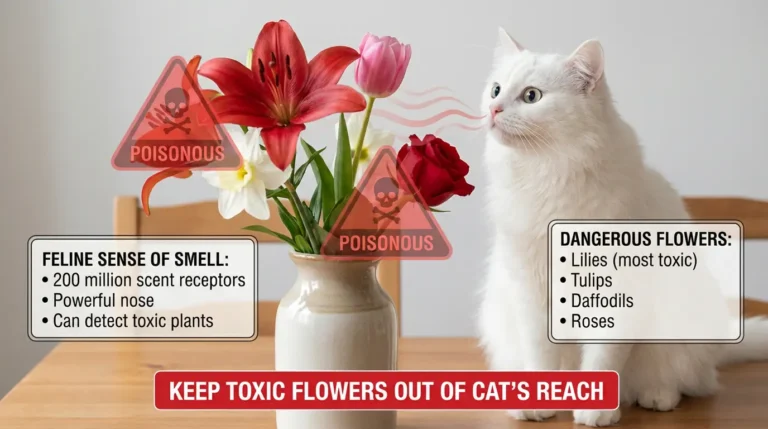
Flowers to Avoid Completely
Deadly serious—never bring these home:
- All true lilies (Easter, Asiatic, tiger, etc.)—kidney failure, often fatal
- Sago palms—liver failure, 50%+ mortality rate
- Azaleas/Rhododendrons—cardiac toxicity
- Tulips (especially bulbs)—severe GI and cardiac issues
- Daffodils—serious vomiting and cardiac problems
Mild to moderate toxicity (avoid these too):
- Carnations (obviously)
- Chrysanthemums
- Gladiolus
- Hyacinth
- Iris
Building a Cat-Proof Bouquet
When I order flowers, here’s my exact script to the florist:
“I need a bouquet with absolutely no lilies, carnations, or toxic plants. I have cats at home. Roses, sunflowers, and orchids are perfect. Can you confirm everything in the arrangement is cat-safe before making it?”
Most florists appreciate the specific guidance. If they seem annoyed or dismissive, find a different florist. Your cat’s safety isn’t negotiable.
For grocery store bouquets, I buy individual bunches of verified safe flowers and arrange them myself. Cheaper, safer, and honestly more satisfying.
Prevention: Keep Carnations and Cats Apart
Strategic Placement
Height wins: Cats can jump 5-6 times their height, but most won’t bother if something’s inconveniently high. Think 5+ feet up—tall bookcases, wall-mounted shelves, high mantels.
Stability matters: Use heavy, wide-based vases that won’t tip if a cat brushes against them. I learned this after a lightweight vase crashed at 3 AM courtesy of a zoomies session.
Deterrents that work:
- Double-sided tape around the vase base (cats hate sticky paws)
- Motion-activated air sprayers (harmless but startling)
- Citrus-scented sachets near flowers (many cats dislike citrus)
Enrichment Over Restriction
Honestly, the best prevention is giving your cat better things to do than murder your flowers.
Cat grass is magic. I grow wheatgrass specifically for my cats. Most flower-chomping cats will happily switch to their designated grass patch. Refresh weekly.
Puzzle feeders and toys keep bored cats busy. A cat working on a food puzzle isn’t investigating your bouquet.
Vertical territory like cat trees and wall shelves gives cats appropriate “high places” to explore.
One client stopped all plant destruction by adding a cat tree near the window where her cat could watch birds. Turns out the cat was just bored and under-stimulated.
The Bottom Line on Carnations and Cats
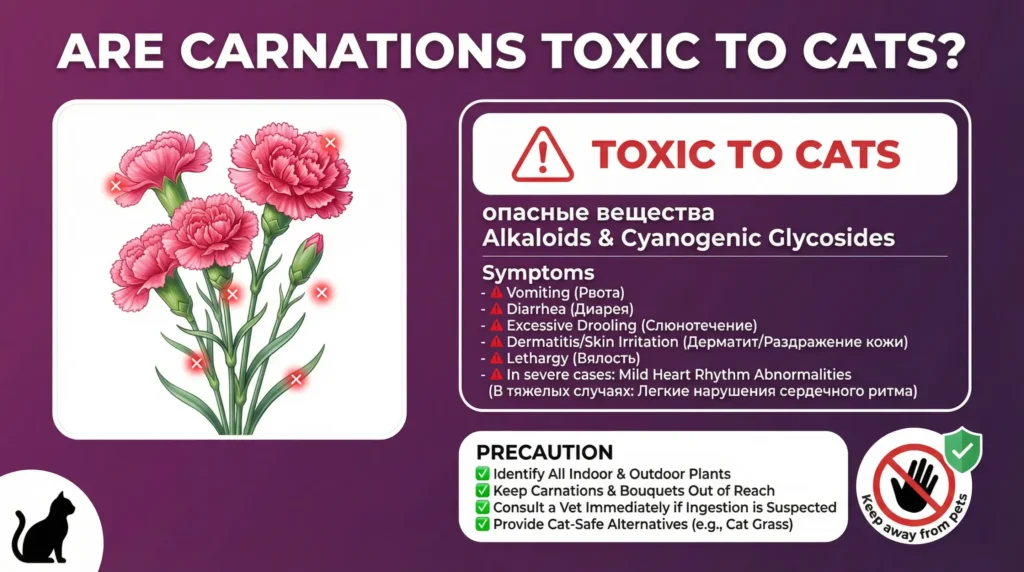
Look, I’m not going to sugarcoat it: Carnations aren’t great for cats. They’ll cause stomach upset, possibly vomiting, and make your cat feel lousy for several hours. But they’re not going to cause kidney failure or kill your cat the way lilies might.
In the hierarchy of flower dangers, carnations rank as a “proceed with caution and keep away from cats” rather than a “never have these in your house ever” situation. That said, why risk even mild illness when gorgeous cat-safe alternatives exist?
After treating my hundredth carnation-eating cat, my takeaway is this: Prevention beats treatment every single time. Choose roses instead of carnations. Place bouquets strategically high. Give your cat appropriate plant alternatives like cat grass. These simple swaps prevent that 2 AM panic entirely.
Your cat doesn’t need to choose between you enjoying flowers and staying healthy. Smart choices mean everyone wins—beautiful blooms for you, no vomiting for your cat, and absolutely zero emergency vet visits.
Just maybe reach for the sunflowers next time instead of the carnations.
Sources:
- ASPCA Animal Poison Control: Carnation Toxicity Data
- Pet Poison Helpline: Carnation Ingestion Cases (2020-2026)
- Journal of Veterinary Emergency and Critical Care: Plant Toxicity Reviews
- What Flowers Are Safe for Cats? Guide to Pet-Friendly Blooms
- Are Roses Safe for Cats? The Complete Truth About Roses and Cat Safety
- Can Cats Eat Roses? Safety Facts You Should Know
- What Flowers Are Poisonous to Cats? Full Safety Guide
- Are Roses Toxic to Cats? Vet Guide 2026
This article is for informational purposes only. If your cat shows signs of illness after eating carnations or any plant, contact your veterinarian immediately.