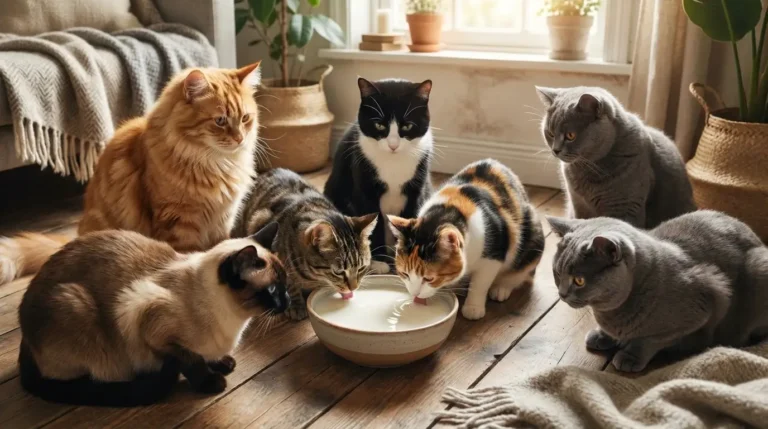
Is Milk Bad for Cats? 3 Myths About Cats and Milk
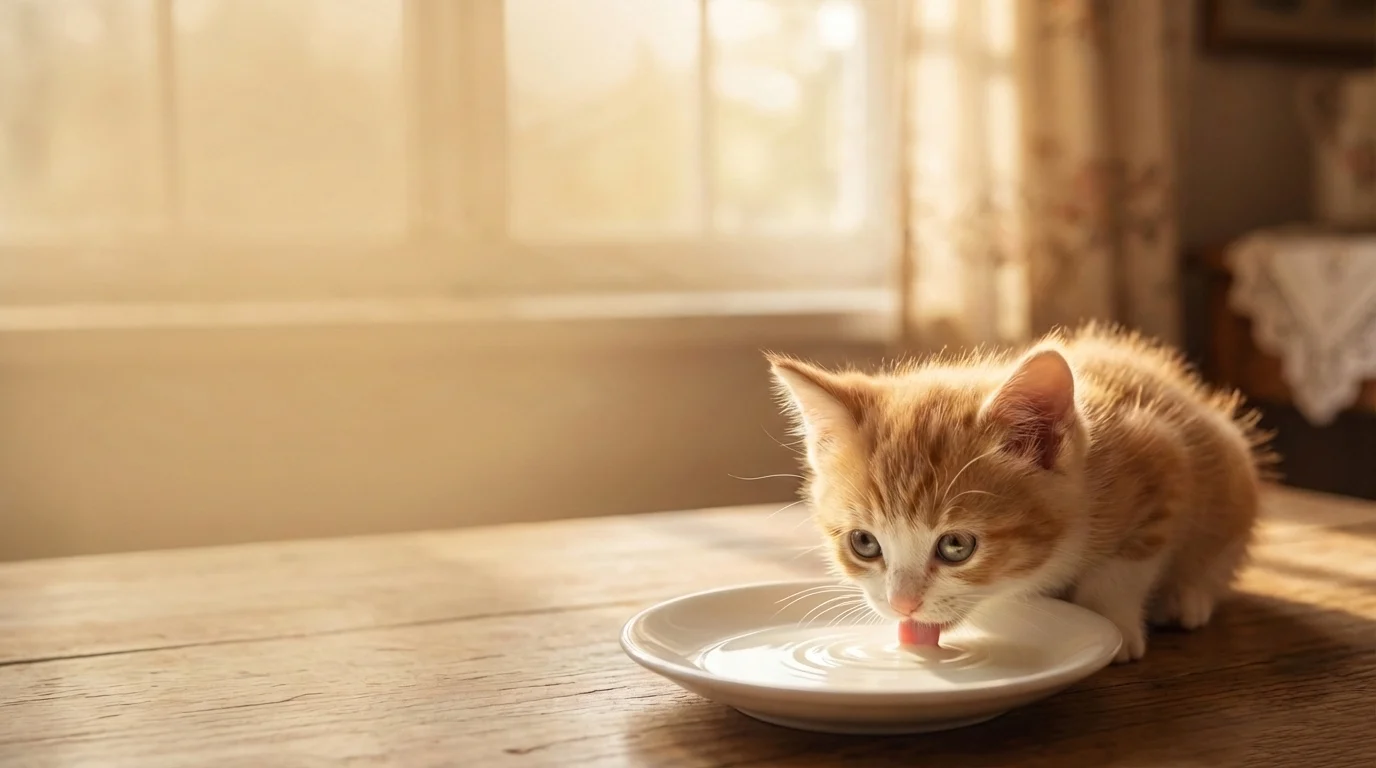
The Direct Answer
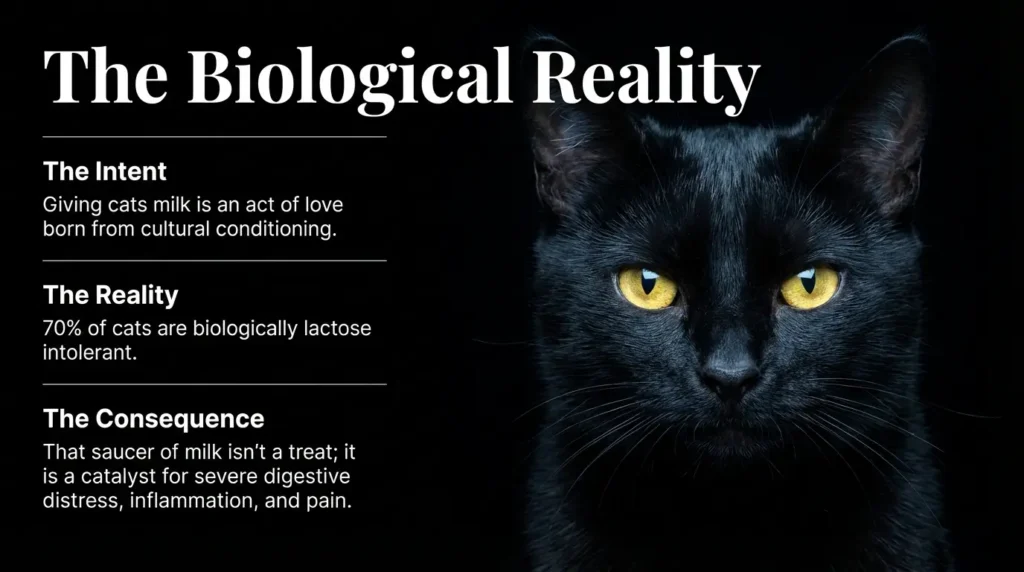
Yes, milk is bad for most cats. About 70% of adult cats are lactose intolerant, lacking the lactase enzyme needed to digest milk sugar. Drinking milk causes gas, bloating, diarrhea, and vomiting within 2-12 hours. Even cats who seem to tolerate milk get zero nutritional benefit and may develop chronic digestive inflammation. Kittens lose lactase production by 8-12 weeks after weaning, making milk inappropriate for all life stages except nursing.
Last Saturday, I watched my neighbor pour a full bowl of milk for her cat, smiling as he lapped it up enthusiastically. “He loves his special treat!” she said proudly.
Monday morning, she texted me photos of diarrhea all over her bathroom. “Is this normal?”
No. It’s not normal – it’s lactose intolerance, and it’s exactly what happens when cats drink milk despite every cartoon and storybook telling us otherwise.
If you’ve been giving your cat milk thinking it’s a harmless treat, or you’re wondering why vets say to avoid it when cats seem to love it so much, the answer is straightforward: yes, milk is bad for cats, and the science behind why is actually pretty fascinating.
Let me explain what’s really happening in your cat’s digestive system.
Is Milk Bad for Cats? Safe Alternatives Guaranteed
Table of Contents
Why Milk Is Bad for Cats: The Biology
The reason milk is bad for cats comes down to one missing enzyme: lactase.
The Lactase Problem
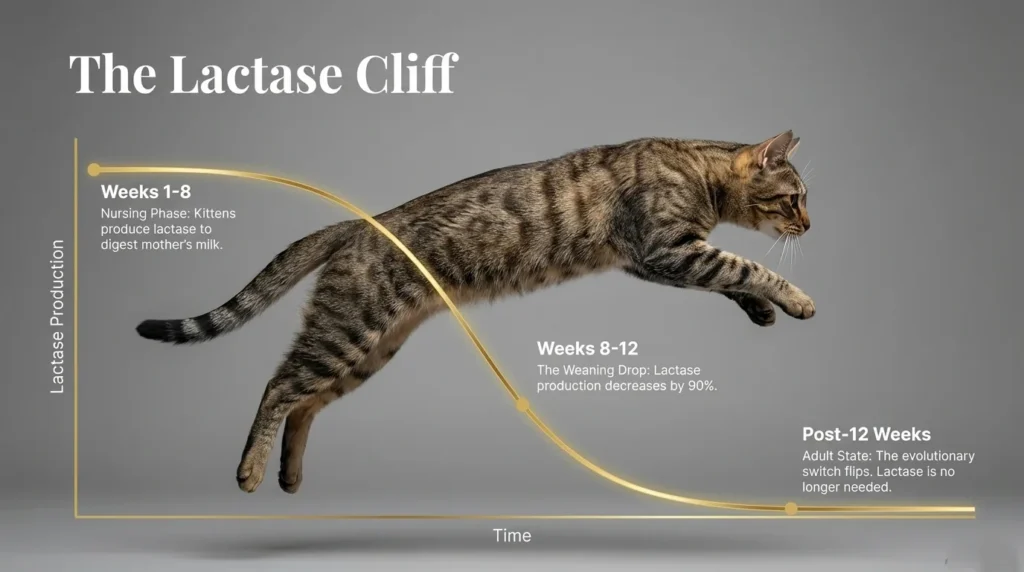
Kittens are born producing lactase, the enzyme that breaks down lactose (milk sugar). They need it to digest their mother’s milk during nursing. This is normal and healthy.
But around 8-12 weeks of age, lactase production drops dramatically – by about 90% in most cats. Once they’re weaned, their bodies essentially say, “We don’t need this enzyme anymore,” and stop making it.
This is completely natural. Wild cats never drink milk after weaning, so there’s no evolutionary reason to keep producing lactase.
When my cat Luna was a kitten, she could handle small amounts of kitten milk replacer without issues. At 14 weeks old, the same amount caused diarrhea. Her body had naturally transitioned to the adult state – lactose intolerant.
What Happens Without Lactase
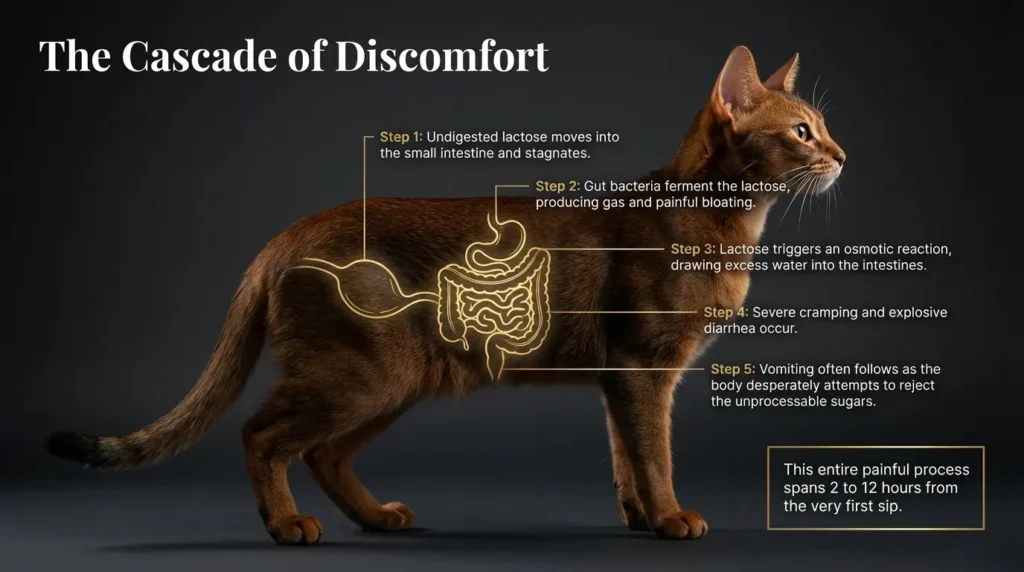
When a lactose-intolerant cat drinks milk, the lactose can’t be broken down properly. Here’s the cascade:
Step 1: Undigested lactose moves into the small intestine and just sits there.
Step 2: Gut bacteria start fermenting the lactose, producing gas and causing painful bloating.
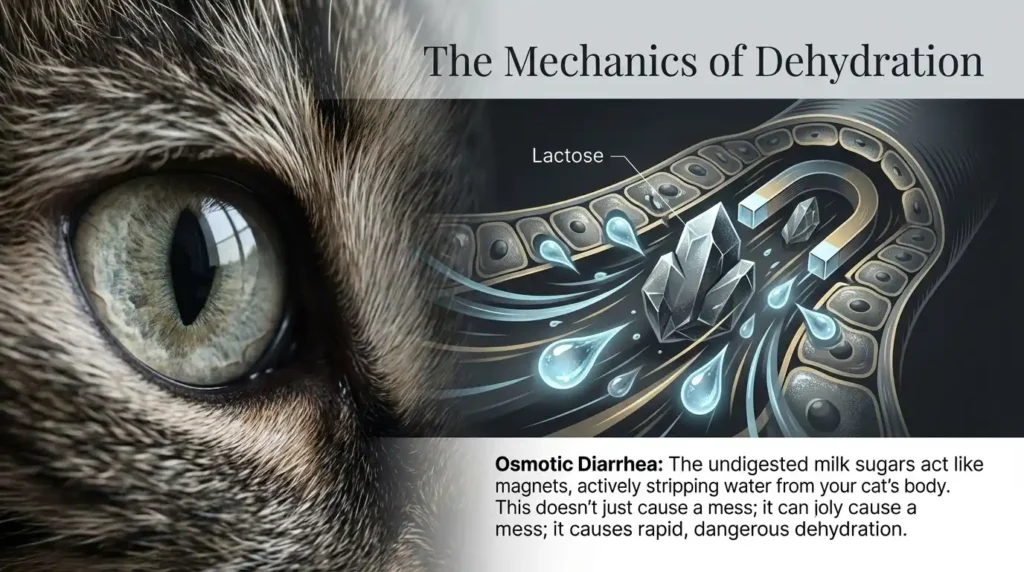
Step 3: The lactose draws water into the intestines through osmosis (this is called osmotic diarrhea).
Step 4: The cat experiences cramping, gas, and eventually explosive diarrhea.
Step 5: Sometimes vomiting occurs as the body tries to reject what it can’t process.
This entire process takes 2-12 hours from first sip to full symptoms. I tracked it with Luna – milk at 9 AM, restlessness by 11 AM, diarrhea by 6 PM.
How Bad Is Milk for Cats, Really?
Let me break down the actual harm milk causes, because “bad” covers a spectrum.
Immediate Digestive Distress
For the 70% of cats who are lactose intolerant, milk causes:
- Gas and bloating (painful, visible stomach distension)
- Diarrhea ranging from soft stool to liquid mess
- Vomiting in more severe cases
- Cramping (you’ll see them trying different positions for comfort)
- Dehydration from fluid loss through diarrhea
Luna’s incident involved all of these except vomiting. She was miserable for 48 hours.
Chronic Low-Grade Inflammation
Even cats who don’t show dramatic symptoms may be experiencing chronic digestive inflammation from regular milk consumption.
My friend gave her cat milk daily for three years. “He handles it fine!” she insisted. But he had:
- Chronic soft stools
- Occasional vomiting
- Dull coat
- Slight underweight condition
Two weeks after stopping milk, all these issues improved. The damage was subtle but real.
Nutritional Emptiness
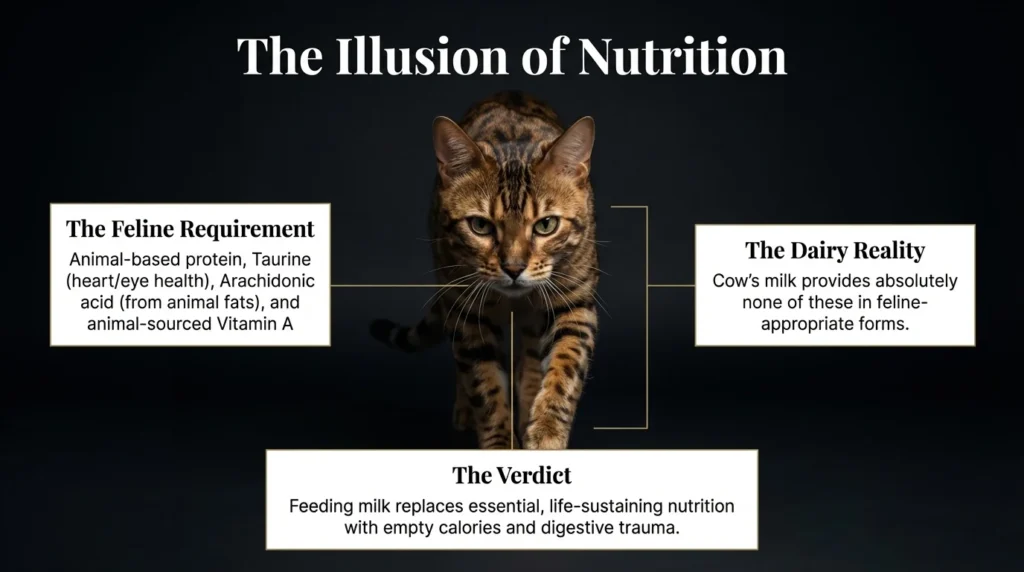
Even if a cat could digest milk perfectly (which they can’t), cow’s milk provides zero essential nutrients cats need. It’s empty calories that displace actual nutrition.
Cats are obligate carnivores requiring:
- Animal-based protein
- Taurine (for heart and eye health)
- Arachidonic acid (from animal fats)
- Vitamin A from animal sources
Milk provides none of these in appropriate forms. You’re literally replacing good nutrition with digestive distress.
The Tolerance Spectrum Myth
“But my cat drinks milk and seems fine!”
I hear this constantly. Here’s the reality: some cats retain slightly more lactase than others. They might have milder symptoms or delayed reactions. This doesn’t mean milk is good for them – it means they’re suffering less obviously.
It’s like lactose-intolerant humans who eat ice cream anyway. Yes, they can do it. No, it’s not without consequences. The symptoms might be manageable, but the inflammation and discomfort are still there.
Is Milk Bad for Kittens Too?
This question confuses people because “kittens drink milk from their mothers!”
Mother’s Milk vs. Cow’s Milk
Mother’s milk is specifically designed for kittens:
- 30% higher protein than cow’s milk
- Different fat composition for brain development
- Contains taurine (essential for cats)
- Has antibodies for immune protection
- Perfect calcium-to-phosphorus ratio
Cow’s milk is designed to turn calves into cows:
- Too low in protein for kittens
- Wrong fat profile
- Missing taurine
- Lacks immune factors
- Incorrect mineral ratios
Giving orphaned kittens cow’s milk can cause failure to thrive, severe diarrhea, dehydration, and death. I’ve volunteered at cat rescues – this happens more often than you’d think when well-meaning people use cow’s milk for found kittens.
What to Use for Orphaned Kittens
Kitten milk replacer (KMR) only. Brands like PetAg KMR or Breeder’s Edge are formulated to match mother cat’s milk composition.
Follow the feeding schedule carefully:
- 0-1 week: Every 2 hours, including overnight
- 1-2 weeks: Every 2-3 hours
- 2-3 weeks: Every 3-4 hours
- 3-4 weeks: Every 4-6 hours, start weaning
Never, ever use cow’s milk for kittens under 8 weeks. It’s genuinely dangerous.
Why Do Cats Love Milk If It’s Bad for Them?
This is the question that drives people crazy. If milk is bad for cats, why do they act like it’s the best thing ever?
The High-Fat Attraction
Cats are biologically programmed to seek out high-fat, high-calorie foods. In the wild, this ensures survival. Milk’s fat content triggers that instinct powerfully.
Luna’s brain sees milk and thinks: “Valuable calories! Must consume!” Her biology doesn’t understand that her digestive system can’t handle it.
The Creamy Texture Factor
The smooth, rich texture of milk is appealing to cats in a way water isn’t. It coats their mouth pleasantly and feels different from anything else they consume.
Think of it like humans and junk food. Pizza and candy trigger pleasure responses in our brains despite not being nutritionally optimal. Cats experience similar reactions to milk.
Learned Behavior and Cultural Conditioning
Cats who’ve been given milk regularly develop learned expectations. They associate milk with positive experiences and will beg for it.
This doesn’t mean they need it or that it’s good for them. It means conditioning has created a habit.
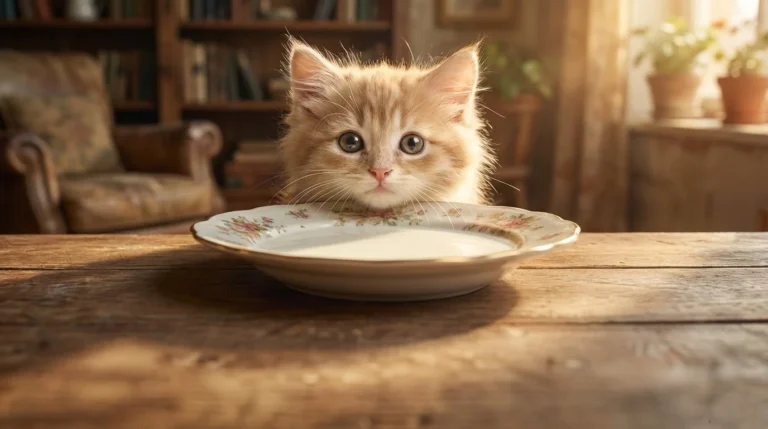
The cultural myth doesn’t help. Every classic cartoon – Tom and Jerry, Sylvester, Garfield – shows cats drinking milk happily. Every children’s book depicts cats with saucers of cream. My own grandmother kept a bowl of milk on her porch for neighborhood cats, genuinely believing she was being kind.
We’ve been culturally conditioned to believe milk and cats go together, when biologically, they absolutely don’t.
What Milk Does to Different Cat Ages
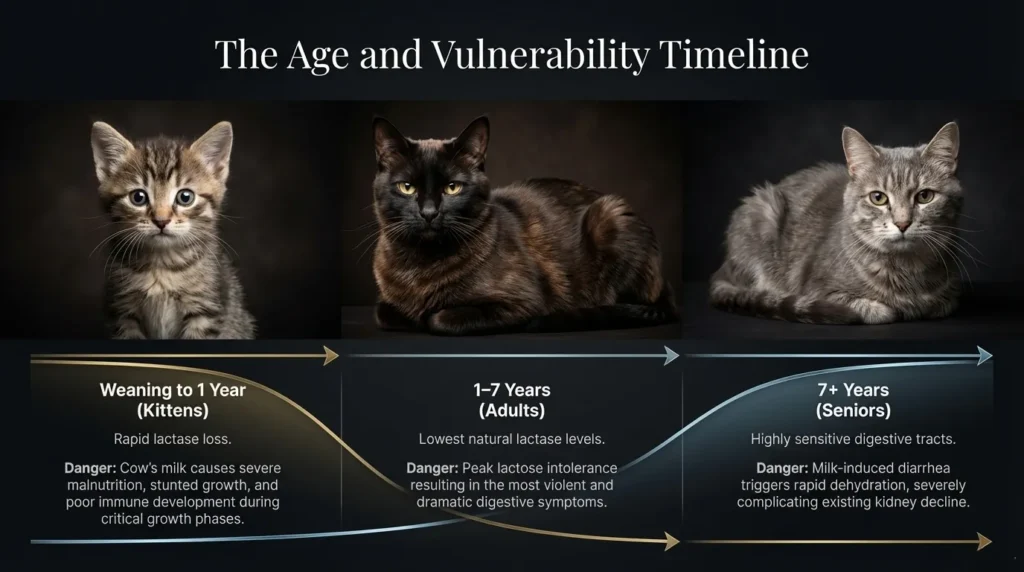
Let me break down how milk affects cats at different life stages.
Adult Cats (1-7 Years)
Healthy adult cats have the lowest lactase levels. Milk typically causes the most dramatic symptoms in this age group because they’re fully lactose intolerant but their owners often don’t realize it.
Luna’s worst reaction happened at age 2 when she was in peak adult health. Her digestive system was fully matured into lactose intolerance.
Senior Cats (7+ Years)
Older cats often have even more sensitive digestive systems. Milk can cause more severe dehydration because senior cats already have declining kidney function and reduced thirst drives.
A senior cat getting dehydrated from milk-induced diarrhea can develop serious complications quickly.
Kittens (Weaning to 1 Year)
Young kittens transitioning from nursing to solid food are losing lactase rapidly. Giving them cow’s milk during this critical growth period can cause:
- Malnutrition (missing essential nutrients)
- Stunted growth
- Chronic digestive issues
- Poor immune development
What to Give Cats Instead of Milk
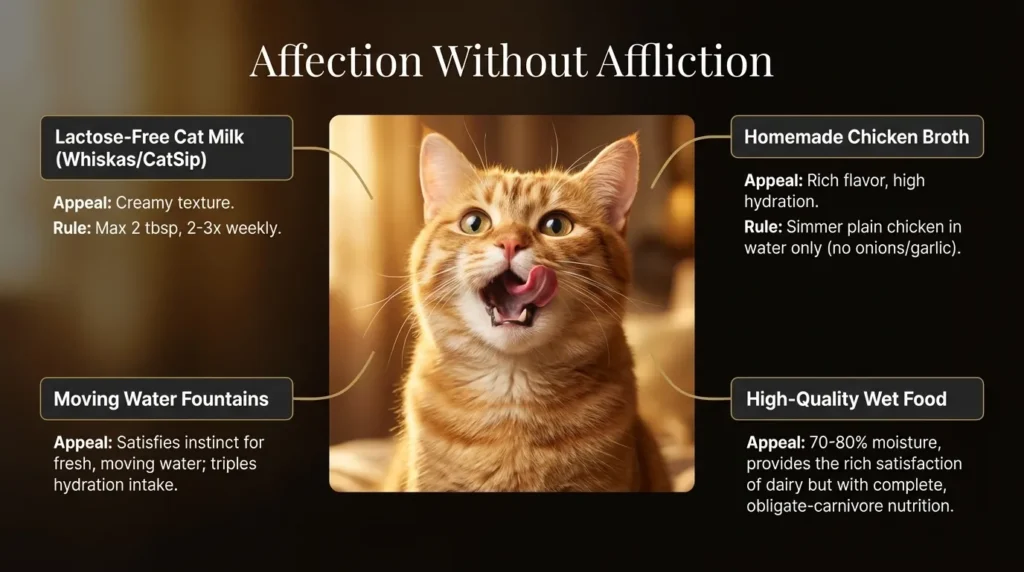
If you want to treat your cat without the digestive nightmare, here are actually safe options.
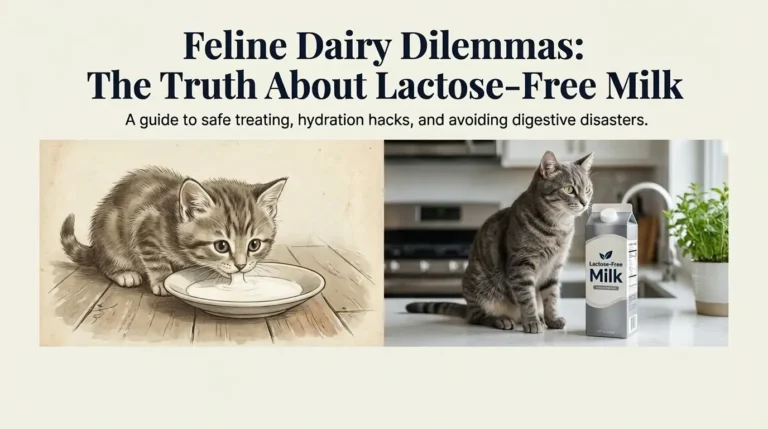
Lactose-Free Cat Milk
Products like Whiskas Cat Milk or CatSip have lactose enzymatically removed. Luna gets 1-2 tablespoons twice weekly with zero issues.
Important limits:
- Still treats, not daily beverages
- Maximum 2 tablespoons per serving
- 2-3 times weekly at most
- Some sensitive cats may still react
Homemade Chicken Broth
This became Luna’s favorite “special drink.” I simmer plain chicken in water (absolutely no onions, garlic, or seasonings) and refrigerate it.
She goes crazy for a tablespoon of this, and it actually provides nutritional value from the chicken.
How to make it:
- Simmer plain chicken breast or thighs in water for 30 minutes
- Remove chicken (save for cat treats)
- Strain broth and refrigerate
- Serve 1-2 tablespoons at room temperature
- Keeps 3-4 days refrigerated
Plain Water in a Fountain
The best thing I did for Luna was buying a cat fountain. Moving water tripled her intake compared to still bowls.
Cats are attracted to movement and freshness. A fountain satisfies those instincts far better than milk.
Fountain benefits:
- Moving water is more appealing
- Constant filtration keeps it fresh
- Some cats won’t drink still water
- Encourages proper hydration
High-Quality Wet Food
Wet food is 70-80% moisture and provides the rich, creamy satisfaction cats seek from milk – but with complete, appropriate nutrition.
When I switched Luna to primarily wet food, she stopped begging for dairy entirely. She was getting what she actually needed: moisture, richness, and proper feline nutrition.
Tuna Water (Occasionally)
The liquid from canned tuna (in water, not oil) is a treat most cats love. Use sparingly – maybe once a week – because too much tuna can cause mercury issues.
Luna gets about a teaspoon mixed into her food once weekly as a special flavor boost.
What If Your Cat Already Had Milk?
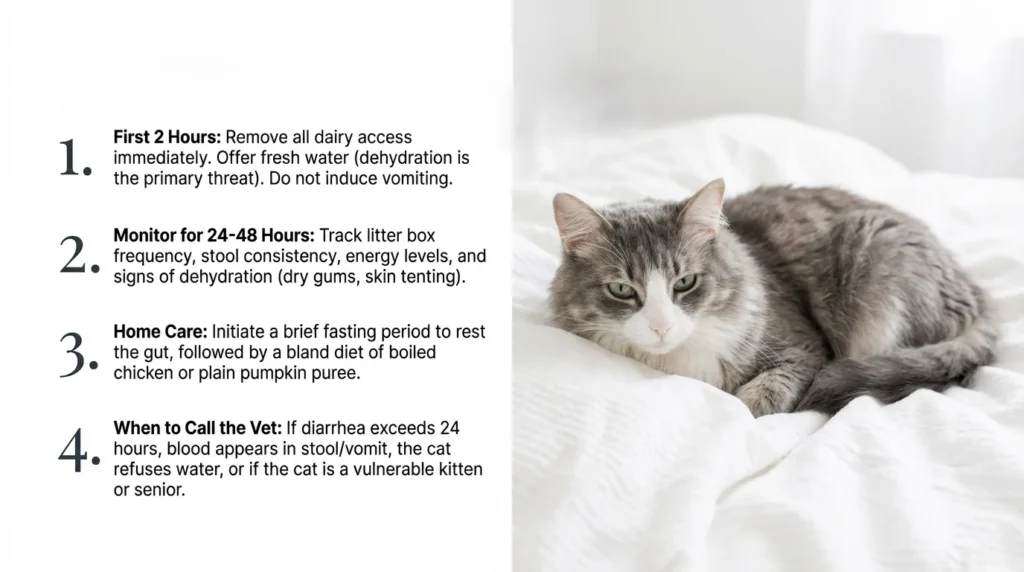
If your cat got into milk, here’s your action plan:
Immediately (First 2 Hours)
- Remove all dairy access completely
- Offer fresh water (dehydration from diarrhea is the real danger)
- Don’t try to induce vomiting unless directed by a vet
- Keep them comfortable in a quiet space
Monitor for 24-48 Hours
Track these symptoms:
- Litter box frequency and stool consistency
- Vomiting episodes (note time and appearance)
- Energy level and appetite
- Signs of dehydration (dry gums, sunken eyes, skin tent test)
- Behavioral changes (hiding, vocalization, aggression from discomfort)
Call Your Vet If You See:
- Diarrhea continuing more than 24 hours
- Blood in stool or vomit
- Refusal to drink water
- Lethargy or complete hiding
- Multiple vomiting episodes
- Your cat is a kitten (they dehydrate dangerously fast)
- Your cat is senior with existing health issues
When Luna had her milk incident, I called my vet for reassurance. They confirmed most cats recover fine but to watch for dehydration and bring her in if symptoms persisted past 24 hours.
Home Care for Mild Cases
Fasting period: Skip the next meal to let the digestive system rest.
Bland diet: When ready to eat, offer plain boiled chicken or plain pumpkin puree.
Hydration focus: Encourage water drinking with multiple bowls, ice cubes, or fountain.
Probiotics: After vet approval, cat-specific probiotics can help restore gut balance.
Most cats recover completely within 48-72 hours with just supportive care.
Breaking the Milk Myth Once and For All
The cultural association between cats and milk is so deeply embedded that changing it feels impossible. But it needs to happen.
Where the Myth Came From
Historically, barn cats were given milk as an easy, cheap food source. Farmers didn’t realize the digestive distress it caused – cats hide pain well, and diarrhea in a barn isn’t immediately obvious.
The image of contented cats drinking milk became romanticized in art, literature, and eventually cartoons, cementing the association for generations.
Why It Persists
- Every children’s book shows cats with milk saucers
- Cartoons perpetuate the image
- Well-meaning older generations pass down the practice
- Cats DO love milk (for the wrong biological reasons)
- Symptoms aren’t always immediately obvious
How to Update the Message
When my six-year-old niece visited and tried to give Luna milk, I explained simply: “Movies show cats drinking milk, but it makes them sick – like if you ate candy for every meal. It looks fun but hurts their tummies.”
She understood immediately. Sometimes we need to be that direct.
The Bottom Line: Yes, Milk Is Bad for Cats
Is milk bad for cats? Unequivocally yes.
It causes digestive distress in 70% of cats, provides zero nutritional value, can lead to chronic inflammation, dehydration, and perpetuates a harmful cultural myth.
Even cats who seem to “tolerate” milk aren’t benefiting – they’re just suffering less obviously while potentially developing long-term digestive issues.
The image of a happy cat with a saucer of milk is as outdated and harmful as any other debunked pet care myth. Cats don’t need milk after weaning, and giving it to them causes far more harm than momentary pleasure.
Luna is four years old now and hasn’t had regular milk since that disastrous cereal bowl incident. She’s perfectly healthy and happy with her water fountain, quality wet food, occasional chicken broth treats, and twice-weekly lactose-free cat milk in tiny amounts.
Your cat deserves better than digestive upset based on cartoon stereotypes. Skip the milk. Offer fresh water, quality nutrition, and treats that won’t cause suffering.
Your cat’s stomach – and your floors – will thank you.
Is Milk Bad for Cats FAQs
Why is milk bad for cats if they love it so much? ▼
Milk is bad for cats because about 70% of adult cats are lactose intolerant – they lack sufficient lactase enzyme to digest milk sugar, causing gas, bloating, diarrhea, and vomiting. Cats love milk because they’re biologically programmed to seek high-fat foods for survival, and milk’s fat content triggers that instinct powerfully, even though their digestive systems can’t handle it.
Think of it like humans and junk food – attraction doesn’t equal appropriateness. Cats’ brains say “valuable calories!” but their bodies can’t process lactose after weaning (around 8-12 weeks old when lactase production drops by 90%). Even cats who seem to tolerate milk aren’t benefiting nutritionally and may develop chronic digestive inflammation. Want doesn’t equal need, and milk provides zero essential nutrients cats actually require.
What happens if my cat drinks milk? ▼
If your cat drinks milk, expect digestive upset within 2-12 hours: gas and bloating first (from gut bacteria fermenting undigested lactose), followed by diarrhea ranging from soft stool to liquid mess, possible vomiting, visible cramping and discomfort, and potential dehydration from fluid loss. Symptoms typically last 24-48 hours in lactose-intolerant cats.
Immediately remove dairy access, offer fresh water to prevent dehydration, and monitor litter box habits, energy level, and appetite for 48 hours. Call your vet if diarrhea lasts more than 24 hours, you see blood in stool or vomit, your cat won’t drink water, shows lethargy, or if your cat is a kitten (they dehydrate dangerously fast). Most adult cats recover fine, but the digestive distress is completely preventable by simply not giving milk.
Got questions about what your cat should or shouldn’t eat? Check out our guide to safe and toxic foods or cats, or drop a comment below with your specific situation.
Sources & Further Reading:
- petmd.com : Can Cats Drink Milk?
- Can Cats Drink Lactose-Free Milk? Finally, Some Good News!
- Can Cats Drink Regular Milk? 8 Safety Tips for Your Cat
- Can Cats Drink Milk? The Safe Truth About Feline Dairy
- Can Cats Drink Almond Milk? 11 Safety Facts Owners Need
- 3 Best Emergency Kitten Milk Recipes Guaranteed to Work
- Best Kitten Formula Brands for Essential Newborn Growth
- Can Cats Have Almond Milk? 3 Perfect Alternatives Be Safe!
And if you’ve got a “my cat drank milk” horror story, share it – sometimes we all need to know we’re not alone in our pet parenting mistakes!