Can Cats Eat Strawberries? A Vet-Informed Safety Guide
The Direct Answer
Can Cats Eat Strawberries?
Yes, cats can eat small amounts of fresh strawberry flesh as an occasional treat. Strawberries are non-toxic and provide hydration and fiber. However, the green leafy tops should be removed, and sugar content makes them unsuitable for diabetic or overweight cats. Limit to one small strawberry piece for healthy adult cats only. Avoid entirely for kittens and cats with digestive sensitivities.
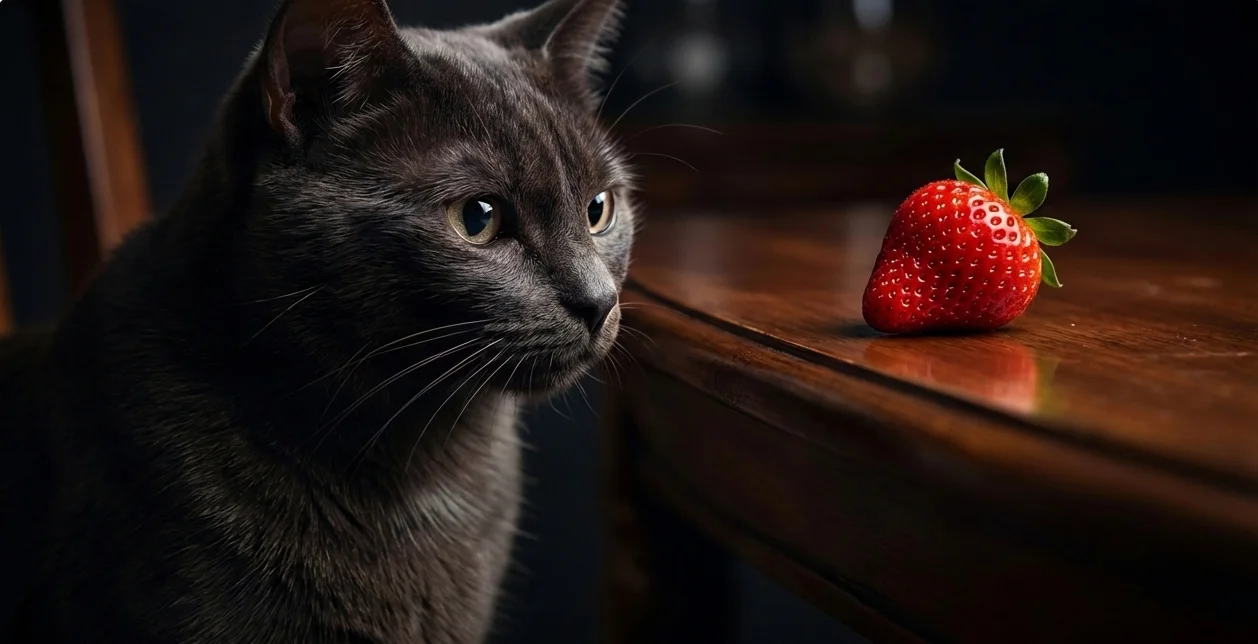
Two summers ago, I dropped a strawberry while making smoothies. Before I could pick it up, my cat Milo pounced on it like it was prey, batting it across the kitchen floor. When he finally took a bite, his face scrunched up in the most hilarious expression of confusion I’ve ever seen.
He didn’t hate it. He didn’t love it. He was just… bewildered.
That moment made me wonder: are strawberries actually safe for cats? Should I have stopped him? What about the green leafy part he was chewing on?
After researching veterinary guidelines and feline nutrition science, I learned that strawberries occupy a surprisingly nuanced space in the “safe for cats” category. If you’re wondering whether to share your berries with your feline friend, here’s what you need to know.
Table of Contents
Quick Comparison Table: Strawberry Safety Guide
| Strawberry Part | Safe for Cats? | Risk Level | Primary Concern | Recommendation |
|---|---|---|---|---|
| Red Flesh | ✅ Yes | Low | High sugar content | 1 small piece max, rarely |
| Green Leafy Tops | ⚠️ Remove | Low-Medium | Digestive upset, pesticides | Always cut off before serving |
| Seeds (on surface) | ✅ Yes | Very Low | Too small to cause issues | Safe—no need to remove |
| Strawberry Stems | ⚠️ Avoid | Medium | Choking, digestive irritation | Remove entirely |
| Fresh Whole Berry | ⚠️ Cut First | Low | Choking hazard if swallowed whole | Always cut into small pieces |
| Frozen Strawberries | ⚠️ Caution | Low-Medium | Tooth sensitivity, choking | Thaw first, cut small |
| Dried Strawberries | ❌ Avoid | High | Extremely concentrated sugar | Not recommended |
| Strawberry Yogurt/Products | ❌ Never | Very High | Dairy, added sugar, xylitol risk | Toxic ingredients possible |
Why Cats Show Interest in Strawberries
The Texture Factor
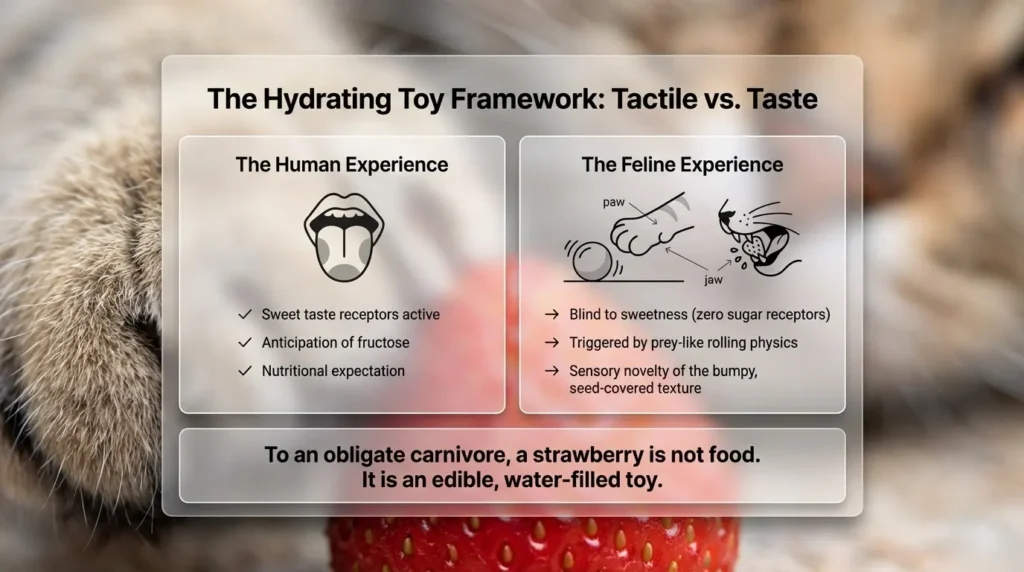
Unlike cantaloupe or watermelon, strawberries have a unique bumpy texture that some cats find fascinating. Those tiny seeds dotting the surface create an interesting sensation when bitten, which can appeal to cats who enjoy novelty.
When Milo first bit into that strawberry, I realized he wasn’t tasting sweetness—he was experiencing texture. Cats can’t taste sugar, so their interest in strawberries is purely about the physical sensation and curiosity.
The Hunt Instinct
Strawberries are small, red, and roll when batted. To a cat, that’s basically a toy that happens to be edible. The prey-like movement triggers hunting instincts, which is why some cats will enthusiastically chase strawberries across the floor before actually eating them.
Oliver, my other cat, treats strawberries like mice. He stalks them, pounces, then loses interest once they stop moving. The entertainment value far exceeds the nutritional value.
The Moisture Appeal
Strawberries are about 91% water, which makes them hydrating on hot days. Cats who don’t drink enough water may instinctively seek out moisture-rich foods—though strawberries should never be your primary hydration strategy.
What Their Interest Really Means
If your cat constantly begs for strawberries or shows obsessive interest in fruit, it might signal inadequate hydration or boredom. Before offering berries regularly, try:
- Adding a cat water fountain
- Providing puzzle toys for mental stimulation
- Increasing wet food in their diet
- Creating more interactive play sessions
Strawberries are a novelty, not a solution to underlying needs.
Nutritional Reality: What Strawberries Offer Cats
The Vitamin and Antioxidant Profile
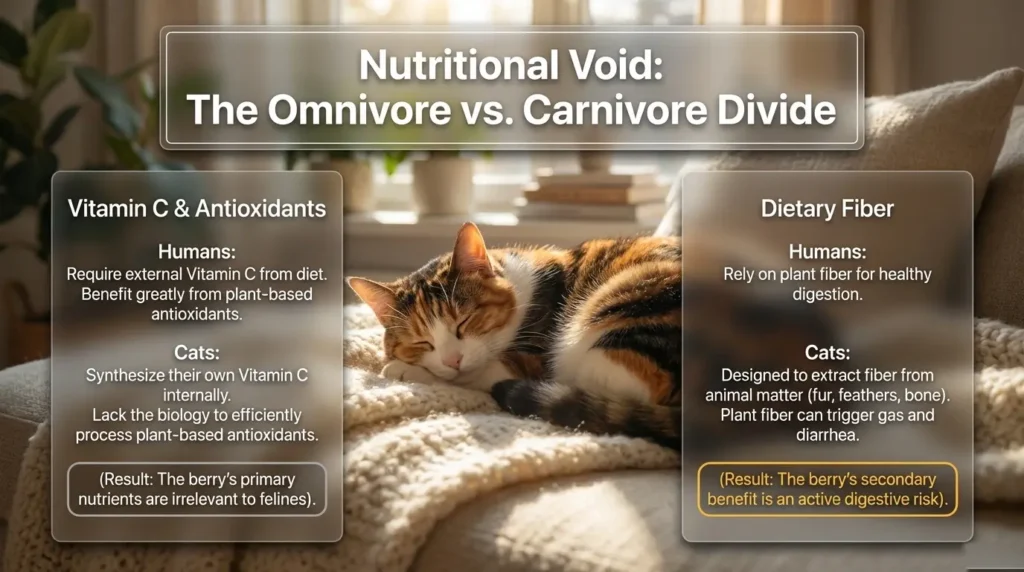
Strawberries contain vitamin C, fiber, manganese, and antioxidants. For humans, that’s impressive. For cats? Largely irrelevant.
Cats synthesize their own vitamin C, unlike humans who need it from food. They also can’t efficiently process plant-based antioxidants the way omnivores do. As obligate carnivores, cats are designed to extract nutrients from meat, not berries.
The vitamins in strawberries aren’t harmful—they’re just not particularly useful for feline health.
The Sugar Problem
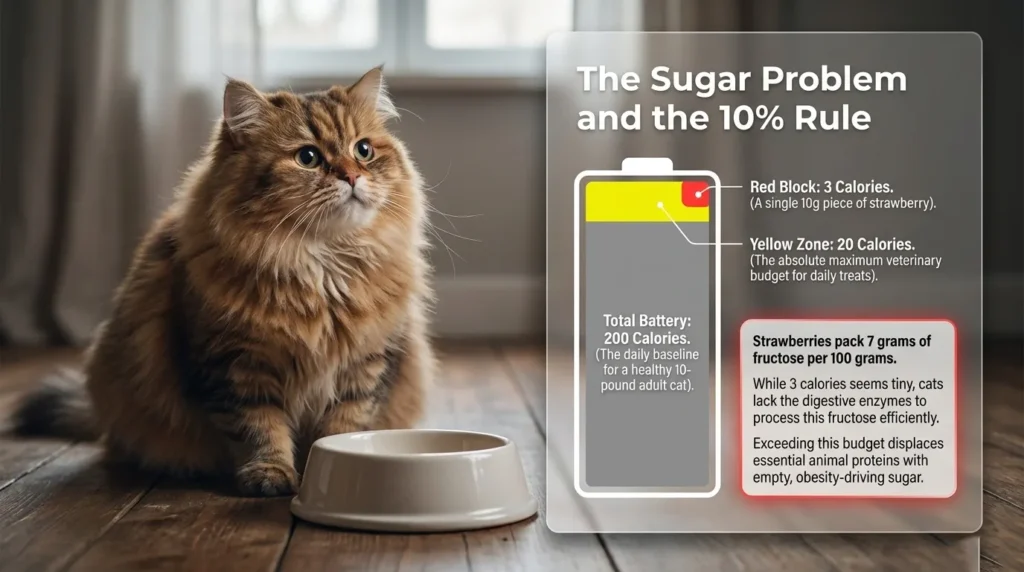
This is the real issue. Strawberries contain about 7 grams of sugar per 100 grams of fruit. While that’s natural fructose (not added sugar), cats lack the digestive enzymes to process it efficiently.
For a healthy 10-pound cat eating roughly 200 calories daily, treats should stay under 20 calories (the veterinary 10% rule). One small strawberry piece (about 10 grams) contains roughly 3 calories—which fits the budget. But anything more, and you’re displacing real nutrition with sugar.
Fiber Content: Helpful or Harmful?
Strawberries contain dietary fiber, which can aid digestion in small amounts. However, cats are designed to get fiber from the fur, feathers, and bones of prey—not from plants.
Too much plant fiber can actually cause digestive upset in cats, leading to diarrhea or gas. What’s beneficial for human digestion can be problematic for feline systems.
The Hydration Benefit (With Caveats)
At 91% water content, strawberries can provide a small hydration boost. But so can:
- Wet cat food (75-80% moisture)
- Cat water fountains (encourages drinking)
- Ice cubes in water bowls
- Bone broth designed for cats
Fruit should be your absolute last resort for hydration, not your go-to strategy.
Bottom Line on Nutrition
Strawberries won’t harm a healthy cat in tiny amounts, but they’re not contributing meaningful nutrition. Think of them as empty calories with a hydration side effect. Your cat needs animal protein, not berries.
The Risks You Need to Understand
Sugar Overload and Weight Gain
Even natural sugar from strawberries can contribute to weight gain if given regularly. Cats are prone to obesity, and unnecessary treat calories make weight management harder.
For diabetic cats, even small amounts of natural sugar can disrupt blood glucose control and destabilize insulin management. If your cat is diabetic, strawberries are completely off the table.
Digestive Upset
The fiber and sugar combination in strawberries can trigger:
- Diarrhea within 6-12 hours
- Vomiting (especially if eaten too quickly)
- Gas and bloating
- Loss of appetite for regular food
- Stomach discomfort
Some cats have more sensitive digestive systems than others. What one cat tolerates easily might send another running for the litter box.
Allergic Reactions (Rare But Possible)
While uncommon, cats can develop allergic reactions to strawberries. Symptoms include:
- Itching or skin irritation
- Excessive grooming
- Swelling around the face or paws
- Difficulty breathing (severe allergic reaction—call vet immediately)
If your cat shows any of these symptoms after eating strawberry, stop giving it permanently and consult your veterinarian.
Choking Hazard
Whole strawberries can be a choking risk, especially for enthusiastic eaters or smaller cats. The firm texture combined with the size can lodge in the throat if swallowed without proper chewing.
Always cut strawberries into small, manageable pieces before offering them to your cat.
Pesticide Exposure
Strawberries consistently rank among the “Dirty Dozen” fruits with the highest pesticide residue. The green leafy tops especially can harbor harmful chemicals.
This is why:
- You should always wash strawberries thoroughly
- Organic strawberries are a safer choice when possible
- The green tops should always be removed
- Non-organic berries need extra-thorough rinsing
Cats Who Should Never Eat Strawberries
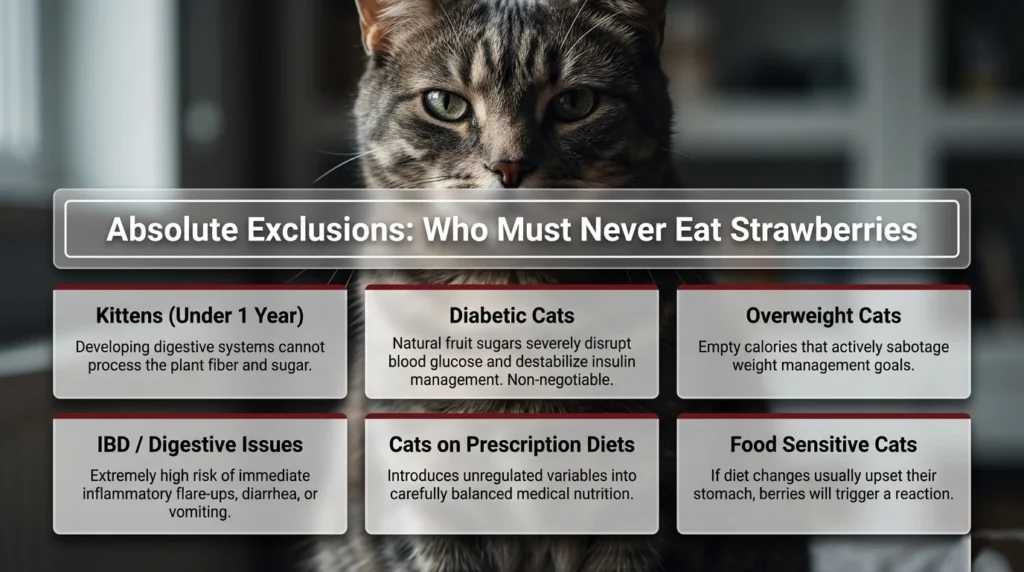
If your cat fits any of these categories, skip the strawberries entirely and ask your vet about appropriate treat alternatives.
How to Serve Strawberries Safely
If your cat is a healthy adult with no risk factors, here’s the exact protocol:
Portion Guidelines
One small piece maximum—roughly the size of a blueberry or about a quarter of a medium strawberry. For cats under 8 pounds, cut that piece in half. For cats over 12 pounds, one small piece is still the limit.
Frequency Rules
Once per week at most, and only during berry season. This should be a rare summer novelty, not a regular treat rotation.
What If Your Cat Already Ate Strawberries?
If They Ate a Small Amount of Flesh
Action: Monitor for 12-24 hours. Watch litter box for diarrhea and observe their energy levels.
When to worry: Vomiting more than once, multiple diarrhea episodes, refusal to eat/drink, visible discomfort, or signs of allergic reaction.
What to do: Most healthy cats will be fine. If mild symptoms appear (one soft stool), stop giving strawberries. If symptoms are severe, call your vet.
If They Ate the Green Leafy Top
Action: Stay calm but vigilant. The leafy tops aren’t toxic, but they can cause digestive upset and may contain pesticide residue.
Watch for: Vomiting, diarrhea, excessive drooling, or signs of mouth irritation.
When to call: If vomiting occurs more than twice, if diarrhea is severe or bloody, or if your cat shows signs of distress. Otherwise, monitor at home.
If They Ate Multiple Strawberries
Action: This is higher concern due to the sugar overload.
Watch for: Diarrhea, vomiting, bloating, lethargy, or unusual thirst (sign of blood sugar spike).
When to call: If your cat is diabetic (call immediately), if symptoms are severe, or if your cat shows signs of distress like excessive hiding or refusing to move.
Emergency Symptoms (Call Vet Immediately)
- Difficulty breathing or wheezing
- Severe swelling around face, mouth, or paws
- Repeated vomiting (more than 3 times)
- Bloody diarrhea
- Extreme lethargy or collapse
- Seizures or disorientation
Frequently Asked Questions
Can cats eat frozen strawberries?
Yes, but with important precautions. Frozen strawberries can be a cooling treat on hot days, but they pose additional risks. The extreme cold can cause tooth sensitivity or pain in cats with dental issues, and the hard frozen texture significantly increases choking risk. If you want to offer frozen strawberry, let it thaw for several minutes until it’s just cool but not rock-hard. Never give your cat frozen strawberries straight from the freezer. Additionally, commercially frozen strawberries may have been processed with added sugars or preservatives—always use plain frozen strawberries you’ve prepared yourself. Cut into small pieces even after thawing, and watch to ensure your cat doesn’t try to swallow large chunks whole.
Are strawberry leaves toxic to cats?
No, strawberry leaves are not toxic to cats, but they should still be removed before serving. The green leafy tops and stems can cause mild digestive upset due to their fibrous texture and slightly bitter compounds. More importantly, the leaves and stems accumulate the highest concentration of pesticide residue from conventional farming practices. Even if you wash the strawberry thoroughly, some pesticides can persist on the leafy parts. While a cat who accidentally eats a strawberry leaf likely won’t experience serious harm, they may develop mild stomach upset, vomiting, or diarrhea. To be safe, always remove the entire green top and stem before offering any part of the strawberry to your cat.
Final Thoughts
Can cats eat strawberries? Yes—but with enough restrictions that you might decide the effort isn’t worth it.
The reality is that your cat doesn’t need strawberries to live a happy, healthy life. They’re perfectly content with quality cat food and appropriate cat treats. But if you want to share a tiny piece as a summer novelty, and your cat is a healthy adult with a strong digestive system, it’s generally safe—as long as you follow the preparation rules carefully.
Trust your instincts. You know your cat better than anyone. If something feels risky or if your cat shows any negative reaction, stop immediately and stick to safer options.
For more guidance on feline nutrition and safe treat choices, explore my related articles on Can a Cat Eat Watermelon? and best cat food reviews.
Stay safe, stay informed, and give your cat an extra chin scratch from me.
→ Read next: Can Cats Have Blueberries?
→ Related: Can Cats Eat Mango?