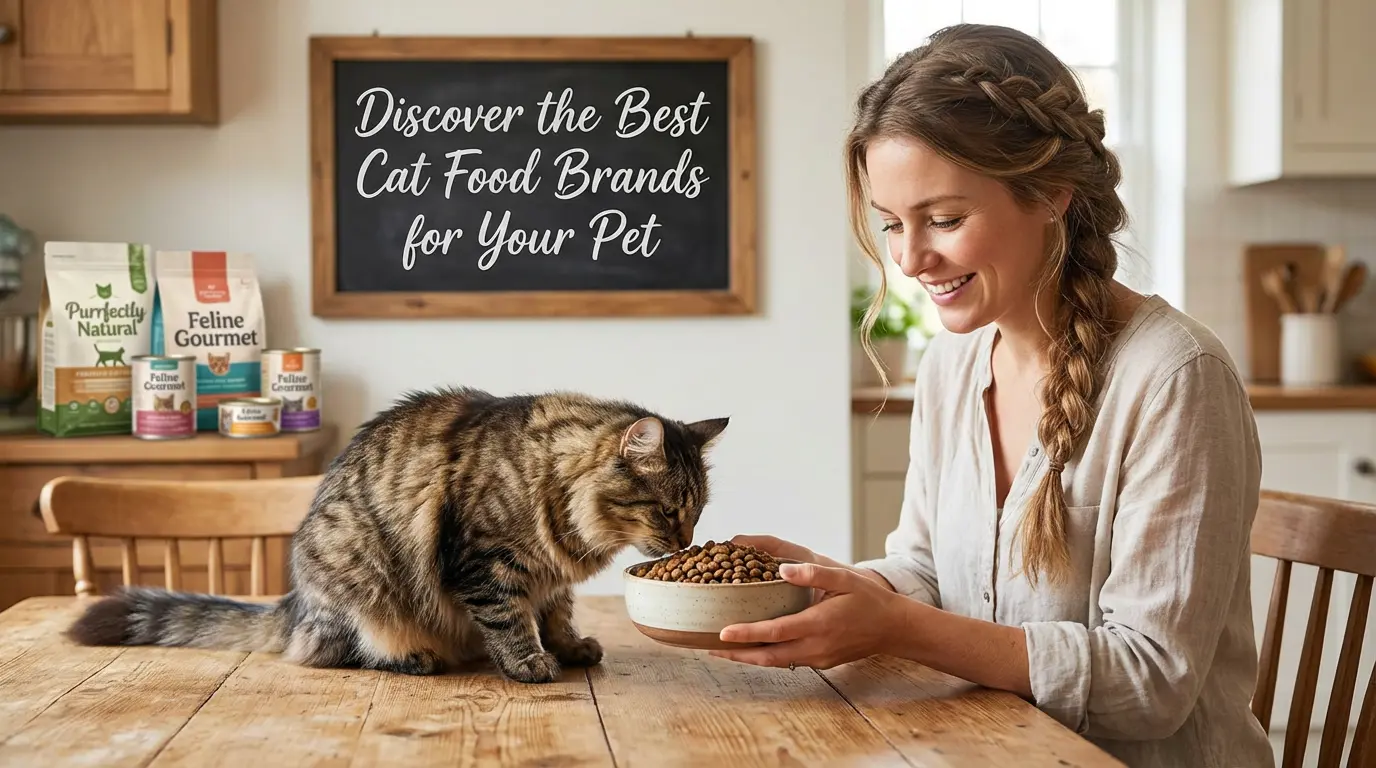
Discover the Best Cat Food Brands for Your Pet
You know that quiet moment when your cat curls on your lap and you feel responsible for every purr and whisker twitch. Choosing the best cat food brands is one of the simplest ways to protect those moments. The right brand affects nutrition, palatability, and your cat’s long-term health more than you might expect.
This article will guide you through top rated cat food brands, vet recommended cat food, and premium cat food options so you can make confident choices. You’ll find comparisons of Purina Pro Plan, Hill’s Science Diet, Royal Canin, Blue Buffalo, Orijen, Wellness, and Merrick alongside boutique names and direct-from-manufacturer subscriptions.
We’ll cover where to buy in the United States—pet specialty stores like PetSmart and Petco, online retailers such as Chewy and Amazon, and subscription services from brands like Blue Buffalo and Royal Canin. You’ll also learn label-reading tips, red flags to watch for, and how brand reputation ties to health outcomes.
Remember to consult your veterinarian for tailored advice, especially for kittens, seniors, pregnant or nursing cats, and pets with kidney disease or food allergies. This guide aims to give you actionable, practical steps to pick the highest quality food for your cat’s life stage and needs.
This article includes affiliate links. You buy through these links and support this site at no extra cost to you.
Key Takeaways
- Choosing the best cat food brands affects nutrition, taste, and long-term health.
- You’ll see vet recommended cat food and top rated cat food brands like Purina Pro Plan and Hill’s Science Diet.
- Premium cat food options include life-stage formulas and boutique choices for special needs.
- Common U.S. purchase channels: PetSmart, Petco, Chewy, Amazon, and brand subscriptions.
- Always consult your veterinarian for individualized diet plans for kittens, seniors, or cats with medical issues.
Overview of Top Rated Cat Food Brands and Why They Matter
You want dependable nutrition for your cat. Choosing from top rated cat food brands helps you avoid guesswork and gives you clear standards to compare ingredients, manufacturing, and testing.
Top cat food choices often come from companies that publish ingredient sources, provide AAFCO nutritional adequacy statements, and maintain a clean recall history. Brands such as Hill’s Science Diet and Purina Pro Plan show how consistent research and veterinary partnerships improve product reliability.
What makes a cat food brand “top rated”
A top rated brand usually meets objective benchmarks used by veterinarians, consumer reviewers, and independent labs. Look for an AAFCO statement of nutritional adequacy and a named animal protein like chicken or salmon listed first.
Check the guaranteed analysis for protein, fat, and fiber percentages. Transparency about ingredient sourcing and third-party testing are strong signals of quality. Brands that avoid unnecessary fillers and harmful additives tend to rank higher with both experts and pet owners.
How brand reputation impacts your cat’s health
Long-standing manufacturers invest in nutrition science and vet-formulated recipes. Companies such as Royal Canin and Hill’s focus on clinical formulations for weight, urinary health, and skin and coat condition.

Boutique and newer names like Blue Buffalo and Wellness emphasize natural ingredients and novel proteins. Reliable manufacturing practices reduce contamination risk and offer consistent nutrient profiles, which matters for ongoing health management.
How to read labels and spot red flags
Start with the AAFCO statement, then confirm a named meat source is the primary ingredient. Avoid vague terms such as “meat” or heavy use of by-products when you can.
- Watch for low-value carbohydrate fillers like corn, wheat, and soy if your cat has sensitivities.
- Be wary of additives such as artificial colors or preservatives like BHA/BHT.
- Question marketing words like natural, human-grade, and holistic, since they lack strict regulation.
Check FDA recall history and resources from Consumer Reports or veterinary nutrition sites before you buy. Frequent recalls or vague ingredient labels are clear red flags when comparing popular cat food brands and deciding on top cat food choices for your pet.
best cat food brands
Choosing among the best cat food brands can feel overwhelming. You want proven nutrition, reliable ingredients, and formulas that match your cat’s life stage. Focus on how a brand supports specific needs like kidney health, weight management, or growth before you decide.
Vet recommended cat food brands to consider
Talk with your veterinarian first if your cat has medical needs. Common vet recommended cat food lines include Hill’s Science Diet for clinical nutrition and renal support, Royal Canin for breed- and condition-specific diets, and Purina Pro Plan for evidence-based options. Iams offers value lines that still meet nutritional standards. Prescription diets from Hill’s and Royal Canin are useful when your cat requires therapeutic monitoring.
Premium cat food options for different life stages
Your cat’s age changes nutrient needs. Kittens require higher calories and DHA for brain and eye development. Adults need balanced protein and fats for maintenance. Seniors benefit from controlled phosphorus and joint-support ingredients. Premium cat food options like Orijen and Acana focus on high-protein, biologically appropriate formulas for adult maintenance.


Wellness CORE delivers protein-focused blends suitable across several life stages. Blue Buffalo Life Protection creates life-stage formulations with added vitamins and minerals for growth and maintenance. Merrick and Purina Beyond offer grain-free or limited-ingredient premium choices that can fit sensitive systems.
Popular cat food brands vs. boutique options
Popular cat food brands such as Purina, Hill’s, and Royal Canin stand out for broad availability, consistent manufacturing, and veterinary endorsements. These brands often provide research-backed recipes at competitive prices.
Boutique and natural-focused brands like Blue Buffalo, Wellness, Orijen, and Merrick prioritize ingredient sourcing and novel proteins. You may find higher-quality raw ingredients and niche recipes, but expect higher prices and occasional reformulations.
Weigh the trade-offs. Mainstream brands provide consistency and clinical evidence. Boutique brands may offer premium ingredients and variety. Match any choice to your cat’s age, weight, activity level, and medical needs. Transition diets gradually over 7–10 days to avoid digestive upset.
Choosing Highest Quality Cat Food for Your Cat’s Needs
Start by defining what “highest quality cat food” means for your pet. Look for diets that meet AAFCO nutrient profiles and list whole animal proteins like chicken, turkey, salmon, or beef first. Check the guaranteed analysis for adequate protein and fat percentages and confirm taurine is included.
Assess your cat’s life stage and health status before you buy. Kittens, adults, seniors, and pregnant cats have different calorie and nutrient needs. Use your cat’s weight and activity level to estimate daily calories and adjust portion sizes as your cat gains or loses weight.
When evaluating labels, favor options with controlled phosphorus and sodium and minimal fillers or artificial additives. Wet food can help with hydration and urinary tract health. For cats prone to urinary issues, consider formulas that support proper urine pH and lower magnesium.
For special needs, choose calorie-controlled diets for weight management with higher protein and lower carbohydrates. For urinary health, look at Hill’s Prescription Diet c/d or Royal Canin Urinary formulas when recommended by your veterinarian. For food sensitivities, try limited-ingredient recipes or novel proteins such as venison or duck from brands like Natural Balance and Merrick Limited Ingredient Diets.
Use top cat food choices from reputable manufacturers when testing new diets, but rotate proteins cautiously to prevent gastrointestinal upset. Mix wet and dry food to boost water intake. Monitor your cat’s body condition score and stool quality to spot issues early.
Practical steps include regular veterinary checkups for dental exams and weight assessments. Verify product claims with resources like AAFCO nutrient profiles and the FDA pet food recall database. Consult a veterinary nutritionist at Tufts Cummings School of Veterinary Medicine if you need a tailored plan.
Keep a shortlist of the best cat food brands that consistently meet these criteria. That way you can choose food that supports long-term health while fitting your budget and your cat’s tastes.
Best Cat Food for Picky Eaters and Fussy Feeders
If your cat turns up its nose at the bowl, you need practical moves that respect feline instincts and nutrition. Start with a calm routine, serve smaller portions several times a day, and avoid free-feeding. Warming wet food slightly releases aroma and can trigger interest. Rotate textures like pate, shreds, and gravy to find what your cat prefers without confusing their palate.
Strategies to encourage a picky cat to eat
- Warm canned food for a few seconds to boost smell and appeal.
- Offer varied textures—pate, flaked, shredded, and stew-style—to test preference.
- Keep meal times consistent and use short social feeding sessions to reinforce eating.
- Avoid regular human food treats that can create long-term pickiness.
- Try rotating proteins—chicken, turkey, fish, and beef—over weeks, not days.
Top cat food choices that appeal to picky eaters
Look for lines with strong aroma and palatable textures. Fancy Feast Classic offers many pate and gravy options that tempt finicky cats. Tiki Cat is known for bold, meaty wet formulas that often win reluctant appetites. Wellness CORE and Merrick bring high-protein, meaty flavors that match a carnivore’s preference.
For sensitive stomachs, limited-ingredient wet diets from Natural Balance or Hill’s Ideal Balance can reduce reactions while staying tasty. Purina Pro Plan Savor and Hill’s Science Diet Adult Savory Mix are often recommended for cats that respond to rich aroma and mixed textures. These top cat food choices balance palatability with dependable nutrition.
How to address appetite loss and when to see a vet
Short-term fussiness can result from stress, travel, or new food. If your cat refuses food for more than 24–48 hours, especially kittens or seniors, seek veterinary attention. Watch for weight loss, lethargy, vomiting, diarrhea, or poor grooming. Prolonged anorexia risks hepatic lipidosis, a life-threatening liver condition that needs urgent care.
Veterinarians typically start with a physical exam, bloodwork (CBC and chemistry), urinalysis, and dental check. Imaging may follow if needed. Your vet may suggest vet recommended cat food or therapeutic diets like Hill’s Prescription lines and may prescribe appetite stimulants such as mirtazapine under careful supervision. Acting quickly protects your cat and helps restore regular eating habits.
Comparing Top-Selling Cat Food Products: Price, Quality, and Availability
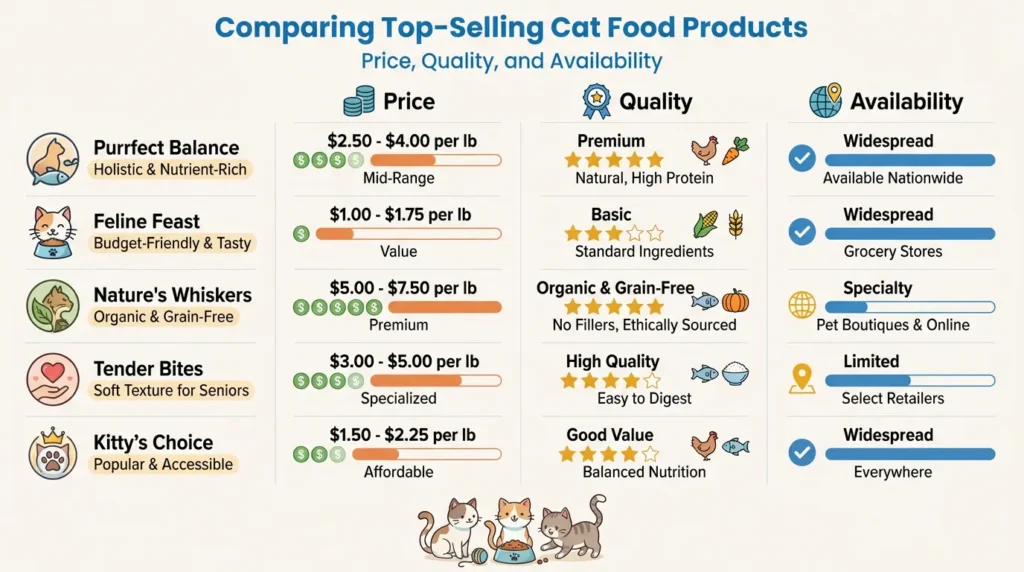
You need a clear way to compare options before you buy. Use three axes: daily cost, ingredient quality including named proteins and fillers, and availability through stores, Chewy or vet clinics. Total cost should factor in how much food your cat needs to meet daily calories.
Value picks fit owners on tight budgets who still want complete nutrition. Look at Purina Cat Chow, Friskies for wet budget options, and Iams. These popular cat food brands give consistent nutrition for many adult cats. Expect more carbohydrate fillers and fewer premium proteins. Check unit price per ounce and calculate price per day so you can compare real cost across bag sizes.
Mid-range favorites bring named meats and fewer artificial additives. Purina Pro Plan, Blue Buffalo, Wellness, and Merrick often balance ingredient quality with cost. You get better protein sources, more flavor variety, and clearer labeling. These brands make up many of the best cat food brands that offer wet and dry lines for life stages and special needs.
Premium and super-premium products focus on high animal-protein content and limited carbs. Orijen, Acana, Tiki Cat, and Ziwi market premium cat food options with specific sourcing and high meat inclusion. They cost more per ounce but can benefit active cats, those with sensitivities, or owners prioritizing sourcing. For many cats, a mid-range or vet-formulated diet may deliver similar health outcomes at lower cost.
You should check availability before committing to a new diet. Compare unit prices on Chewy, Amazon, and national retailers. Consider subscription discounts for recurring deliveries and vet clinic channels for prescription diets. Watch recall history and verify current FDA recall lists before large purchases.
Plan diet changes gradually to avoid gastrointestinal upset. Phase in new food over 7–10 days while monitoring appetite and stool quality. Use per-day cost, ingredient lists, and purchase channels to decide which of the top-selling cat food products or popular cat food brands fits your budget and your cat’s needs.
Conclusion
You now have a clear path to finding the best cat food brands for your pet. Prioritize AAFCO-complete diets that list named animal proteins and match your cat’s life stage. Look for wet options when hydration or urinary health is a concern, and remember that both mainstream labels like Purina Pro Plan and premium lines such as Hill’s Science Diet can deliver the highest quality cat food when matched to specific needs.
When dealing with the best cat food for picky eaters, use palatability strategies: warm food slightly, offer varied textures, and introduce new formulas slowly over a week. Monitor appetite, weight, and stool quality throughout the transition. If appetite loss or digestive changes persist, consult your veterinarian for diagnostic guidance and tailored recommendations.
Audit your current cat food label today using the guidance above, then trial a vet-recommended or top-rated product to see how your cat responds. Check AAFCO statements, transition diets gradually, track body condition, and schedule a follow-up with your vet to reassess diet suitability. With that routine, you’ll be better positioned to choose the best cat food brands that meet your cat’s unique needs.