7 Critical Facts: How Long Can Cats Go Without Eating?
Have you ever wondered how long a cat can safely skip a meal before it becomes dangerous?
This article answers the central question: how long can cats go without eating and why that matters for your pet in the United States. Most healthy adult cats can survive several days without food. But serious health risks, like hepatic lipidosis, can start within 48–72 hours of not eating. Sick, elderly, or underweight cats face higher danger and can deteriorate much faster.
You’ll find this piece presented as a clear Q&A, organized into evidence-based sections. We cover signs and risks, physiological changes, and factors that affect feline hunger duration. We also discuss practical steps for monitoring and intervention. Topics like cat food deprivation, pet feeding schedule, and feline meal frequency are covered to give you a full picture.
Remember: while exact survival times vary, a sudden absence of appetite is a red flag. Monitor your cat’s eating closely. Contact your veterinarian sooner rather than later if appetite loss lasts or other symptoms appear.
Table of Contents
how long can cats go without eating
When your cat skips meals, you need to know the facts. This section covers how long cats can fast, the difference between healthy and sick cats, and the dangers of long-term fasting. Remember these points to act quickly and avoid bigger problems.
Overview of typical feline fasting tolerance
Healthy adult cats can usually go without food for 24–48 hours without harm. But fasting for more than 48–72 hours can lead to serious health issues like liver disease. Cats need to eat often because they can’t store protein like other animals.
Some cats might fast briefly due to stress or being picky. But, if they’re forced to stop eating because of illness or blockages, it’s much more dangerous. Vets say cats are not good at going without food because of their metabolism.
Differences between healthy and sick cats
How long a cat can go without eating depends on their age, weight, and health. Kittens, older cats, and those who are too thin can get sick in just 24 hours. Cats with diabetes, kidney disease, or other health issues are at higher risk during fasting.
Diabetic cats are especially at risk of a serious condition called ketoacidosis if they don’t eat. Cats with cancer or infections also need to eat more and should see a vet quickly. Keep a close eye on these cats and call your vet early.
Short-term fasting vs. prolonged food deprivation
Short-term fasting is 12–24 hours. It’s often okay and can happen during vet visits or when cats are stressed. Reasons include stress, new food, or changes in their routine.
Prolonged fasting is 48–72+ hours. It can lead to serious health problems like liver disease. Causes include illness, blockages, severe dental problems, and neglect.
Even if a cat seems fine during short fasts, don’t assume it’s safe for longer. Always check with a vet after 24–48 hours. Early action helps keep your cat healthy and avoids serious problems.
| Fasting Length | Typical Causes | Risk Level | Recommended Action |
|---|---|---|---|
| 0–12 hours | Missed meal, travel stress, picky eating | Low | Offer favored food; monitor appetite |
| 12–24 hours | Clinic visits, mild stress, temporary change | Moderate | Reassess feeding; consult vet if other signs appear |
| 24–48 hours | Illness onset, pain, dental issues | High | Contact veterinarian; consider diagnostics |
| 48–72+ hours | Obstruction, severe disease, prolonged neglect | Very high | Seek urgent veterinary care; risk of hepatic lipidosis |
Signs and risks of cat food deprivation
You might see small changes before a big problem. Watch your cat closely at mealtime and when they’re quiet. Spotting cat food deprivation early can stop illness from getting worse and shorten how long they don’t eat.
Behavioral signs you can observe at home
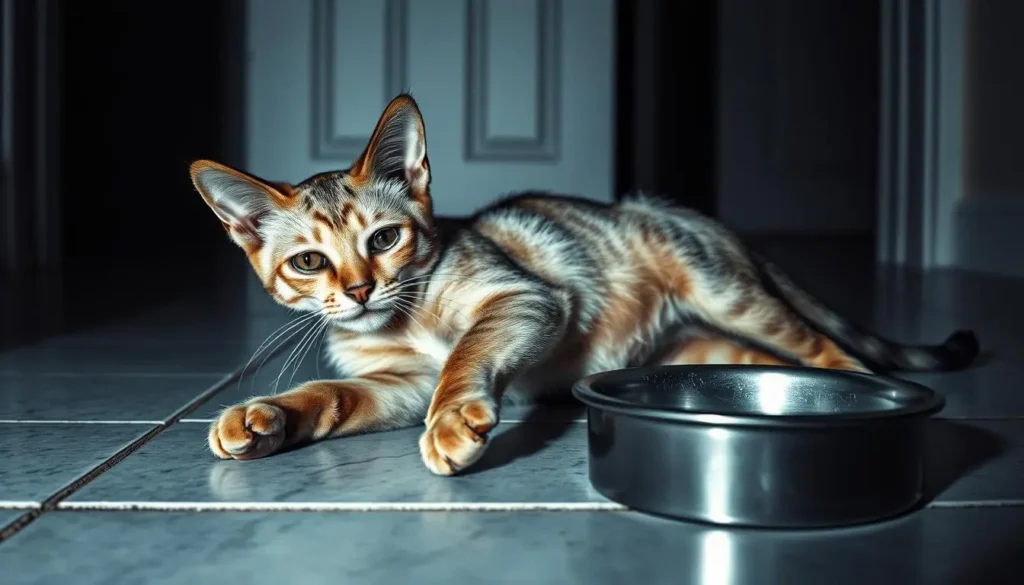
If your cat doesn’t want to eat their favorite foods or leaves the bowl, pay attention. Some cats might only eat a little, try to open a closed bowl, or hide more than usual.
Look for signs like less grooming, being more tired, or changes in how they meow. You might see weight loss by feeling their skin or seeing their ribs more easily. These are signs of not eating you can watch for at home.
Physical symptoms indicating serious concern
Physical signs mean something serious is going on. Vomiting, diarrhea, drooling, or bad breath could mean stomach or metabolic problems. Drinking too much or too little can also be a sign of dehydration.
Jaundice, pale gums, fast breathing, shaking, collapsing, or losing weight fast are emergencies. Dehydration shows as sunken eyes and gums that feel sticky. Muscle wasting and not making much urine are also serious signs in a starving cat.
When lack of eating becomes a medical emergency
If an adult cat won’t eat for more than 48 hours, get vet help fast. Any kitten that stops eating needs help right away. If your cat has diabetes, kidney disease, or another long-term condition, see a vet within 24 hours of not eating.
Be ready to tell the vet about your cat’s recent eating, any meds, changes in behavior, and symptoms. Quick action can help avoid serious problems and improve chances of recovery when a cat’s not eating for too long.
Factors that influence feline hunger duration
Understanding what affects a cat’s hunger is key. Many things can change how long a cat can go without eating. Knowing this helps you plan their meals and when to see the vet.
Age, weight, and underlying health conditions
Kittens eat a lot because they burn energy fast. They can get very sick, even in just a day or two. So, you need to watch their eating closely.
Adult cats that are too thin don’t have enough energy. They can get organ damage if they don’t eat for a short time. Cats with long-term illnesses like kidney disease or diabetes also eat less and are at higher risk.
Some medicines can make cats not want to eat. If your cat suddenly stops eating, talk to your vet. They can help figure out why.
Hydration status and its critical role
How much water a cat has is more important than how much food. Dehydration can make a cat very sick very fast. It’s a big problem.
Check if your cat’s gums are dry or if their skin doesn’t spring back. If they’re not drinking enough, offer fresh water. If they still don’t drink, your vet can give them fluids. Without enough water, waste builds up and can hurt their kidneys, especially if they already have kidney disease.
Environmental stressors and changes in feeding schedule
Stress can make a cat lose their appetite fast. Things like moving, new people or pets, or loud noises can do this. Even changing their food can upset them.
Changes in routine, like different feeding times or new bowls, can upset a cat. Try to keep their eating area calm and consider using pheromone diffusers like Feliway to help them relax.
When you change their food, do it slowly over a few days. This helps keep their eating schedule steady and reduces the chance they won’t eat.
What happens to a cat’s body during prolonged not eating
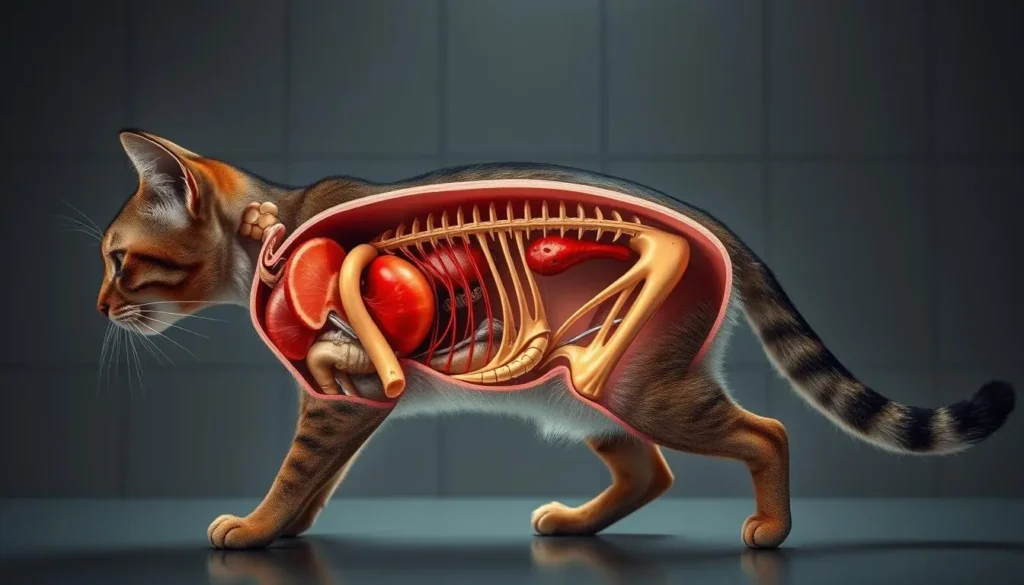
When a cat stops eating, its body quickly starts breaking down fat for energy. This is why cats experience metabolic changes faster than many other animals. The fat goes to the liver, but cats have trouble packaging it properly.
This can lead to a condition called hepatic lipidosis within 48–72 hours without food. Early signs include a lack of appetite, rapid weight loss, and yellowing of gums or skin. You might also see vomiting and tiredness.
These symptoms are serious because they can lead to liver problems and even failure if not treated quickly.
Metabolic shifts and liver vulnerability
Fasting makes the liver work harder to turn fat into energy. But a cat’s liver can only handle so much. Too much fat can damage liver cells and impair its function.
This is why it’s crucial to watch for metabolic changes in cats that stop eating.
Immune and organ system effects
Not eating for a long time weakens a cat’s immune system. This can slow down wound healing and make them more prone to infections. Kidneys, pancreas, and electrolyte levels can also be affected.
Stress hormones increase when a cat loses its appetite. This can put extra strain on the heart and other organs. It’s important to monitor for heart problems and blood pressure changes during recovery.
Recovery timeline after refeeding
When a cat starts eating again, mild cases may recover in 24–72 hours. But more severe cases or those with liver problems may need longer in the hospital. Treatment can include IV fluids, antiemetics, and special feeding tubes.
Refeeding must be done slowly and under close supervision to avoid complications. It’s important to check electrolytes and liver values often. Recovery times vary, with some cats getting better in weeks and others taking months.
To prevent relapse, keep a regular feeding schedule at home. Monitor your cat’s food intake, weight, and stool. If their appetite doesn’t come back quickly or if new symptoms appear, seek vet help right away.
Practical guidance for your pet feeding schedule and emergencies
Keep a simple pet feeding schedule to spot changes fast. Record meal times, amounts, treats, and water intake in a small diary or a smartphone note. Weigh your cat weekly so you notice subtle drops in body mass.
Good monitoring cat appetite habits include noting vomiting, diarrhea, and the exact time your cat eats. Most adult cats prefer several small meals a day. A sudden shift in frequency or refusal to eat may signal cat food deprivation.
Use clear steps to encourage eating at home before calling your veterinarian. Warm wet food for a few seconds to boost aroma. Offer strong-smelling proteins like canned tuna in water for short tastes. Try different textures, such as pate versus chunks, and hand-feed small amounts to rebuild interest.
Do not force-feed without veterinary instruction. Avoid toxic human foods such as onions, garlic, alcohol, and chocolate. Be cautious with flavored medications and treats that can cause vomiting. If appetite loss lasts beyond 24–48 hours, do not delay seeking help.
Know when to call your veterinarian or seek urgent care. Call if an adult cat stops eating for more than 48 hours. Contact a clinic immediately for kittens, elderly cats, or animals with chronic conditions. Signs like dehydration, jaundice, continuous vomiting, collapse, difficulty breathing, or severe lethargy require urgent evaluation.
Major emergency networks in the United States that can provide after-hours care include VCA, Banfield, and BluePearl. When you call, give the clinic the cat’s age, weight, known conditions, current medications, exact duration of anorexia, and any recent diet or household changes.
The veterinary team may recommend antiemetics such as ondansetron or maropitant, appetite stimulants like mirtazapine, assisted feeding with a syringe or feeding tube, and fluid therapy. Ask about kitty food tolerance before switching diets to avoid digestive upset.
| What to Track | Why It Matters | Action Threshold |
|---|---|---|
| Meal times and portions | Detects missed meals and reduced intake | Missed meals for 24–48 hours |
| Water intake and urination | Assesses hydration and kidney stress | Marked reduction or signs of dehydration |
| Vomiting, diarrhea | Signals GI upset or toxin exposure | Continuous episodes or blood present |
| Weight checks | Reveals slow weight loss from cat food deprivation | Any unexplained loss over two weeks |
| Behavior and energy | Shows systemic illness or pain | Severe lethargy, collapse, or breathing trouble |
Conclusion
While some healthy adult cats can go without food for a bit, how long varies a lot. It depends on their age, health, and if they’re sick. Kittens, older cats, and those with health issues are at greater risk if they don’t eat for more than 48–72 hours.
Keep an eye on your cat’s eating schedule and their weight. Look out for early signs of not eating enough, like less activity, hiding, or eating less. Try using warm wet food or gentle appetite boosters your vet suggests. But, if your cat’s appetite doesn’t come back in a day or if they show serious symptoms, see a vet right away.
Seeing a vet quickly can stop serious problems like liver disease and other issues. Watching your cat’s eating and staying consistent is key to avoiding hunger and food deprivation. If you’re worried, call your vet fast to keep your cat healthy.
FAQ
How long can cats go without eating before it becomes dangerous?
Healthy adult cats can go a few days without food. But, serious health issues like fatty liver disease can start in 48–72 hours. Kittens, older cats, and those with health problems are at risk sooner, often within 12–24 hours. If your cat doesn’t want to eat, watch closely and call your vet quickly.
What is hepatic lipidosis and why does it happen when a cat stops eating?
Hepatic lipidosis, or fatty liver disease, happens when a cat’s body uses fat too fast. The liver can’t handle it, leading to liver damage, jaundice, and vomiting. It’s a serious problem that can start in as little as 48–72 hours for some cats.
What behavioral signs at home indicate my cat isn’t eating normally?
Look for signs like not wanting favorite foods, skipping meals, or pawing at a closed bowl. Other signs include hiding more, grooming less, being tired, or acting differently. Also, check for weight loss over time.
Which physical symptoms mean I should seek emergency veterinary care?
Get emergency help if your cat vomits a lot, has diarrhea, drools, or shows yellow gums or eyes. Also, seek help for pale gums, fast breathing, collapse, or extreme tiredness. Cats with diabetes or kidney disease need help within 24 hours.
How does underlying illness change how long a cat can go without food?
Cats with chronic diseases like kidney or diabetes problems can get sick faster. Even short times without food can be risky. Cats on certain meds may also lose their appetite quickly.
Can dehydration be more dangerous than not eating?
Yes, dehydration can be more dangerous than not eating. It can lead to kidney damage and even collapse. Signs include dry gums, skin that doesn’t spring back, and less urine. If your cat won’t drink, get vet help fast.
What are safe home strategies to encourage my cat to eat?
Try warming wet food to make it smell better. Offer strong-smelling foods like tuna in water. Change food textures or feed by hand. Make sure the feeding area is quiet and consistent. If your cat still won’t eat, see your vet.
Are there unsafe practices to avoid when a cat refuses food?
Don’t force-feed without vet advice. Avoid giving toxic foods like onions or chocolate. Don’t rely on treats or human food. Delaying vet care can let serious problems develop.
How should I monitor my cat’s feeding schedule and appetite?
Keep a diary of meal times, amounts, and water intake. Weigh your cat weekly. Most cats eat small meals often; changes need attention.
When should I call my veterinarian or go to an emergency clinic?
Call if your cat won’t eat for over 48 hours or shows signs of dehydration or jaundice. Cats with health problems need help within 24 hours. Use emergency clinics like VCA or BluePearl if your vet is closed.
What veterinary treatments are available if my cat won’t eat?
Vets may give IV fluids, anti-nausea meds, or appetite stimulants. They might use feeding tubes for nutrition. Treatment for underlying issues is also important. Severe cases may need hospital care.
How long does recovery take after refeeding a cat that stopped eating?
Recovery can take days to weeks. Mild cases may improve in 24–72 hours. Cats with liver disease may need longer care. Monitor their health closely to avoid complications.
Can stress or environmental changes cause a cat to stop eating?
Yes, stress from changes can affect appetite. Provide a quiet space for eating and use pheromone diffusers. If your cat’s appetite doesn’t return, get vet advice.
How do age and body condition affect how long a cat can fast?
Kittens and underweight cats can get sick quickly. Healthy adult cats can tolerate short fasts but still risk liver disease. Age and weight affect how long a cat can go without eating.
What should I tell the vet when I call about a cat not eating?
Tell the vet about your cat’s age, weight, health history, and meds. Mention how long they haven’t eaten, any diet changes, and symptoms. This helps the vet plan the best care.
Are there particular medications that suppress appetite in cats?
Yes, some meds can make cats lose their appetite. If your cat starts a new drug and stops eating, tell your vet. They can adjust treatment to help your cat eat and stay hydrated.